
The Ethics of Ownership: How the 'Right to Repair' Movement is Rewriting the Rules of Tech
As landmark right-to-repair laws take effect across the US and Europe in 2026, the movement is fundamentally shifting the ethical balance of power from manufacturers back to consumers.
By Factlen Editorial Team
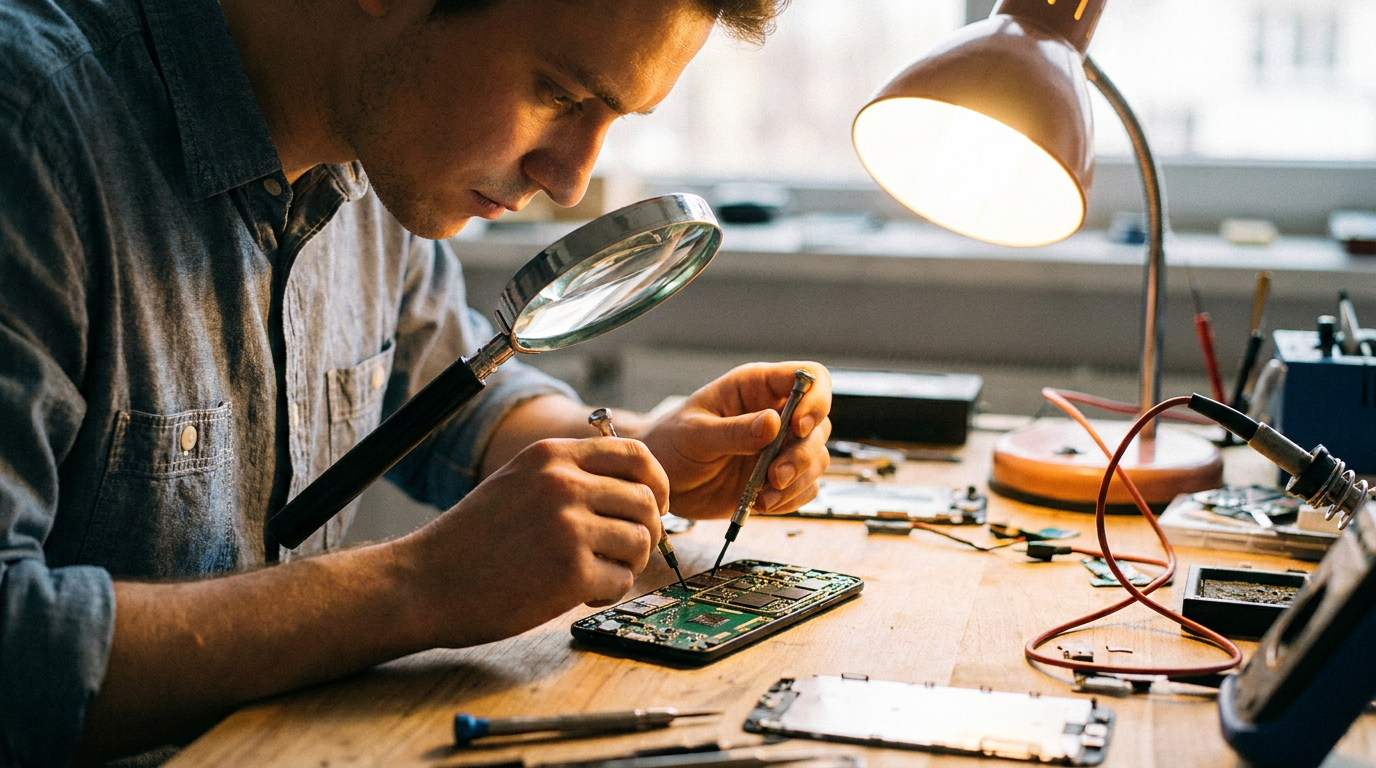
- Consumer Rights Advocates
- Argue that true ownership requires the ability to modify and maintain a product.
- Environmental Organizations
- Focus on the ecological necessity of extending product lifespans to reduce e-waste.
- Original Equipment Manufacturers
- Highlight concerns over intellectual property, device security, and user safety.
What's not represented
- · Independent local repair shop owners
- · Agricultural workers fighting tractor software locks
Why this matters
Understanding the right to repair empowers you to save money, extend the life of your devices, and participate in a circular economy that drastically reduces global electronic waste. As new laws force companies to provide parts and manuals, consumers are regaining control over the technology they rely on daily.
Key points
- The EU's Right to Repair Directive requires member states to enact comprehensive repair laws by July 31, 2026.
- Oregon became the first US state to explicitly ban 'parts pairing,' a software lock that prevents third-party repairs.
- The movement frames repairability as a fundamental property right and a crucial tool for reducing global electronic waste.
- Major tech manufacturers are adapting to the legislation by launching self-service repair programs and redesigning hardware.
For decades, the concept of ownership was straightforward: when you bought a physical object, it belonged to you entirely. You could use it, break it, and fix it however you saw fit. But the digital revolution quietly introduced a new paradigm. Today, you might purchase the hardware of a smartphone, a smart refrigerator, or a tractor, but the manufacturer retains tight control over its lifecycle through software locks and proprietary components. This shift has sparked a global ethical debate over autonomy, property rights, and environmental stewardship.[1][2]
Born from the frustration of farmers unable to fix their own tractors and consumers holding glued-together smartphones, the "Right to Repair" movement has evolved from a niche tinkerer's grievance into a formidable legislative force. It challenges the modern throwaway economy, arguing that repairability is a fundamental human right. As landmark laws take effect across the United States and the European Union in 2026, the movement is fundamentally shifting the balance of power back to the consumer.[1][7]
At the heart of this movement is a profound ethical question: If you cannot fix a device, do you truly own it? Consumer rights advocates argue that artificial repair restrictions are an infringement on basic property rights. They point to practices that create "repair monopolies," where manufacturers force users into expensive first-party service centers by withholding diagnostic tools, repair manuals, and genuine replacement parts from the public and independent shops.[1][2]
The most controversial of these restrictive practices is "parts pairing." This occurs when a manufacturer uses software to cryptographically link a specific hardware component—like a screen or a battery—to the device's motherboard. Even if a consumer harvests a genuine, identical part from another broken device, the software will reject it or disable key features. Advocates argue this is a blatant anti-competitive tactic designed to eliminate third-party repair options and force premature upgrades.[1][5]

Original Equipment Manufacturers (OEMs) offer a different ethical framing, emphasizing safety, security, and quality control. Modern electronics are highly complex, and manufacturers argue that mishandling components like high-capacity lithium-ion batteries poses severe fire risks. Furthermore, they contend that restricting diagnostic access protects proprietary trade secrets and shields consumers from cybersecurity vulnerabilities that could arise from unregulated third-party modifications or counterfeit parts.[1][3]
However, the environmental stakes of the debate have increasingly overshadowed these manufacturer concerns. Electronic waste is currently the fastest-growing waste stream on the planet. The energy, water, and rare-earth minerals required to manufacture a single new smartphone or laptop vastly outweigh the carbon footprint of repairing an existing one. Environmental organizations stress that society cannot simply recycle its way out of this crisis; extending the active lifespan of products is an ecological necessity.[2][5]
This environmental imperative is formalized in the "10R framework" of the circular economy, which ranks sustainability strategies. In this hierarchy, "Repair" (R4) is prioritized far above "Recycle" (R8), as repairing requires significantly less energy than breaking products down into raw materials. By fighting planned obsolescence—the practice of designing products with an artificially limited useful life—the right to repair directly combats the linear "take-make-dispose" model of capitalist consumerism.[2][5]
This environmental imperative is formalized in the "10R framework" of the circular economy, which ranks sustainability strategies.
The economic arguments are equally compelling. Repair monopolies artificially inflate the Total Cost of Ownership (TCO) for consumers and businesses alike. When the cost of an authorized repair approaches the price of a brand-new device, consumers are financially incentivized to throw away perfectly good hardware. Breaking these monopolies not only saves consumers money but also revitalizes local economies by empowering independent repair shops to compete fairly.[1][5]
This convergence of consumer frustration and environmental urgency has triggered a legislative tipping point. In the United States, a cascade of states including California, Colorado, and Minnesota have passed sweeping right-to-repair laws. A major milestone was reached in January 2025, when Oregon's law officially took effect, becoming the first in the nation to explicitly prohibit the practice of parts pairing for consumer electronics.[1]

Across the Atlantic, the European Union has taken an even more comprehensive approach. The EU's Right to Repair Directive (2024/1799) was officially published with a hard transposition deadline: all member states must integrate the rules into national law by July 31, 2026. This directive fundamentally alters the obligations of manufacturers operating within the European single market, shifting the burden of longevity onto the creators of the technology.[3][4]
The EU directive mandates that manufacturers of specific goods—including washing machines, refrigerators, vacuum cleaners, smartphones, and tablets—must provide repairs at a "reasonable price" and within a reasonable timeframe, even outside the original warranty period. Crucially, companies are now required to keep spare parts available for seven to ten years after the last unit of a model is placed on the market, ensuring devices aren't orphaned by a lack of components.[3][4]
To actively change consumer behavior, the EU legislation incorporates clever behavioral economics. If a consumer chooses to have a defective product repaired instead of replaced during the legal guarantee period, their warranty is automatically extended by an additional 12 months. This shifts the financial math, providing a tangible, immediate incentive for consumers to choose the environmentally friendly option.[3]
Parallel to these top-down legislative victories, a vibrant grassroots culture has emerged to reclaim the social practice of repair. Since the first "Repair Café" opened in Amsterdam in 2009, thousands of these community hubs have popped up worldwide. These spaces transform repair from a solitary, frustrating chore into a collaborative, empowering event where volunteers teach neighbors how to fix everything from toasters to laptops.[2][5]

Facing mounting legal pressure and shifting public sentiment, major tech giants are beginning to adapt. Companies that historically lobbied millions of dollars against right-to-repair bills have recently launched self-service repair programs, offering public access to manuals and parts for the first time. Some brands are even redesigning their flagship devices to be more modular, replacing heavy adhesives with standard screws to improve their "repairability scores."[6][7]
Despite these massive strides, the movement's work is far from finished. Advocates are now pushing to expand these protections beyond consumer electronics into highly contested sectors like medical devices and agricultural equipment. As the 2026 laws take root, the ultimate legacy of the right to repair will be a redefined relationship with technology—one where consumers are empowered stewards of their devices, rather than mere renters of hardware.[1][4][7]
How we got here
2001
The first Motor Vehicle Owners Right to Repair Act is proposed in the US, sparking the modern legislative movement.
2009
The first 'Repair Café' opens in Amsterdam, launching a global grassroots movement.
2024
The European Union officially publishes the Right to Repair Directive (2024/1799).
Jan 2025
Oregon's Right to Repair law takes effect, becoming the first US state to explicitly ban 'parts pairing'.
July 2026
Deadline for all EU member states to transpose the Right to Repair Directive into national law.
Viewpoints in depth
Consumer Rights Advocates
Argue that true ownership requires the ability to modify and maintain a product.
This camp views repair restrictions as an infringement on basic property rights. They argue that practices like 'parts pairing'—where a device's software rejects third-party replacement components—are anti-competitive monopolies designed to force consumers into expensive first-party repairs or premature upgrades. For these advocates, the right to repair is a fundamental issue of economic equity and personal autonomy.
Environmental Organizations
Focus on the ecological necessity of extending product lifespans to reduce e-waste.
Environmentalists emphasize that we cannot recycle our way out of the e-waste crisis. The energy and rare-earth minerals required to manufacture a new smartphone or refrigerator dwarf the footprint of repairing an existing one. This camp champions the circular economy, arguing that legislation must penalize planned obsolescence and legally mandate the availability of spare parts to protect the planet.
Original Equipment Manufacturers (OEMs)
Highlight concerns over intellectual property, device security, and user safety.
Manufacturers often argue that modern electronics are highly complex and potentially dangerous if mishandled (such as puncturing a lithium-ion battery). They contend that restricting diagnostic tools and parts to authorized technicians ensures quality control, protects proprietary trade secrets, and shields consumers from cybersecurity vulnerabilities that could arise from unregulated third-party modifications.
What we don't know
- How strictly European member states will define and enforce the 'reasonable price' requirement for manufacturer repairs.
- Whether right-to-repair legislation will successfully expand into highly contested sectors like medical devices and agricultural equipment.
Key terms
- Parts Pairing
- A practice where a manufacturer uses software to link a specific hardware component to a device, preventing third-party replacement parts from functioning.
- Planned Obsolescence
- The business strategy of designing products with an artificially limited useful life so consumers are forced to replace them sooner.
- Circular Economy
- An economic model focused on minimizing waste and making the most of resources by repairing, reusing, and recycling products.
- Ecodesign
- The integration of environmental sustainability considerations into product design, ensuring items are durable and repairable from the start.
Frequently asked
Does repairing my own device void the warranty?
In many jurisdictions, including the US and EU, simply opening your device or using third-party parts does not automatically void the warranty, thanks to consumer protection laws, unless the manufacturer can prove your repair caused the damage.
What products are covered under the new EU directive?
The 2026 EU rules specifically cover products with existing ecodesign requirements, including washing machines, refrigerators, vacuum cleaners, smartphones, and tablets.
Why do manufacturers oppose right-to-repair laws?
Manufacturers typically cite concerns over user safety (especially regarding high-capacity batteries), cybersecurity risks, and the protection of their intellectual property and proprietary designs.
Sources
Source coverage
7 outlets
3 viewpoints surfaced







[1]WikipediaOriginal Equipment Manufacturers
Right to repair
Read on Wikipedia →[2]Sustainability Management WikiEnvironmental Organizations
The right-to-repair movement: Sustainability and consumer rights
Read on Sustainability Management Wiki →[3]Taylor WessingOriginal Equipment Manufacturers
EU Directive on the right to repair: What will change exactly?
Read on Taylor Wessing →[4]Right to Repair EuropeConsumer Rights Advocates
What should we expect from 2026 for repair and right to repair in Europe?
Read on Right to Repair Europe →[5]Ethical ConsumerConsumer Rights Advocates
The Right to Repair movement
Read on Ethical Consumer →[6]ResearchGateEnvironmental Organizations
The right-to-repair movement: Sustainability and consumer rights
Read on ResearchGate →[7]Factlen Editorial TeamEnvironmental Organizations
Synthesis by Factlen editorial team
Read on Factlen Editorial Team →
Every angle. Every day.
Get culture stories with full source coverage and perspective breakdowns delivered to your inbox.