
Stem Cell Transplant Banishes Severe Autoimmune Disease for 15 Years in Medical First
Two patients with a debilitating autoimmune disorder have remained in remission for over 15 years after receiving donor stem cells, suggesting a potential functional cure for conditions that typically require lifelong medication.
By Factlen Editorial Team
- Clinical Researchers
- Focus on the biological proof of concept that an immune system reset can provide a functional cure.
- Patient Advocates
- Emphasize the life-altering restoration of mobility and independence for treatment-resistant patients.
- Medical Specialists
- Highlight the severe toxicity of the procedure and the need for strict patient selection.
What's not represented
- · Health Insurance Providers
- · Pharmaceutical Companies producing standard NMOSD treatments
Why this matters
Autoimmune diseases typically require lifelong immune-suppressing medications that only manage symptoms. This 15-year milestone provides the strongest evidence yet that replacing the immune system entirely can offer a permanent functional cure for severe, treatment-resistant conditions.
Key points
- Two patients with severe NMOSD have remained symptom-free for over 15 years after a stem-cell transplant.
- The procedure involved wiping out their malfunctioning immune systems and replacing them with donor cells.
- Neither patient has shown a return of the disease-causing antibodies since the treatment.
- The patients regained significant neurological function and independence, with one starting a family.
- The treatment carries severe risks, including infection, graft-versus-host disease, and secondary cancers.
- Experts recommend the procedure primarily for younger patients who fail to respond to standard therapies.
For decades, the standard medical approach to autoimmune diseases has been management, not cure. Patients are typically prescribed lifelong regimens of immunosuppressive drugs designed to quiet the body's misdirected attacks on its own tissues. But a landmark study published this week in the journal Med, and highlighted by Nature, offers compelling evidence that a far more radical approach—completely replacing the patient's immune system—can halt severe autoimmune disease in its tracks for more than a decade.[1][3]
The research follows two individuals diagnosed with neuromyelitis optica spectrum disorder (NMOSD), a rare and devastating condition. In NMOSD, the immune system produces rogue antibodies that specifically target the optic nerve and the spinal cord. The resulting inflammation triggers severe episodes of eye pain, profound vision loss, vomiting, and progressive weakness or paralysis in the limbs.[1][2][4]
Standard therapies, which aim to prevent these debilitating flare-ups, had failed both patients. Facing a lifetime of compounding neurological damage, their medical teams opted for an experimental and highly aggressive intervention: an allogeneic hematopoietic stem-cell transplant (HSCT). This procedure is more commonly associated with treating blood cancers like leukemia, and adapting it for NMOSD represented a significant clinical frontier.[2][4]
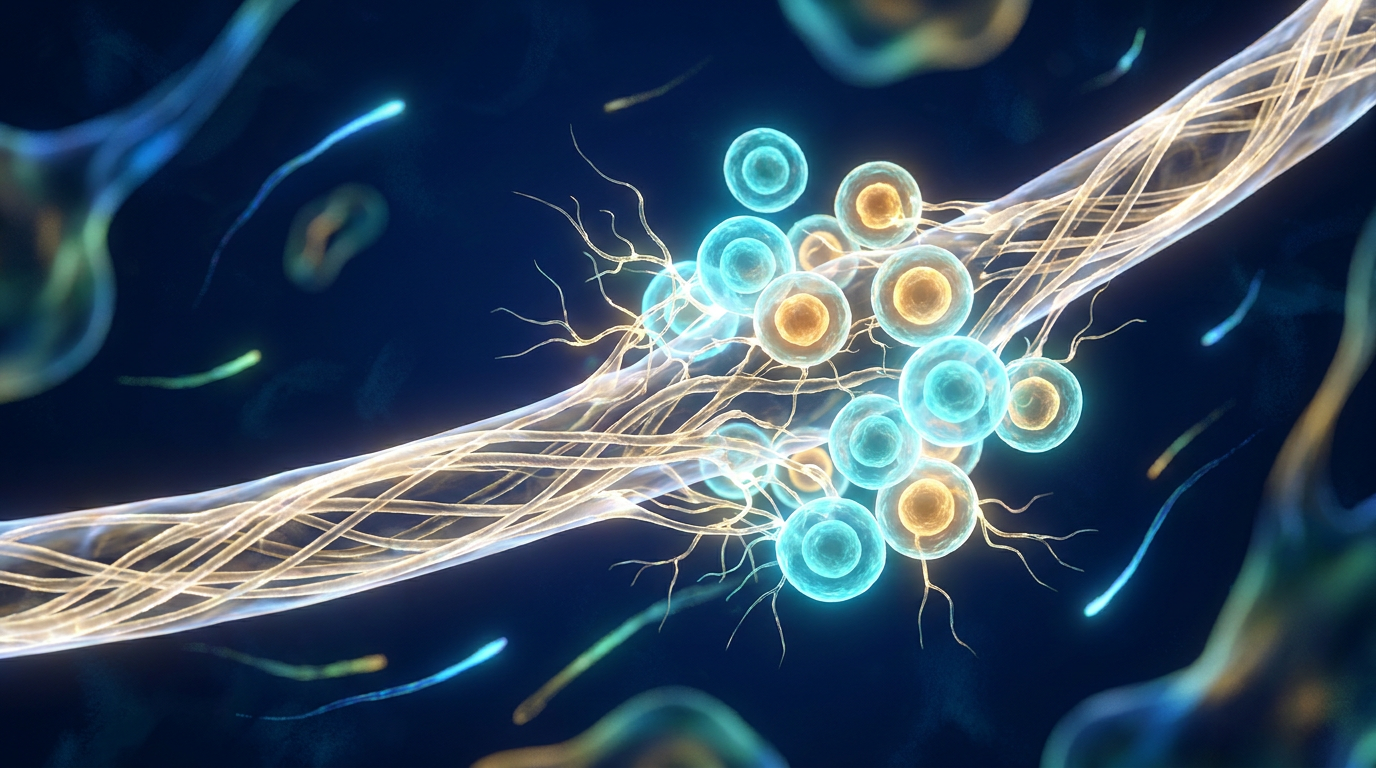
The mechanism behind the treatment is both elegant and brutal. Doctors first use intensive chemotherapy and antibody-based therapies to systematically destroy the patient's existing, malfunctioning immune system. Once the autoreactive cells are eradicated, the patient receives an infusion of healthy, blood-forming stem cells from a donor. The goal is for these donor cells to engraft in the bone marrow and build a completely new, self-tolerant immune system from scratch.[2][5][6]

The first patient, a man suffering from a severe manifestation of NMOSD, underwent the procedure in 2009, receiving stem cells donated by his sister. The following year, a woman with the same condition received a transplant using stem cells from an unrelated donor. Both patients received a single infusion of the donor cells, followed by medications to prevent the new immune system from attacking their bodies—a risk known as graft-versus-host disease.[1][2][3]
The first patient, a man suffering from a severe manifestation of NMOSD, underwent the procedure in 2009, receiving stem cells donated by his sister.
The long-term results, now surpassing the 15-year mark, are unprecedented. Neither patient has experienced a single return of NMOSD symptoms, nor have doctors detected any of the disease-related antibodies that once ravaged their nervous systems. The treatment effectively removed the source of the autoimmune attack altogether, achieving what researchers cautiously describe as a functional cure.[1][2][3]
The clinical improvements have been life-altering. Following his transplant, the male patient's neurological function recovered sufficiently for him to resume a normal life, and he subsequently went on to have two children. The female patient regained significant motor control in her arms and, crucially, no longer requires any daily medication to manage her NMOSD symptoms.[1][2]

However, the medical community is emphasizing transparent caution alongside the celebration. Allogeneic stem-cell transplantation is a high-stakes procedure carrying severe, potentially life-threatening risks. The conditioning regimen leaves patients highly vulnerable to serious infections, and the threat of graft-versus-host disease requires precise, expert management.[2][4][5]
The study's authors meticulously documented the adverse effects experienced by the two pioneers. Both patients faced complications in the years following their transplants, including swollen lymph nodes and periods of antibody deficiency that required ongoing medical care. Furthermore, one of the patients later developed bladder cancer, highlighting the complex long-term health surveillance required after such profound immune system manipulation.[2][3]

Because this data relies on a sample size of just two individuals, experts stress that the findings, while historic, cannot immediately rewrite standard care protocols. The European Society for Blood and Marrow Transplantation currently notes that evidence remains insufficient to recommend HSCT for NMOSD outside of controlled clinical trials, largely due to the recent arrival of highly effective, less toxic monoclonal antibody treatments.[4][5][6]
Nevertheless, the 15-year milestone provides a vital proof of concept. Researchers suggest that allogeneic HSCT should be viewed as a powerful rescue therapy. It holds immense promise for younger patients whose disease aggressively breaks through standard medications, or for those suffering from multiple overlapping autoimmune disorders where conventional suppression is inadequate.[2][5]
As the scientific community digests these findings, the next phase of research will focus on larger, multi-center clinical trials. These studies will aim to refine the patient selection process, optimize the chemotherapy conditioning to reduce toxicity, and definitively weigh the long-term curative potential against the inherent risks of the transplant procedure.[1][3][6]
How we got here
2009
A male patient with severe NMOSD receives the first allogeneic stem-cell transplant for the condition using cells from his sister.
2010
A female patient undergoes the same procedure using stem cells from an unrelated donor.
2020s
Newer, highly effective monoclonal antibody treatments for NMOSD enter the market, changing the standard of care.
June 2026
Researchers publish 15-year follow-up data in the journal Med, confirming both patients remain in complete remission.
Viewpoints in depth
Clinical Researchers
Focus on the biological proof of concept that an immune system reset can provide a functional cure.
For researchers, the 15-year absence of disease-related antibodies is the most critical data point. It proves that the autoimmune cascade is not permanently hardwired into the patient's tissues, but rather resides entirely within the malfunctioning immune cells. By successfully engrafting a donor's immune system, they have demonstrated that a true 'reset' is biologically possible, shifting the paradigm from lifelong symptom management to potential eradication of the disease source.
Patient Advocates
Emphasize the life-altering restoration of mobility and independence for treatment-resistant patients.
From the patient perspective, the success of this trial represents a lifeline for those who have exhausted all other options. NMOSD is terrifying precisely because standard treatments often fail to stop the progressive loss of vision and motor function. The ability of these two patients to not only halt their decline but to regain arm function, stop daily immunosuppressants, and safely start families highlights the profound human impact of this aggressive intervention.
Medical Ethicists & Specialists
Highlight the severe toxicity of the procedure and the need for strict patient selection.
Specialists caution against viewing stem cell transplants as a silver bullet for all autoimmune conditions. The conditioning chemotherapy is highly toxic, and the risk of graft-versus-host disease—where the new immune system attacks the patient's organs—is a constant threat. Because the patients in this study experienced significant adverse effects, including cancer and antibody deficiencies, ethicists argue the procedure must remain restricted to severe, refractory cases where the immediate danger of the disease outweighs the severe risks of the transplant.
What we don't know
- Whether these results can be safely replicated in a large-scale clinical trial with diverse patients.
- How the long-term risks of the transplant compare to the long-term risks of newer monoclonal antibody treatments for NMOSD.
- If this specific allogeneic transplant protocol could be equally effective for other severe autoimmune diseases like multiple sclerosis or lupus.
Key terms
- Neuromyelitis Optica Spectrum Disorder (NMOSD)
- A rare autoimmune disease where the immune system mistakenly attacks the optic nerve and spinal cord, causing vision loss and paralysis.
- Allogeneic Hematopoietic Stem-Cell Transplant
- A medical procedure that replaces a person's bone marrow and immune system with healthy blood-forming stem cells from a donor.
- Graft-Versus-Host Disease (GVHD)
- A potentially serious complication of donor stem-cell transplants where the newly transplanted immune cells attack the recipient's body.
- Conditioning Regimen
- The intensive chemotherapy and antibody treatment given before a transplant to wipe out the patient's existing immune system.
- Immunosuppressive Drugs
- Medications that reduce the strength of the body's immune system, commonly used to manage autoimmune diseases.
Frequently asked
What is NMOSD?
NMOSD is a rare, debilitating autoimmune disorder where the body's immune system attacks the optic nerve and spinal cord, leading to vision loss, pain, and paralysis.
How does a stem cell transplant cure autoimmune disease?
The procedure uses chemotherapy to destroy the patient's malfunctioning immune system, then infuses healthy donor stem cells to build a new, tolerant immune system that no longer attacks the body.
Is this treatment available for everyone?
Not currently. Because the procedure carries severe, life-threatening risks, it is generally reserved for patients whose disease does not respond to standard, less toxic medications.
What are the risks of the transplant?
Risks include severe infections due to a weakened immune system, graft-versus-host disease, and long-term complications such as secondary cancers or antibody deficiencies.
Sources
Source coverage
6 outlets
3 viewpoints surfaced






[1]NatureClinical Researchers
Stem cells banish severe autoimmune disease for 15 years
Read on Nature →[2]QazinformPatient Advocates
Rare autoimmune disease halted for 15 years after stem-cell transplant
Read on Qazinform →[3]MedClinical Researchers
Long-term remission of neuromyelitis optica with allogeneic hematopoietic stem cell transplant
Read on Med →[4]MDPIMedical Specialists
Hematopoietic Stem Cell Transplantation in Neuromyelitis Optica-Spectrum Disorders
Read on MDPI →[5]European Society for Blood and Marrow TransplantationMedical Specialists
Autologous and Allogeneic Stem Cell Transplantation for Autoimmune Diseases
Read on European Society for Blood and Marrow Transplantation →[6]Factlen Editorial TeamClinical Researchers
Synthesis by Factlen editorial team
Read on Factlen Editorial Team →
More in science
See all 7 stories →ENSO Cycle
Is Climate Change Supercharging El Niño? The Evidence, Explained
6 sources

Turfgrass Science
The 2026 World Cup's Biggest Engineering Feat Is the Grass Beneath the Players' Feet
7 sources

El Niño 2026
As a Potentially Historic El Niño Begins, Scientists Debate the Role of Climate Change
7 sources

Thermodynamics
The Thermodynamic Flaw in Most Portable Air Conditioners
6 sources

Every angle. Every day.
Get science stories with full source coverage and perspective breakdowns delivered to your inbox.