
US and Iran Sign 'Islamabad Memorandum' to End 110-Day War and Reopen Strait of Hormuz
The United States and Iran have signed a preliminary memorandum of understanding to halt military operations, lift a U.S. naval blockade, and reopen the Strait of Hormuz. The agreement establishes a fragile 60-day window to negotiate a final settlement on Iran's nuclear program and long-term sanctions relief.
By Factlen Editorial Team
- US Administration
- Views the deal as a victory achieved through maximum pressure and military leverage.
- Iranian Factions
- Divided between moderates seeking economic relief and hardliners wary of nuclear concessions.
- Regional Mediators
- Focused on restoring maritime trade and preventing a wider regional collapse.
- Legal & Security Analysts
- Skeptical of the fragile 60-day timeline and the complexity of the unresolved nuclear issues.
What's not represented
- · The Israeli Government, which is not a party to the MoU but is directly affected by the Lebanon ceasefire provisions.
- · Global shipping companies tasked with navigating the newly reopened but historically volatile Strait of Hormuz.
Why this matters
The agreement pauses a devastating 110-day conflict that crippled global shipping and spiked energy prices. However, with core issues like Iran's nuclear program and permanent sanctions relief deferred to a 60-day negotiating window, the global economy remains highly vulnerable to a sudden collapse in talks.
Key points
- The US and Iran signed a 14-point memorandum to end their 110-day war.
- The agreement immediately reopens the Strait of Hormuz to commercial shipping.
- The US will fully dismantle its naval blockade of Iran within 30 days.
- Both sides have 60 days to negotiate a final deal on Iran's nuclear program.
- The MoU proposes a $300 billion regional reconstruction plan for Iran if a final deal is reached.
- The ceasefire extends to allied factions, including military operations in Lebanon.
The United States and Iran have officially signed the "Islamabad Memorandum of Understanding," pausing a 110-day war that has devastated the Middle East and severely disrupted global energy markets. The preliminary agreement, signed remotely on Wednesday by U.S. President Donald Trump and Iranian President Masoud Pezeshkian, mandates an immediate cessation of hostilities on all fronts.[1][2][6]
Brokered primarily by Pakistan with assistance from Qatar, Saudi Arabia, Turkey, and Egypt, the 14-point framework offers immediate economic and maritime relief while deferring the most intractable issues to a strict 60-day negotiating window.[3][6]
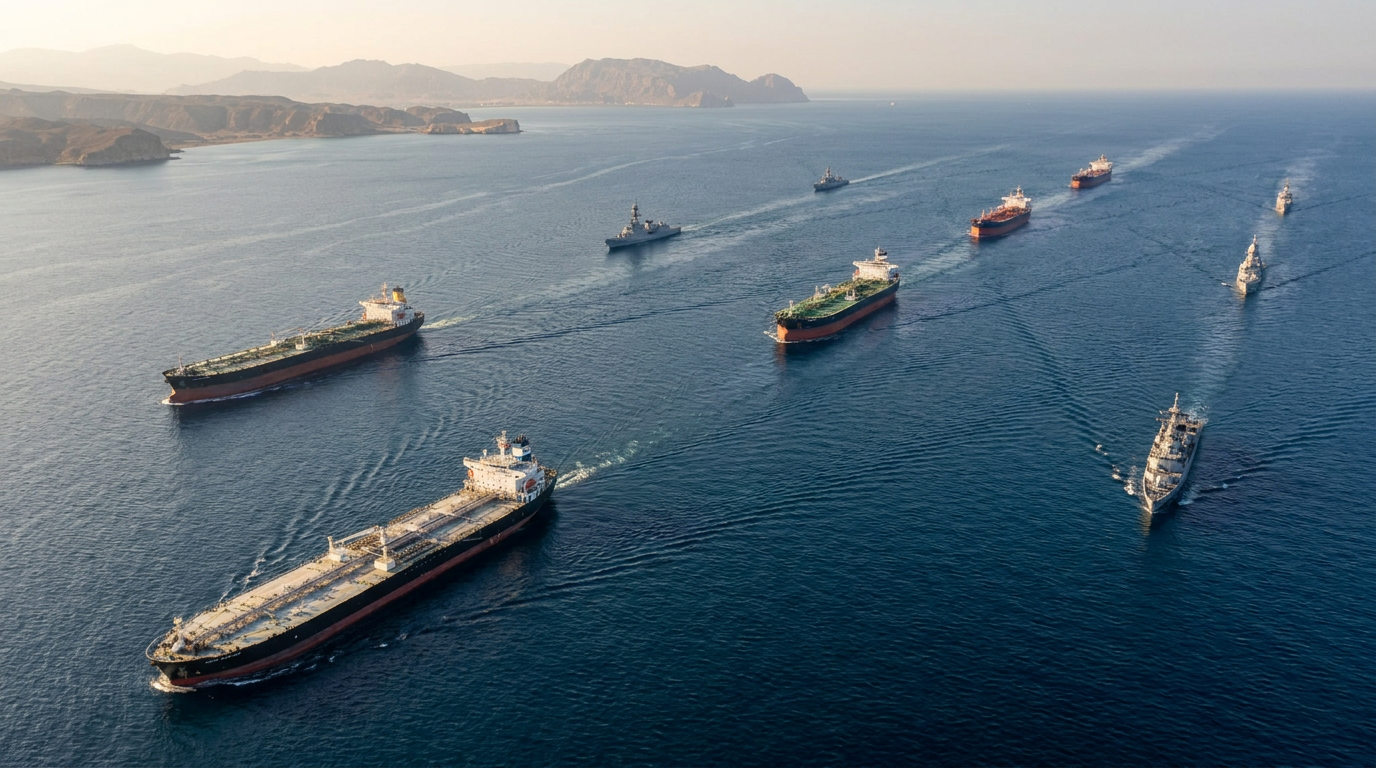
The most immediate global impact is the reopening of the Strait of Hormuz. The vital waterway, which handles roughly one-fifth of global oil shipments, had been effectively closed by the conflict, sending energy prices soaring. Under the MoU, Iran has committed to ensuring the safe passage of commercial vessels for the next 60 days, and the first Saudi-flagged supertankers have already resumed transit.[3]

In exchange, the United States has agreed to immediately dismantle its naval blockade of Iranian ports, a process that must be completed within 30 days. The U.S. has also granted temporary sanctions waivers allowing Iran to sell oil during the 60-day negotiation period, providing a crucial lifeline to Tehran's battered economy.[1][3]
The agreement explicitly extends the ceasefire to allied factions, notably requiring an end to military operations in Lebanon. U.S. officials emphasized that this provision effectively obligates Tehran to rein in Hezbollah, though they noted that Israel—which is not a party to the MoU—retains the right to respond if attacked.[2]
The agreement explicitly extends the ceasefire to allied factions, notably requiring an end to military operations in Lebanon.
While the cessation of violence brings immediate relief, the MoU leaves the core drivers of the conflict unresolved. The text intertwines future sanctions relief with a final settlement on Iran's nuclear program, setting the stage for highly complex talks.[2][5]

As a preliminary concession, Iran has agreed to down-blend its enriched uranium stockpile on its own soil under the supervision of the International Atomic Energy Agency (IAEA). However, the comprehensive dismantling of Iran's nuclear infrastructure remains a subject for the upcoming negotiations.[2]
To incentivize a final deal, the MoU outlines a commitment by the U.S. and regional partners to develop a $300 billion reconstruction and economic development plan for Iran. The mechanics and funding sources for this massive initiative remain undefined and will be a central focus of the 60-day window.[3][5]
The political reception to the deal has been mixed. In Washington, the Trump administration has framed the MoU as a successful ultimatum, with the President warning that the U.S. is prepared to resume heavy military action if Iran violates the terms.[3]

In Tehran, rival political factions are already clashing over the implications of the agreement. While moderates view the temporary sanctions relief and the end of the blockade as a necessary victory for the Iranian public, hardliners remain deeply skeptical of U.S. commitments and the proposed constraints on the nuclear program.[4]
Legal and geopolitical analysts warn that the 60-day window is highly fragile. Because either side can walk away at any time, the global economy remains in a precarious position. If the talks collapse, the U.S. has signaled it will rapidly reinstate the blockade and escalate economic pressure, potentially plunging the region back into full-scale war.[2][5]
How we got here
Late Feb 2026
The US-Iran war begins, leading to a US naval blockade and the closure of the Strait of Hormuz.
April 13, 2026
The US formally imposes a strict naval blockade on all Iranian ports.
June 12, 2026
Pakistani mediators announce that the US and Iran have agreed on the final text of a preliminary peace deal.
June 17, 2026
President Trump and President Pezeshkian remotely sign the Islamabad Memorandum of Understanding.
June 18, 2026
The first commercial oil tankers resume passage through the Strait of Hormuz.
Viewpoints in depth
US Administration's view
Framed as a successful pressure campaign that forced Iran to the table.
U.S. officials are presenting the Islamabad Memorandum as a victory for maximum pressure. By leveraging the devastating economic impact of the naval blockade, the administration argues it has forced Tehran to make immediate concessions, such as down-blending uranium and halting Hezbollah's operations in Lebanon. The administration maintains a hardline stance on enforcement, emphasizing that the U.S. will rapidly reinstate the blockade and escalate military strikes if Iran fails to reach a comprehensive nuclear agreement within the 60-day window.
Iranian Leadership's view
Focused on the immediate lifting of the crippling U.S. naval blockade and the resumption of oil exports.
For Tehran, the immediate priority of the MoU is economic survival. The 110-day naval blockade severely compounded years of existing sanctions, bringing the Iranian economy to the brink. Moderates within the Iranian government view the 60-day sanctions waiver and the proposed $300 billion reconstruction fund as vital lifelines. However, hardline factions remain deeply suspicious of Washington's long-term intentions, arguing that the U.S. cannot be trusted to permanently lift sanctions even if Iran agrees to dismantle its nuclear infrastructure.
Regional Mediators' view
Prioritizing the reopening of the Strait of Hormuz and long-term regional de-escalation.
Countries like Pakistan, Saudi Arabia, and Qatar, which facilitated the talks, view the agreement through the lens of regional stability and global trade. The closure of the Strait of Hormuz posed an existential threat to Gulf economies heavily reliant on energy exports. These mediators see the $300 billion reconstruction plan not just as an incentive for Iran, but as a necessary investment to integrate Tehran into the regional economy, thereby reducing the likelihood of future conflicts.
What we don't know
- Whether the 60-day window will be enough time to resolve decades-old disputes over Iran's nuclear program.
- How the proposed $300 billion reconstruction fund will be financed and administered.
- Whether Israel will abide by the de-escalation terms regarding Hezbollah in Lebanon.
Key terms
- Islamabad Memorandum of Understanding
- The 14-point preliminary agreement brokered primarily by Pakistan to halt the 2026 US-Iran war.
- Strait of Hormuz
- A critical maritime chokepoint between the Persian Gulf and the Gulf of Oman, through which roughly 20% of the world's oil passes.
- Down-blending
- The process of diluting highly enriched uranium into a lower concentration, making it unsuitable for use in nuclear weapons.
- Naval Blockade
- A military operation in which the US Navy prevented commercial and military vessels from entering or leaving Iranian ports.
Frequently asked
Is the US-Iran war officially over?
The MoU mandates an immediate and permanent termination of military operations, but it is a preliminary agreement. A final peace treaty depends on the outcome of the 60-day negotiations.
Will global gas prices go down?
The reopening of the Strait of Hormuz and the resumption of Iranian oil exports are expected to significantly lower global crude oil prices, which had surged during the 110-day conflict.
What happens if the 60-day talks fail?
U.S. officials have stated that either side can walk away at any time. The U.S. is prepared to reinstate the naval blockade and escalate military pressure if negotiations collapse.
Does the ceasefire apply to Hezbollah?
Yes. The agreement explicitly requires an end to military operations in Lebanon, effectively obligating Iran to rein in allied factions like Hezbollah.
Sources
Source coverage
6 outlets
4 viewpoints surfaced






[1]AxiosUS Administration
READ: Full text of U.S.-Iran memorandum of understanding
Read on Axios →[2]The GuardianLegal & Security Analysts
US officials reveal preliminary memorandum of understanding to end Iran conflict
Read on The Guardian →[3]Middle East EyeRegional Mediators
US-Iran peace deal: Six things we learned from the Islamabad Memorandum of Understanding
Read on Middle East Eye →[4]Al JazeeraIranian Factions
Where do Iran’s political factions stand on the US peace deal?
Read on Al Jazeera →[5]Herbert Smith FreehillsLegal & Security Analysts
Emerging U.S. Iran Memorandum of Understanding and Implications for Sanctions and Nuclear Negotiations
Read on Herbert Smith Freehills →[6]WikipediaLegal & Security Analysts
Islamabad Memorandum of Understanding
Read on Wikipedia →
More in news politics
See all 8 stories →Strait of Hormuz
Iran Announces Closure of Strait of Hormuz, Citing US and Israeli Ceasefire Violations
7 sources

Strait of Hormuz
Iran Re-Closes Strait of Hormuz, Citing Israeli Strikes in Lebanon as Breach of US Peace Deal
10 sources
Electoral Reform
Fact-Checking the Evidence: Does Ranked-Choice Voting Actually Reduce Political Polarization?
8 sources

Strait of Hormuz
Iran Closes Strait of Hormuz, Threatening Fragile U.S. Peace Deal Over Lebanon Escalation
8 sources
Every angle. Every day.
Get news politics stories with full source coverage and perspective breakdowns delivered to your inbox.