
How Next-Generation Geothermal Is Unlocking 24/7 Clean Power
Advances in horizontal drilling have allowed enhanced geothermal systems to move from pilot projects to commercial scale, providing a massive new source of firm, carbon-free electricity.
By Factlen Editorial Team
- Geothermal Developers
- Companies adapting oil and gas techniques to unlock scalable clean energy.
- Energy Policymakers
- Regulators seeking reliable, domestic baseload power to stabilize the grid.
- Tech Industry Offtakers
- Hyperscalers funding geothermal to secure 24/7 clean power for AI data centers.
- Scientific Researchers
- Experts analyzing the technical viability, costs, and environmental impacts of EGS.
What's not represented
- · Local communities living near proposed EGS drilling sites
- · Fossil fuel workers transitioning to the geothermal sector
Why this matters
As artificial intelligence and electrification push the global power grid to its limits, solar and wind alone cannot meet the demand for 24/7 electricity. Next-generation geothermal energy unlocks a virtually limitless supply of clean, always-on baseload power, fundamentally changing how the world will keep the lights on without burning fossil fuels.
Key points
- Enhanced Geothermal Systems (EGS) use horizontal drilling to create artificial reservoirs in hot, dry rock.
- Fervo Energy is launching the world's first commercial-scale EGS plant in Utah in October 2026.
- Hyperscale tech companies are heavily funding geothermal to secure 24/7 clean power for AI data centers.
- The U.S. Department of Energy projects advanced geothermal could expand domestic capacity by a factor of 20 by 2050.
- EGS technology is now cost-competitive with natural gas across much of Europe, potentially replacing 42% of coal and gas generation.
The global energy transition has hit a bottleneck. While solar and wind power have expanded exponentially, they are inherently intermittent—producing electricity only when the sun shines or the wind blows. Meanwhile, the explosive growth of artificial intelligence and hyperscale data centers has created an insatiable demand for "clean firm" power: carbon-free electricity that runs 24 hours a day, seven days a week. To solve this, the energy sector is turning to the Earth's crust. In 2026, next-generation geothermal energy is officially moving from experimental pilot projects to commercial-scale deployment, promising to unlock a virtually limitless supply of baseload power.[6][7][1]
Traditional geothermal energy has always been a niche resource, constrained by geography. For decades, developers had to "get lucky" by finding naturally occurring reservoirs of hot water and steam trapped in highly permeable rock formations, typically near volcanic fault lines in places like Iceland or California. Because of these strict geological requirements, geothermal currently supplies less than 0.5% of the world's electricity. But beneath the surface, hot dry rock is ubiquitous. The challenge has simply been how to extract that heat economically without relying on natural aquifers.[3][4][1]
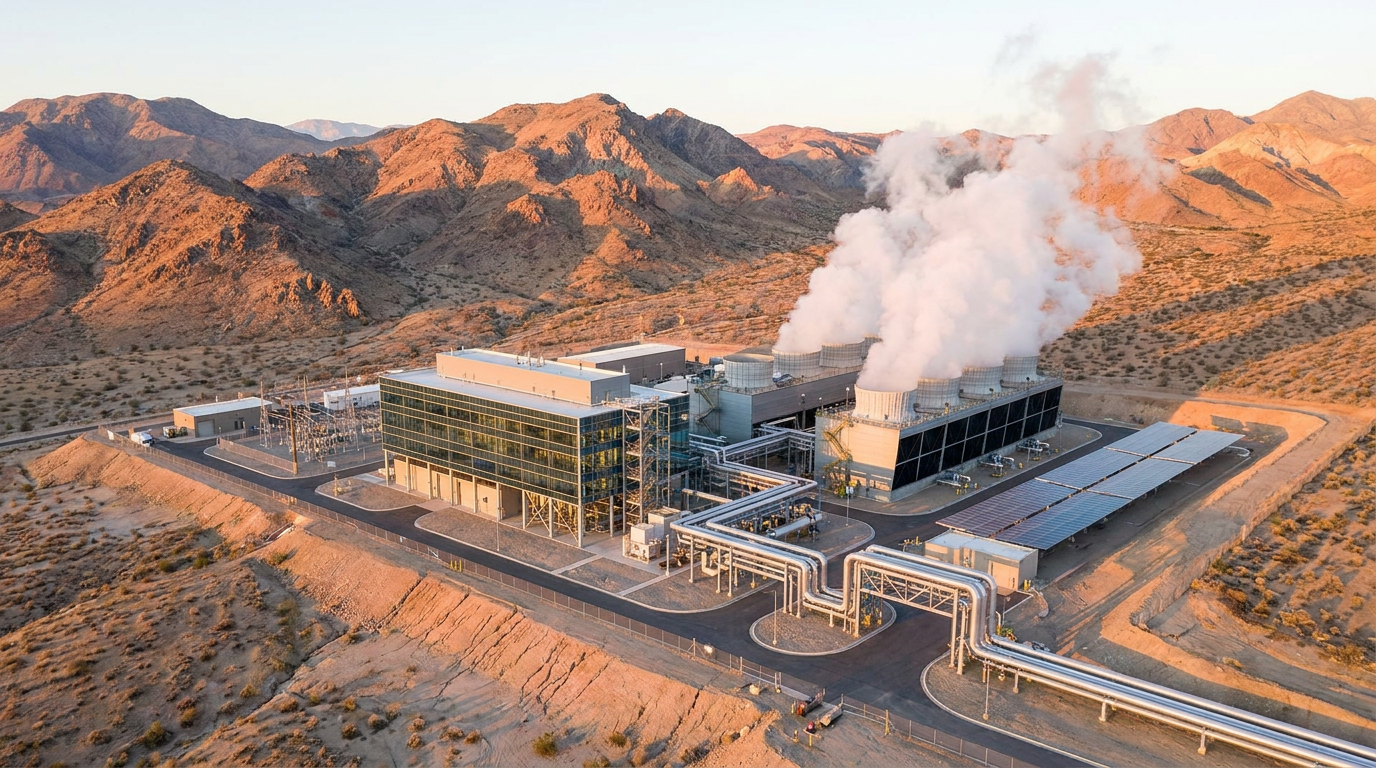
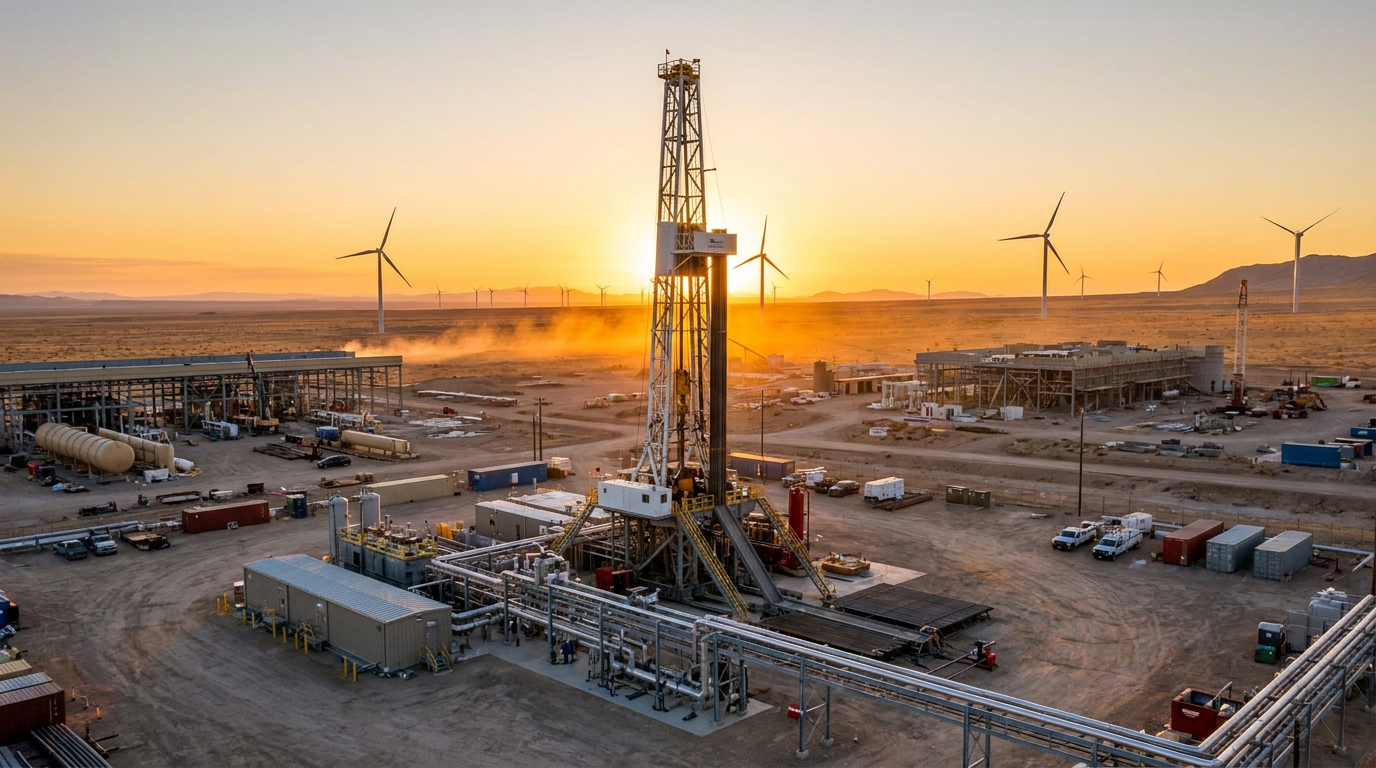
The breakthrough is a technology known as Enhanced Geothermal Systems (EGS). Rather than hunting for natural hot springs, EGS engineers artificial reservoirs. Developers drill thousands of feet down into hot, impermeable rock, then inject water at high pressure to create a network of millimeter-thick fractures. This technique, known as hydraulic stimulation or hydro-shearing, is directly adapted from the oil and gas industry's shale fracking boom. A second "production" well is then drilled horizontally to intersect these fractures. As water circulates through the newly created pathways, it absorbs the Earth's ambient heat and returns to the surface as superheated fluid, which drives a turbine to generate electricity.[7][2][6]

Fervo Energy, a Houston-based startup founded by former oil and gas engineers, has become the poster child for this technological leap. After successfully proving the EGS model with a 5-megawatt pilot project in Nevada, Fervo is now completing Cape Station, a massive facility in Beaver County, Utah. The project's first 100-megawatt phase is scheduled to begin delivering power to the grid in October 2026, marking the world's first commercial-scale EGS plant. When fully built out in 2028, Cape Station is expected to generate 500 megawatts—enough to power hundreds of thousands of homes.[2][5]
The financial markets have aggressively validated this approach. In May 2026, Fervo Energy executed a highly successful $1.89 billion initial public offering (IPO), signaling that Wall Street now views advanced geothermal as a bankable infrastructure asset. This influx of capital follows a $462 million Series E funding round in late 2025, which was backed by major tech players including Google. The rapid maturation of EGS proves that the technology can scale by leveraging the existing workforce, supply chains, and horizontal drilling rigs left idle by the fossil fuel industry.[5][6][2][1]
The primary catalyst driving this geothermal renaissance is the tech industry. Hyperscalers like Google, Microsoft, and Meta have made ambitious commitments to operate their data centers on 100% carbon-free energy by 2030. Realizing that solar and wind cannot provide the round-the-clock reliability required by AI workloads, these companies are signing massive Power Purchase Agreements (PPAs) with geothermal developers. Google, for instance, pioneered a "Clean Transition Tariff" with NV Energy to purchase 115 megawatts of Fervo's geothermal power in Nevada, effectively subsidizing the early-stage premium of the technology to guarantee firm clean power for its servers.[7][6]
The primary catalyst driving this geothermal renaissance is the tech industry.
The potential scale of EGS is staggering. A recent "Pathways to Commercial Liftoff" report by the U.S. Department of Energy (DOE) concluded that advanced geothermal could expand the nation's geothermal capacity by a factor of 20. The DOE estimates that EGS could provide 90 gigawatts of clean firm power to the U.S. grid by 2050, up from just 3.7 gigawatts today. Because EGS does not require specific hydrothermal conditions, it can be deployed across vast swaths of the American West and eventually nationwide, fundamentally altering the geography of renewable energy.[1][7]

The momentum extends far beyond the United States. In Europe, the climate think tank Ember recently published an analysis revealing that modern geothermal is now cost-competitive with gas across much of the continent. The report identified 43 gigawatts of enhanced geothermal capacity in the European Union that could be developed at a levelized cost of less than €100 per megawatt-hour. If fully realized, this capacity could replace 42% of the EU's coal and gas-fired generation, providing a secure, domestic energy source insulated from the price volatility of imported fossil fuels.[4]
Despite the immense promise, the industry faces significant hurdles before it can achieve global ubiquity. The most immediate challenge is the high upfront capital cost of drilling deep horizontal wells in hard, high-temperature rock. While Fervo has successfully slashed its drilling costs by nearly 50% and cut completion times by 70% over the past two years, EGS remains more expensive than utility-scale solar or wind. The DOE aims to drive the levelized cost of advanced geothermal down to $60–$70 per megawatt-hour by 2030, which would make it highly competitive with natural gas peaker plants.[3][7][1]
Another technical uncertainty is the "parasitic load" of EGS facilities. Because these systems must continuously pump water deep underground at high pressures, they consume a significant portion of the electricity they generate. Early estimates suggest that some EGS plants may use up to 40% of their gross power output just to operate the pumps, reducing the net electricity delivered to the grid. Engineers are actively working to optimize fluid dynamics and pump efficiency, but this energy penalty remains a core focus for next-generation designs.[6][3]

Environmental and regulatory concerns also loom over the sector's expansion. Because EGS relies on hydraulic fracturing, it carries a risk of induced seismicity—small, human-caused earthquakes. While developers use continuous fiber-optic monitoring and microseismic sensors to carefully manage subsurface pressures, public perception remains a sensitive issue, particularly in densely populated areas. Furthermore, the permitting process for drilling on federal lands in the U.S. is notoriously slow, often taking years to secure the necessary environmental clearances for a single well pad.[3][1][7]
To mitigate these risks, researchers are exploring even more advanced iterations of the technology. Closed-loop Advanced Geothermal Systems (AGS) circulate fluid through sealed underground pipes, eliminating the need to fracture the rock or inject water directly into the formation. Meanwhile, "superhot rock" geothermal aims to drill even deeper to reach supercritical water temperatures above 374°C (705°F), which could theoretically multiply the energy output of a single well by a factor of ten. Though still in the R&D phase, these innovations represent the next frontier of subsurface engineering.[3][7]

As 2026 unfolds, the successful launch of commercial-scale EGS projects marks a critical inflection point for the global energy transition. By systematically translating decades of oil and gas expertise into scalable clean energy deployment, the geothermal industry is proving that the Earth itself can act as a massive, always-on battery. If developers can continue to drive down costs and navigate regulatory bottlenecks, next-generation geothermal is poised to become the indispensable backbone of a decarbonized grid.[1][6][2][7]
How we got here
2023
Fervo Energy successfully launches Project Red in Nevada, proving the commercial viability of horizontal drilling for geothermal.
March 2024
The U.S. Department of Energy releases its 'Liftoff' report, projecting a 20-fold increase in domestic geothermal capacity by 2050.
Late 2025
Fervo secures a $462 million Series E funding round, backed by major tech companies, to accelerate its Cape Station project.
May 2026
Fervo Energy executes a $1.89 billion initial public offering (IPO), signaling Wall Street's validation of the EGS market.
October 2026
The first 100-megawatt phase of Cape Station in Utah is scheduled to come online, becoming the world's largest commercial EGS facility.
Viewpoints in depth
Geothermal Developers
Companies adapting oil and gas techniques to unlock scalable clean energy.
Firms like Fervo Energy argue that Enhanced Geothermal Systems (EGS) are the missing piece of the clean energy puzzle. By leveraging the horizontal drilling and hydraulic fracturing technologies perfected during the shale boom, they believe they can manufacture geothermal reservoirs anywhere there is hot rock. Developers emphasize that unlike solar or wind, geothermal provides firm, 24/7 baseload power, making it the ideal complement to intermittent renewables and the perfect power source for energy-hungry data centers.
Grid Operators & Policymakers
Regulators seeking reliable, domestic baseload power to stabilize the grid.
The U.S. Department of Energy and European regulators view next-generation geothermal as a critical national security and grid stability asset. Because EGS can theoretically be deployed nationwide, it reduces reliance on imported fossil fuels and mitigates the need to overbuild massive battery storage facilities. However, policymakers remain cautious about the high upfront capital costs and the slow pace of federal permitting, which they acknowledge must be streamlined for the technology to reach its 90-gigawatt potential by 2050.
Environmental Skeptics
Groups raising concerns over water usage and induced seismicity.
While broadly supportive of carbon-free energy, some environmental and community groups urge caution regarding the rapid expansion of EGS. Their primary concerns mirror those raised during the oil and gas fracking boom: the massive amounts of water required to stimulate the wells and the risk of induced seismicity (human-caused earthquakes). Although developers use advanced fiber-optic monitoring to manage subsurface pressures, skeptics argue that scaling these projects near populated areas requires stringent oversight and transparent risk management.
What we don't know
- Whether developers can consistently lower the high upfront capital costs of drilling deep horizontal wells.
- How efficiently engineers can reduce the 'parasitic load'—the amount of energy the plants consume to pump water underground.
- How quickly federal and state regulators will streamline the permitting process for new geothermal drilling sites.
Key terms
- Enhanced Geothermal System (EGS)
- A technology that creates artificial underground reservoirs by injecting water into hot, dry rock to extract heat for electricity generation.
- Baseload Power
- The minimum amount of electric power needed to be supplied to the electrical grid at any given time, requiring power plants that can run continuously.
- Clean Firm Power
- Electricity that is both carbon-free and available on demand 24/7, regardless of weather conditions.
- Hydraulic Fracturing
- A drilling technique that injects high-pressure fluid underground to create cracks in deep rock formations, allowing water or gas to flow more freely.
- Parasitic Load
- The amount of electricity a power plant consumes itself to operate its own equipment, such as the massive water pumps required for EGS.
Frequently asked
What is the difference between traditional and enhanced geothermal?
Traditional geothermal relies on naturally occurring hot springs and permeable rock, which are geographically rare. Enhanced Geothermal Systems (EGS) create artificial reservoirs by drilling into hot, dry rock and using high-pressure water to fracture it, allowing geothermal plants to be built almost anywhere.
Does enhanced geothermal cause earthquakes?
EGS involves hydraulic fracturing, which creates microseismic events deep underground. While these are typically too small to be felt at the surface, developers use continuous fiber-optic monitoring to carefully manage pressures and mitigate the risk of larger induced earthquakes.
Why are tech companies investing heavily in geothermal?
Hyperscale tech companies like Google and Microsoft need massive amounts of electricity to power AI data centers 24/7. Because solar and wind are intermittent, these companies are funding geothermal to secure 'clean firm' baseload power that runs around the clock without carbon emissions.
Sources
Source coverage
7 outlets
4 viewpoints surfaced







[1]U.S. Department of EnergyEnergy Policymakers
Pathways to Commercial Liftoff: Next-Generation Geothermal Power
Read on U.S. Department of Energy →[2]Canary MediaGeothermal Developers
Fervo nabs $462M to complete massive next-gen geothermal project
Read on Canary Media →[3]MIT Energy InitiativeScientific Researchers
Next-generation geothermal energy: Promise, progress, and challenges
Read on MIT Energy Initiative →[4]EmberEnergy Policymakers
Hot Stuff: Geothermal Energy in Europe
Read on Ember →[5]Fervo EnergyGeothermal Developers
Fervo Energy Announces Pricing of its $1.89B Initial Public Offering
Read on Fervo Energy →[6]Factlen Editorial TeamScientific Researchers
Synthesis by Factlen editorial team
Read on Factlen Editorial Team →[7]Information Technology and Innovation FoundationTech Industry Offtakers
Advanced Geothermal Energy Is Widely Available, Clean, and Maybe Cheap Enough to Make a Big Impact
Read on Information Technology and Innovation Foundation →
Every angle. Every day.
Get guides stories with full source coverage and perspective breakdowns delivered to your inbox.