
How Enhanced Geothermal Systems Are Unlocking 24/7 Clean Energy Anywhere
By borrowing horizontal drilling techniques from the oil and gas industry, next-generation geothermal plants are turning hot, dry rock into massive underground radiators.
By Factlen Editorial Team
- Geothermal Innovators
- View EGS as the ultimate clean energy breakthrough that leverages oil and gas technology to unlock limitless baseload power.
- Grid Operators & Energy Buyers
- Focus on the urgent commercial need for 24/7 clean energy to power AI data centers without relying on intermittent renewables.
- Environmental & Risk Analysts
- Emphasize the need for rigorous oversight regarding induced seismicity, water consumption, and high upfront capital costs.
What's not represented
- · Local communities near drilling sites
- · Fossil fuel industry workers transitioning to geothermal
Why this matters
As the AI boom and domestic manufacturing drive unprecedented electricity demand, the grid desperately needs power that is both carbon-free and available around the clock. Enhanced Geothermal Systems provide a weather-independent alternative to fossil fuels that can be deployed nationwide, not just in volcanic regions.
Key points
- Enhanced Geothermal Systems (EGS) unlock clean, 24/7 baseload power by creating artificial reservoirs in hot, dry rock.
- The technology borrows horizontal drilling and fiber-optic sensing techniques perfected by the oil and gas industry.
- Fervo Energy's Project Red successfully operated for over 600 continuous days, proving the long-term viability of engineered reservoirs.
- The first large-scale commercial EGS plant, Cape Station in Utah, is scheduled to begin delivering power to the grid in June 2026.
- Tech companies are heavily investing in EGS to secure reliable, carbon-free electricity for energy-intensive AI data centers.
- Challenges remain regarding high upfront drilling costs, water consumption, and the management of induced seismicity risks.
The global energy transition has a massive, intermittent problem. While solar and wind power have become astonishingly cheap and widely deployed, they are fundamentally tethered to the weather and the daylight cycle. As the explosive growth of artificial intelligence data centers, domestic manufacturing reshoring, and nationwide electrification drives electricity demand to heights not seen in decades, grid operators are desperately searching for baseload power. They need energy that is entirely carbon-free, highly reliable, and available twenty-four hours a day, regardless of whether the sun is shining or the wind is blowing.[3][6][7]
For over a century, traditional geothermal energy has provided exactly that kind of steady reliability. By tapping into naturally occurring underground reservoirs of steam and hot water, conventional geothermal plants generate continuous, carbon-free electricity with a tiny surface footprint. But there is a significant geological catch: traditional geothermal requires a rare lottery of subterranean conditions. It only works in regions where extreme heat, natural fluids, and highly permeable rock all exist in the exact same place, typically restricting development to volcanic fault lines like those found in Iceland, New Zealand, or California.[1][2][7]
Now, a rapidly maturing technology known as Enhanced Geothermal Systems (EGS) is rewriting those strict geological rules. Instead of hunting for naturally perfect underground reservoirs, EGS engineers are learning how to build them from scratch. By drilling deep into the Earth's crust and artificially creating permeability in hot, dry rock formations, EGS has the potential to unlock geothermal energy almost anywhere on the planet. This shift transforms geothermal from a niche, geographically constrained resource into a universally deployable climate solution.[1][3]
The mechanics of EGS rely entirely on solving the so-called 'dry rock' problem. A naturally occurring geothermal system requires three fundamental ingredients to generate electricity: heat, fluid, and permeability. Beneath our feet, the Earth's crust holds an essentially infinite supply of thermal energy. However, in most places across the globe, the deep crystalline bedrock is entirely dry and impermeable. Because water cannot flow through this dense rock, the trapped heat cannot be extracted and brought to the surface using conventional methods.[1][3]

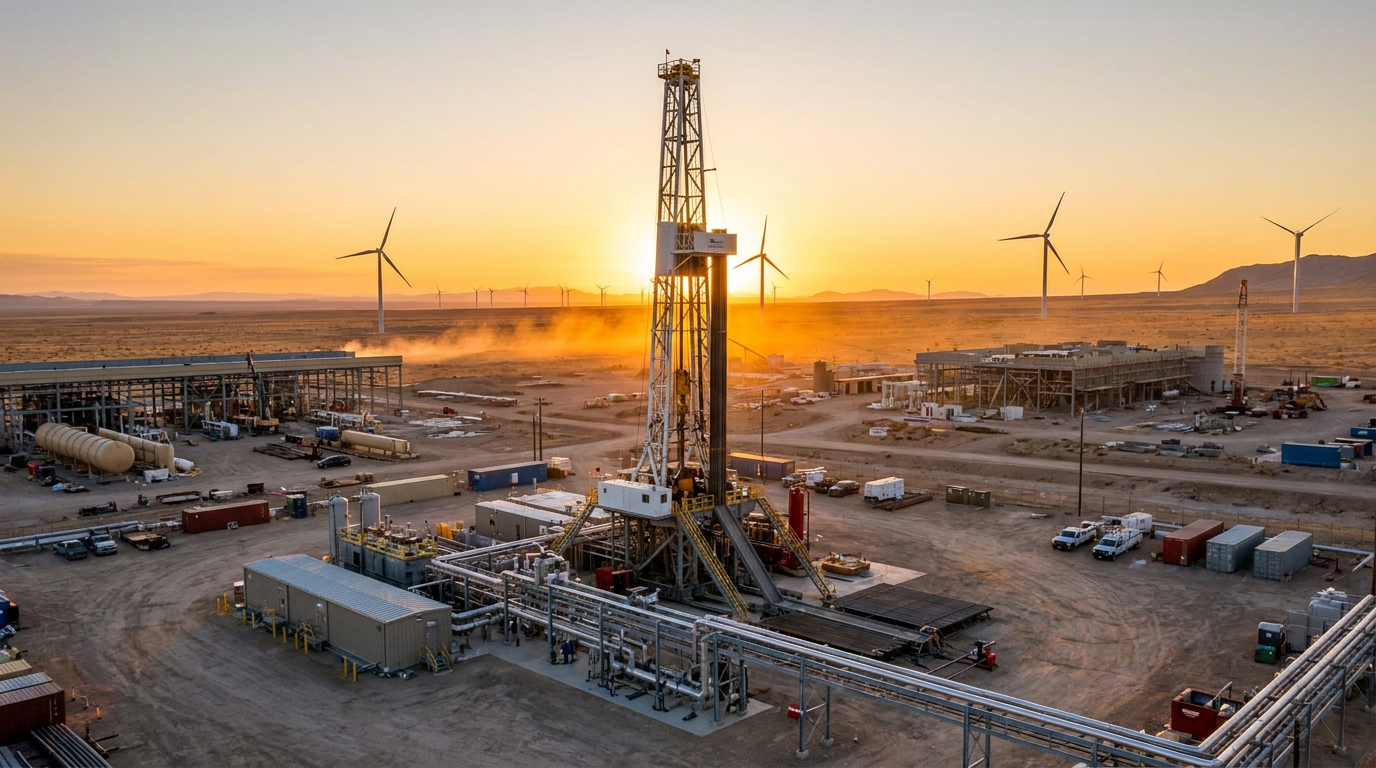
To overcome this barrier, EGS operators deploy massive rigs to drill injection wells three to ten kilometers deep into the hot basement rock, targeting zones where temperatures routinely exceed 150 degrees Celsius. Once the well is established, they pump cold water down the shaft at highly controlled, elevated pressures. This precise injection process, known as hydro-shearing or hydraulic stimulation, forces pre-existing, microscopic fractures in the deep rock to slowly open and expand, creating a vast, engineered network of permeable pathways where none previously existed.[1][3]
Unlike the hydraulic fracturing techniques used in the oil and gas industry—which rely on chemical proppants and brute force to blast open entirely new cracks in sedimentary rock—hydro-shearing relies on a more elegant mechanism. It primarily uses the thermal contraction that occurs when cold water hits superheated rock to gently slip and prop open natural fault lines. This creates a durable, highly permeable subterranean radiator without the extensive chemical footprint associated with fossil fuel extraction, ensuring the reservoir remains open for decades of continuous fluid circulation.[3][7]
Once the underground fracture network is successfully established, a second well—known as the production well—is drilled nearby to intersect the newly created pathways. In the operational phase, water is continuously pumped down the injection well and forced through the hot, fractured rock. As the fluid navigates this engineered maze, it absorbs massive amounts of thermal energy from the surrounding stone before being pushed up the production well and back to the surface at blistering temperatures, ready to be converted into usable grid electricity.[1][3]
At the surface, the superheated water or steam drives a massive turbine to generate electricity. In modern binary-cycle power plants, the geothermal fluid never actually touches the turbine blades. Instead, it passes through a heat exchanger, transferring its intense thermal energy to a secondary working fluid with a much lower boiling point. This secondary fluid vaporizes to spin the generator, while the cooled geothermal water is immediately re-injected back into the ground in a closed loop, ensuring a continuous, sustainable cycle with virtually zero greenhouse gas emissions.[1][7]

The recent commercial viability of EGS is largely the result of an ironic technological crossover. For decades, EGS was considered a costly, impractical science experiment that struggled to move beyond government-funded pilot programs. But in recent years, a new wave of geothermal startups began borrowing the advanced horizontal drilling and fiber-optic sensing technologies that were originally perfected by the shale oil and gas boom, repurposing fossil fuel innovations to unlock clean energy at a fraction of the historical cost.[3][5]
The recent commercial viability of EGS is largely the result of an ironic technological crossover.
Fervo Energy, currently the leading developer in the commercial EGS space, pioneered a unique horizontal well design that functions like a massive underground ladder. Instead of relying on traditional vertical wells that might easily miss the best fracture zones, Fervo drills horizontally for thousands of feet through the hot rock. They create two parallel horizontal wells connected by 'rungs' of engineered fractures, ensuring maximum surface area for the water to absorb heat and dramatically increasing the total power output of a single installation.[3][4]
The results of this technological crossover have officially moved EGS from academic theory to commercial reality. Fervo's 'Project Red' facility in Nevada recently completed over six hundred days of continuous, stable operation. The subsurface system performed flawlessly without requiring any chemical treatments or well remediations, delivering a steady gross power output of 2.1 megawatts and definitively proving that engineered geothermal reservoirs can maintain predictable, long-term performance without degrading over time, a milestone that has eluded previous generations of geothermal engineers.[4]
Now, the technology is scaling up dramatically across the American West. In Utah, the U.S. Department of Energy sponsors the Frontier Observatory for Research in Geothermal Energy, a dedicated field laboratory that provides open-source data to accelerate EGS techniques industry-wide. Just down the road from that federal site, Fervo is rapidly constructing the Cape Generating Station, which is slated to become the first large-scale commercial EGS power plant in the United States, signaling a massive shift in how grid operators view the resource.[1][2][3]
Scheduled to begin delivering reliable power to the grid in June 2026, the Cape Station project recently secured $421 million in non-recourse project financing, a massive vote of confidence from institutional lenders who now view the technology as bankable infrastructure. The plant will launch with an initial capacity of 53 megawatts and is fully contracted through long-term power purchase agreements to scale up to 500 megawatts by the end of the decade, enough to power hundreds of thousands of homes with continuous clean electricity.[2][6]

The commercial demand for this 24/7 clean power is proving to be voracious. Tech giants like Meta and Google, desperate to power their energy-hungry AI data centers without relying on fossil fuels or purchasing controversial carbon offsets, are eagerly signing massive power purchase agreements with EGS developers. Simultaneously, the Department of Defense has partnered with geothermal companies to build EGS plants capable of providing secure, off-grid power to military bases, ensuring operational resilience even if the broader civilian grid fails.[2][3]
Despite the rapid technical progress and influx of capital, EGS still faces significant hurdles before it can be deployed globally. The primary barrier remains cost. Drilling through ultra-hard, high-temperature crystalline rock is vastly more expensive and punishing on equipment than drilling through the softer sedimentary rock typical of oil and gas fields. While drilling times and costs have plummeted by nearly fifty percent in the last two years thanks to better drill bits and automation, EGS remains highly capital-intensive upfront.[1][2][3]
There are also complex environmental and geological considerations that developers must navigate. Because EGS involves injecting pressurized fluid into deep fault lines, it carries an inherent risk of induced seismicity—minor, human-caused earthquakes. While modern EGS projects use advanced fiber-optic seismic monitoring networks to carefully manage injection pressures and avoid triggering tremors that can be felt on the surface, the risk requires strict regulatory oversight, transparent community engagement, and careful site selection to ensure public safety and maintain the industry's social license to operate.[7]

Water consumption presents another logistical challenge for the burgeoning industry. Although the systems operate in a closed loop during their decades-long power generation phase, the initial stimulation process requires millions of gallons of water to create the underground fracture network. In the arid regions of the American West where the hottest rock is closest to the surface, securing water rights for the initial drilling phase can be politically and logistically complex, prompting some developers to explore using non-potable or recycled wastewater.[6][7]
Looking ahead, the geothermal industry is already eyeing the next frontier of subsurface engineering: Superhot Rock Geothermal. By drilling even deeper to reach rock temperatures exceeding 375 degrees Celsius, the injected water enters a 'supercritical' state where it behaves as both a liquid and a gas simultaneously. Supercritical fluid can carry exponentially more thermal energy to the surface, potentially multiplying the power output of a single well by a factor of ten and further driving down the levelized cost of energy.[1][3][5]
Other innovators in the space are exploring Advanced Geothermal Systems (AGS), which utilize entirely closed-loop pipes underground. These systems act like a massive subterranean radiator, circulating a proprietary working fluid through sealed pipes without ever needing to fracture the rock or inject water directly into the earth. While still in their infancy compared to EGS, these closed-loop technologies represent the outer edge of geothermal innovation and could eventually eliminate the risks of induced seismicity and water consumption entirely.[1][3]
For now, the successful commercialization of Enhanced Geothermal Systems marks a watershed moment for the global climate effort. By transforming the Earth's inexhaustible internal heat into a dispatchable, carbon-free utility that can be built almost anywhere, EGS provides the missing puzzle piece for a fully decarbonized grid. It proves that with enough engineering ingenuity, the energy transition's most reliable, long-lasting battery might just be the planet itself, quietly humming beneath our feet and ready to power the next century of human progress.[3][7]
How we got here
1970s
The U.S. government funds the first EGS experiments at Fenton Hill, New Mexico, proving the concept but struggling with commercial viability.
2014
The Department of Energy launches the FORGE initiative to accelerate EGS research and de-risk the technology.
2023
Fervo Energy successfully completes a 30-day well test at Project Red, proving the viability of horizontal drilling for geothermal.
March 2026
Fervo secures $421 million in project financing for the Cape Generating Station in Utah.
June 2026
The first 53-megawatt phase of the Cape Station is scheduled to begin delivering commercial power to the grid.
Viewpoints in depth
Geothermal Innovators
Viewing EGS as the ultimate clean energy breakthrough.
For developers and government researchers, EGS represents the holy grail of the energy transition. By successfully adapting the horizontal drilling and hydraulic fracturing techniques perfected by the fossil fuel industry, they argue that geothermal energy is no longer geographically constrained to volcanic regions. Proponents point to the flawless 600-day operational record of pilot projects like Fervo's Project Red as proof that engineered reservoirs are durable, predictable, and ready to scale nationwide.
Grid Operators & Energy Buyers
Desperate for reliable, 24/7 carbon-free baseload power.
Utility companies and massive corporate energy consumers—particularly tech giants building AI data centers—view EGS as an operational necessity. While solar and wind are cheap, their intermittency requires expensive battery storage or fossil-fuel backups. Energy buyers argue that paying a premium for early-stage EGS power is a strategic investment to secure continuous, weather-independent electricity that can stabilize the grid as overall demand skyrockets.
Environmental & Risk Analysts
Cautious about the subsurface risks and resource intensity of engineered geothermal.
While supportive of carbon-free energy, risk analysts and environmental consultants stress that EGS is not without localized impacts. The process of hydro-shearing fault lines carries an inherent risk of induced seismicity, requiring strict monitoring to prevent surface-level earthquakes. Furthermore, analysts point out that the initial stimulation of these wells requires millions of gallons of water—a significant hurdle in the arid Western states where the most accessible hot rock is located.
What we don't know
- How quickly drilling costs will decline as the industry moves from pilot projects to mass commercial deployment.
- Whether Superhot Rock Geothermal (>375°C) can be successfully commercialized using current drilling materials.
- How local communities will respond to the widespread deployment of EGS rigs and the associated seismic monitoring.
Key terms
- Enhanced Geothermal Systems (EGS)
- A technology that generates geothermal electricity by artificially creating fluid pathways in hot, dry rock.
- Hydro-shearing
- The process of injecting high-pressure water into rock to force pre-existing natural fractures to slip and remain open.
- Baseload Power
- The minimum level of electricity demand on a grid over a 24-hour period, requiring power plants that can run continuously without interruption.
- Supercritical Fluid
- A substance at a temperature and pressure where distinct liquid and gas phases do not exist, allowing it to transport massive amounts of thermal energy.
- Binary-Cycle Power Plant
- A geothermal plant where hot water heats a secondary fluid with a lower boiling point, which then vaporizes to spin a turbine.
Frequently asked
What is the difference between traditional geothermal and EGS?
Traditional geothermal requires naturally occurring hot water and permeable rock. EGS creates its own permeability by injecting water into hot, dry rock to open fractures.
Does EGS cause earthquakes?
The fluid injection process can cause 'induced seismicity' (micro-earthquakes). However, operators use advanced monitoring to keep these tremors far below the threshold that can be felt on the surface.
How much water does an EGS plant use?
While the initial fracturing process requires millions of gallons of water, the actual power generation operates in a closed loop, meaning the water is continuously recycled with minimal ongoing consumption.
Why is the oil and gas industry involved in geothermal?
EGS relies heavily on horizontal drilling and fiber-optic sensing technologies that were originally developed and perfected by the oil and gas industry during the shale fracking boom.
Sources
Source coverage
7 outlets
3 viewpoints surfaced







[1]U.S. Department of EnergyGeothermal Innovators
Enhanced Geothermal Systems
Read on U.S. Department of Energy →[2]U.S. Energy Information AdministrationGrid Operators & Energy Buyers
Enhanced geothermal systems could expand geothermal power generation
Read on U.S. Energy Information Administration →[3]Information Technology and Innovation FoundationGrid Operators & Energy Buyers
Advanced Geothermal Energy Is Widely Available, Clean, and Maybe Cheap Enough to Make a Big Impact
Read on Information Technology and Innovation Foundation →[4]Fervo EnergyGeothermal Innovators
Enhanced Geothermal Has Been Proven at Scale. Here's What Two Years of Production Data Show.
Read on Fervo Energy →[5]PatSnap InsightsGeothermal Innovators
Enhanced geothermal systems technology landscape 2026
Read on PatSnap Insights →[6]ERMEnvironmental & Risk Analysts
ERM supports Fervo Energy in securing financing for Enhanced Geothermal Systems project
Read on ERM →[7]Factlen Editorial TeamEnvironmental & Risk Analysts
Synthesis by Factlen editorial team
Read on Factlen Editorial Team →
Every angle. Every day.
Get guides stories with full source coverage and perspective breakdowns delivered to your inbox.