
How the Airbus A321XLR is Quietly Rewriting the Map of International Travel
By combining the economics of a small plane with the range of a widebody, the Airbus A321XLR is allowing airlines to bypass massive hubs and launch direct flights between secondary cities.
By Factlen Editorial Team
- Network Planners
- Airlines view the aircraft as a financial game-changer that drastically lowers the risk of launching new routes.
- Passenger Experience Advocates
- Frequent flyers caution that 11 hours in a narrowbody cabin presents significant comfort challenges.
- Aviation Industry Analysts
- Praise the aircraft's technological achievements, noting its 30% reduction in fuel burn per seat helps lower the aviation industry's carbon footprint.
- Flight Crews
- Cabin crews highlight the operational difficulties of delivering long-haul service in a short-haul workspace.
What's not represented
- · Connecting Hub Airports
- · Economy Class Passengers on 11-hour flights
Why this matters
The A321XLR allows airlines to bypass massive, congested hub airports and fly directly between smaller cities. For travelers, this means fewer layovers, shorter total travel times, and a wider array of nonstop international destinations.
Key points
- The Airbus A321XLR is a single-aisle aircraft capable of flying up to 11 hours, a range previously reserved for widebody jets.
- A custom Rear Center Tank allows the aircraft to carry 12,900 additional liters of fuel without sacrificing excessive cargo space.
- The jet consumes 30% less fuel per seat, allowing airlines to profitably operate direct routes between secondary cities.
- While economically efficient, passengers and crew have noted comfort trade-offs, including narrow aisles and limited lavatories on 10-hour flights.
For decades, the fundamental rules of international air travel were dictated entirely by the physical size of the airplane. If you wanted to fly across an ocean or between continents, you boarded a massive, twin-aisle widebody jet designed to carry hundreds of people. For travelers living in secondary cities, this reality meant that flying internationally almost always required taking a short domestic flight to a massive mega-hub—like London Heathrow, Frankfurt, or New York's JFK—before finally crossing the water. The hub-and-spoke model was an unavoidable reality of global geography.
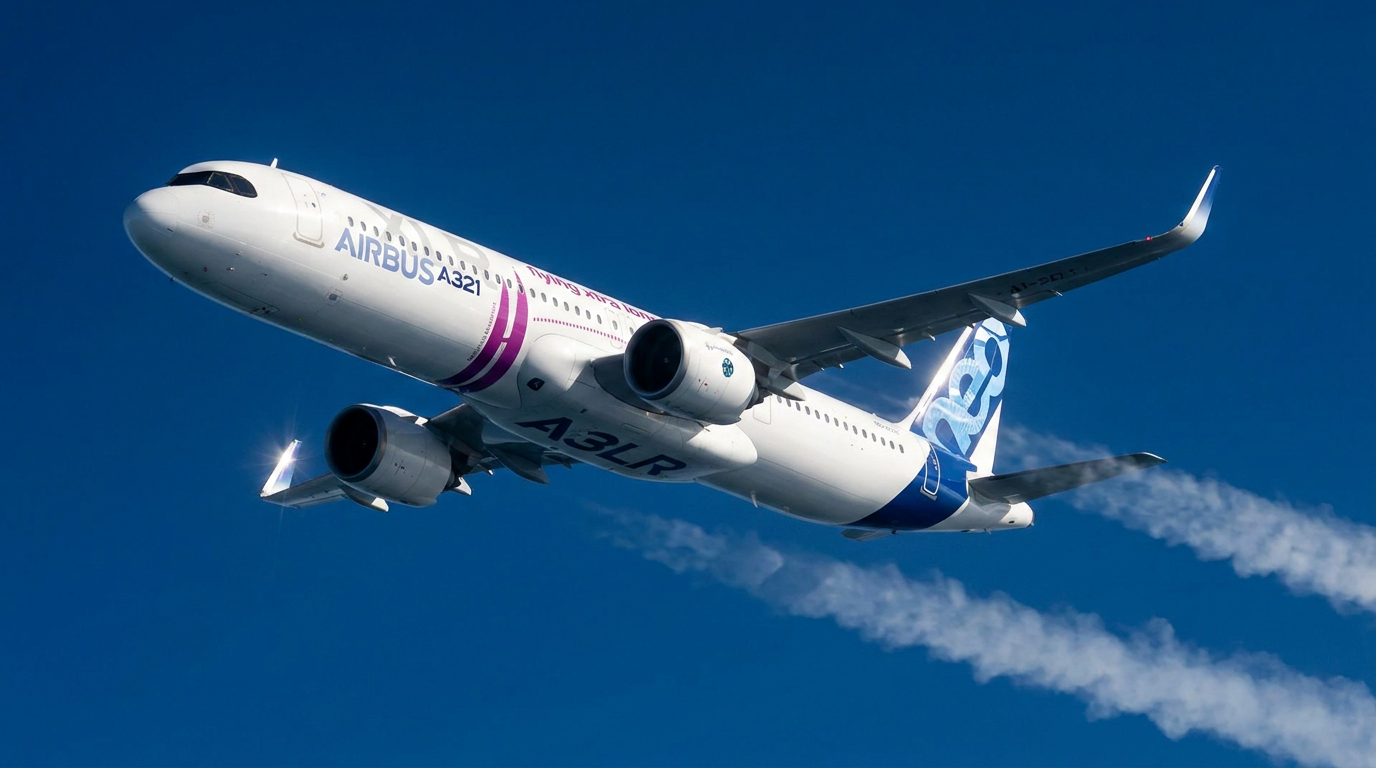
In 2026, a quiet revolution is actively rewriting that traditional travel map. The catalyst for this shift is not a giant new jumbo jet, but rather a surprisingly standard-looking aircraft that resembles the planes used for short domestic hops: the Airbus A321XLR. By combining the economics of a small plane with the endurance of a massive one, this new aircraft is fundamentally changing how airlines plan their networks and how passengers reach their final destinations. As hundreds of these jets enter service, they are quietly dismantling the necessity of the mega-hub.
Standing for 'Xtra Long Range,' the A321XLR is a single-aisle narrowbody plane that boasts the unprecedented endurance of a widebody jet. It is currently reshaping the aviation industry by allowing airlines to bypass congested hub airports entirely. Instead, carriers can now fly directly between smaller, secondary cities that could never previously generate enough passenger demand to support a nonstop international route on a 300-seat aircraft. This point-to-point model saves travelers hours of layover time. The aircraft represents a paradigm shift in route planning, prioritizing direct convenience over mass consolidation.[6]
The aircraft's core appeal lies in its extraordinary range for its size class. The A321XLR is certified to fly up to 4,700 nautical miles, keeping it in the air for up to 11 hours without needing to refuel. That is enough endurance to fly nonstop from Dallas to Oslo, or from Delhi to Athens. For a single-aisle plane, these numbers were considered physically impossible just a decade ago, representing a major leap forward in aerospace engineering and fuel efficiency.[6][7]

Airlines have eagerly embraced the new jet, and by early 2026, carriers across the globe are deploying the A321XLR on ambitious new routes. American Airlines, for example, has aggressively updated its schedules to utilize the aircraft for transatlantic hops. The carrier is launching direct flights from Philadelphia to Lisbon and Amsterdam, as well as initiating new service from New York's JFK to Edinburgh—routes that perfectly match the aircraft's 'long and thin' operational profile. These routes demonstrate the exact use case Airbus envisioned: connecting mid-sized markets directly across the ocean.[8]
The expansion is not limited to North America and Europe. In Asia, IndiGo is utilizing the aircraft to launch direct flights from New Delhi and Mumbai to Athens, creating a nonstop link that previously required a layover in the Middle East. Meanwhile, Iberia—the launch customer for the aircraft—is pushing deep into South America, flying the narrowbody from Madrid to Fortaleza, Brazil. These routes highlight the sheer versatility of the jet across vastly different global markets. Airlines are finding that the aircraft unlocks city pairs that were previously economically unviable.[1][2]
How exactly does a plane designed for short domestic hops manage to cross the Atlantic Ocean? The engineering secret lies hidden beneath the passenger cabin floor. To achieve this unprecedented range, Airbus designed a custom Rear Center Tank (RCT) that is built directly into the aircraft's fuselage, rather than being added as a removable component in the cargo hold. This structural integration is the defining innovation of the XLR program, separating it from previous iterations of the A320 family.[6]
This permanent, structurally integrated tank holds an astonishing 12,900 liters of additional aviation fuel. Crucially, because its shape is meticulously optimized to the exact contours of the lower fuselage, it takes up significantly less volumetric space than the bulky, removable auxiliary tanks used in previous long-range narrowbodies. This allows airlines to carry the fuel they need for an 11-hour flight without entirely sacrificing the cargo space required for passenger luggage and commercial freight. It is a masterclass in spatial efficiency, solving the primary limitation of single-aisle range.[6][7]

To safely accommodate the immense weight of this extra fuel, Airbus had to fundamentally reinforce the aircraft's belly fairings and upgrade its structural materials. These extensive modifications were necessary to satisfy stringent safety regulations imposed by global aviation authorities. The reinforced structure ensures that the massive fuel tank can withstand severe vertical impact loads and resist ground fires for several minutes in the highly unlikely event of an emergency landing or gear collapse. These safety benchmarks go beyond what was required for previous variants, ensuring the aircraft meets the rigorous standards of modern long-haul flight.[9]
To safely accommodate the immense weight of this extra fuel, Airbus had to fundamentally reinforce the aircraft's belly fairings and upgrade its structural materials.
For airline network planners and financial executives, the A321XLR is an absolute revelation. The aircraft's modern engines and aerodynamic improvements mean it consumes approximately 30 percent less fuel per seat than previous-generation jets. More importantly, the total cost to operate a flight from gate to gate is roughly 45 percent lower than that of a modern twin-aisle widebody aircraft. This drastic reduction in operating expenses fundamentally rewrites the financial math of international route planning. Airlines are no longer burdened by the massive overhead costs of flying half-empty jumbo jets.[6][9]
Traditionally, an airline needed to sell upwards of 250 to 300 seats just to break even on a long-haul widebody flight, which is why those flights were restricted to massive population centers. With the A321XLR, that financial break-even point drops dramatically. Airlines can now profitably operate these 'long and thin' routes with just 150 to 200 passengers. This lower risk profile encourages carriers to experiment with new destinations and maintain year-round service on routes that used to be strictly seasonal. The financial barrier to entry for international expansion has never been lower.[7]
This strategic advantage has left Boeing, Airbus's primary manufacturing rival, in a remarkably difficult position. Boeing currently has no direct competitor to the A321XLR in its product lineup. Its legacy Boeing 757, which pioneered narrowbody transatlantic flying, has been retired. Furthermore, engineering a variant of the 737 MAX to match the XLR's impressive range and runway performance would require a multi-billion dollar redesign that the American manufacturer has thus far opted not to pursue, effectively ceding this lucrative market segment to Airbus. Boeing initially bet that the ultra-long-range narrowbody would be a niche market, a calculation that the XLR's 500-plus orders have thoroughly disproven.[3]

However, the A321XLR's undeniable triumph of engineering and economics comes with a highly debated trade-off: the passenger experience. Spending 10 to 11 hours inside a single-aisle aircraft is a fundamentally different physical experience from flying on a spacious, twin-aisle widebody. As the aircraft enters widespread service, the reality of ultra-long-haul narrowbody flying is becoming apparent to everyday travelers, sparking a lively debate about comfort versus convenience. While the plane can technically fly for 11 hours, the human body's tolerance for confined spaces is being put to the test.
Aviation reviewers and frequent flyers have begun noting the inherent compromises of the design. A narrowbody cabin inherently features lower ceilings and more sharply curved sidewalls than a widebody jet. On a quick two-hour domestic hop, these dimensions are barely noticeable. But on an ultra-long sector stretching across an ocean, the lack of vertical and horizontal space can induce a sense of claustrophobia, making the cabin feel significantly smaller as the hours drag on. The physical constraints of the fuselage cannot be entirely masked by clever interior design.[7]
The single-aisle layout also creates unavoidable logistical bottlenecks during the flight. On a widebody aircraft, passengers can easily stretch their legs by walking a continuous 'loop' around the two aisles, and they can usually bypass service carts by simply crossing over to the other side. On the A321XLR, no such flexibility exists. If a flight attendant is in the aisle with a meal cart, the entire pathway is blocked, severely restricting passenger mobility for extended periods. This lack of movement is particularly noticeable on overnight flights when passengers are restless.[5][7]
Lavatory access has emerged as a specific and frequent pain point in early passenger reviews. With only one central aisle leading to a limited number of bathrooms—often concentrated entirely at the rear of the economy cabin—queues frequently spill out into the main walkway. This congestion blocks the aisle for other passengers and creates a disruptive environment for those seated in the aft rows, highlighting the challenges of managing 200 people in a single-tube environment. The ratio of passengers to lavatories is a stark reminder of the aircraft's short-haul DNA.[4][5]

Flight crews have also voiced their own operational frustrations with the new aircraft. Flight attendants report that the A321XLR's tiny galleys offer barely enough space to prepare and stage meals for a 10-hour flight. This lack of workspace complicates service flows and makes trash management difficult, especially in premium cabins where passengers expect the elaborate, multi-course meals traditionally served on long-haul widebody flights. The narrow aisles also make it difficult for crew members to pass one another while working. Delivering a flagship international service standard in a domestic-sized workspace requires significant adaptation.[4][5]
Airbus is acutely aware of these challenges and has attempted to mitigate the comfort issues by equipping the A321XLR with its modern 'Airspace' cabin interior. This upgraded design includes customizable LED lighting specifically programmed to reduce jet lag, significantly larger overhead bins to prevent luggage crowding and speed up boarding, and redesigned sidewall panels that carve out a few crucial extra inches of shoulder room at the window seats. These touches help elevate the space beyond a standard commuter jet. The goal is to trick the mind into feeling less confined, even if the physical dimensions remain strict.[6]
Ultimately, the long-term success of the A321XLR from a consumer standpoint relies on a simple, pragmatic compromise. Travelers are being asked to trade the physical spaciousness and mobility of a large widebody jet for the ultimate logistical convenience: a direct flight that saves them hours of layover time, eliminates the stress of missed connections, and gets them to their final destination faster. For many passengers, avoiding a chaotic mega-hub is well worth a slightly narrower cabin. The calculus of travel is shifting from onboard luxury to door-to-door efficiency.
As hundreds of these remarkable aircraft roll off the assembly line and integrate into global fleets throughout 2026, they are quietly democratizing long-haul travel. The A321XLR may not offer the sweeping romance or cavernous space of a traditional jumbo jet, but it is fundamentally reshaping the map of the world. By making direct international flights economically viable for dozens of new cities, this narrowbody marvel is making the globe significantly more connected, one secondary city at a time. It is a triumph of targeted engineering that will define the next decade of commercial aviation.
How we got here
2019
Airbus officially launches the A321XLR program to meet airline demand for a long-range narrowbody.
June 2022
The aircraft completes its maiden test flight in Hamburg, Germany.
July 2024
The A321XLR receives its type certification from the European Union Aviation Safety Agency (EASA).
November 2024
The aircraft enters commercial service with launch customer Iberia.
Early 2026
Major carriers including American Airlines and IndiGo rapidly expand their long-haul networks using the new jet.
Viewpoints in depth
Network Planners' view
Airlines view the A321XLR as a financial game-changer that drastically lowers the risk of launching new routes.
For airline executives and network planners, the A321XLR solves the fundamental problem of long-haul economics. By reducing trip costs by 45% compared to widebody aircraft, airlines no longer need to rely on massive hub-and-spoke consolidation to fill 300 seats. This allows them to capture premium point-to-point demand between secondary cities, maintaining profitability even on 'thin' routes or during off-peak seasons. They argue that the convenience of a direct flight is the ultimate passenger amenity, far outweighing the need for a wider cabin.
Passenger Experience Advocates' view
Frequent flyers and reviewers caution that 11 hours in a narrowbody cabin presents significant comfort challenges.
While acknowledging the convenience of direct routing, passenger advocates point out the physical realities of ultra-long-haul narrowbody flying. They note that the single-aisle layout severely restricts mobility, making it difficult to stretch or walk during a 10-hour flight. Furthermore, the limited number of lavatories often leads to aisle congestion, and the lower ceilings can induce claustrophobia. They argue that airlines must be careful not to pack these aircraft too densely, as the lack of widebody spaciousness could eventually alienate premium travelers.
Flight Crews' view
Cabin crews highlight the operational difficulties of delivering long-haul service in a short-haul workspace.
Flight attendants tasked with working the A321XLR have expressed frustration over the aircraft's spatial constraints. The primary issue is the galley size, which is significantly smaller than those found on widebody jets, making it incredibly difficult to stage and serve complex, multi-course meals for a 10-hour flight. Additionally, the single narrow aisle means that whenever a service cart is deployed, the entire cabin is blocked, complicating both passenger requests and crew movement. Crews argue that airlines need to rethink their service protocols specifically for this aircraft.
What we don't know
- How passengers will ultimately react to flying 10 to 11 hours in a narrowbody cabin once the novelty wears off.
- Whether Boeing will eventually develop a clean-sheet narrowbody aircraft to compete directly with the A321XLR's range.
- How airlines will adapt their inflight service protocols to manage the limited galley space on ultra-long sectors.
Key terms
- Narrowbody
- An aircraft with a single passenger aisle, typically used for short to medium-haul domestic flights.
- Widebody
- A larger aircraft with two passenger aisles, traditionally required for long-haul international flights.
- Rear Center Tank (RCT)
- A specialized fuel tank built directly into the fuselage of the A321XLR, providing the extra fuel needed for its extended range.
- Point-to-point transit
- A routing strategy where passengers fly directly to their final destination, bypassing large connecting hub airports.
- Hub-and-spoke model
- A traditional aviation network where passengers from smaller cities are routed through a massive central airport (hub) to catch their international flights.
Frequently asked
What is the Airbus A321XLR?
The Airbus A321XLR is a single-aisle, narrowbody commercial aircraft designed to fly ultra-long-haul routes that previously required much larger widebody planes.
How does the A321XLR fly so far?
It features a custom-built Rear Center Tank (RCT) integrated directly into the fuselage, holding an additional 12,900 liters of fuel without taking up excessive cargo space.
Is the A321XLR comfortable for long flights?
While it features modern lighting and larger overhead bins, passengers and crew have noted that the single-aisle layout can feel cramped on 10-hour flights, with limited space to walk and queues for lavatories.
What new routes is the A321XLR flying?
Airlines are using it for direct 'long and thin' routes between secondary cities, such as American Airlines flying from New York to Edinburgh, or IndiGo flying from Delhi to Athens.
Sources
Source coverage
9 outlets
4 viewpoints surfaced









[1]Simple FlyingNetwork Planners
The Ultra-Long Airbus A321XLR Routes Flying In 2026
Read on Simple Flying →[2]Aviation WeekNetwork Planners
New Airbus A321XLR routes are among the network highlights in January 2026
Read on Aviation Week →[3]CNNAviation Industry Analysts
How the Airbus A321XLR is changing the air map of the world
Read on CNN →[4]One Mile at a TimePassenger Experience Advocates
My experience flying the Airbus A321XLR
Read on One Mile at a Time →[5]AirInsightFlight Crews
Negative feedback on the Airbus A321XLR
Read on AirInsight →[6]AirbusAviation Industry Analysts
The Xtra Long-Range route opener
Read on Airbus →[7]Head for PointsPassenger Experience Advocates
The pros and cons of the long-haul single-aisle A321XLR
Read on Head for Points →[8]Engine CowlNetwork Planners
American Airlines schedules A321XLR flights to Amsterdam, Barcelona, & Lisbon
Read on Engine Cowl →[9]AeroReportAviation Industry Analysts
The Airbus A321XLR will revolutionize long-haul flights
Read on AeroReport →
Every angle. Every day.
Get travel stories with full source coverage and perspective breakdowns delivered to your inbox.