
Iran Announces Renewed Closure of Strait of Hormuz Ahead of Switzerland Peace Talks
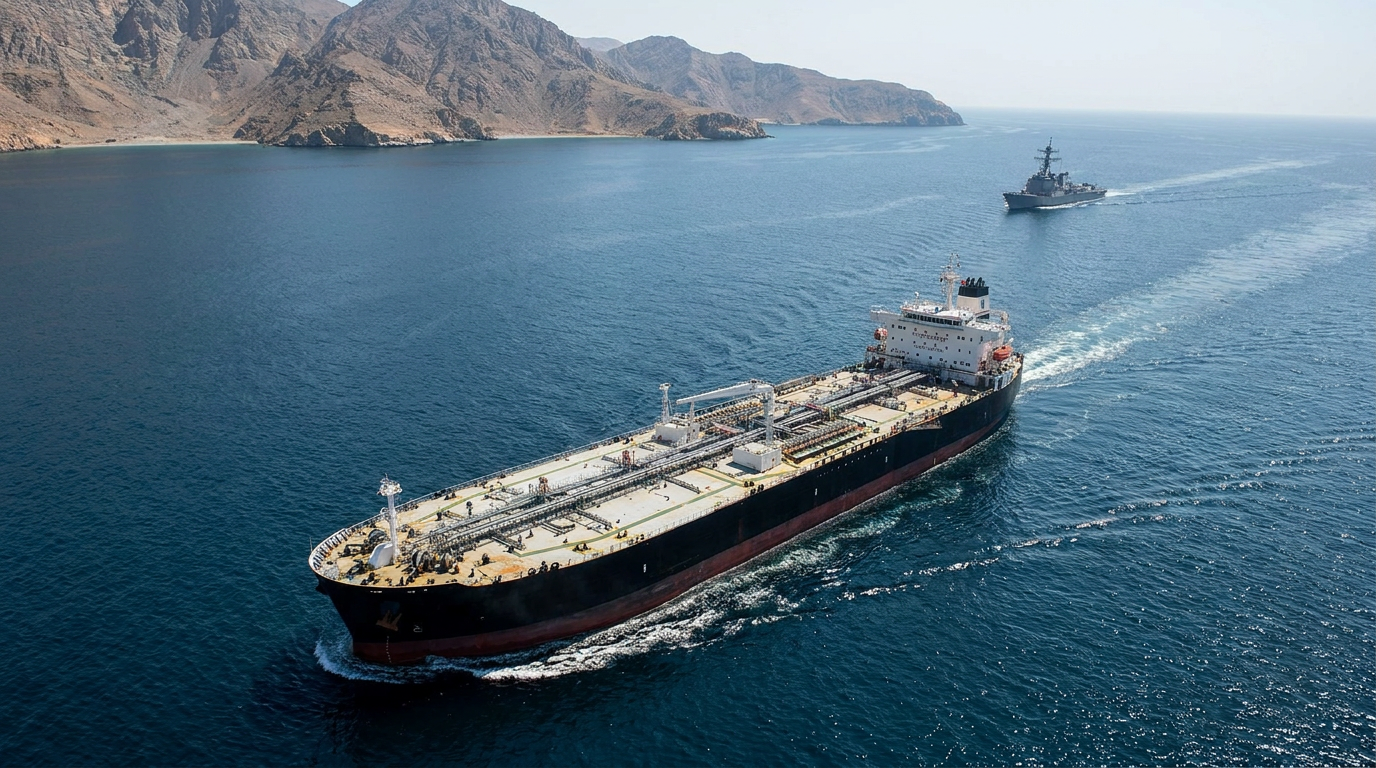
Iran's military declared the Strait of Hormuz closed to commercial traffic, citing Israeli operations in Lebanon as a breach of a recent ceasefire, even as US and Iranian delegations head to Switzerland for technical talks.
By Factlen Editorial Team
- Iranian Military & State
- Views the closure as a necessary deterrent to force compliance with the ceasefire in Lebanon.
- US Administration & Military
- Maintains that the strait is open and prioritizes the upcoming diplomatic talks.
- Global Energy Markets
- Highly sensitive to the physical security of the strait and the risk of supply disruptions.
- Regional Mediators
- Focused on keeping the diplomatic process alive and transitioning the framework into actionable steps.
What's not represented
- · Commercial shipping companies and maritime insurers
- · Lebanese civilians affected by the ongoing operations
Why this matters
The Strait of Hormuz is the world's most critical energy chokepoint, handling a fifth of global seaborne oil. Its renewed closure threatens to instantly reverse the recent drop in global energy prices and unravel a fragile peace framework before it can be fully implemented.
Key points
- Iran's military announced the renewed closure of the Strait of Hormuz to commercial traffic on Saturday.
- Tehran cited ongoing Israeli military operations in southern Lebanon as a breach of the US-Iran ceasefire agreement.
- US CENTCOM disputed the closure, stating that commercial traffic actually increased and US forces are ensuring navigation.
- Despite the military escalation, US and Iranian delegations are traveling to Switzerland for technical-level peace talks.
- The uncertainty threatens to reverse a recent drop in global oil prices that followed the signing of the peace framework.
Just days after a landmark peace agreement aimed at ending months of conflict, the global energy market faces renewed uncertainty. On Saturday, Iran's top military command announced it was once again closing the Strait of Hormuz to commercial vessel traffic.[1][3]
The announcement from Iran's Khatam al-Anbiya Central Headquarters cited a "blatant breach" of the newly signed Islamabad Memorandum of Understanding. Specifically, the Iranian military pointed to ongoing Israeli military operations in southern Lebanon, accusing the United States of bad faith and failing to enforce a comprehensive ceasefire.[3][5][6]
The Islamic Revolutionary Guard Corps (IRGC) Navy issued a stark warning to commercial ships, stating that any vessels approaching the strait would be putting their security at risk. The declaration threatened to unravel the fragile economic relief that had just begun to materialize following the diplomatic breakthrough earlier in the week.[3][4][6]
However, the reality on the water remains fiercely contested. The United States military immediately disputed Iran's claim, with US Central Command (CENTCOM) asserting that commercial shipping traffic through the waterway actually increased on Saturday. CENTCOM stated that US forces are actively operating in the area to ensure freedom of navigation and that Iran does not control the strait.[1][6]

US Vice President JD Vance echoed this assessment, stating in a Saturday interview that there was no evidence Iran had successfully closed the chokepoint. The conflicting narratives leave international shipping companies and insurers caught between Iranian military threats and American security assurances.[1][6][9]
Despite the escalating military rhetoric, both nations are proceeding with high-stakes diplomacy. Technical-level talks are scheduled to begin Sunday in Burgenstock, Switzerland, operating under the framework brokered by Pakistan and Qatar.[2][5]
The Iranian delegation, led by Parliament Speaker Mohammad Bagher Ghalibaf and Foreign Minister Abbas Araghchi, departed Tehran for Switzerland on Saturday. Vice President Vance confirmed he expects to join the negotiations shortly, alongside US negotiators Steve Witkoff and Jared Kushner, noting that the diplomatic protocols are currently being finalized.[7][9]
The Iranian delegation, led by Parliament Speaker Mohammad Bagher Ghalibaf and Foreign Minister Abbas Araghchi, departed Tehran for Switzerland on Saturday.
The talks are intended to operationalize the 14-point Islamabad Memorandum of Understanding, signed by US President Donald Trump and Iranian President Masoud Pezeshkian on June 17. The framework calls for the reopening of the Strait of Hormuz, the lifting of the US naval blockade on Iranian ports, and a 60-day process to address broader disputes.[4][5]
The stakes for the global economy are immense. The Strait of Hormuz is the world's most critical energy chokepoint; prior to the conflict that erupted in late February, roughly 20% of the world's seaborne oil passed through its narrow waters.[4][8]

The initial blockade erased millions of barrels a day from the market, creating a historic energy shock. When the MOU was announced, Brent crude prices tumbled rapidly, falling below $80 a barrel by Friday as traders priced in the return of Gulf oil exports and the normalization of maritime logistics.[4][8]
The core complication threatening this economic relief is the sequencing of the ceasefire. The MOU reportedly requires a cessation of hostilities on all fronts, which Iran interprets as including Lebanon. However, Israel—which is not a direct signatory to the US-Iran pact—has maintained its operations against Hezbollah.[3][9]
The Israeli military reported the deaths of several soldiers in southern Lebanon in recent days, while Lebanese authorities reported dozens of casualties from Israeli airstrikes. Iran views Israel's failure to withdraw from Lebanese territory as a direct violation of the first clause of the MOU, prompting the retaliatory closure order.[3][5][9]
Yet, internal Iranian communications suggest the military escalation is tightly coordinated with the diplomatic track. A leaked directive from Iran's Supreme National Security Council instructed domestic media to frame the Hormuz closure not as a rogue military action, but as direct "support for diplomacy."[7]

The directive explicitly described a "single strategy" that combines military deterrence and leverage with negotiation. By threatening the global oil supply, Tehran appears to be applying maximum pressure on the United States to rein in Israeli operations in Lebanon before the technical talks begin in earnest.[5][7]
As mediators from Pakistan and Qatar prepare to host the delegations in Switzerland, the immediate focus will be preventing the framework agreement from collapsing before its technical details can be drafted. The durability of the peace pact now hinges on whether the US can navigate the intertwined conflicts of the Middle East while keeping the world's most vital shipping lane open.[1][2][5]
How we got here
Late Feb 2026
Conflict erupts, leading to severe restrictions on maritime traffic through the Strait of Hormuz.
June 17, 2026
The US and Iran sign the 14-point Islamabad Memorandum of Understanding to end the war.
June 19, 2026
Brent crude oil prices fall below $80 a barrel as markets price in the reopening of the strait.
June 20, 2026
Iran announces the renewed closure of the strait, citing ongoing Israeli military operations in Lebanon.
Viewpoints in depth
Iran's "Single Strategy"
Tehran views military leverage and diplomacy as two sides of the same coin.
Internal directives reveal that Iran's leadership does not view the military's closure of the strait and the diplomats' trip to Switzerland as contradictory. Instead, it is a coordinated "single strategy." By threatening the global oil supply—the very crisis the US sought to solve with the MOU—Tehran aims to generate maximum leverage. The goal is to force Washington to pressure Israel into halting its operations in southern Lebanon, ensuring the ceasefire applies to all fronts as Iran interprets the agreement.
The US Freedom of Navigation Stance
Washington is determined to project control over the waterway while pursuing talks.
The US military's immediate pushback against Iran's closure announcement serves both an economic and a strategic purpose. By asserting that traffic is actually increasing and that US forces are actively patrolling the area, CENTCOM aims to reassure global markets and prevent a spike in oil prices and insurance premiums. Strategically, the US is refusing to let Iran dictate the facts on the water, maintaining its posture that the strait is an international waterway that Tehran does not own or control.
The Lebanon Complication
Israel's ongoing operations highlight the limits of the bilateral US-Iran pact.
The crisis exposes a structural flaw in the Islamabad MOU: it attempts to settle a regional conflict through a bilateral agreement. Israel is not a direct signatory to the pact between Washington and Tehran. From Israel's perspective, its operations against Hezbollah in southern Lebanon are a separate, necessary security imperative. However, because Hezbollah is an Iranian proxy, Tehran views any attack on the group as a violation of the broader ceasefire, creating a dangerous loophole that threatens the entire peace framework.
What we don't know
- Whether commercial shipping companies will heed Iran's warning or trust US security assurances to continue transiting the strait.
- How the US plans to address Iran's demands regarding Israeli operations in Lebanon during the Switzerland talks.
- If the technical talks in Burgenstock will proceed as scheduled or face delays due to the military escalation.
Key terms
- Strait of Hormuz
- A narrow maritime chokepoint between the Persian Gulf and the Gulf of Oman, critical for global energy transport.
- Islamabad Memorandum of Understanding
- A 14-point framework agreement signed by the US and Iran in June 2026 to end their conflict.
- Khatam al-Anbiya Central Headquarters
- The highest-level joint military command of the Iranian Armed Forces, responsible for operational coordination.
- CENTCOM
- United States Central Command, the unified military command responsible for US interests in the Middle East.
Frequently asked
Why did Iran announce the closure of the Strait of Hormuz again?
Iran claims the US and Israel violated the recent ceasefire agreement by continuing military operations in southern Lebanon.
Is the Strait of Hormuz actually closed to shipping?
The situation is disputed. Iran claims it is closed, while US CENTCOM states that commercial traffic is flowing and actively protected by US forces.
What is the Islamabad Memorandum of Understanding?
It is a 14-point framework agreement signed by the US and Iran to end months of conflict and reopen maritime trade.
What is happening in Switzerland?
Technical-level talks mediated by Pakistan and Qatar are scheduled to begin Sunday to hammer out the details of the peace agreement.
Sources
Source coverage
9 outlets
4 viewpoints surfaced








[1]The New York TimesUS Administration & Military
New Strait of Hormuz Closure Announcement Threatens the Slow Uptick in Traffic
Read on The New York Times →[2]Al JazeeraRegional Mediators
US-Iran talks to kick off Sunday in Switzerland, says Pakistan
Read on Al Jazeera →[3]CBS NewsIranian Military & State
Iran recloses Strait of Hormuz over alleged violations in Lebanon: Iranian state TV
Read on CBS News →[4]The GuardianGlobal Energy Markets
Donald Trump posts 'Let the oil flow' as US-Iran peace deal sparks immediate drop for Brent crude
Read on The Guardian →[5]Arab NewsIranian Military & State
Pakistan says US-Iran talks to begin in Switzerland as Tehran reimposes Hormuz blockade
Read on Arab News →[6]The Jerusalem PostIranian Military & State
Iran claims Strait of Hormuz closed in retaliation for US, Israel breaches of MoU - report
Read on The Jerusalem Post →[7]Iran InternationalIranian Military & State
EXCLUSIVE: Iran media told to frame Hormuz closure as support for diplomacy
Read on Iran International →[8]ICISGlobal Energy Markets
Oil stays below $80/barrel as US-Iran deal takes effect
Read on ICIS →[9]The HinduUS Administration & Military
U.S. Vice President J.D. Vance says peace talks with Iran are on
Read on The Hindu →
Every angle. Every day.
Get news politics stories with full source coverage and perspective breakdowns delivered to your inbox.