
Iran Announces Strait of Hormuz Closure, Testing Fragile U.S. Ceasefire
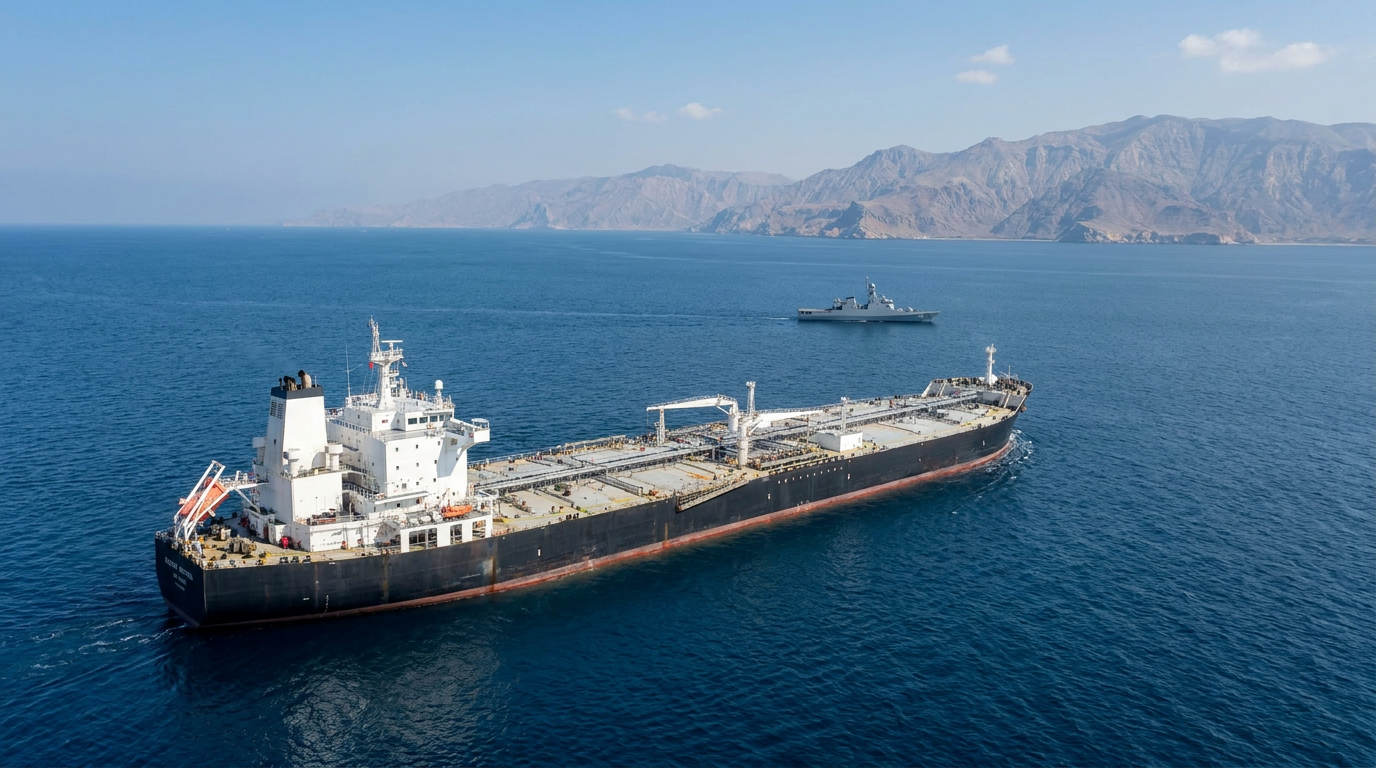
Iran's military declared it is closing the vital Strait of Hormuz to commercial traffic, citing Israeli operations in Lebanon as a violation of a recent U.S.-Iran ceasefire. The U.S. military denied the closure, stating that millions of barrels of oil continue to safely transit the waterway.
By Factlen Editorial Team
- Iranian Military Command
- Argues the U.S. and Israel violated the ceasefire, justifying the strait's closure.
- U.S. Central Command
- Maintains the waterway is open and denies Iran's capability to close it.
- Global Energy Markets
- Focused on the supply bottleneck and the risk of trapped oil sending prices soaring.
What's not represented
- · Commercial Shipping Lines
- · Omani Government
Why this matters
Roughly 20 percent of the world's seaborne crude oil passes through the Strait of Hormuz. If the waterway closes, the resulting supply bottleneck will cause a severe spike in global energy prices, directly increasing the cost of gasoline, transport, and manufactured goods for consumers worldwide.
Key points
- Iran's military announced it is closing the Strait of Hormuz, citing Israeli strikes in Lebanon as a violation of a recent U.S.-Iran ceasefire.
- The U.S. military denied the closure, reporting that 55 merchant ships and 17 million barrels of oil safely transited the waterway on Saturday.
- The dispute threatens a fragile 14-point memorandum of understanding designed to end months of naval warfare and blockade.
- Global energy markets are closely watching the standoff, as a renewed closure could trap 85 million barrels of stranded Gulf oil.
- Diplomatic talks mediated by Pakistan are scheduled to continue in Switzerland to salvage the agreement.
Just days after a landmark diplomatic agreement promised to end months of devastating naval warfare in the Persian Gulf, the world's most critical energy artery is once again the center of a high-stakes standoff. On Saturday, Iran's military command announced it was closing the Strait of Hormuz to all commercial vessel traffic, plunging global energy markets back into uncertainty. The abrupt reversal threatens to shatter a fragile 14-point memorandum of understanding signed earlier in the week by U.S. President Donald Trump and Iranian President Masoud Pezeshkian. That agreement was meticulously designed to halt the 2026 U.S.-Iran war, lift a crippling American naval blockade on Iranian ports, and restore the uninterrupted flow of global energy supplies through the narrow maritime corridor.[2][3][6][7]
However, the facts on the water remain fiercely contested between the two heavily armed powers. While Iran's Islamic Revolutionary Guard Corps broadcast severe warnings that commercial ships would put their security at immediate risk by approaching the strait, the United States military flatly denied that the waterway had been shut down. U.S. Central Command reported that 55 merchant ships, carrying approximately 17 million barrels of oil, safely transited the corridor on Saturday without incident. "Iran does not control the Strait of Hormuz," Navy Captain Tim Hawkins stated in a public address, adding that U.S. naval forces remain "present and vigilant" to ensure that international traffic continues to flow unimpeded despite the hostile rhetoric emanating from Tehran.[1][2][4][7]
The diplomatic rupture stems from the complex, multi-front nature of the Middle Eastern conflict and the interconnected alliances that define it. Iran justified its sudden closure order by pointing to ongoing Israeli military operations against Hezbollah militants in southern Lebanon. According to statements released by Iran's Khatam al-Anbiya Central Headquarters, Israel's refusal to withdraw from Lebanese territory constitutes a "clear breach" of the memorandum's first clause. That specific provision mandated an immediate and permanent termination of military operations on all fronts, explicitly including the Lebanese border. Because the United States brokered the deal, Tehran views the continued Israeli airstrikes as a fundamental American failure to enforce the terms of the ceasefire, prompting the retaliatory closure of the strait.[1][2][3][4]

Israel, which is not a direct signatory to the U.S.-Iran memorandum of understanding, has maintained a hardline stance, declaring that it will not pull its forces out of the southern Lebanese territories it currently occupies. Over the past 48 hours, the Israeli military has continued to launch devastating airstrikes in the area, targeting Hezbollah infrastructure in a campaign that has left dozens dead. This parallel conflict has created an impossible diplomatic contradiction for Washington: the U.S.-Iran agreement hinges on a comprehensive regional ceasefire, but the White House has struggled to compel its closest regional ally to halt its operations, leaving the broader peace framework highly vulnerable to collapse.[2][3]
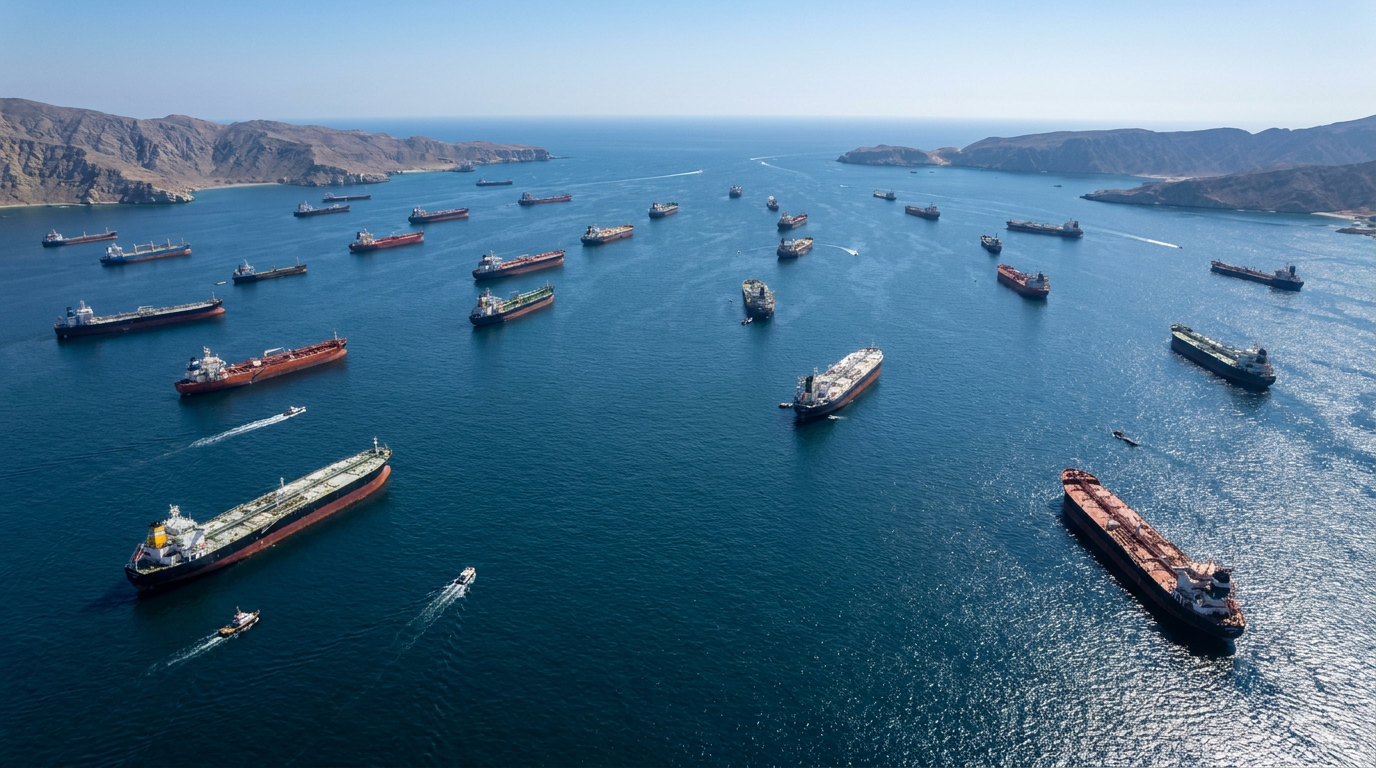
The economic stakes of this geopolitical brinkmanship are difficult to overstate. Before the outbreak of the war in early 2026, roughly 20 percent of the world's seaborne crude oil and 20 percent of its liquefied natural gas passed through the Strait of Hormuz. The waterway, which measures just 21 miles wide at its narrowest point, is the only sea passage from the oil-rich Persian Gulf to the open ocean. When Iran initially blocked the strait in February and March—laying naval mines and aggressively boarding commercial vessels—tanker traffic dropped to near zero. That initial closure stranded millions of barrels of oil, sent energy markets into a panic, and forced shipping companies to completely reroute their global supply chains.[5][6]
The economic stakes of this geopolitical brinkmanship are difficult to overstate.
The signing of the memorandum on June 17 had provided immediate, albeit brief, relief to those battered energy markets. As the first Saudi-flagged tankers cautiously resumed transit through the cleared channels, Brent crude prices fell to $78.31 a barrel, reversing a massive price spike that had defined the spring. Energy analysts estimated that the reopening would allow more than 85 million barrels of stranded Gulf oil to finally re-enter the global market. Middle Eastern producers had already begun preparing to restore their export volumes, with the Kuwait Petroleum Corporation notably lifting the "force majeure" notices it had issued during the height of the conflict to protect itself from liability over undelivered shipments.[5]

Now, commodity traders are once again delaying directional bets, waiting anxiously for hard evidence of whether tanker traffic can actually normalize under the shadow of renewed Iranian threats. Even if the U.S. Navy successfully escorts vessels through the corridor, the sheer risk of collateral damage or soaring maritime insurance premiums could deter commercial shipping lines from making the journey. The standoff highlights the immense pressure on the diplomatic backchannels attempting to hold the ceasefire together. Pakistan, which served as the primary mediator for the initial agreement, announced that emergency technical talks between U.S. and Iranian officials are scheduled to resume in Geneva, Switzerland, on Sunday in a desperate bid to salvage the pact.[1][3][5]
U.S. Vice President J.D. Vance, who is expected to travel to Switzerland to participate in the high-stakes negotiations, publicly dismissed Iran's closure announcement as mere political posturing rather than a tactical reality. "We are not seeing any evidence the Iranians are still closing down the Strait of Hormuz," Vance said in a Saturday morning television interview, pointing to the millions of barrels that successfully exited the gulf the day prior. However, if the diplomatic framework collapses entirely in Geneva, the region risks returning to the punishing economic attrition of the spring. Between April and June, the U.S. enforced a strict naval blockade on Iranian ports that the Defense Department estimated cost Tehran up to $500 million daily in lost oil revenue.[1][3][6]

The mechanics of enforcing or breaking a blockade in the Strait of Hormuz rely on a delicate balance of asymmetric warfare. During the height of the conflict earlier this year, Iran did not need to physically wall off the strait; instead, the IRGC utilized fast-attack speedboats, anti-ship cruise missiles stationed along the rugged coastline, and naval mines to create an uninsurable risk environment. In response, the U.S. Navy's Operation Project Freedom relied on advanced guided-missile destroyers and continuous aerial surveillance to escort massive, slow-moving commercial tankers through the danger zone. This cat-and-mouse dynamic means that even a single boarding incident or warning shot in the coming days could instantly freeze commercial traffic, regardless of whether the U.S. military declares the waterway technically open.[6]
For now, the Strait of Hormuz exists in a perilous state of geopolitical superposition: officially closed according to the nation that borders its northern coast, and officially open according to the superpower heavily patrolling its waters. Commercial captains navigating the 21-mile choke point must weigh the assurances of U.S. Central Command against the explicit threats broadcast by the Islamic Revolutionary Guard Corps. The coming days of maritime transit data, combined with the outcome of the emergency diplomatic talks in Geneva, will ultimately determine which reality takes hold—and whether the global economy is headed for a renewed energy crisis or a sustained, if uneasy, peace.[1][2][4]

How we got here
Feb-Mar 2026
The U.S. and Israel launch military operations against Iran; Iran blocks the Strait of Hormuz in retaliation.
April 13, 2026
The U.S. imposes a naval blockade on Iranian ports, costing Iran an estimated $500 million daily.
June 17, 2026
U.S. and Iranian presidents sign a 14-point memorandum of understanding to end the war.
June 18-19, 2026
Oil tankers cautiously resume transit; Brent crude prices drop as Kuwait lifts force majeure notices.
June 20, 2026
Iran announces it is closing the strait again due to Israeli strikes in Lebanon, a claim the U.S. military denies.
Viewpoints in depth
Iranian Military Command
Views the ongoing Israeli operations in Lebanon as a direct violation of the ceasefire, justifying the strait's closure.
Iran's Khatam al-Anbiya Central Headquarters argues that the 14-point memorandum of understanding explicitly required a halt to military operations on all fronts, including Lebanon. Because Israeli forces have not withdrawn from southern Lebanon and continue to launch airstrikes against Hezbollah, Tehran views the United States as acting in bad faith. From this perspective, closing the strait is a proportional 'first step' to enforce the terms of the agreement, with the IRGC warning that any commercial vessel attempting to transit is risking its own security.
U.S. Central Command
Maintains that the waterway remains open to international shipping and denies Iran's authority to close it.
The U.S. military apparatus, backed by the White House, insists that the Strait of Hormuz is functioning normally. CENTCOM points to the successful transit of 55 merchant ships and 17 million barrels of oil as empirical proof that Iran's closure announcement is merely rhetorical posturing. U.S. officials argue that Iran does not own or control the international transit corridors, and emphasize that American naval forces remain 'present and vigilant' to guarantee freedom of navigation and deter any physical attempts by the IRGC to board or mine commercial vessels.
Global Energy Markets
Focused entirely on the severe supply bottleneck and the risk of trapped oil sending prices soaring.
Commodity traders and energy analysts view the political standoff through the lens of supply risk. The initial signing of the MoU provided massive relief, dropping Brent crude prices as markets anticipated the return of 85 million stranded barrels. However, the renewed threats have frozen the market's optimism. Analysts warn that even if the U.S. Navy keeps the physical lanes open, the mere threat of IRGC intervention could cause maritime insurance premiums to skyrocket, effectively creating a 'paper blockade' that deters shipping companies from risking their fleets.
What we don't know
- Whether commercial shipping companies will continue to send tankers through the strait despite the IRGC's threats.
- How the United States plans to resolve the contradiction between the U.S.-Iran ceasefire and Israel's ongoing operations in Lebanon.
- If the upcoming diplomatic talks in Geneva will result in a formal enforcement mechanism for the 14-point memorandum.
Key terms
- Strait of Hormuz
- A narrow strategic waterway between the Persian Gulf and the Gulf of Oman, serving as the world's most important oil transit chokepoint.
- 14-Point Memorandum of Understanding
- The June 2026 preliminary ceasefire agreement between the U.S. and Iran aimed at ending hostilities and reopening maritime trade.
- U.S. Central Command (CENTCOM)
- The unified combatant command of the U.S. military responsible for operations in the Middle East, including the Persian Gulf.
- Force Majeure
- A legal clause invoked by oil producers during the blockade to free them from liability when extraordinary events prevent them from fulfilling contracts.
Frequently asked
Is the Strait of Hormuz currently open or closed?
The situation is highly contested. Iran's military claims it has closed the strait to commercial traffic, while the U.S. military states the waterway remains open and that 55 ships safely transited on Saturday.
Why did Iran announce the closure?
Iran cited ongoing Israeli military operations in southern Lebanon, arguing that they violate the first clause of the U.S.-Iran ceasefire agreement, which required a halt to hostilities on all fronts.
How does this affect global oil prices?
The initial reopening of the strait pushed Brent crude prices down to around $78 per barrel. However, a renewed closure threatens to trap 85 million barrels of stranded oil and could cause prices to spike again.
Sources
Source coverage
7 outlets
3 viewpoints surfaced







[1]The Washington PostU.S. Central Command
Iran says it is closing Strait of Hormuz, testing fragile agreement with U.S.
Read on The Washington Post →[2]CBS NewsIranian Military Command
Iran recloses Strait of Hormuz over alleged violations in Lebanon: Iranian state TV
Read on CBS News →[3]The HinduIranian Military Command
Iran's military command announces Strait of Hormuz closure over ceasefire violations by U.S., Israel
Read on The Hindu →[4]Iran InternationalIranian Military Command
Iran says it will close Strait of Hormuz to shipping
Read on Iran International →[5]Crux InvestorGlobal Energy Markets
Stranded Gulf Barrels Re-Enter Global Oil Markets
Read on Crux Investor →[6]WikipediaGlobal Energy Markets
2026 Strait of Hormuz crisis
Read on Wikipedia →[7]NYTU.S. Central Command
New Strait of Hormuz Closure Announcement Threatens the Slow Uptick in Traffic
Read on NYT →
Every angle. Every day.
Get news politics stories with full source coverage and perspective breakdowns delivered to your inbox.