
Sodium-Ion Batteries Reach Mass Production, Reshaping the Affordable EV Market
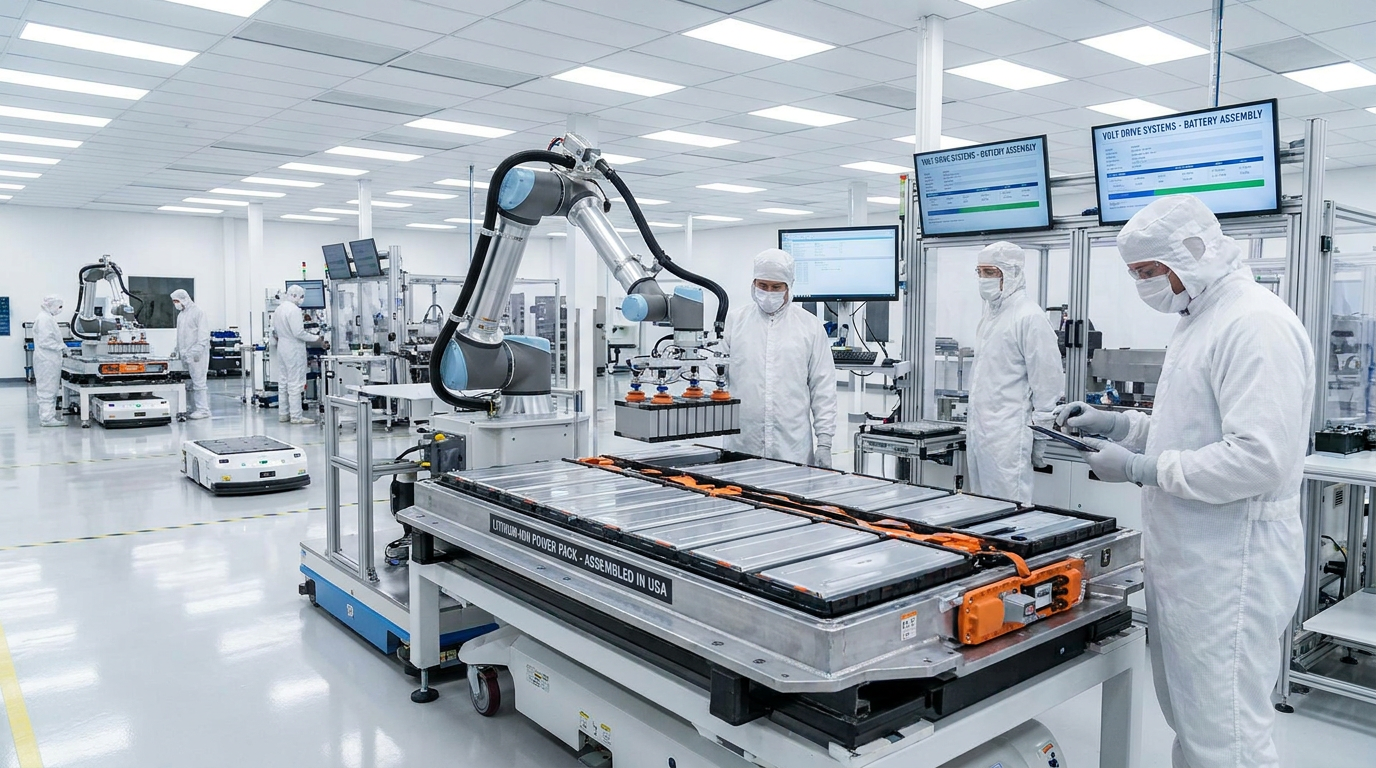
After years of laboratory development, sodium-ion batteries are officially powering mass-market electric vehicles in 2026. The technology trades some energy density for massive gains in cold-weather performance, safety, and material abundance.
By Factlen Editorial Team
- Battery Manufacturers
- Focus on scaling production, lowering costs, and bypassing lithium supply bottlenecks.
- Cold-Climate Consumers
- Value the massive winter performance gains and elimination of cold-weather charging anxiety.
- Supply Chain Analysts
- Emphasize the geopolitical security of using abundant sea salt over concentrated lithium and cobalt.
- Performance EV Advocates
- Note that the lower energy density makes sodium unsuitable for heavy, long-range luxury vehicles.
What's not represented
- · Lithium Mining Industry
- · Automotive Dealership Service Centers
Why this matters
Lithium-ion batteries have made EVs possible, but their reliance on scarce, expensive minerals has kept vehicle prices high and winter performance low. Sodium-ion technology democratizes electric mobility by using one of the earth's most abundant elements, paving the way for cheaper, cold-resistant cars.
Key points
- Sodium-ion batteries have officially entered the mass market in 2026, debuting in the Changan Nevo A06 electric vehicle.
- The technology uses abundant, cheap sodium extracted from sea salt, bypassing the need for scarce lithium and cobalt.
- Sodium-ion cells retain up to 90% of their capacity at -40°C, solving the severe winter range loss associated with lithium batteries.
- Due to lower energy density, sodium-ion will not replace lithium in luxury EVs, but will dominate city cars and fleet vehicles.
- Chinese manufacturers currently hold a near-monopoly on volume production, following the collapse of several Western startups.
The electric vehicle industry is undergoing a quiet but profound chemical shift in 2026. For over a decade, the lithium-ion battery has been the undisputed king of portable energy, powering everything from smartphones to long-range luxury cars. But lithium's dominance has come with steep costs: volatile commodity prices, concentrated supply chains, and notorious performance drops in freezing weather. Now, a long-anticipated alternative has finally crossed the threshold from laboratory prototype to mass-market reality: the sodium-ion battery.[3][4]
In mid-2026, the automotive world witnessed a major milestone with the rollout of the Changan Nevo A06, the world's first mass-produced passenger EV powered entirely by a sodium-ion pack. Built in partnership with CATL, the world's largest battery manufacturer, the vehicle represents the vanguard of a new "dual-chemistry" era. Rather than attempting to dethrone lithium entirely, automakers are deploying sodium-ion technology to solve specific, stubborn problems in the EV landscape.[1][5]
To understand why this shift matters, one must look at the mechanism inside the cell. A sodium-ion battery operates on the exact same fundamental principle as a lithium-ion battery. During charging and discharging, ions shuttle back and forth between a positive cathode and a negative anode, traveling through a liquid electrolyte. The critical difference is the ion itself: sodium instead of lithium.[6][7]
That single elemental swap triggers a cascade of engineering changes. Because sodium ions are roughly 25 percent larger and three times heavier than lithium ions, they cannot easily slip into the standard graphite anodes used in today's EVs. Instead, battery engineers had to develop anodes made of "hard carbon," a more disordered carbon structure that can accommodate the bulkier sodium ions. Cathodes, meanwhile, have been re-engineered using layered oxides or Prussian blue analogues.[3][6][7]

Overcoming these chemical hurdles has unlocked massive economic advantages. Sodium is the sixth most abundant element in the Earth's crust, roughly 1,000 times more plentiful than lithium. It can be extracted cheaply from common sea salt, entirely bypassing the environmentally destructive and geopolitically fraught mining processes required for lithium, cobalt, and nickel. For automakers, this translates to a dramatic reduction in raw material costs and a highly resilient supply chain.[3][4][6]
But the most immediate, consumer-facing breakthrough of sodium-ion technology is its extraordinary resilience in extreme cold. Traditional lithium-ion batteries are notoriously sluggish in winter; freezing temperatures increase the viscosity of their electrolytes, slowing ion movement, slashing driving range, and severely throttling fast-charging speeds. EV owners in northern climates are intimately familiar with the frustrating routine of waiting for a battery pack to warm up before it can accept a high-speed charge.[3][6]
Sodium-ion cells rewrite the winter playbook. Their specific electrolyte formulations and the inherent kinetic properties of sodium allow the ions to move freely even when the thermometer plummets. According to CATL's engineering data, its new "Naxtra" sodium-ion cells retain approximately 90 percent of their usable capacity at a staggering minus 40 degrees Celsius.[1][5][6]
Their specific electrolyte formulations and the inherent kinetic properties of sodium allow the ions to move freely even when the thermometer plummets.
Furthermore, the discharge power of a sodium-ion battery at minus 30 degrees Celsius is nearly three times higher than that of an equivalent lithium iron phosphate (LFP) cell. For drivers in Canada, the Nordics, and Eastern Europe, this means an EV that starts instantly, delivers full power, and charges rapidly even when left outside in a blizzard. Industry analysts note that this cold-weather capability is the technology's true "killer app," opening up geographical markets where EV adoption has historically stalled due to winter range anxiety.[3][4][5]

Safety and durability offer additional tailwinds. Sodium-ion batteries are significantly less prone to thermal runaway—the uncontrollable overheating that can cause lithium fires. Their chemical stability also allows them to be completely discharged to zero volts without damaging the cell, making them vastly safer and cheaper to transport globally. Furthermore, third-generation sodium cells developed by manufacturers like BYD are now achieving lifespans of over 10,000 charge cycles, ensuring the battery will likely outlast the chassis of the car.[3][6][7]
However, the laws of physics dictate a strict trade-off. Because sodium is heavier and larger than lithium, sodium-ion batteries inherently suffer from lower energy density. They simply cannot store as much energy per kilogram. CATL's current mass-production Naxtra cells achieve an energy density of roughly 175 watt-hours per kilogram (Wh/kg).[6][7]
While 175 Wh/kg represents a monumental leap from early prototypes—putting sodium roughly on par with older LFP lithium batteries—it still trails far behind the 250+ Wh/kg achieved by premium nickel-manganese-cobalt (NMC) lithium cells. As a result, a sodium-ion battery pack must be physically larger and heavier to deliver the same range as a high-end lithium pack.[1][3][5][7]
This energy density ceiling means sodium-ion will not be powering 600-mile luxury cruisers or heavy electric pickup trucks anytime soon. Instead, the automotive industry is segmenting the market. Lithium-ion will remain the undisputed choice for premium, long-range, and performance vehicles where weight is a critical constraint.[3][6]

Sodium-ion, conversely, is poised to dominate the affordable, high-volume sectors. It is the ideal chemistry for compact city cars, urban delivery vans, scooter fleets, and battery-swapping networks. In these applications, a 250-mile (400 km) range is more than sufficient, and the lower upfront cost and robust durability heavily outweigh the need for maximum energy density.[3][5][7]
The race to scale this technology is currently heavily concentrated in Asia. While CATL leads the charge with its 60 GWh supply contracts and integration into brands like Chery and Geely, rival BYD is rapidly constructing a 30 GWh sodium-ion plant in Xuzhou focused on low-cost mobility. Western attempts to commercialize the chemistry have struggled; several highly publicized US and European sodium-ion startups shuttered in 2025 after failing to transition from pilot lines to volume manufacturing.[2][3][4]

As production lines ramp up through the end of 2026, the EV landscape is becoming more specialized and resilient. By offloading the massive demand for short-range and cold-weather vehicles onto abundant sodium, the industry simultaneously frees up constrained lithium supplies for the heavy-duty applications that truly need it. The result is a more sustainable, affordable, and weather-proof electric future.[2][3]
How we got here
April 2025
CATL unveils its Naxtra brand of sodium-ion batteries, signaling intent for mass production.
August 2025
Several Western sodium-ion startups, including Bedrock Materials, halt operations due to scaling challenges.
February 2026
Changan and CATL officially unveil the Nevo A06, the world's first mass-production passenger EV with a sodium-ion pack.
Mid-2026
The first commercial sodium-ion EVs begin rolling off assembly lines and into consumer hands.
Viewpoints in depth
Battery Manufacturers
Focus on scaling production, lowering costs, and bypassing lithium supply bottlenecks.
Companies like CATL and BYD view sodium-ion as a critical pressure-release valve for their supply chains. By shifting entry-level and short-range vehicles to sodium, they can reserve their constrained lithium and cobalt supplies for high-margin, long-range luxury vehicles. They argue that the cost savings from using abundant materials will ultimately drive the next wave of global EV adoption.
Cold-Climate Consumers
Value the massive winter performance gains and elimination of cold-weather charging anxiety.
For drivers in regions with severe winters, the primary appeal of sodium-ion isn't cost—it's reliability. Lithium-ion batteries suffer severe range degradation and painfully slow charging speeds in sub-zero temperatures. Advocates in Nordic and Canadian markets point to sodium's ability to retain 90% capacity at -40°C as the breakthrough needed to make EVs practical year-round without relying on heated garages.
Supply Chain Analysts
Emphasize the geopolitical security of using abundant sea salt over concentrated lithium and cobalt.
Market analysts and geopolitical experts frame sodium-ion technology as a matter of resource security. Lithium extraction is geographically concentrated and environmentally taxing. Because sodium can be harvested from seawater anywhere in the world, analysts argue this chemistry dramatically reduces the automotive industry's exposure to international trade disputes and volatile commodity supercycles.
Performance EV Advocates
Note that the lower energy density makes sodium unsuitable for heavy, long-range luxury vehicles.
Enthusiasts and engineers focused on premium EVs caution against viewing sodium as a universal replacement. Because sodium ions are heavier and larger, the resulting battery packs are bulkier and less energy-dense. This camp emphasizes that for heavy pickup trucks, sports cars, and vehicles requiring 400+ miles of range, lithium-ion (specifically NMC chemistry) will remain the undisputed standard for the foreseeable future.
What we don't know
- How quickly charging infrastructure in Western markets will adapt to support the unique voltage curves of sodium-ion packs.
- Whether European and American automakers can successfully domesticate sodium-ion manufacturing, or if the market will remain a Chinese monopoly.
- The exact real-world degradation rates of mass-market sodium cells after five to ten years of daily consumer use.
Key terms
- Sodium-ion (Na-ion)
- A rechargeable battery chemistry that uses sodium ions, rather than lithium, to carry electrical charge.
- Energy Density
- The amount of energy a battery can store relative to its weight, usually measured in watt-hours per kilogram (Wh/kg).
- Hard Carbon
- A solid form of carbon used as the anode in sodium batteries because its structure accommodates larger sodium ions better than graphite.
- LFP (Lithium Iron Phosphate)
- A popular, durable lithium-ion battery chemistry widely used in standard-range EVs.
Frequently asked
Will sodium-ion batteries replace lithium-ion?
No. They will coexist. Lithium will remain the standard for long-range and premium vehicles, while sodium will dominate affordable city cars and cold-weather markets.
Why are sodium-ion batteries better in the winter?
Their liquid electrolytes have lower viscosity at freezing temperatures, allowing sodium ions to move freely even at -40°C without the severe range loss seen in lithium batteries.
Can I buy a sodium-ion EV today?
As of mid-2026, the first mass-market models, like the Changan Nevo A06, are rolling out primarily in China, with European and global market entries expected to follow.
Sources
Source coverage
7 outlets
4 viewpoints surfaced







[1]ElectrekPerformance EV Advocates
CATL is bringing sodium-ion batteries to EVs in 2026
Read on Electrek →[2]CarNewsChinaBattery Manufacturers
CATL to mass-produce sodium-ion batteries in 2026, targets 600 km range
Read on CarNewsChina →[3]EleportCold-Climate Consumers
Sodium-Ion batteries go mainstream
Read on Eleport →[4]Discovery AlertSupply Chain Analysts
Sodium-Ion Batteries Transform Electric Vehicle Performance in 2026
Read on Discovery Alert →[5]CATL OfficialBattery Manufacturers
CHANGAN and CATL Unveil World's First Mass-Production Sodium-Ion EV
Read on CATL Official →[6]Live ScienceSupply Chain Analysts
Na-ion batteries vs Li-ion batteries: What are the benefits?
Read on Live Science →[7]Bonnen BatteriesPerformance EV Advocates
Sodium-ion batteries in 2026: Applications and Performance
Read on Bonnen Batteries →
Every angle. Every day.
Get automotive stories with full source coverage and perspective breakdowns delivered to your inbox.