
The Science of Swimming: Why the Pool Might Be the Ultimate Longevity Tool
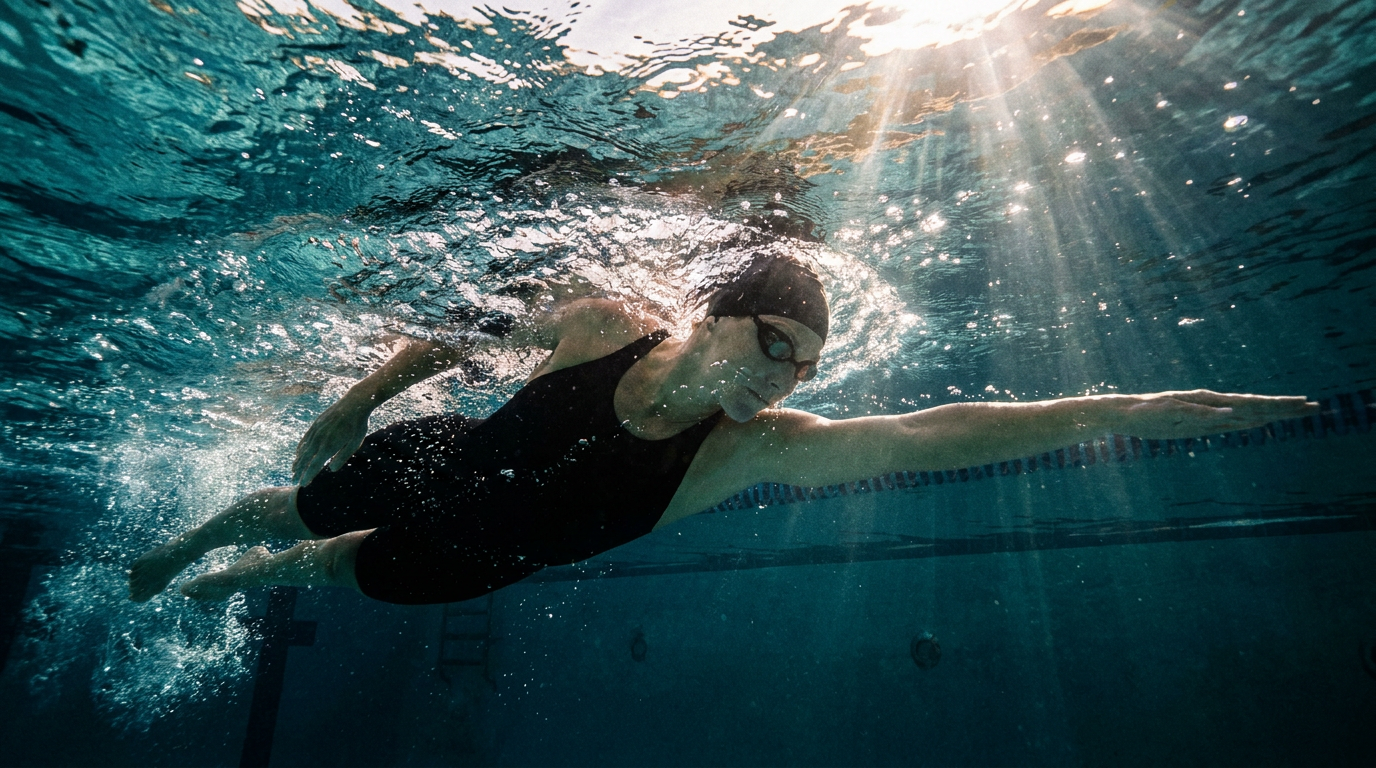
Emerging research reveals that the unique combination of hydrostatic pressure, breath control, and zero-gravity movement makes swimming uniquely effective for preserving brain volume and extending lifespan.
By Factlen Editorial Team
- Exercise Physiologists
- Focus on the mechanical and cardiovascular efficiencies created by water immersion.
- Neuroscientists
- Focus on the biochemical changes in the brain triggered by aquatic exercise.
- Longevity Researchers
- Focus on all-cause mortality reduction and the sustainability of the exercise over a lifespan.
What's not represented
- · Public Health Officials focused on the socioeconomic barriers to pool access
- · Physical Therapists specializing in aquatic rehabilitation for severe injuries
Why this matters
As the global population ages, finding high-intensity, low-impact exercises that protect both cognitive function and joint health is critical for extending healthspan, not just lifespan.
Key points
- A 32-year longitudinal study found swimmers have a 50% lower mortality risk than walkers and 49% lower than runners.
- Water's hydrostatic pressure acts as a full-body compression suit, effortlessly pushing blood back to the heart.
- Immersion in water increases blood flow to the brain by up to 14 percent.
- Swimming triggers a massive release of BDNF, a protein that grows new brain cells and improves memory.
- The zero-gravity environment allows for high-intensity cardiovascular training without degrading joint cartilage.
For decades, the pursuit of the perfect longevity exercise has been a balancing act. Running builds immense cardiovascular engine capacity but exacts a heavy toll on the knees, hips, and lower back over a lifetime. Cycling spares the joints but largely ignores the upper body and core. Weightlifting preserves bone density and muscle mass but rarely sustains the prolonged elevated heart rates required for deep cardiovascular adaptation. In the search for a modality that offers high-intensity cardiovascular conditioning, full-body muscular engagement, and zero joint degradation, sports scientists are increasingly pointing to the pool.[1]
The epidemiological case for swimming as a supreme longevity tool is anchored by the University of South Carolina's Aerobics Center Longitudinal Study. Researchers tracked more than 40,000 men across multiple decades to determine how their exercise modality of choice impacted their overall lifespan. The results revealed a stark divergence between those who exercised on land and those who took to the water.[2]
According to the data, regular swimmers were 53 percent less likely to die of any cause compared to sedentary individuals. More surprisingly, the swimmers also outperformed their active peers on land: they were 50 percent less likely to die than walkers and 49 percent less likely to die than runners. This massive gap in all-cause mortality prompted physiologists to look closer at the unique biological mechanisms triggered by aquatic exercise.[2]

The secret lies in physics, specifically a phenomenon known as hydrostatic pressure. When the human body is submerged, water exerts a constant, multi-directional force on the skin. At just one meter of depth, this pressure equals roughly 1.4 pounds per square inch. Unlike the localized pressure of a tight garment, water wraps the body in a perfectly distributed, heavy blanket of resistance.[1]
This hydrostatic pressure acts like a full-body medical compression stocking. It forcefully assists venous return—the physiological process of pushing deoxygenated blood from the extremities back up to the heart. On land, the heart has to fight gravity to pull blood up from the legs. In the pool, the water's pressure does a significant portion of that circulatory work automatically.[6]
Because the water is assisting the circulatory system, the heart is able to pump a larger volume of blood per beat (known as stroke volume) without having to spike the heart rate as high as it would during a comparable land-based sprint. This results in profound cardiovascular conditioning with significantly less cardiac stress, allowing older adults to achieve vigorous aerobic thresholds safely.[6]

The circulatory benefits of hydrostatic pressure extend upward into the skull. A landmark study from the University of Western Australia found that simply being submerged in water up to the chest alters blood flow dynamics, and actively swimming increases cerebral blood flow by 14 percent compared to resting on land. This surge of blood to the brain acts as a powerful delivery system for oxygen and nutrients.[4]
The circulatory benefits of hydrostatic pressure extend upward into the skull.
However, the cognitive benefits of swimming go far beyond basic vascular plumbing. The combination of aerobic exertion and water immersion triggers a massive biochemical cascade in the brain, resulting in the release of a crucial protein that neuroscientists believe is the key to delaying cognitive decline.[4][7]
That protein is Brain-Derived Neurotrophic Factor (BDNF). Described by Harvard Medical School researchers as "Miracle-Gro for the brain," BDNF is responsible for repairing damaged neurons, promoting the growth of entirely new brain cells, and enhancing overall neuroplasticity. While all aerobic exercise stimulates BDNF, studies indicate that swimming is particularly effective at elevating these levels.[3]
Elevated BDNF levels are strongly correlated with improved memory, sharper learning capacity, and mood regulation. In animal models, swimming has been shown to specifically suppress apoptosis—the programmed death of cells—in the aging hippocampus, effectively keeping the brain's memory center younger for longer.[3][7]

Furthermore, researchers at Columbia University have demonstrated that regular aerobic activities like swimming can actually prevent the physical shrinkage of the brain that typically accompanies aging. Older adults who swam regularly maintained significantly larger brain volumes than their sedentary peers, proving that cognitive decline is not an inevitable consequence of getting older.[5]
The mechanics of the swimming stroke itself also provide a unique neurological workout. The bilateral cross-patterning required for freestyle and backstroke forces the left and right hemispheres of the brain to communicate rapidly across the corpus callosum. This complex coordination strengthens neural pathways in a way that simple linear movements, like jogging on a treadmill, do not.[1][7]
Below the neck, swimming introduces a respiratory challenge found in almost no other sport: controlled hypoxia. Because swimmers can only breathe at specific intervals in the stroke cycle, the lungs are forced to become highly efficient at extracting oxygen and expelling carbon dioxide under mild duress. This breath control translates to improved pulmonary function and greater stamina in daily life.[6]

This respiratory efficiency is paired with the ultimate musculoskeletal advantage: buoyancy. Water neutralizes gravity, allowing older adults or those recovering from injuries to perform high-intensity interval training without the mechanical wear and tear that degrades cartilage over time. It is one of the few sports where an 80-year-old can safely push their body to its absolute physical limit.[1][6]
Finally, the hydrostatic pressure that aids circulation also dulls the reticular system's tactile sensory neurons. This naturally reduces the perception of muscle pain and anxiety during the workout, creating a meditative state. The result is a highly sustainable, lifelong practice that fortifies the heart, preserves the joints, and actively rebuilds the brain.[1]
How we got here
2008
Harvard psychiatrist John Ratey publishes 'Spark', popularizing the concept of BDNF as 'Miracle-Gro for the brain' triggered by aerobic exercise.
2011
The University of South Carolina publishes its landmark 32-year longitudinal study revealing swimmers have a 50% lower mortality rate than walkers.
2014
University of Western Australia researchers document a 14% increase in cerebral blood flow during water immersion.
2020
Columbia University presents findings showing that regular swimming prevents age-related brain shrinkage in older adults.
Viewpoints in depth
Exercise Physiologists
Focus on the mechanical and cardiovascular efficiencies created by water immersion.
For exercise physiologists, the pool is a unique laboratory where gravity is suspended. They emphasize how hydrostatic pressure fundamentally alters hemodynamics, allowing athletes to achieve maximal cardiovascular output with lower heart rates. This camp views swimming as the ultimate tool for building a massive aerobic base without the orthopedic cost of impact sports.
Neuroscientists
Focus on the biochemical changes in the brain triggered by aquatic exercise.
Neurological researchers are primarily interested in the brain's chemical response to swimming. They point to the robust release of BDNF and the 14% increase in cerebral blood flow as evidence that swimming is a potent neuroprotective agent. For this camp, the pool is less about building muscle and more about preserving hippocampal volume, enhancing neuroplasticity, and delaying the onset of cognitive decline.
Longevity Researchers
Focus on all-cause mortality reduction and the sustainability of the exercise over a lifespan.
Longevity experts look at the macro-level epidemiological data, such as the University of South Carolina's 32-year study. They argue that the best exercise is the one you can perform vigorously at age 80. Because swimming eliminates the joint degradation that eventually sidelines runners and weightlifters, this camp views it as the most sustainable path to extending human healthspan.
What we don't know
- Exactly how much of the mortality reduction in swimmers is due to the exercise itself versus the generally healthier lifestyle habits of people who have regular access to pools.
- The precise minimum threshold of time in the water required to trigger a clinically significant release of BDNF in the brain.
- How the cognitive benefits of swimming compare directly to other complex, low-impact coordination sports like rowing or cross-country skiing.
Key terms
- Hydrostatic Pressure
- The force exerted by a fluid on an object immersed in it, which increases with depth and acts like a full-body compression suit.
- BDNF
- Brain-Derived Neurotrophic Factor, a protein that promotes the survival of nerve cells and the growth of new ones.
- Venous Return
- The flow of deoxygenated blood from the extremities back to the heart, which is significantly enhanced by water pressure.
- Apoptosis
- The programmed death of cells, a natural aging process in the brain that swimming has been shown to suppress.
- Corpus Callosum
- The bundle of nerve fibers connecting the left and right hemispheres of the brain, which is stimulated by the cross-body movements of swimming.
Frequently asked
Do I need to swim fast to get these benefits?
No. While vigorous swimming increases cardiovascular fitness faster, simply being immersed in water and moving at a moderate pace provides the benefits of hydrostatic pressure and increased cerebral blood flow.
Is swimming better for longevity than running?
Both are excellent for cardiovascular health, but longitudinal studies show swimmers have a slightly lower all-cause mortality rate than runners, likely due to the absence of joint impact and a lower rate of lifelong injury.
How often should I swim for brain health?
Most sports scientists recommend 150 minutes of moderate aquatic exercise or 75 minutes of vigorous swimming per week to trigger sustained BDNF release and maintain brain volume.
Does water temperature matter?
Yes. Cold water triggers additional metabolic benefits and vasoconstriction, but thermoneutral water (around 80-84°F) is generally considered best for sustaining the prolonged aerobic workouts needed for cardiovascular adaptation.
Sources
Source coverage
7 outlets
3 viewpoints surfaced







[1]Factlen Editorial TeamLongevity Researchers
Synthesis by Factlen editorial team
Read on Factlen Editorial Team →[2]University of South CarolinaLongevity Researchers
Aerobics Center Longitudinal Study: Swimming and Mortality
Read on University of South Carolina →[3]Harvard Medical SchoolNeuroscientists
Spark: The Revolutionary New Science of Exercise and the Brain
Read on Harvard Medical School →[4]University of Western AustraliaNeuroscientists
Cerebral blood flow increases during aquatic exercise
Read on University of Western Australia →[5]Columbia UniversityNeuroscientists
Physical activity prevents brain shrinkage in older adults
Read on Columbia University →[6]University of Texas at AustinExercise Physiologists
Cardiovascular Aging Research Laboratory: Swimming Benefits
Read on University of Texas at Austin →[7]Trends in NeurosciencesNeuroscientists
Enhancing brain health: Swimming-induced BDNF release
Read on Trends in Neurosciences →


Every angle. Every day.
Get fitness stories with full source coverage and perspective breakdowns delivered to your inbox.