
FDA Advisory Committee Unanimously Recommends First mRNA Flu Vaccine
An FDA advisory panel has endorsed the first influenza vaccine utilizing mRNA technology, paving the way for faster manufacturing and potentially higher efficacy against seasonal strains.
By Factlen Editorial Team
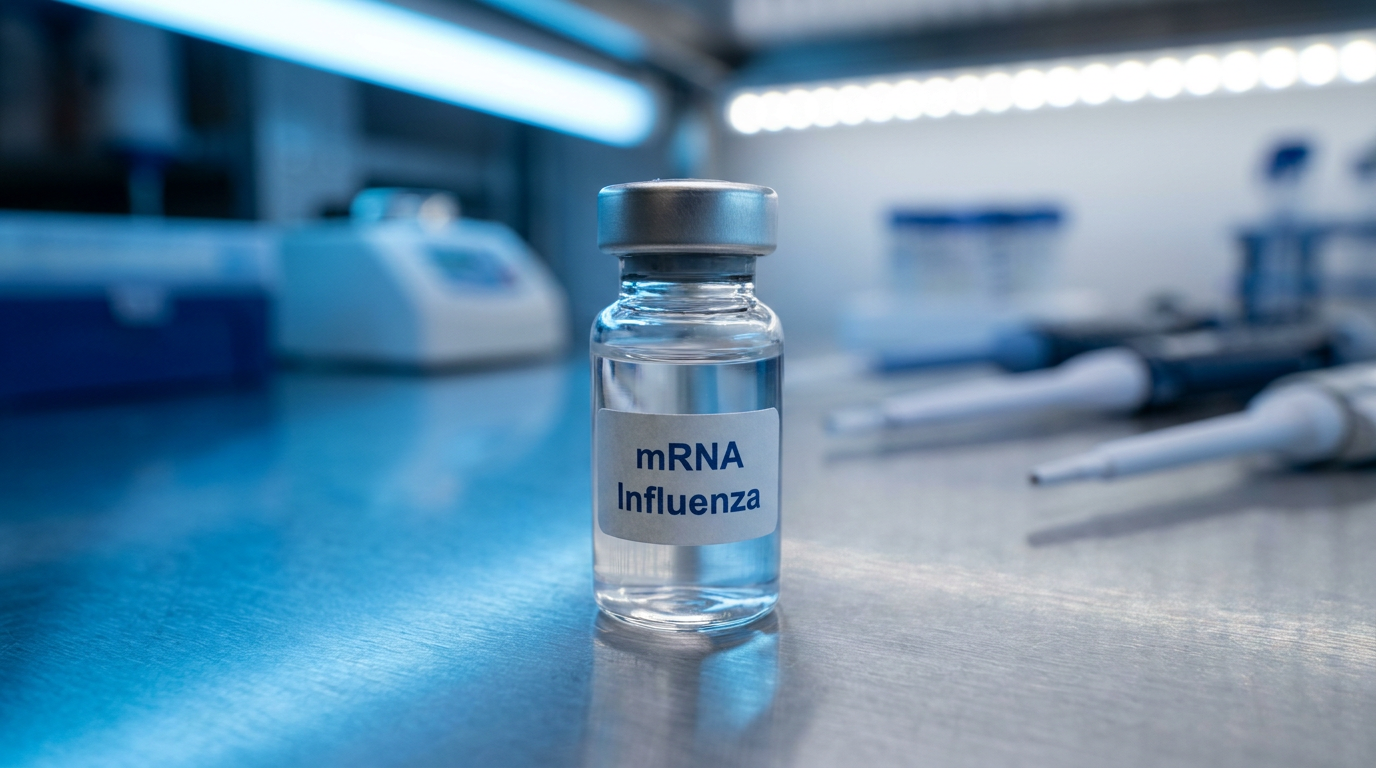
- Public Health Officials
- Focuses on the public health benefits of faster manufacturing and more accurate strain matching.
- Immunology Researchers
- Prioritizes the clinical trial data, focusing on antibody titers, reactogenicity, and long-term durability.
- Biotech Industry Analysts
- Views the approval as a stepping stone toward highly scalable combination respiratory vaccines.
What's not represented
- · Primary care physicians managing cold-chain logistics
- · Patients with severe egg allergies
Why this matters
Traditional flu vaccines take six months to manufacture and often mutate during the egg-incubation process, reducing their effectiveness. mRNA technology allows for rapid, precise strain matching just weeks before flu season, potentially saving thousands of lives annually by preventing vaccine mismatches.
Key points
- An FDA advisory committee voted 21-0 to recommend the first mRNA seasonal flu vaccine.
- The mRNA platform bypasses the 6-month egg-based incubation process, allowing for faster production.
- Phase 3 trials showed superior antibody responses against severe Influenza A strains compared to traditional shots.
- The vaccine carries a higher rate of mild side effects, similar to an mRNA COVID-19 booster.
- Approval paves the way for future combination vaccines targeting flu, COVID-19, and RSV in a single shot.
The FDA's Vaccines and Related Biological Products Advisory Committee (VRBPAC) has unanimously recommended the approval of the first-ever mRNA-based seasonal influenza vaccine. In a landmark 21-0 vote on Thursday, the panel of independent scientific experts concluded that the vaccine's benefits in preventing seasonal flu outweigh its risks for adults aged 18 and older. This regulatory milestone marks the first time the messenger RNA technology—which gained global prominence during the COVID-19 pandemic—has successfully crossed the threshold for a seasonal respiratory virus outside of the coronavirus family. If the FDA follows the committee's recommendation, as it typically does, the vaccine could be available as early as the upcoming fall respiratory season, fundamentally altering a manufacturing paradigm that has remained largely unchanged for over seventy years.[1][3]
The significance of this transition cannot be overstated in the context of global public health. For decades, the standard method for producing the annual flu shot has relied on incubating the virus in millions of chicken eggs. This analog process is notoriously slow, requiring global health authorities to guess which flu strains will circulate nearly six months before the season actually begins. By shifting to a genetic approach, manufacturers can bypass the egg-based incubation entirely, reducing the production timeline from half a year to a matter of weeks. This agility provides a critical buffer against the unpredictable nature of influenza, allowing scientists to match the vaccine to the circulating strains with unprecedented precision.[2][5]
The core scientific advantage of the mRNA platform lies in its resistance to "egg adaptation." When human influenza viruses are grown in avian eggs, they frequently undergo spontaneous genetic mutations to better survive in that specific environment. By the time the virus is harvested and inactivated for use in a human vaccine, its surface proteins may look significantly different from the wild virus circulating in the population. This mismatch is a primary reason why traditional flu vaccines sometimes offer only 30% to 40% protection in a given year. Because mRNA vaccines are synthesized chemically from a genetic sequence, they do not require a biological host for incubation, ensuring that the vaccine perfectly matches the target strain identified by epidemiologists.[3][4]

The clinical data presented to the FDA committee provided a robust evidence pack supporting the vaccine's efficacy. In a Phase 3 randomized, observer-blinded trial involving over 35,000 participants across multiple continents, the mRNA candidate demonstrated non-inferiority—and in some cases, superiority—to standard-dose egg-based vaccines. Specifically, the mRNA vaccine elicited significantly higher geometric mean titers (a measure of antibody concentration in the blood) against the influenza A strains, H1N1 and H3N2, which are typically responsible for the most severe flu seasons and the highest rates of hospitalization. The immune response against influenza B strains was comparable to existing vaccines, meeting the FDA's strict immunogenicity criteria for approval.[3][4]
While the antibody data is highly encouraging, the advisory committee spent considerable time scrutinizing the vaccine's safety and reactogenicity profile. Reactogenicity refers to the expected, temporary physical reactions that occur as the immune system responds to the vaccine. Trial data indicated that the mRNA flu vaccine produces a higher rate of mild to moderate systemic side effects compared to traditional flu shots. Participants reported higher incidences of injection site pain, fatigue, headache, and muscle aches—a profile that closely mirrors the experience of receiving an mRNA COVID-19 booster. However, severe adverse events were exceedingly rare and statistically indistinguishable from the control group receiving the traditional vaccine.[1][4]
The committee ultimately concluded that this reactogenicity profile is acceptable, particularly given the potential for enhanced protection against severe disease. Public health experts on the panel noted that while a sore arm or a day of fatigue is inconvenient, it is a highly favorable trade-off compared to a week of severe influenza or a potential hospital admission. However, they also emphasized the need for transparent public messaging. If patients expect the nearly imperceptible side-effect profile of a traditional egg-based flu shot, they may be caught off guard by the more robust immune response triggered by the mRNA version. Managing these expectations will be crucial for maintaining high vaccination coverage rates.[1][5]
The committee ultimately concluded that this reactogenicity profile is acceptable, particularly given the potential for enhanced protection against severe disease.
Beyond the immediate clinical data, the introduction of an mRNA flu vaccine opens the door to a new era of rapid-response manufacturing. Currently, the World Health Organization and the FDA must finalize their strain selections for the Northern Hemisphere's winter flu season in late February or early March. If a new, unexpected strain emerges in May or June, the traditional manufacturing infrastructure is too slow to pivot, leaving the population vulnerable. The mRNA platform's 8-to-12-week production cycle means that strain selection could theoretically be delayed until early summer, providing a much more accurate picture of the viral landscape just before the shots go into arms.[2][3]

This speed also provides a critical safeguard against the threat of a novel influenza pandemic. If an avian flu strain, such as H5N1, were to mutate and gain the ability to spread easily between humans, the global demand for a matched vaccine would be immediate and overwhelming. The infrastructure built to produce seasonal mRNA flu vaccines could be rapidly repurposed to churn out pandemic-specific doses. Unlike egg-based manufacturing, which is constrained by the physical supply of specialized, pathogen-free chicken eggs, mRNA production is limited only by the availability of raw biochemical materials and bioreactor capacity, making it vastly more scalable in a crisis.[2][5]
Despite the unanimous endorsement, the FDA committee highlighted several areas of ongoing uncertainty that will require post-market surveillance. Chief among these is the durability of the immune response. Traditional flu vaccines are known to wane in effectiveness over the course of a 5-to-6-month flu season, which is why public health officials often advise against getting vaccinated too early in the fall. It remains to be seen whether the antibody titers generated by the mRNA vaccine will persist longer than those from traditional vaccines, or if they will experience a similar, or perhaps even steeper, decline. Long-term follow-up data from the Phase 3 trials will be essential to answer this question.[3][4]
Another open question involves the vaccine's performance in older adults, a demographic that suffers the highest burden of severe influenza. The immune system naturally weakens with age, a phenomenon known as immunosenescence. To combat this, seniors are currently offered high-dose or adjuvanted traditional flu vaccines designed to provoke a stronger immune response. While the mRNA vaccine showed strong immunogenicity across all age groups in the trials, direct head-to-head comparisons against these enhanced senior-specific vaccines are still ongoing. The committee recommended that the FDA carefully tailor the vaccine's labeling to ensure healthcare providers understand exactly how it compares to the specialized options currently available for the elderly.[1][3]

The logistical rollout of the new vaccine will also present unique challenges for pharmacies and clinics. Unlike traditional flu shots, which can be stored in standard medical refrigerators for months, mRNA vaccines typically require stricter cold-chain management, often involving ultra-cold freezers for long-term storage. While manufacturers have made significant strides in improving the thermal stability of lipid nanoparticles—the microscopic fat bubbles that deliver the mRNA into cells—clinics will still need to adapt their inventory management practices. Ensuring that rural and under-resourced healthcare settings have the necessary equipment to store and handle the vaccine will be a priority for federal health agencies.[2][5]
Looking ahead, the approval of a standalone mRNA flu vaccine is widely viewed as a stepping stone toward a more comprehensive approach to respiratory virus prevention. Manufacturers are already in advanced clinical trials for combination vaccines that bundle mRNA sequences for influenza, COVID-19, and Respiratory Syncytial Virus (RSV) into a single annual injection. By proving that the mRNA platform can safely and effectively target influenza on its own, this week's FDA committee vote significantly de-risks the regulatory pathway for these future combination shots. A single, highly effective annual booster could dramatically simplify adult immunization schedules and improve overall compliance.[2][4]

The next step in the regulatory process rests with the FDA, which is expected to issue its final approval decision within the coming weeks. Following FDA authorization, the Centers for Disease Control and Prevention's (CDC) Advisory Committee on Immunization Practices (ACIP) will convene to draft specific clinical guidelines. The ACIP will determine exactly who should receive the mRNA vaccine and whether it should be preferred over traditional options for certain high-risk groups. Their recommendations will ultimately dictate how insurance companies cover the new shot and how doctors present it to their patients during the fall vaccination campaign.[1][3]
Ultimately, the introduction of mRNA technology to the seasonal flu fight represents one of the most significant upgrades to preventative medicine in a generation. For decades, the medical community has accepted the limitations of egg-based vaccines as an unavoidable reality of influenza management. By successfully applying the rapid, precise, and scalable tools of genetic medicine to this persistent public health challenge, researchers have fundamentally shifted the baseline of what is possible. While questions about durability and real-world effectiveness will take time to fully answer, the era of relying on mid-century manufacturing techniques to fight a rapidly mutating virus is officially drawing to a close.[5]
How we got here
2020
mRNA vaccine technology is validated on a global scale during the COVID-19 pandemic.
2022-2023
Early-stage clinical trials begin for seasonal influenza mRNA candidates.
Early 2026
Phase 3 trial data demonstrates strong efficacy against Influenza A strains.
June 2026
An FDA advisory committee votes unanimously to recommend the vaccine's approval.
Viewpoints in depth
Public Health Officials
Focuses on the public health benefits of faster manufacturing and more accurate strain matching.
For epidemiologists and public health directors, the primary appeal of the mRNA platform is its speed. Traditional egg-based manufacturing requires the WHO and FDA to guess which flu strains will be dominant nearly six months in advance. If the virus mutates late in the spring, the vaccine distributed in the fall will be a poor match, leading to thousands of excess hospitalizations. Public health officials argue that shrinking the production timeline to 8-12 weeks allows for much later strain selection, drastically reducing the risk of a mismatched vaccine and providing a more robust defense against seasonal epidemics.
Immunology Researchers
Prioritizes the clinical trial data, focusing on antibody titers, reactogenicity, and long-term durability.
Clinical researchers are highly encouraged by the geometric mean titers observed in the Phase 3 trials, particularly the superior response against the notoriously severe H3N2 strain. However, immunologists remain focused on the unanswered questions surrounding durability. Because traditional flu vaccines wane in effectiveness over a 5-to-6-month season, researchers are eager to see long-term follow-up data to determine if the mRNA-induced antibodies degrade at a similar rate. They are also closely monitoring the reactogenicity profile, noting that while the side effects are safe and temporary, they are noticeably stronger than those of traditional flu shots.
Biotech Industry Analysts
Views the approval as a stepping stone toward highly scalable combination respiratory vaccines.
From an industry perspective, a standalone mRNA flu vaccine is merely the first phase of a broader market disruption. Analysts view this FDA committee vote as a critical de-risking event for the next generation of combination vaccines. Manufacturers are already developing single-shot injections that combine mRNA sequences for influenza, COVID-19, and RSV. By proving that the platform can successfully target the flu on its own, biotech companies have cleared the largest regulatory hurdle toward a future where adult respiratory immunizations are consolidated into one highly effective annual appointment.
What we don't know
- Whether the immune protection provided by the mRNA vaccine will last through the entire 6-month flu season without waning.
- How the mRNA vaccine's real-world effectiveness in older adults compares directly to specialized high-dose traditional vaccines.
- Whether the higher rate of mild side effects will deter some patients from getting their annual flu shot.
Key terms
- mRNA (Messenger RNA)
- A genetic molecule that teaches cells how to make a protein that triggers an immune response, without using any actual virus.
- VRBPAC
- The FDA's independent advisory committee of experts who review clinical data and recommend whether vaccines should be approved.
- Egg Adaptation
- The process where a human flu virus mutates while being grown in chicken eggs, making the resulting vaccine less effective against real-world strains.
- Reactogenicity
- The expected, temporary physical side effects (like a fever or sore arm) that occur as the immune system responds to a vaccine.
- Geometric Mean Titer (GMT)
- A standard measurement used in clinical trials to quantify the concentration of specific antibodies in a person's blood.
Frequently asked
When will the mRNA flu vaccine be available?
If the FDA and CDC grant final approvals, the vaccine is expected to be available for the fall 2026 flu season.
Does this vaccine contain a live virus?
No. Like mRNA COVID-19 vaccines, it contains only a genetic instruction for a single viral protein, making it impossible to catch the flu from the shot.
Are the side effects worse than a normal flu shot?
Clinical trials show a higher rate of mild, temporary side effects like a sore arm, fatigue, and headache, similar to the experience of a COVID-19 booster.
Can I get this at the same time as my COVID booster?
Yes, public health guidelines generally allow for the co-administration of flu and COVID-19 vaccines during the same clinic visit.
Sources
Source coverage
5 outlets
3 viewpoints surfaced





[1]NPRPublic Health Officials
FDA committee unanimously recommends first mRNA flu vaccine
Read on NPR →[2]STAT NewsBiotech Industry Analysts
In a milestone for genetic medicine, FDA panel backs first mRNA seasonal flu shot
Read on STAT News →[3]FDAPublic Health Officials
Vaccines and Related Biological Products Advisory Committee June 2026 Briefing Document
Read on FDA →[4]The LancetImmunology Researchers
Immunogenicity and safety of mRNA-based seasonal influenza vaccines: a phase 3 randomized trial
Read on The Lancet →[5]Factlen Editorial TeamBiotech Industry Analysts
Synthesis by Factlen editorial team
Read on Factlen Editorial Team →

More in health
See all 9 stories →mRNA Tech
FDA Advisory Panel Unanimously Recommends First mRNA Flu Vaccine
8 sources

Aging & Longevity
Why Neurologists Are Prescribing Tai Chi to Prevent Falls and Protect Aging Brains
6 sources

Nature Therapy
The Evidence Behind 'Nature Prescriptions': How Green Space Alters Brain Chemistry
7 sources

Vaccine Tech
FDA Advisory Committee Unanimously Recommends First mRNA Flu Vaccine
8 sources

Every angle. Every day.
Get health stories with full source coverage and perspective breakdowns delivered to your inbox.