
The Rise of Aquascaping: How Underwater Gardening Became a Mental Health Phenomenon
Driven by a desire for neurological rest and aesthetic beauty, the art of aquascaping has transformed the traditional aquarium into a complex, self-sustaining ecosystem.
By Factlen Editorial Team
- Wellness & Lifestyle Advocates
- Mental health professionals and lifestyle enthusiasts focus on the therapeutic, stress-reducing benefits of the hobby.
- Nature Style Purists
- Advocates for the Nature Aquarium style prioritize emotional resonance and natural mimicry over sheer plant mass.
- High-Tech Horticulturists
- This camp views the aquarium as a biochemical laboratory where precision yields aesthetic perfection.
- Industry Analysts
- Market researchers view the aquascaping boom through the lens of economic growth and technological democratization.
What's not represented
- · Marine/Reef Aquarists
- · Veterinary Professionals
Why this matters
As digital fatigue and screen time reach all-time highs, aquascaping offers a scientifically backed method for reducing cortisol and engaging the brain's restorative networks, turning a simple hobby into an accessible form of daily therapy.
Key points
- Aquascaping blends horticulture, biology, and design to create self-sustaining underwater landscapes.
- The hobby shifted from fish-centric to plant-centric, heavily influenced by Japanese photographer Takashi Amano in the 1990s.
- High-tech setups rely on pressurized CO2 injection and nutrient-rich substrates to fuel rapid plant photosynthesis.
- Psychological studies indicate that observing planted aquariums provides neurological rest and lowers cortisol levels.
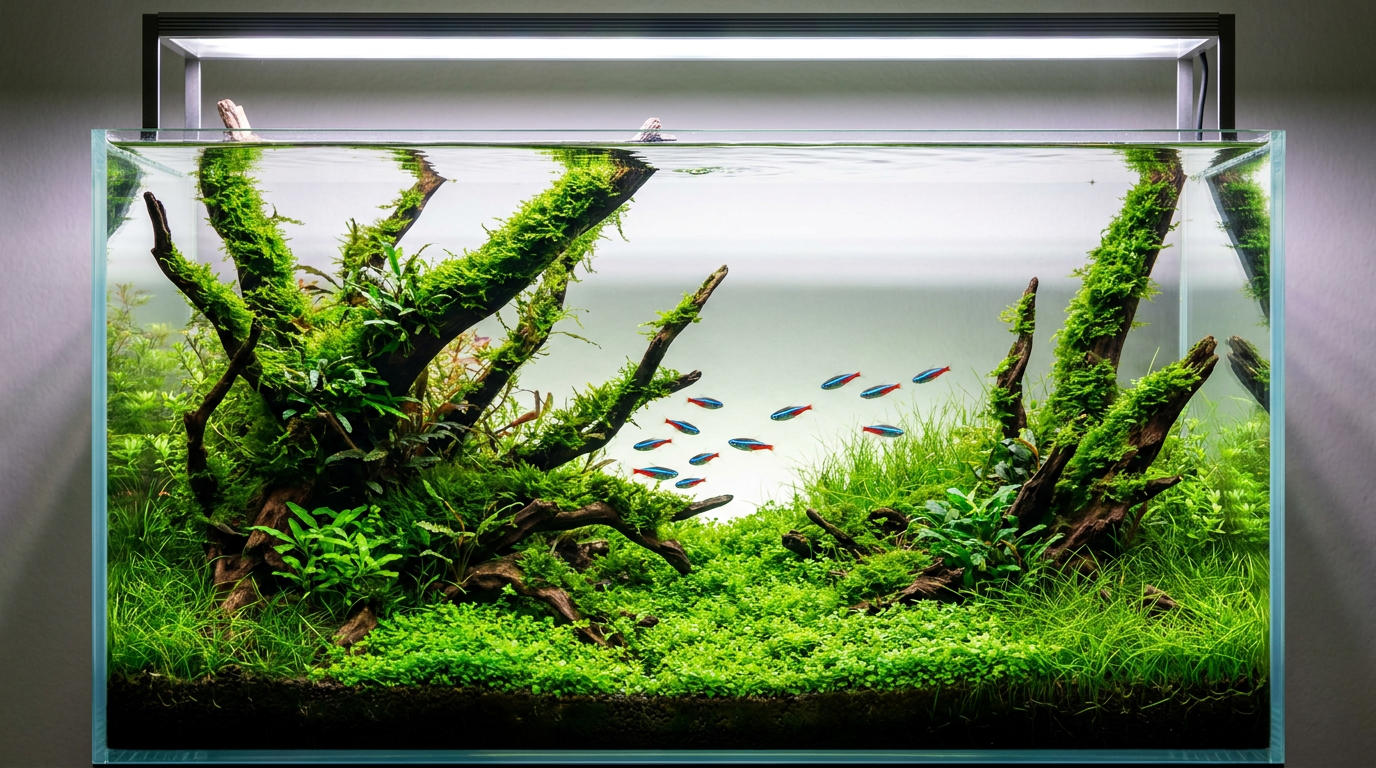
For millions of remote workers navigating the cognitive fatigue of screen-heavy days, a new form of micro-break has taken root on desktops around the world. Instead of scrolling through social media, a growing number of professionals are turning their gaze to miniature, meticulously curated underwater jungles. This is the world of aquascaping—the art and science of creating natural aquatic landscapes within the confines of a glass tank. Far removed from the neon gravel and plastic castles of mid-century fishkeeping, modern aquascaping treats the aquarium as a living canvas, blending horticulture, biology, and design into a self-sustaining ecosystem.[1][3][9]
While keeping fish in glass enclosures dates back to the Victorian era, the concept of prioritizing aquatic plants over animal inhabitants began to crystallize in the Netherlands during the 1930s. The "Dutch style" of aquascaping emerged alongside the first commercially available aquarium equipment, characterized by lush, orderly rows of stem plants arranged much like a terrestrial flower garden. However, the hobby remained relatively niche until a Japanese professional cyclist and nature photographer named Takashi Amano fundamentally transformed the industry in the 1990s.[6][8]
Amano introduced the "Nature Aquarium" concept, shifting the paradigm from underwater gardening to the recreation of terrestrial landscapes. Drawing on his background in photography and the Japanese aesthetic philosophy of wabi-sabi—which embraces transience and imperfection—Amano designed aquariums that mimicked dense forests, sweeping mountain ranges, and tranquil riverbeds. He utilized natural driftwood and stones, known as hardscape, to anchor the visual flow of the tank, creating a sense of depth and perspective that made a small glass box feel like an expansive, ancient ecosystem.[6][8]
The execution of these living landscapes, however, requires more than an artistic eye; it demands a rigorous understanding of aquatic chemistry. A planted aquarium is a closed system, meaning the aquarist must artificially simulate the natural cycles of light, nutrients, and gas exchange that occur in lakes and streams. The foundation of this system lies in the substrate. Unlike inert gravel, modern aquascapes rely on nutrient-rich aqua soils that serve as a biochemical engine. This layered soil hosts colonies of beneficial bacteria that stabilize water chemistry and process organic waste, creating a living filter beneath the plants' roots.[5][7]

Perhaps the most critical scientific leap in modern aquascaping was the widespread adoption of carbon dioxide (CO2) injection. Terrestrial plants easily pull carbon from the atmosphere, but submerged aquatic plants are entirely dependent on dissolved CO2 to fuel photosynthesis. Amano famously discovered the dramatic effects of CO2 supplementation when he poured carbonated soda water into one of his struggling tanks, sparking a revolution in aquatic horticulture. Today, high-tech planted aquariums utilize pressurized CO2 cylinders, regulators, and diffusers to atomize the gas into microbubbles.[5][6][8]
Managing this carbon engine requires precision governed by Henry's Law, which dictates how gases dissolve in liquids under pressure. Aquascapers aim for a delicate optimal concentration of 25 to 30 milligrams per liter. If the CO2 levels drop below this threshold, plant growth stalls and opportunistic algae take over the tank. If the concentration rises too high, the water becomes toxic, asphyxiating the fish and invertebrates. When the balance of light, nutrients, and CO2 is struck perfectly, the plants exhibit a phenomenon known as "pearling"—releasing visible streams of oxygen bubbles from their leaves as photosynthesis outpaces the water's capacity to dissolve the gas.[5][7]
Managing this carbon engine requires precision governed by Henry's Law, which dictates how gases dissolve in liquids under pressure.
This intersection of intense biological management and artistic composition has spawned distinct sub-genres within the hobby. Beyond the dense, wood-heavy Nature style, the "Iwagumi" style strips the aquascape down to its most minimalist form. Using only a carpet of low-growing plants and a carefully arranged odd number of stones, Iwagumi layouts evoke the stark beauty of a Zen rock garden. These minimalist setups have surged in popularity among urban hobbyists who appreciate the clean lines and the illusion of vast scale within a compact nano-tank.[3][8]

The meticulous care required to maintain these ecosystems has proven to be a significant draw for individuals seeking mental health benefits. Psychological studies and wellness advocates increasingly point to aquascaping as a potent form of passive therapy. The visual complexity of a planted tank engages the brain's default mode network—the neural system associated with daydreaming and creative thought—providing genuine neurological rest without the cognitive fatigue triggered by digital screens. For remote workers, a few minutes of observing a tank serves as a highly effective micro-break.[1][2]
Involvement in the daily maintenance of an aquascape, from trimming overgrown stems to testing water parameters, offers a grounding, tactile routine. Research indicates that this active engagement, combined with the passive observation of slow-moving fish and swaying plants, measurably reduces cortisol levels and alleviates symptoms of anxiety. Unlike temporary wellness trends, the continuous, living nature of an aquarium demands a patient, long-term commitment that rewards the creator with a tangible sense of stewardship and peace.[1][2][3]
This combination of aesthetic appeal and therapeutic value has catalyzed substantial economic growth within the pet and hobbyist sectors. The global aquarium market, valued at $6.33 billion in 2024, is projected to reach $8.70 billion by 2032, expanding at a compound annual growth rate of 4.8%. This robust growth was sharply accelerated by the pandemic, as homebound individuals sought engaging indoor activities to alleviate isolation. However, the momentum has sustained well beyond the pandemic years, driven by the permanent shift toward remote and hybrid work models that keep professionals anchored in their home offices.[2][4]

Industry analysts note a distinct consumer shift toward more complex, high-value setups. While the traditional entry point was a simple glass bowl, modern beginners are increasingly investing in rimless low-iron glass tanks, programmable LED lighting that mimics natural sunrises, and advanced filtration systems. This technological democratization has lowered the barrier to entry for high-tech aquascaping, allowing novices to achieve lush plant growth that would have been impossible a decade ago.[4][5]
As the hobby matures, it is also grappling with its environmental footprint. The demand for exotic aquatic plants and ornamental fish has historically placed pressure on wild ecosystems. In response, the aquascaping community is driving a significant shift toward sustainability. There is a growing emphasis on tissue-cultured plants grown in sterile laboratories and captive-bred fish species, reducing the reliance on wild harvesting and minimizing the risk of introducing invasive pathogens.[4][8]

Ultimately, the enduring appeal of aquascaping lies in its unique fusion of disciplines. It is a hobby where the rigid rules of water chemistry and biology meet the fluid, subjective nature of artistic design. An aquascape is never truly finished; it is a constantly evolving sculpture that requires the aquarist to adapt, observe, and learn from the miniature world they have created. In an increasingly fast-paced and digitized world, the planted aquarium stands as a quiet, breathing reminder of the beauty of patience and the restorative power of nature.[1][3][9]
How we got here
1930s
The 'Dutch style' of aquascaping emerges in the Netherlands, focusing on dense, orderly rows of aquatic plants.
1990s
Takashi Amano introduces the 'Nature Aquarium' style, blending Japanese aesthetics with aquatic horticulture and popularizing CO2 injection.
2020
The global pandemic triggers a massive surge in the hobby as homebound individuals seek engaging, nature-based indoor activities.
2024
The global aquarium market reaches $6.33 billion, driven heavily by the rising popularity of high-tech planted tanks.
Viewpoints in depth
The Artistic Purists
Advocates for the Nature Aquarium style prioritize emotional resonance and natural mimicry over sheer plant mass.
For traditionalists inspired by Takashi Amano, an aquascape is a philosophical exercise as much as a horticultural one. This camp argues that the goal is not simply to grow plants, but to capture the essence of a natural landscape—a dense forest, a sweeping mountain range, or a quiet riverbed. They rely heavily on the Japanese concept of wabi-sabi, embracing imperfection, asymmetry, and the passage of time. To these purists, the hardscape (wood and stone) is the soul of the tank, providing a permanent, grounding structure while the plants represent the ephemeral, ever-changing nature of life.
The Scientific Horticulturists
This camp views the aquarium as a biochemical laboratory where precision yields aesthetic perfection.
High-tech aquascapers approach the hobby through the lens of chemistry and biology. They argue that true success in a closed aquatic system requires strict control over environmental variables. By utilizing pressurized CO2 injection, programmable full-spectrum LED lighting, and precise daily fertilizer dosing, this group pushes aquatic plants to exhibit growth rates and vibrant red colorations rarely seen in the wild. For them, the ultimate marker of success is 'pearling'—the visible release of oxygen bubbles from leaves—which serves as empirical proof that the tank's photosynthetic engine is running at peak efficiency.
The Wellness Advocates
Mental health professionals and lifestyle enthusiasts focus on the therapeutic, stress-reducing benefits of the hobby.
For a growing segment of the community, the primary value of an aquascape lies outside the glass. Wellness advocates point to the measurable psychological benefits of maintaining a planted tank, noting that the visual complexity of the underwater environment engages the brain's default mode network. This provides genuine neurological rest, lowering cortisol levels and offering a tactile, grounding routine that counters the digital fatigue of modern life. They argue that even a simple, low-tech nano tank can serve as a vital tool for passive therapy and mindfulness.
What we don't know
- The long-term ecological impact of the booming demand for rare, wild-harvested aquatic plant species.
- How emerging AI-driven water monitoring technologies will alter the traditional, hands-on maintenance routines of the hobby.
Key terms
- Aquascaping
- The craft of arranging aquatic plants, rocks, cavework, or driftwood in an aesthetically pleasing manner within an aquarium.
- Hardscape
- The non-living foundational materials used in an aquascape, primarily consisting of rocks, stones, and driftwood.
- Aqua Soil
- A nutrient-rich, baked clay substrate designed specifically to support the root systems of aquatic plants and buffer water chemistry.
- Nitrogen Cycle
- The biological process in an aquarium where beneficial bacteria convert toxic ammonia from fish waste into nitrites, and then into less harmful nitrates.
- Iwagumi
- A minimalist Japanese aquascaping style that uses only stones and low-growing carpeting plants to mimic sweeping terrestrial landscapes.
- Pearling
- The visual phenomenon of oxygen bubbles forming on and releasing from aquatic plant leaves during intense photosynthesis.
Frequently asked
What is the difference between an aquarium and an aquascape?
An aquarium is generally focused on keeping fish, while an aquascape prioritizes the artistic arrangement of aquatic plants, wood, and stone to create a living underwater landscape.
Do I need CO2 injection to have a planted tank?
No. While high-tech setups use pressurized CO2 for rapid growth and demanding plant species, many beautiful 'low-tech' aquascapes thrive using hardy plants like Anubias and Java Fern without added carbon dioxide.
What is 'pearling' in an aquascape?
Pearling occurs when aquatic plants photosynthesize so rapidly that the surrounding water cannot dissolve the oxygen they produce, resulting in visible streams of tiny bubbles rising from the leaves.
How does aquascaping benefit mental health?
Studies show that observing the slow, complex movements within a planted aquarium engages the brain's default mode network, providing neurological rest, reducing cortisol levels, and alleviating digital eye strain.
Sources
Source coverage
9 outlets
4 viewpoints surfaced





[1]Gensou AquascapingWellness & Lifestyle Advocates
Aquariums and Stress Reduction: The Mental Health Benefits of Aquascaping
Read on Gensou Aquascaping →[2]BiofluxWellness & Lifestyle Advocates
Aquascape business overview and its impact on mental well-being
Read on Bioflux →[3]The Pharma Innovation JournalWellness & Lifestyle Advocates
Art and science of aquascaping
Read on The Pharma Innovation Journal →[4]Intel Market ResearchIndustry Analysts
Global Aquarium Market Size and Forecast 2025-2032
Read on Intel Market Research →[5]Hanna InstrumentsHigh-Tech Horticulturists
Aquascaping: The Intersection of Art and Water Chemistry
Read on Hanna Instruments →[6]Tropical Fish Hobbyist MagazineNature Style Purists
Takashi Amano's Aquarium Innovations
Read on Tropical Fish Hobbyist Magazine →[7]Horizon AquaticsHigh-Tech Horticulturists
Optimising CO₂ in the Planted Aquarium: Science, Precision, and Balance
Read on Horizon Aquatics →[8]Buce PlantNature Style Purists
The Evolution of Aquascaping Techniques and Principles
Read on Buce Plant →[9]Factlen Editorial TeamIndustry Analysts
Synthesis by Factlen editorial team
Read on Factlen Editorial Team →

Every angle. Every day.
Get lifestyle stories with full source coverage and perspective breakdowns delivered to your inbox.