
Apple's iOS 27 Brings Conversational Siri and Smart App Integrations to iPhones
Apple's upcoming iOS 27 update introduces a completely overhauled Siri powered by on-device AI, alongside quality-of-life improvements across core apps. Early hands-on testing suggests the assistant is significantly more capable of handling complex, multi-step requests without compromising user privacy.
By Factlen Editorial Team
- Tech Enthusiasts
- Celebrate the long-awaited modernization of Siri and the practical, everyday utility of the new AI features.
- Privacy & Security Analysts
- Focus on Apple's on-device processing architecture as a necessary safeguard against the data-harvesting practices of cloud-based AI.
- App Developers
- Express excitement about the new App Intents API, while navigating the shift in how users will interact with their software.
What's not represented
- · Accessibility advocates evaluating how the new AI tools assist users with motor or visual impairments.
- · Competitors reacting to Apple's native integration of AI into the operating system.
Why this matters
For over a decade, voice assistants have been limited to basic timers and weather checks. The iOS 27 update transforms the iPhone into a genuinely proactive tool that can navigate apps, summarize documents, and manage schedules, fundamentally changing how hundreds of millions of people interact with their devices daily.
Key points
- iOS 27 introduces a completely rebuilt Siri powered by generative AI.
- The assistant can now maintain conversational context and understand on-screen content.
- Most AI processing happens on-device to protect user privacy.
- The update includes dozens of non-AI quality-of-life improvements across core apps.
- A public beta is expected in July, with the final release slated for the fall.
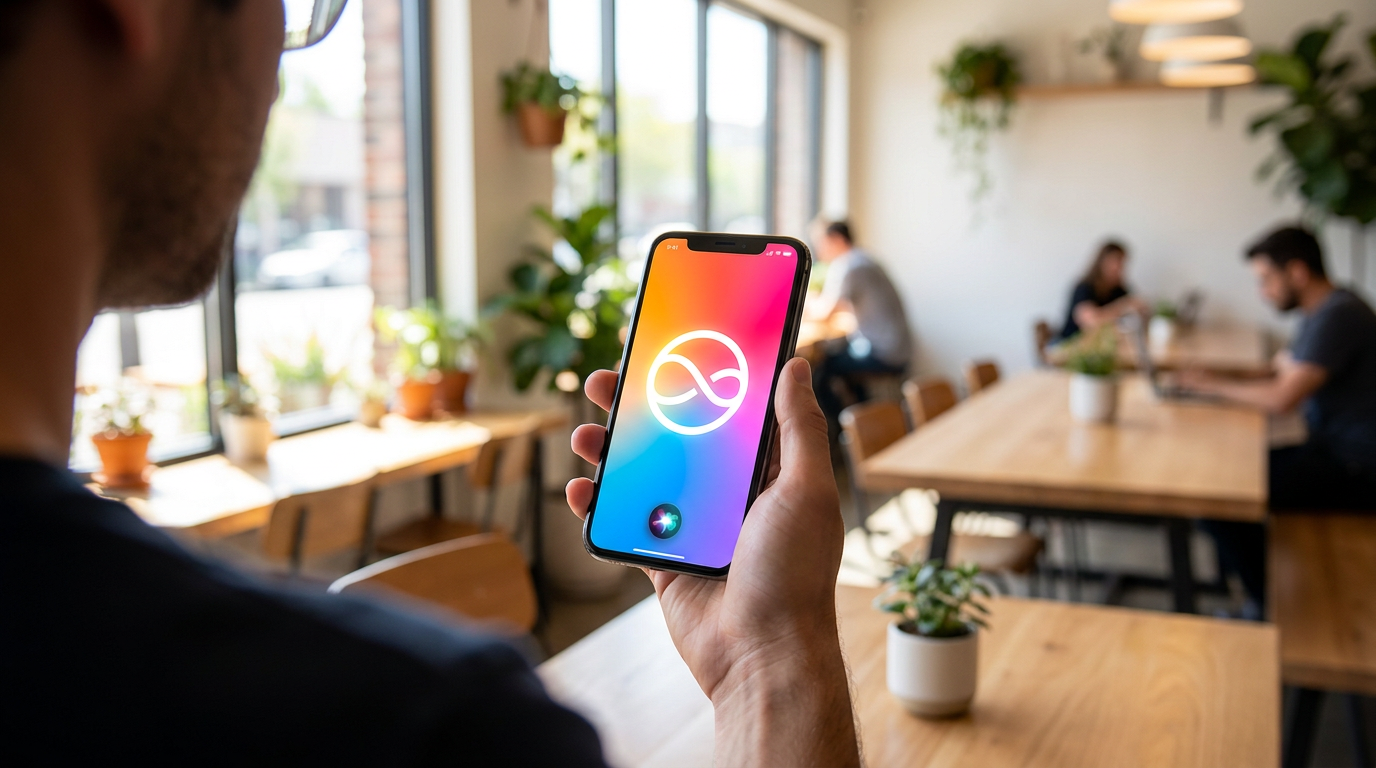
After years of trailing behind nimble competitors in the artificial intelligence race, Apple is finally giving its digital assistant a brain transplant. The upcoming iOS 27 update, currently in the hands of developers and early testers, introduces a completely overhauled version of Siri powered by the company's proprietary generative AI models. Early hands-on impressions suggest that the days of robotic commands and frustrating web-search fallbacks are largely over. Instead, the new assistant operates as a genuinely conversational partner, capable of understanding natural language, hesitations, and complex multi-step requests.[1][2]
The most immediate change users will notice is Siri's ability to maintain context from one query to the next. If a user asks for the weather in Chicago, and then follows up with "what about tomorrow?", the assistant seamlessly understands the location constraint without needing it repeated. This conversational memory extends across different applications. Reviewers note that you can ask Siri to find a specific photo from a recent trip, and then seamlessly command it to "send this to Sarah," with the AI understanding exactly which image and which contact are being referenced.[3][6]
Apple is leaning heavily into its traditional stronghold—user privacy—to differentiate its AI approach from cloud-heavy competitors. The vast majority of Siri's new generative capabilities are processed entirely on-device, utilizing the neural engines built into recent iPhone processors. This means that personal requests, from summarizing text messages to drafting emails, never leave the phone. For requests that require more computational power than the device can handle, Apple has introduced a secure cloud handoff system that encrypts the data and immediately deletes it after processing, a move designed to reassure privacy-conscious consumers.[5][7]

Beyond the headline-grabbing AI upgrades, iOS 27 is packed with dozens of quality-of-life improvements that refine the daily iPhone experience. The Messages app has received a significant overhaul, introducing advanced scheduling features and AI-generated summaries of busy group chats. Apple Maps now includes highly detailed topographic data and custom route creation, while the native Mail app features automatic categorization that sorts newsletters, transactional emails, and personal correspondence into distinct, easily navigable tabs.[1][6]
Beyond the headline-grabbing AI upgrades, iOS 27 is packed with dozens of quality-of-life improvements that refine the daily iPhone experience.
The true potential of the new Siri lies in its deep integration with third-party applications. Through a newly expanded App Intents API, developers can expose specific functions of their software directly to the digital assistant. This allows users to bypass app interfaces entirely for routine tasks. For example, a user could theoretically tell Siri to "order my usual from Starbucks" or "start a 30-minute outdoor run in Strava," and the assistant will execute the action in the background without requiring the user to open the respective apps and tap through menus.[4][7]
Perhaps the most futuristic addition is a feature Apple calls "Screen Awareness." With user permission, Siri can analyze the contents currently displayed on the iPhone's screen and take action based on that context. If a friend texts an address, a user can simply say "add this to my contacts," and Siri will extract the information and create a new address book entry. Early testers have praised this feature for eliminating the tedious copying and pasting that has long defined mobile multitasking, though it remains to be seen how reliably it works across non-standard app interfaces.[2][3]

However, these advanced capabilities come with strict hardware requirements. Because the new Siri relies heavily on local processing power to ensure speed and privacy, the full suite of AI features will be restricted to newer devices equipped with the latest Apple Silicon. While iOS 27 itself will be available on older models, features like Screen Awareness and conversational memory will likely require an iPhone 16 or newer. This hardware gatekeeping has sparked some frustration among users with older devices, though analysts note it is a necessary compromise to maintain performance without relying on server farms.[4][6]
From a strategic standpoint, the iOS 27 update represents a massive ecosystem play for Apple. By embedding a highly capable AI directly into the operating system, the company is reducing the need for users to download third-party AI apps or rely on external search engines. The seamless integration between hardware, software, and personal data creates a frictionless experience that competitors will struggle to replicate on fragmented platforms. Industry watchers suggest this could further lock users into the Apple ecosystem, as the convenience of a deeply integrated assistant becomes difficult to abandon.[5]
The rollout of these features will be gradual. Developers are currently testing the initial beta versions of iOS 27, with a public beta expected to launch in July. Apple has indicated that some of the more complex Siri integrations, particularly those involving third-party apps, will roll out in phases throughout the fall and into early 2027. As the software matures and developers update their apps to support the new APIs, the iPhone is poised to transition from a grid of static applications into a truly proactive digital assistant.[1][7]
How we got here
June 2026
Apple officially previews iOS 27 and the new Siri at its Worldwide Developers Conference.
Late June 2026
First developer betas reveal the extent of the new on-device AI capabilities.
July 2026
Expected release of the first public beta for general users.
September 2026
Anticipated official launch of iOS 27 alongside new iPhone hardware.
Viewpoints in depth
Everyday Users
Focus on the practical convenience of a smarter assistant.
For the average iPhone owner, the appeal of iOS 27 isn't in the underlying neural architecture, but in the elimination of daily friction. Users are expressing relief that they no longer have to speak to their phones in rigid, robotic syntax. The ability to casually ask Siri to summarize a long group text thread or pull up a specific document without navigating through folders is seen as a massive leap forward in mobile usability.
Privacy Advocates
Appreciate the local processing but remain vigilant about cloud handoffs.
Privacy experts have largely praised Apple's commitment to processing the bulk of AI requests directly on the device. By keeping personal data out of server farms, Apple avoids the data-scraping controversies that have plagued other AI companies. However, some advocates remain cautious about the 'secure cloud handoff' feature for complex queries, noting that any data leaving the device introduces a potential vulnerability, regardless of the encryption standards applied.
Third-Party Developers
Excited by new capabilities but wary of changing user habits.
The developer community is actively exploring the new App Intents API, which allows Siri to execute commands within their apps. While this opens up new ways for users to interact with software, it also presents a strategic challenge. If users can order food, log workouts, or send messages entirely through Siri's voice interface, they may spend less time actually looking at the developer's carefully designed app interface, potentially impacting in-app advertising and engagement metrics.
What we don't know
- How battery life will be impacted by the heavy on-device AI processing.
- Exactly which third-party apps will have full Siri integration ready at launch.
Key terms
- On-device processing
- Performing computational tasks directly on the phone's hardware rather than sending data to a remote server.
- App Intents API
- A framework that allows developers to expose specific functions of their apps to Siri, letting the assistant control the app.
- Screen Awareness
- An AI capability that allows the digital assistant to 'see' and understand the text and images currently displayed on the device.
Frequently asked
Will my older iPhone get the new Siri?
While iOS 27 will support older models, the advanced on-device AI features will likely be restricted to the iPhone 16 series and newer due to hardware requirements.
Is Apple using my data to train its AI?
Apple has stated that its on-device models are pre-trained and user data is not sent to the cloud or used to train global models.
When can I download iOS 27?
The developer beta is available now, with a public beta expected in July and a full release in September.
Sources
Source coverage
7 outlets
3 viewpoints surfaced







[1]TechCrunchTech Enthusiasts
Every new iOS 27 feature that’s worth knowing about
Read on TechCrunch →[2]WiredTech Enthusiasts
Siri AI Hands On: A Smart, Helpful Assistant
Read on Wired →[3]The VergeTech Enthusiasts
iOS 27 preview: Siri finally gets a brain
Read on The Verge →[4]MacRumorsApp Developers
Developers dive into iOS 27 beta: Hidden features and AI upgrades
Read on MacRumors →[5]Wall Street JournalPrivacy & Security Analysts
Apple's AI Push in iOS 27 Aims to Keep Users Locked In
Read on Wall Street Journal →[6]CNETApp Developers
How iOS 27 changes your daily iPhone routine
Read on CNET →[7]Apple NewsroomPrivacy & Security Analysts
Apple previews iOS 27 with major updates to Siri and Intelligence
Read on Apple Newsroom →

Every angle. Every day.
Get technology stories with full source coverage and perspective breakdowns delivered to your inbox.