
Apple's 'Siri AI' in iOS 27: Hands-On with the Upgrade That Finally Makes Siri Useful
Apple's iOS 27 developer beta introduces a completely overhauled Siri AI, featuring deep cross-app integration, on-screen awareness, and a dedicated app. Early testing reveals a significantly more capable assistant that finally delivers on Apple's long-standing AI promises.
By Factlen Editorial Team
- Apple Ecosystem Users
- Focus on seamless integration and reliable daily utility over raw AI power.
- AI Power Users
- Compare Siri AI against frontier models, noting its limitations in creative generation.
- Privacy Advocates
- Praise the on-device processing but remain cautious about extensive personal indexing.
What's not represented
- · Android Users
- · Third-Party App Developers
Why this matters
For hundreds of millions of iPhone users, this update transforms the device from a passive grid of apps into a proactive assistant that can actually execute multi-step tasks. It fundamentally changes how people will manage their schedules, emails, and daily digital chores.
Key points
- Siri AI in iOS 27 features a dedicated app and a new edge-to-edge screen animation.
- The assistant can index personal data across Mail, Messages, and Calendar to understand context.
- Visual Intelligence allows the camera to analyze real-world objects and execute tasks like splitting bills.
- Apple uses Private Cloud Compute to handle complex queries without storing user data.
- Siri AI requires an iPhone 15 Pro or newer and will not launch initially in the EU or China.
After years of trailing behind the generative AI curve, Apple has officially given its virtual assistant a much-needed brain transplant. Unveiled at the Worldwide Developers Conference (WWDC) on June 8, 2026, the new 'Siri AI' in iOS 27 represents the company's most aggressive software overhaul in a decade. For years, users have lamented Siri's inability to handle complex queries, often receiving a frustrating web search result instead of a direct action. Early hands-on testing of the developer beta reveals an assistant that has finally graduated from setting basic kitchen timers to acting as a system-wide orchestrator. By deeply integrating with the operating system, Siri is now capable of understanding nuanced context, reading active screens, and executing multi-step tasks autonomously, fundamentally changing how users interact with their iPhones.[1][2][8]
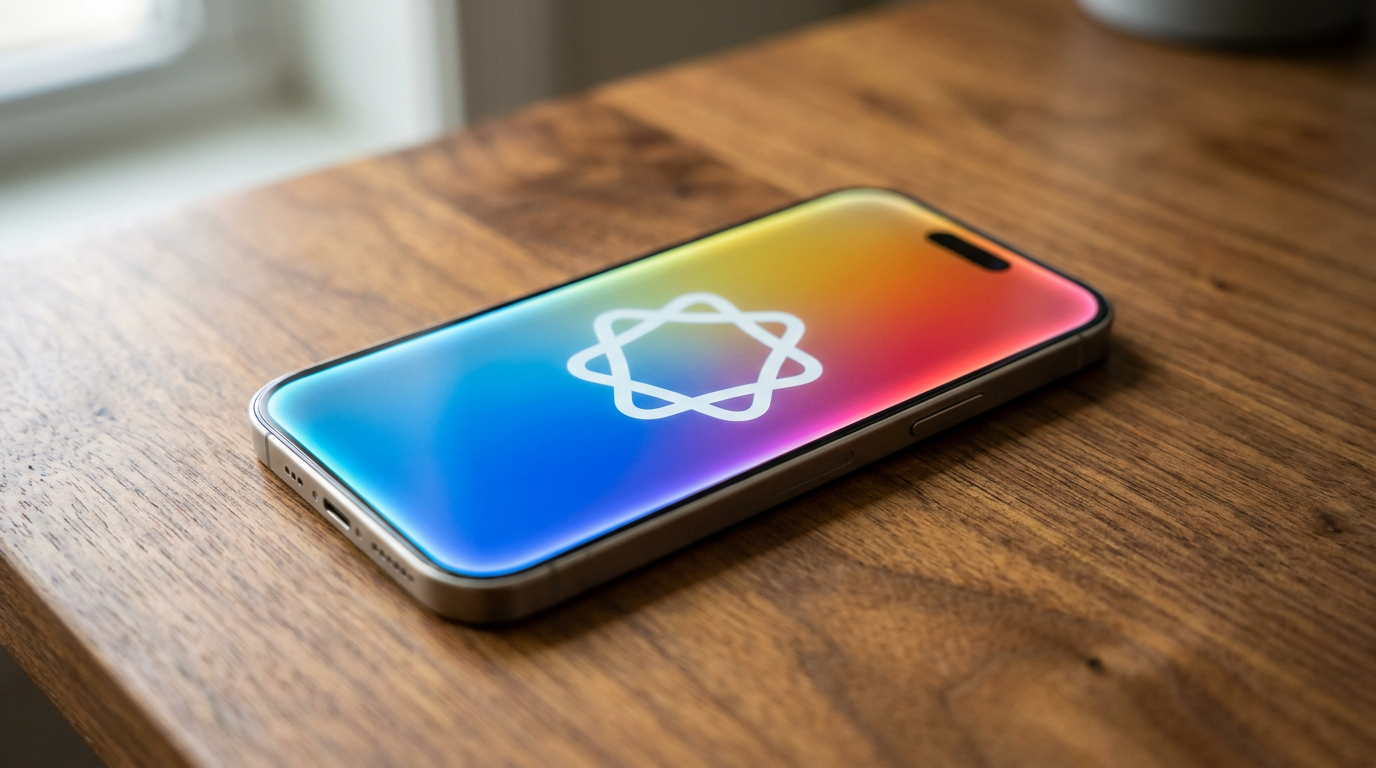
The most immediate and striking change to the user experience is visual. The familiar, isolated glowing orb that used to appear at the bottom of the screen has been entirely replaced by a translucent, edge-to-edge animation that pulses dynamically around the iPhone's bezel when activated. More importantly, Siri now features a dedicated app with a ChatGPT-style interface, allowing users to type their requests, review their contextual history, and manage ongoing AI tasks in a clean, centralized hub. This hybrid approach of voice and text acknowledges that users do not always want to speak aloud when interacting with complex AI workflows, especially in public spaces. The dedicated app also serves as a persistent workspace, meaning users can start a research task, leave the app, and return later to find their AI conversation exactly where they left it.[3][5][6]
Under the hood, Siri AI is powered by the next generation of Apple Foundation models, which were developed in a strategic collaboration with Google's Gemini technology and optimized for Apple's silicon. These advanced models allow Siri to tap into a deeply integrated semantic index of the user's personal data. By securely scanning emails, text messages, calendar events, and photos, Siri can connect the dots across disparate applications in a way that isolated chatbots simply cannot. For example, a user can ask a vague question like, 'What was the name of the restaurant I ate at in February with Sarah?' and Siri will cross-reference location data, photo timestamps, and message histories to deliver the exact answer, rather than just offering a generic web search.[2][5]

This deep personal context understanding translates into tangible, time-saving actions that reduce digital friction. Reviewers testing the iOS 27 developer beta have successfully handed off real, multi-step work to the assistant. If a flight confirmation arrives in Apple Mail, Siri can automatically extract the dates, times, airports, and confirmation numbers to create a comprehensive Calendar event, entirely without requiring the user to manually copy and paste the information. The assistant can even draft a structured email based on scattered bullet points buried in the Notes app. By acting as a bridge between different software silos, Siri AI effectively eliminates the tedious administrative tasks that have long defined the smartphone experience.[4][8]
The camera has also been elevated to a primary input method for Siri AI through a heavily upgraded feature called Visual Intelligence. Now occupying a dedicated, permanent mode alongside standard photo and video options in the Camera app, Visual Intelligence allows the iPhone to actively analyze the real world. Pointing the camera at a physical festival lineup poster prompts Siri to instantly offer calendar event creation for specific bands, while snapping a photo of a restaurant receipt allows the assistant to calculate tips and prepare an Apple Cash request to split the bill among friends. It can even analyze the nutritional information of a plated meal, providing a macronutrient breakdown directly on the viewfinder.[5][7][8]

The camera has also been elevated to a primary input method for Siri AI through a heavily upgraded feature called Visual Intelligence.
Beyond native Apple applications, Siri AI is gaining the unprecedented ability to take action across the broader iOS ecosystem on the user's behalf. The new Safari browser uses Apple Intelligence to automatically group open tabs by topic, surface stale pages, and provide one-tap summaries of long articles. Meanwhile, the Passwords app has been upgraded from a static digital vault to an active security manager. If Siri detects that a saved login has been compromised in a data breach, it can navigate to the affected website, sign in, generate a new cryptographic password, and save the updated credentials entirely on its own, shielding the user from the tedious recovery process.[6][7][8]
Despite these sweeping, data-intensive capabilities, Apple has rigorously maintained its strict stance on user privacy. The personal context index that powers Siri AI is generated and stored entirely on-device, meaning Apple does not have access to a user's semantic history. For highly complex queries that require more processing power than the iPhone's neural engine can handle locally, Apple routes the request through its proprietary Private Cloud Compute infrastructure. This server system ensures that user data is cryptographically anonymized, processed securely in a walled garden, and immediately discarded after the request is fulfilled, preventing the creation of the cloud-based tracking profiles favored by other tech giants.[1][5][6]
However, early adopters and tech reviewers note that Siri AI is not without its growing pains and limitations. While it excels at everyday productivity, system navigation, and contextual retrieval, it still struggles with complex creative tasks. Testers found that when asked to perform advanced generative photo edits—such as swapping the background of a car photo to a beach setting—Siri AI faltered, whereas standalone applications like Google Gemini handled the request effortlessly. Industry analysts describe the iOS 27 update as 'just good enough' to steady Apple's AI ship and satisfy investors, rather than a definitive leapfrog over the raw reasoning capabilities of frontier models from OpenAI and Anthropic.[1][3]

Hardware availability remains a significant bottleneck for this technological leap. Because Siri AI requires immense on-device processing power and memory bandwidth, it is strictly limited to the iPhone 15 Pro, iPhone 15 Pro Max, and the upcoming iPhone 16 lineup, alongside iPads and Macs equipped with M1 chips or newer. Furthermore, regulatory complexities and antitrust scrutiny mean that Siri AI will not be available initially in the European Union or China. This staggered release strategy leaves a substantial portion of Apple's global user base waiting for a localized rollout, creating a temporary feature disparity across different regions.[1][2]
For the estimated 1.5 billion active iPhone users who will eventually gain access to compatible hardware, iOS 27 marks a fundamental shift in how they will interact with their devices. By bridging the gap between isolated applications and transforming the camera into an active search engine, Apple has finally delivered an assistant that feels genuinely proactive rather than merely reactive. As the software moves through its developer beta phases toward a highly anticipated public release this fall, Siri AI is poised to make the iPhone significantly more capable, proving that deep ecosystem integration can rival raw artificial intelligence.[3][4][6]
How we got here
June 2024
Apple previews its initial Apple Intelligence vision at WWDC, promising a smarter Siri.
June 8, 2026
Apple officially unveils the overhauled 'Siri AI' and iOS 27 at WWDC 2026.
Mid-June 2026
The first iOS 27 developer betas roll out, giving testers hands-on access to the new assistant.
Fall 2026
Expected public release of iOS 27, bringing Siri AI to compatible devices worldwide.
Viewpoints in depth
Apple Ecosystem Users
Focus on seamless integration and reliable daily utility over raw AI power.
For users deeply entrenched in the Apple ecosystem, the iOS 27 update is a long-awaited quality-of-life improvement. This camp values the fact that Siri can finally connect the dots between their existing Mail, Calendar, and Messages apps without requiring third-party workarounds. They appreciate that the AI operates invisibly in the background to automate tedious tasks, prioritizing reliability and seamless cross-device syncing over experimental generative features.
AI Power Users
Compare Siri AI against frontier models, noting its limitations in creative generation.
Enthusiasts who regularly use standalone tools like ChatGPT, Claude, or Google Gemini view Siri AI as a necessary but iterative step. While they praise the on-screen awareness and system-level integration, they point out that Apple's foundation models still lack the raw reasoning and creative horsepower of the industry leaders. For this camp, Siri AI is an excellent device manager, but it won't replace their dedicated AI apps for complex coding, deep research, or advanced image generation.
Privacy Advocates
Praise the on-device processing but remain cautious about extensive personal indexing.
Cybersecurity and privacy experts largely commend Apple's Private Cloud Compute architecture, noting that it sets a new industry standard for processing complex AI requests without harvesting user data. However, some advocates express mild concern about the sheer volume of personal data—ranging from private messages to financial receipts—that must be indexed on-device to make Siri AI functional. While the data doesn't leave the user's control, the comprehensive nature of the semantic index makes device security more critical than ever.
What we don't know
- When Siri AI will become available in the European Union and China given regulatory hurdles.
- How deeply third-party developers will be able to integrate their apps into Siri's semantic index.
Key terms
- Apple Intelligence
- Apple's suite of generative AI features integrated deeply into iOS, macOS, and iPadOS.
- On-Screen Awareness
- A feature allowing an AI assistant to read and understand the text and images currently displayed on a device's screen.
- Private Cloud Compute
- Apple's secure server infrastructure designed to process complex AI requests without storing or tracking user data.
- Semantic Index
- A structured database of a user's personal information—like emails and photos—that allows AI to understand context and relationships.
Frequently asked
Which iPhones support the new Siri AI?
Siri AI requires significant processing power and is limited to the iPhone 15 Pro, iPhone 15 Pro Max, and the upcoming iPhone 16 lineup.
Does Siri AI send my personal data to the cloud?
Most tasks are processed entirely on-device. For complex requests, Apple uses Private Cloud Compute, which cryptographically anonymizes data and immediately discards it after processing.
When will iOS 27 be available to the public?
iOS 27 is currently in developer beta, with a full public release expected in the fall of 2026.
Sources
Source coverage
8 outlets
3 viewpoints surfaced








[1]AppleApple Ecosystem Users
Apple introduces Siri AI, a profoundly more capable and personal assistant
Read on Apple →[2]MacRumorsApple Ecosystem Users
Everything New With Siri AI in iOS 27
Read on MacRumors →[3]Tom's GuideAI Power Users
I found the future of Siri in iOS 27, and it's currently an AGI Android app
Read on Tom's Guide →[4]TechRadarAI Power Users
Apple just gave 'Siri AI' its biggest upgrade ever — whether iPhone users asked for it or not
Read on TechRadar →[5]BGRApple Ecosystem Users
All Apple Intelligence Features Coming In iOS 27
Read on BGR →[6]AI Empire MediaPrivacy Advocates
Siri AI 2026 is Apple's biggest Intelligence overhaul yet
Read on AI Empire Media →[7]MediumPrivacy Advocates
Visual Intelligence on iOS 27: Your iPhone Camera Just Got a Lot Smarter
Read on Medium →[8]SubstackAI Power Users
What changed in iOS 27 and how to put Siri to work
Read on Substack →
Every angle. Every day.
Get technology stories with full source coverage and perspective breakdowns delivered to your inbox.