
Iran Re-Closes Strait of Hormuz Over Lebanon Strikes, Threatening US Peace Deal
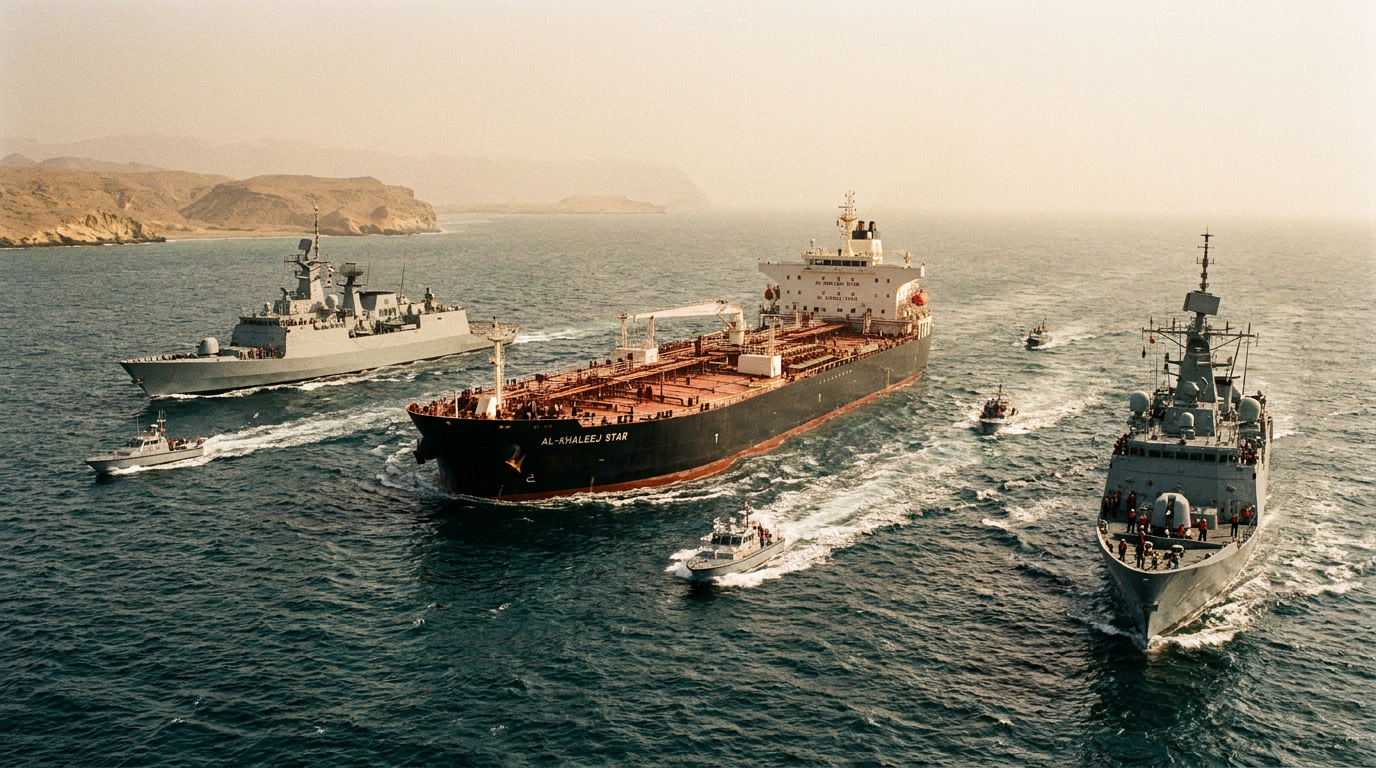
Iran has announced the re-closure of the Strait of Hormuz in response to ongoing Israeli military operations in Lebanon, threatening the collapse of the fragile US-Iran peace agreement. The renewed tensions have forced the postponement of follow-up diplomatic talks in Switzerland and sparked fears of a renewed global energy crisis.
By Factlen Editorial Team
- Iranian Leadership
- Views the cessation of Israeli operations in Lebanon as a non-negotiable condition for keeping the Strait of Hormuz open.
- Israeli Government
- Maintains it is not bound by the US-Iran pact and must retain freedom to dismantle Hezbollah's infrastructure.
- US Administration
- Prioritizes preserving the fragile agreement to keep the strait open, while managing friction with allies.
- Global Energy Markets
- Deeply concerned about the re-closure of the world's most critical oil chokepoint and the resulting economic fallout.
What's not represented
- · Lebanese civilians caught in the crossfire of the Israel-Hezbollah conflict
- · Commercial shipping companies forced to reroute vessels and absorb logistical costs
Why this matters
The re-closure of the Strait of Hormuz threatens to choke off 20 percent of the world's oil supply, risking a massive spike in global energy prices and inflation just as the US-Iran war appeared to be ending.
Key points
- Iran has re-closed the Strait of Hormuz to commercial traffic, citing Israeli attacks in Lebanon.
- The closure threatens the fragile 14-point US-Iran memorandum of understanding signed days earlier.
- Planned follow-up diplomatic talks between the US and Iran in Switzerland have been postponed.
- Israel maintains it is not bound by the US-Iran deal and must dismantle Hezbollah's infrastructure.
- The US is facing diplomatic friction with European allies, including a public dispute with Italy over airstrip access.
Less than a week after the United States and Iran signed a landmark memorandum of understanding to end their direct military conflict, the fragile diplomatic breakthrough is already unraveling. On Saturday, Iran's central military command announced it was re-closing the Strait of Hormuz to commercial vessel traffic. The abrupt reversal threatens to plunge global energy markets back into chaos and raises serious questions about whether the broader peace framework can survive its first major stress test.[1][3]
The immediate catalyst for the collapse is the ongoing, intense warfare in southern Lebanon. Despite the US-Iran agreement implicitly calling for a halt to regional hostilities, Israel and the Iran-backed militant group Hezbollah have engaged in their deadliest exchanges since the pact was signed. Over the past two days, Israeli airstrikes have killed at least 47 people in Lebanon, while Hezbollah rocket and drone attacks have resulted in the deaths of four Israeli soldiers.[2][5]
The Khatam-al Anbiya Central Headquarters, which coordinates Iran's joint military operations, declared the strait's closure a direct response to what it termed an "enemy's breach of promise." Iranian state television broadcast the military's statement, which warned that if the aggression in Lebanon continues, Tehran will take further steps to force compliance. For Iranian leadership, the cessation of Israeli operations against Hezbollah is an unwritten but non-negotiable pillar of the broader ceasefire.[3][7]
The mechanism of the original 14-point memorandum of understanding, signed by US President Donald Trump and Iranian President Masoud Pezeshkian, was designed as a phased de-escalation. In exchange for the United States lifting its crippling naval blockade on Iranian ports, Tehran agreed to immediately reopen the Strait of Hormuz—a critical maritime chokepoint—for a 60-day period without charging transit fees.[4][6]

This 60-day window was intended to serve as a cooling-off period, allowing diplomats to convene in Switzerland to negotiate a permanent resolution to the conflict and address Iran's nuclear program. However, the mechanism relied on a delicate regional balance that did not include all the active combatants. Neither Israel nor Hezbollah are signatories to the US-Iran deal, leaving a massive loophole in the security architecture.[2][5]
The Israeli government's position is unequivocal: it is not bound by the Washington-Tehran accord. Israeli officials maintain that the military must retain complete operational freedom to dismantle Hezbollah's infrastructure in southern Lebanon. Following months of cross-border rocket fire that displaced tens of thousands of northern Israeli residents, Prime Minister Benjamin Netanyahu's cabinet views the neutralization of Hezbollah as an existential necessity, regardless of the diplomatic inconvenience it causes the United States.[2][4]
Hezbollah, conversely, has refused to halt its attacks unless Israel commits to a full withdrawal from Lebanese territory. The militant group has leveraged the ambiguity of the US-Iran deal to its advantage, continuing to fire salvos of rockets and drones at Israeli military positions while relying on Tehran to apply geopolitical pressure on its behalf.[5][7]
Hezbollah, conversely, has refused to halt its attacks unless Israel commits to a full withdrawal from Lebanese territory.
The diplomatic fallout from the renewed fighting has been swift. The highly anticipated follow-up talks in the Swiss village of Obbürgen, which US Vice President JD Vance and chief Iranian negotiator Mohammad-Bagher Ghalibaf were scheduled to attend, have been abruptly postponed. The Swiss foreign ministry confirmed the delay, noting that the environment was no longer conducive to productive negotiations.[4][6]
The collapse of the talks highlights the immense difficulty of isolating the US-Iran bilateral relationship from the broader proxy conflicts that define the Middle East. US intelligence agencies had reportedly warned the White House days earlier that continued Israeli operations in Lebanon would likely undermine the memorandum of understanding. Those warnings have now materialized, leaving the Trump administration scrambling to salvage its signature foreign policy achievement.[4][5]

The strain of the conflict is also fracturing the United States' traditional alliances, exposing deep rifts over the execution of the war. In a stark public display of this friction, President Trump recently lashed out at Italian Prime Minister Giorgia Meloni. Trump accused the Italian government of turning its back on the US by refusing to allow American forces to use Italian airstrips during the military campaign against Iran.[8]
The diplomatic spat with Rome underscores the logistical and political costs of the US-Iran war. Trump claimed the denial of airstrip access created a "major logistical inconvenience" and publicly rejected Meloni's attempts to mend relations following the cessation of direct US-Iran hostilities. The public rebuke has alarmed European allies, who are already deeply anxious about the economic fallout of the conflict.[8]
The economic stakes of the current standoff are staggering. The Strait of Hormuz, a narrow waterway between the Persian Gulf and the Gulf of Oman, is the world's most important oil transit chokepoint. Roughly 20 percent of global oil consumption passes through the strait daily. Its re-closure threatens to sever the global economy from significant supplies of oil and natural gas, risking a massive spike in energy prices that could trigger widespread inflation.[1][4]

Before the latest closure, commercial traffic had briefly resumed, with at least 10 commercial vessels transiting the strait on Thursday morning. The sudden reversal has left shipping companies in limbo, forcing them to reroute vessels or anchor them safely outside the conflict zone. The disruption is exactly what European and Asian economies had feared when the war first erupted in late February.[4][6]
Beyond the immediate closure, military analysts note that Iran is using the strait as a strategic lever to secure long-term concessions. The Institute for the Study of War assesses that Tehran ultimately seeks to establish a joint Iranian-Omani management scheme for the waterway, which would allow it to legally charge transit fees to commercial vessels. By demonstrating its willingness to shut down the strait over proxy conflicts, Iran is reinforcing its demand for permanent control over the maritime route.[7]
The uncertainty surrounding the crisis is now twofold. First, it remains unclear whether US and Qatari mediators can successfully broker a localized ceasefire between Israel and Hezbollah that satisfies both Jerusalem's security demands and Tehran's geopolitical red lines. Second, if the fighting in Lebanon persists, the international community faces the daunting question of how to bypass a permanently closed Strait of Hormuz without triggering a wider, uncontrollable regional war.[2][5]
For now, the 60-day window for peace has slammed shut almost as quickly as it opened. With military forces on high alert, diplomatic channels frozen, and the global energy supply held hostage to the fighting in southern Lebanon, the Middle East remains locked in a volatile holding pattern, waiting to see which side will blink first.[1][4]
How we got here
Feb 28, 2026
US and Israeli strikes kill Iranian Supreme Leader Ayatollah Ali Khamenei, sparking the direct US-Iran war.
Mid-June 2026
US President Trump and Iranian President Pezeshkian sign a 14-point MoU to end hostilities and reopen the Strait of Hormuz.
June 18, 2026
Commercial shipping briefly resumes through the Strait of Hormuz as the US lifts its naval blockade.
June 19, 2026
Heavy fighting erupts between Israel and Hezbollah in Lebanon, killing 47 Lebanese and 4 Israeli soldiers.
June 20, 2026
Iran announces the re-closure of the Strait of Hormuz, and planned US-Iran talks in Switzerland are postponed.
Viewpoints in depth
Iran's Strategic Calculus
Tehran views the cessation of Israeli operations in Lebanon as a non-negotiable condition for keeping the Strait of Hormuz open.
For Iran's military and political leadership, the memorandum of understanding signed with the United States was never strictly limited to bilateral naval maneuvers. Tehran considers its 'Axis of Resistance'—particularly Hezbollah in Lebanon—as an integral part of its forward defense strategy. By conditioning the reopening of the Strait of Hormuz on an Israeli ceasefire in Lebanon, Iran is utilizing its control over global energy markets to shield its most valuable proxy. Furthermore, analysts assess that Iran is using the current crisis to normalize the idea that it has the ultimate authority to regulate, and eventually toll, commercial traffic through the vital waterway.
Israel's Security Imperative
Jerusalem maintains it is not bound by the US-Iran deal and must dismantle Hezbollah's military infrastructure.
The Israeli government views the US-Iran diplomatic breakthrough as a bilateral arrangement that fails to address Israel's immediate security threats. Following months of cross-border attacks that have displaced tens of thousands of civilians from northern Israel, Prime Minister Benjamin Netanyahu's cabinet insists that Hezbollah must be pushed back from the border. Israeli officials argue that halting their military campaign now, simply to facilitate a US-brokered reopening of the Strait of Hormuz, would leave a heavily armed Iranian proxy entrenched on their doorstep. Consequently, Israel has prioritized its tactical military objectives in Lebanon over Washington's broader strategic timeline.
The US Diplomatic Bind
The Trump administration is struggling to preserve its landmark peace deal while managing fractured alliances.
The White House finds itself caught between its desire to secure a historic diplomatic victory and the messy realities of Middle Eastern proxy warfare. The administration's primary goal is to keep the Strait of Hormuz open to prevent a global energy crisis and to initiate talks on Iran's nuclear program. However, achieving this requires restraining an Israeli government that feels existentially threatened by Hezbollah. Compounding the challenge is the administration's frayed relationship with traditional European allies, exemplified by the public dispute with Italy over airstrip access, which has left the US increasingly isolated in its management of the conflict's fallout.
What we don't know
- Whether US and Qatari mediators can successfully broker a separate ceasefire between Israel and Hezbollah to satisfy Iran's conditions.
- How long Iran intends to keep the Strait of Hormuz closed, and whether it will attempt to permanently institute transit fees for commercial vessels.
- If the postponed US-Iran talks in Switzerland will be rescheduled before the 60-day window of the original agreement expires.
Key terms
- Strait of Hormuz
- A narrow maritime chokepoint between the Persian Gulf and the Gulf of Oman through which roughly 20 percent of the world's oil consumption passes.
- Memorandum of Understanding (MoU)
- A formal agreement between two or more parties that outlines the terms and details of an understanding, serving as the foundation for the recent US-Iran ceasefire.
- Khatam-al Anbiya Central Headquarters
- The highest-level joint command center of the Iranian Armed Forces, responsible for coordinating military operations and announcing the strait's closure.
Frequently asked
Why did Iran close the Strait of Hormuz again?
Iran's military stated the closure is a direct response to ongoing Israeli military operations against Hezbollah in Lebanon, which Tehran views as a breach of the US-Iran ceasefire agreement.
What was the US-Iran memorandum of understanding?
It was a 14-point agreement where the US agreed to lift its naval blockade on Iran in exchange for Tehran reopening the Strait of Hormuz for 60 days without transit fees, paving the way for broader peace talks.
Is Israel part of the US-Iran deal?
No. Israel is not a signatory to the agreement and maintains that it must continue military operations in Lebanon to secure its northern border against Hezbollah.
Why is Trump criticizing Italy's Prime Minister?
President Trump publicly criticized Giorgia Meloni for refusing to allow US forces to use Italian airstrips during the military campaign against Iran, calling it a 'major logistical inconvenience.'
Sources
Source coverage
8 outlets
4 viewpoints surfaced








[1]BBCGlobal Energy Markets
Iran says Strait of Hormuz will be closed over Israel attacks on Lebanon
Read on BBC →[2]The New York TimesIsraeli Government
Israel and Hezbollah Are Still Fighting, Several Cease-Fires Later
Read on The New York Times →[3]Al ArabiyaIranian Leadership
Iran says Hormuz Strait closed over Israel attacks on Lebanon
Read on Al Arabiya →[4]The GuardianGlobal Energy Markets
US-Iran talks cancelled as Israel and Hezbollah trade deadly strikes
Read on The Guardian →[5]Associated PressIsraeli Government
Deadly fighting persists in Lebanon as the US-Iran deal is under threat
Read on Associated Press →[6]CBS NewsUS Administration
Switzerland says U.S.-Iran talks postponed
Read on CBS News →[7]Institute for the Study of WarIranian Leadership
Iran Update, June 18, 2026
Read on Institute for the Study of War →[8]Fox NewsUS Administration
Trump says Meloni 'wants to be friends again' after Italy refused to help US amid Iran war
Read on Fox News →
More in news politics
See all 6 stories →Electoral Reform
The Evidence on Ranked-Choice Voting: Does It Actually Reduce Polarization?
6 sources
Gun Rights
Supreme Court Strikes Down Federal Gun Ban for Marijuana Users
7 sources
Strait of Hormuz
Iran Threatens to Close Strait of Hormuz Following Israeli Strikes in Lebanon
7 sources
Cognitive Security
Evidence Pack: Does 'Pre-Bunking' Actually Protect Voters From Misinformation?
6 sources

Every angle. Every day.
Get news politics stories with full source coverage and perspective breakdowns delivered to your inbox.