
The "Build, Baby, Build" Era: How Hard Tech and AI Are Reshaping American Entrepreneurship
A new wave of founders and investors is pivoting from software to physical manufacturing, driven by AI integration, national security demands, and a push to rebuild domestic industrial capacity.
By Factlen Editorial Team
- Hard Tech Founders & Investors
- Believes applying software-like iteration to physical manufacturing will unlock massive economic value.
- Defense & National Security Officials
- Prioritizes sovereign capability and the rapid modernization of the military supply chain.
- Workforce & Labor Advocates
- Emphasizes that the manufacturing renaissance will fail without massive investment in human capital.
What's not represented
- · Environmental Advocates concerned about the energy and resource consumption of a massive industrial buildout.
- · Legacy Manufacturing Workers whose traditional skills may become obsolete in AI-native factories.
Why this matters
For the last two decades, venture capital overwhelmingly favored software and apps. The sudden pivot toward physical manufacturing, defense tech, and robotics signals a generational shift in where the highest-paying jobs, largest investments, and most critical innovations will be located.
Key points
- A new wave of venture capital is flowing into hardware, robotics, and advanced manufacturing startups.
- The 'Reindustrialize Summit' in Detroit highlighted the shift toward rebuilding domestic industrial capacity.
- Geopolitical tensions and supply chain vulnerabilities are driving demand for 'sovereign capability' in manufacturing.
- Startups are using AI and digital twins to automate factories and improve the unit economics of hardware.
- A severe shortage of skilled technical workers remains the biggest bottleneck to the reindustrialization movement.
For the better part of two decades, the quintessential American startup was a software company. Founders built apps, optimized digital advertising, and scaled cloud services. But in 2026, the entrepreneurial zeitgeist has decisively shifted from silicon to steel. A new movement, rallying around the mantra "Build, Baby, Build," is driving a massive resurgence in hardware entrepreneurship, advanced manufacturing, and defense technology.[1][7]
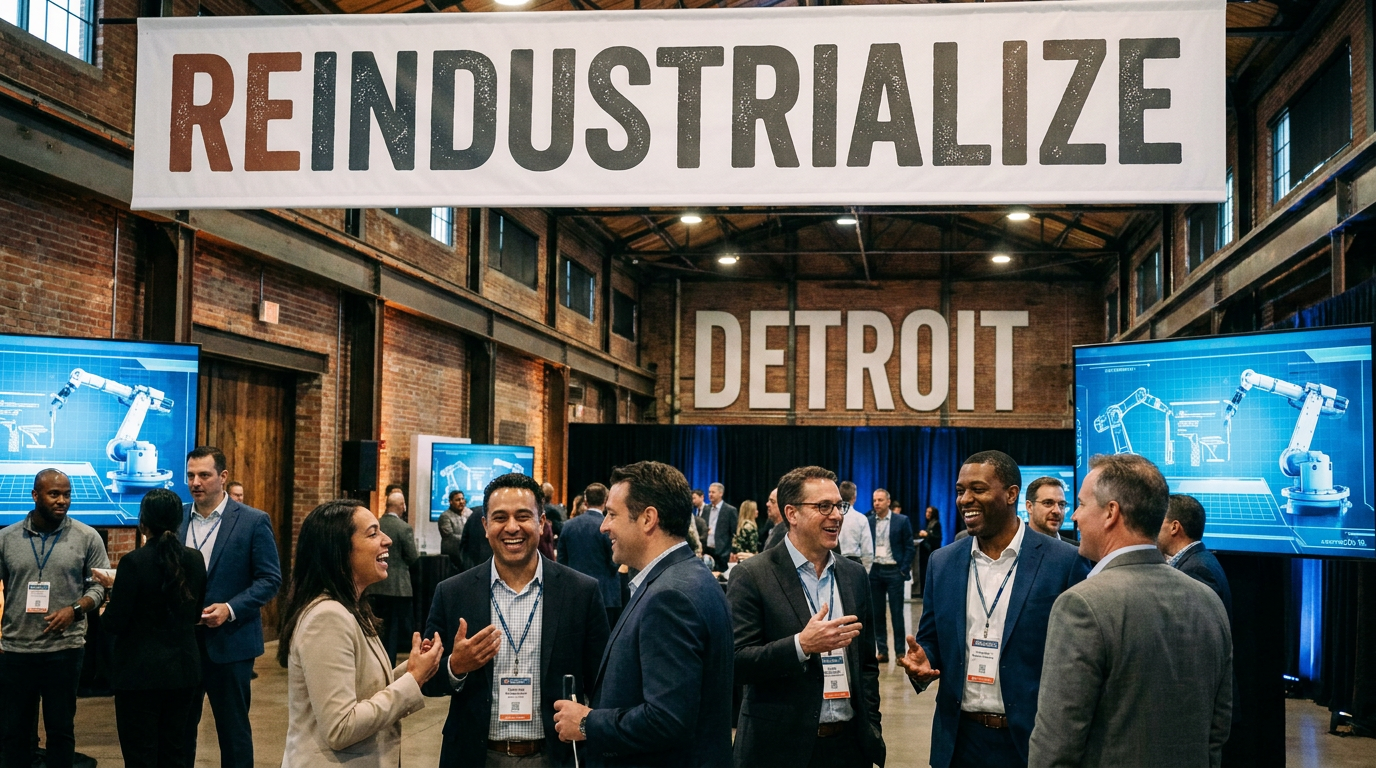
This pivot was on full display in mid-June at the Reindustrialize Summit in Detroit. The gathering brought together thousands of founders, venture capitalists, and policymakers with a singular focus: rebuilding the American industrial base. The energy at the summit underscored a growing consensus that the United States outsourced too much of its physical production capacity, and that the next trillion-dollar companies will be those that figure out how to make complex physical goods domestically, efficiently, and at scale.[1][4][6]
Several converging factors are fueling this hard-tech renaissance. The first is geopolitical. Supply chain shocks and rising tensions have made "sovereign capability"—the ability of a nation to manufacture its own critical infrastructure and defense systems—a top priority. The U.S. government has aggressively incentivized domestic production through legislation like the CHIPS Act and the Inflation Reduction Act, while the White House's recent "America's AI Action Plan" explicitly called for an industrial renaissance to support energy-intensive AI infrastructure.[4][5][7]
The defense sector is acting as a massive catalyst for these startups. Legacy aerospace and defense supply chains have become notoriously slow and convoluted, often relying on mom-and-pop component producers that are aging out of the market. In response, a new breed of agile, venture-backed companies is stepping in to modernize weapons production and defense logistics.[2][3]

For example, The Advanced Manufacturing Company of America (Amca), launched by former SpaceX engineers, recently raised $76.5 million to consolidate and upgrade legacy component suppliers. Rather than building factories from scratch, Amca is acquiring existing suppliers and integrating them into a modernized, high-speed network capable of producing the sensors and flight-control computers required for modern defense systems.[3]
Similarly, traditional industrial giants are recognizing the need for speed and agility. General Motors and Lockheed Martin recently announced a collaboration to strengthen the U.S. industrial base across the defense sector, a move that highlights how commercial manufacturing expertise is increasingly being applied to national security challenges.[2]
But the resurgence is not just about government contracts; it is fundamentally driven by a technological inflection point. For years, hardware startups struggled with brutal unit economics and slow iteration cycles. Today, the integration of artificial intelligence and robotics is changing the math.[6][7]
But the resurgence is not just about government contracts; it is fundamentally driven by a technological inflection point.
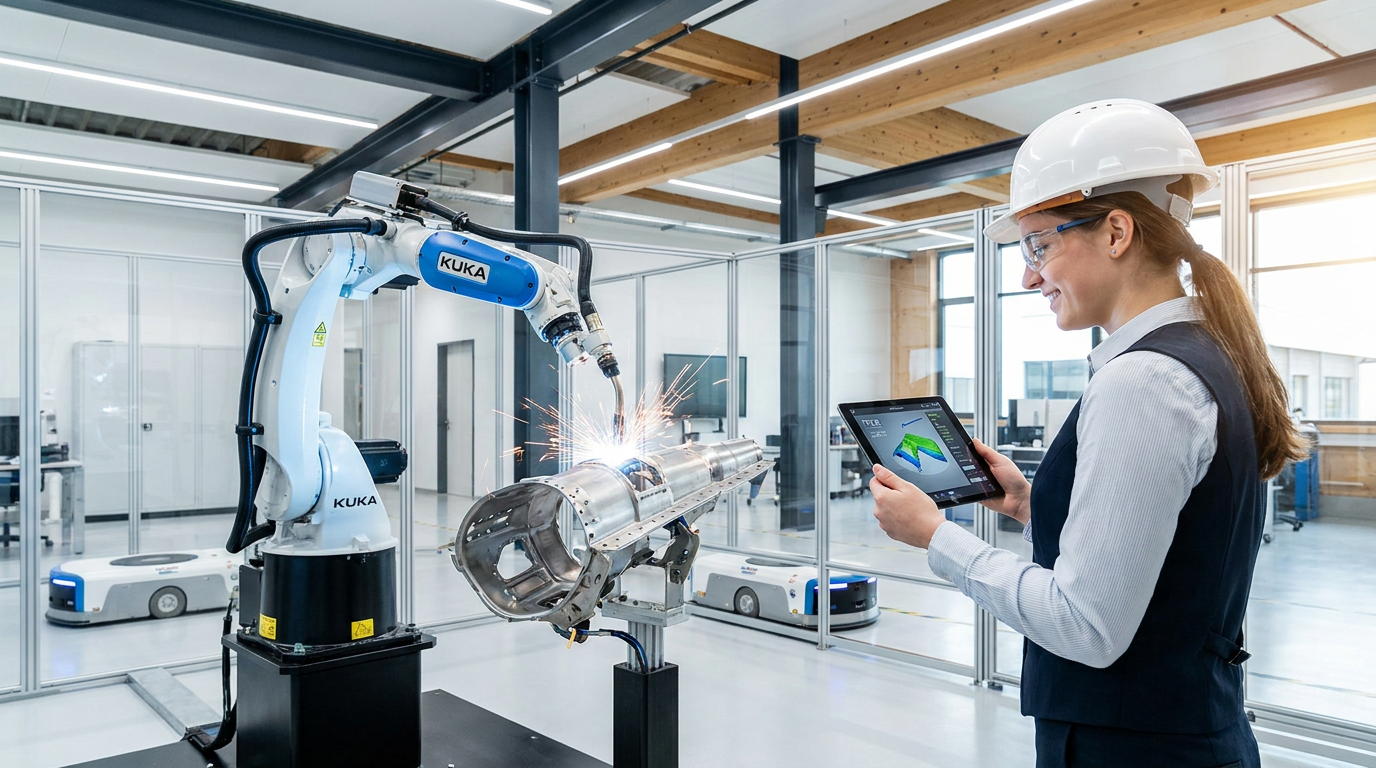
"Physical AI"—the application of machine learning to robotics and factory operations—is allowing startups to automate complex tasks that previously required highly specialized human labor. Digital twins, which create dynamic virtual replicas of physical factories, enable founders to simulate and optimize entire production lines before spending a single dollar on physical equipment.[7]
This technological leap is enabling entirely new business models. Take Isembard, a UK-based advanced manufacturing startup that recently raised a $50 million Series A to expand aggressively into the United States. Isembard is pioneering a "franchise" model for manufacturing, aiming to become the "McDonald's of manufacturing."[3]

The company provides franchisees with its proprietary technology, brand, accreditations, and customer base, allowing local operators to spin up high-tech factories equipped with computer numerical control (CNC) machines and 3D printers. This decentralized approach allows production to scale rapidly while empowering local entrepreneurs to participate in the hard-tech boom.[3]
Despite the influx of capital and technology, the movement faces a severe bottleneck: human capital. While tech giants can commit billions to building data centers and automated factories, the limiting factor is the skilled workforce required to build, operate, and maintain this infrastructure.[6][7]
A recent survey by the New American Industrial Alliance found that while 52% of manufacturers have already implemented robotics and automation, a staggering 69% identify skilled technical roles as their hardest positions to fill. The tension between rapid technological innovation and a lagging workforce pipeline is the defining challenge of the reindustrialization era.[6]

To bridge this gap, the industry is rethinking education and training. The traditional divide between "blue-collar" hardware work and "white-collar" software engineering is dissolving. Modern factory technicians must be fluent in both physical machinery and the software that controls it. Community colleges and vocational programs are increasingly partnering with startups to develop curriculums that blend mechanical engineering with data science and robotics.[7]
The implications of this shift are profound. For decades, the economic gains of the tech boom were heavily concentrated in coastal software hubs. The reindustrialization movement, by contrast, requires vast physical footprints, access to energy, and proximity to logistics networks.[4][7]
This is driving investment and job creation into the American heartland, revitalizing legacy manufacturing hubs like Detroit, and creating new centers of innovation in states like Texas and Ohio. If the "Build, Baby, Build" ethos succeeds, it promises not only to secure supply chains and national defense but to distribute the wealth of the next technological revolution far more broadly across the physical landscape of the country.[1][7]
How we got here
August 2022
The CHIPS and Science Act is signed, injecting billions into domestic semiconductor manufacturing.
2024 - 2025
Defense-tech startups like Anduril and Hadrian raise massive funding rounds, proving the viability of venture-backed hardware.
July 2025
The White House releases 'America's AI Action Plan,' explicitly calling for an industrial renaissance to support AI infrastructure.
June 2026
The Reindustrialize Summit in Detroit draws thousands of leaders, cementing the 'Build, Baby, Build' movement as a dominant entrepreneurial trend.
Viewpoints in depth
Hard Tech Founders & Investors
This camp believes that applying software-like iteration speeds to physical manufacturing will unlock trillion-dollar opportunities.
Venture capitalists and startup founders argue that the legacy industrial base has grown complacent and slow. By leveraging AI, digital twins, and modular robotics, they believe startups can dramatically compress the time it takes to design, test, and manufacture complex hardware. They view the current environment not just as a national security necessity, but as the most lucrative investment frontier of the decade, capable of yielding returns that rival the early days of the internet.
Defense & National Security Officials
This group prioritizes sovereign capability and the rapid modernization of the military supply chain.
For policymakers and defense leaders, the reindustrialization movement is an existential imperative. They point out that the U.S. cannot rely on strategic competitors for the components that power its critical infrastructure and weapons systems. This camp actively encourages the disruption of legacy defense contractors, pushing for a more agile, decentralized network of suppliers that can surge production of drones, sensors, and munitions in the event of a global conflict.
Workforce & Labor Advocates
This perspective emphasizes that the manufacturing renaissance will fail without massive investment in human capital.
Labor advocates and educators warn that capital and AI alone cannot build factories. They highlight the severe shortage of electricians, machinists, and specialized technicians required to maintain advanced robotics. This camp argues that the 'Build, Baby, Build' agenda must be paired with a 'Train, Baby, Train' initiative, advocating for stronger vocational programs, apprenticeships, and higher wages to attract a new generation to industrial trades.
What we don't know
- Whether the venture capital model, which demands rapid scaling and massive returns, can sustainably adapt to the capital-intensive realities of physical manufacturing.
- How quickly the U.S. educational system can pivot to produce the hundreds of thousands of specialized technicians required to operate AI-native factories.
- The extent to which future administrations will maintain the tariffs and subsidies currently driving the onshoring boom.
Key terms
- Physical AI
- The application of artificial intelligence and machine learning to physical systems, such as robotics and factory automation, allowing machines to adapt to complex tasks.
- Digital Twin
- A dynamic, real-time virtual representation of a physical asset or factory, used to simulate and optimize production before physical deployment.
- Sovereign Capability
- A nation's ability to independently manufacture the critical infrastructure, technologies, and defense systems required for its security and economy.
- Computer Numerical Control (CNC)
- The automated control of machining tools by means of a computer, essential for precision manufacturing.
- Onshoring
- The practice of transferring a business operation that was moved overseas back to the country from which it originally relocated.
Frequently asked
Why are software investors suddenly funding hardware?
Advances in AI and robotics have made hardware development faster and cheaper, while geopolitical tensions have created massive demand for domestically produced physical goods and defense technology.
What is the 'Build, Baby, Build' movement?
It is a cultural and economic push among entrepreneurs, investors, and policymakers to revitalize American manufacturing, build new infrastructure, and reduce reliance on foreign supply chains.
Will AI replace manufacturing jobs?
While AI and robotics are automating repetitive tasks, the industry is currently facing a massive labor shortage. The technology is shifting the demand toward highly skilled technicians who can operate and maintain the new automated systems.
Sources
Source coverage
7 outlets
3 viewpoints surfaced







[1]BloombergWorkforce & Labor Advocates
The Reindustrialize Summit: 'Build, Baby, Build'
Read on Bloomberg →[2]AxiosDefense & National Security Officials
GM, Lockheed Martin to collaborate on weapons production
Read on Axios →[3]Tectonic DefenseHard Tech Founders & Investors
Manufacturing is so back, baby: Isembard raises $50M
Read on Tectonic Defense →[4]ReindustrializeWorkforce & Labor Advocates
Rebuilding the American Industrial Base
Read on Reindustrialize →[5]White HouseDefense & National Security Officials
America's AI Action Plan
Read on White House →[6]PR NewswireWorkforce & Labor Advocates
Reindustrialize Summit Unites Business, Government + Policy Leaders
Read on PR Newswire →[7]Factlen Editorial TeamHard Tech Founders & Investors
Synthesis by Factlen editorial team
Read on Factlen Editorial Team →
More in business
See all 6 stories →Climate Tech
Climate Tech Startup Twelve Opens First U.S. Commercial Plant Making Jet Fuel From CO2
7 sources
Strait of Hormuz
Iran Declares Strait of Hormuz Closed Over Lebanon Strikes, Testing Fragile U.S. Peace Deal
8 sources

Strait of Hormuz
The Strait of Hormuz Standoff: Why Iran's Re-Closure Threatens Global Oil Markets
9 sources

Industrial Revival
"Build, Baby, Build": Tech and Manufacturing Leaders Converge in Detroit to Forge America's Industrial Revival
6 sources
Every angle. Every day.
Get business stories with full source coverage and perspective breakdowns delivered to your inbox.