
How Small Language Models Brought the AI Revolution to Your Pocket
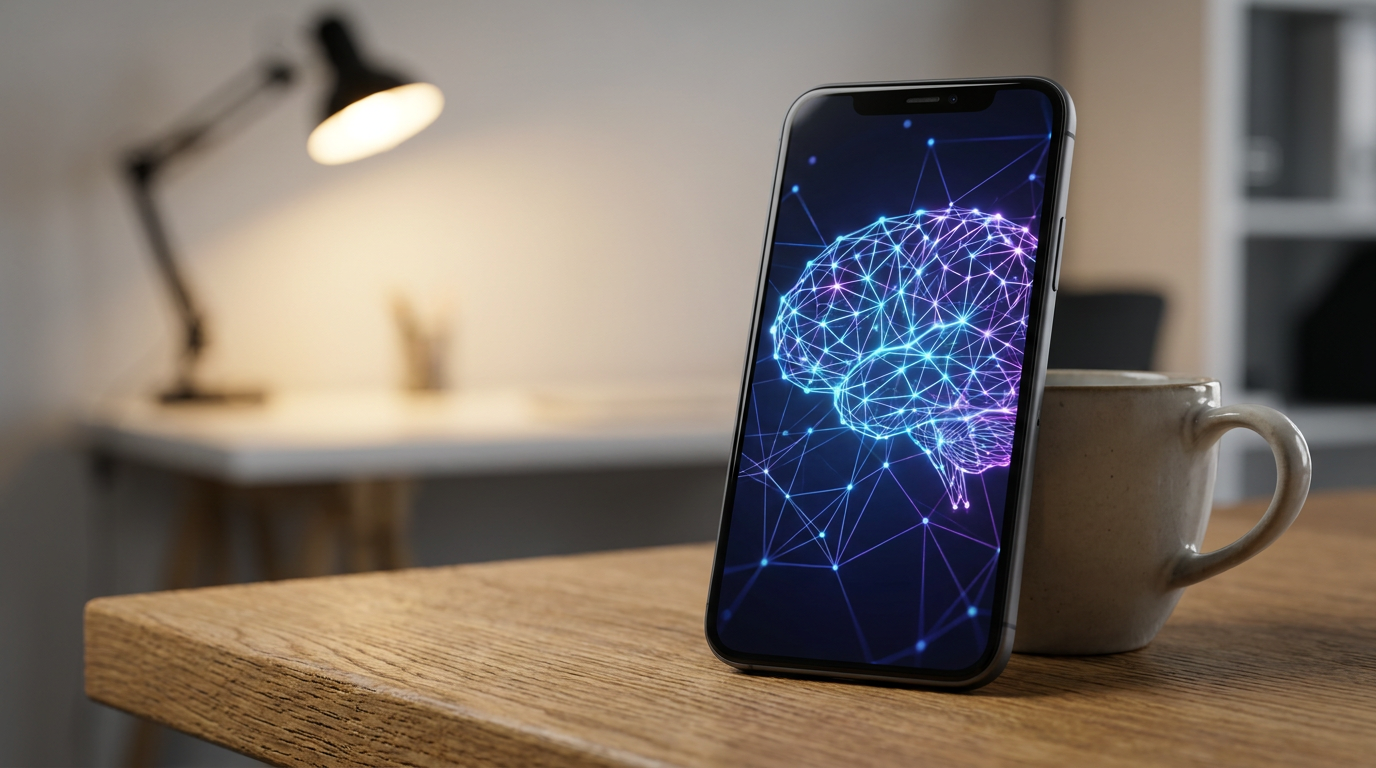
The era of massive, cloud-dependent AI is making way for highly efficient Small Language Models (SLMs). By running entirely on-device, these compact models offer zero latency, offline capabilities, and absolute privacy.
By Factlen Editorial Team
- Privacy Advocates
- Argue that local execution is the only way to safely integrate AI into daily life without creating massive surveillance risks.
- Open-Source Developers
- Value SLMs for democratizing AI, removing cloud subscription costs, and allowing anyone to run powerful models on consumer hardware.
- Enterprise Architects
- Focus on the cost-efficiency and low latency of SLMs, using them to reduce cloud bills and improve app responsiveness.
- Frontier AI Researchers
- Maintain that while SLMs are useful for routine tasks, massive cloud-based models are still required for complex reasoning and scientific breakthroughs.
What's not represented
- · Hardware Manufacturers
- · Cloud Service Providers
Why this matters
By running AI directly on your smartphone or laptop, Small Language Models eliminate the need for expensive cloud subscriptions and ensure your personal data never leaves your device. This shift makes advanced AI faster, cheaper, and fundamentally private.
Key points
- Small Language Models (SLMs) now run entirely on consumer devices like smartphones and laptops.
- Local execution guarantees privacy, as personal data never leaves the device.
- On-device AI eliminates network latency, providing instantaneous responses.
- Techniques like quantization allow billions of parameters to fit into standard mobile RAM.
- Running models locally removes the need for expensive cloud API subscriptions.
The AI revolution was supposed to be housed in massive data centers. For years, the narrative dictated that artificial intelligence required sprawling server farms, gigawatts of electricity, and constant internet connectivity. But in 2026, the most significant breakthrough in AI isn't happening in a remote cloud facility—it is happening right in your pocket.[1]
Welcome to the era of Small Language Models (SLMs). While tech giants spent the early 2020s racing to build the largest possible models, a parallel engineering effort focused on extreme efficiency. The result is a new class of AI that runs entirely locally on smartphones, laptops, and smartwatches, fundamentally changing how we interact with machine intelligence.[1][6]
To understand the shift, we have to look at the numbers. Traditional Large Language Models (LLMs) like GPT-4 or Gemini Ultra boast hundreds of billions, or even trillions, of parameters—the internal neural connections that store the model's "knowledge." Running them requires massive GPU clusters. SLMs, by contrast, typically range from 1 billion to 8 billion parameters.[6]
Despite their smaller footprint, these models punch far above their weight class. By training on highly curated, "textbook quality" data rather than scraping the entire unfiltered internet, developers have created compact models that rival the reasoning capabilities of much larger predecessors.[6]

The magic that makes this possible on consumer hardware is a technique called quantization. In simple terms, quantization compresses the mathematical precision of the model's weights. Instead of using high-resolution 16-bit numbers, the model is squeezed into 4-bit or 8-bit integers. This drastically reduces the memory footprint, allowing an 8-billion parameter model to fit comfortably within the 4GB to 8GB of RAM available on modern smartphones.[6][8]
But software compression is only half the story. The hardware has finally caught up. Modern processors from Apple, Qualcomm, and MediaTek now feature dedicated Neural Processing Units (NPUs) designed specifically for machine learning math. These NPUs allow devices to run complex AI tasks without draining the battery or overheating the phone.[2][5]
The most immediate and profound benefit of on-device AI is absolute privacy. For years, using an AI assistant meant sending your personal data, private messages, and sensitive documents to a server on another continent. With local SLMs, the data never leaves your device.[1][5]
Apple has made this the cornerstone of its 2026 Apple Intelligence architecture. The system prioritizes on-device processing for everyday tasks like summarizing emails, drafting text, and organizing photos. When a request is too complex for the local chip, it utilizes "Private Cloud Compute"—a secure enclave that processes the data ephemerally without storing it or making it accessible to Apple.[2]
Apple has made this the cornerstone of its 2026 Apple Intelligence architecture.
Google is taking a similar approach with Android 16. The operating system now features an advanced AICore that manages model distribution directly on the device. Models like Gemini Nano run as a system service, allowing apps to tap into AI capabilities without needing to bundle their own massive files or send user data to the cloud.[3][5]
For developers, this means they can build secure messaging apps that summarize long threads locally. The model receives the plain text, generates the summary, and clears its buffer instantly. The server never sees the unencrypted content, preserving end-to-end encryption while still delivering advanced AI features.[5]

Beyond privacy, local execution solves the latency problem. Cloud-based AI is inherently limited by network speed; every prompt requires a round-trip to a data center. On-device models operate with near-zero latency. When you ask a local model to rewrite a sentence or translate a phrase, the response is instantaneous.[3][7]
This offline capability is transformative for accessibility and global use. Handheld devices can now process real-time translation in over 50 languages without an internet connection, making them invaluable for travel, remote fieldwork, or areas with unreliable cellular networks.[3]
The shift to local AI is also breaking the subscription model that dominated the early AI boom. Because the compute power is provided by the user's own hardware, there are no per-token API costs or monthly server fees for the developer. This "unmetered intelligence" is democratizing access to AI tools.[4]
Microsoft has leaned heavily into this with its Windows ML platform, introducing models like Aion 1.0 Instruct and Aion 1.0 Plan. These models are purpose-built for local execution on Windows PCs, allowing developers to build agentic workflows—where the AI autonomously plans and executes multi-step tasks—without racking up massive cloud bills.[4]

The open-source community is accelerating this trend rapidly. Tools like MLC LLM and apps like Private LLM allow users to download models like Meta's Llama 3 8B directly to their iPhones or Macs. Users can chat, generate code, and analyze documents entirely offline, achieving performance that rivals paid cloud services from just a year ago.[8]
We are also seeing the rise of specialized SLMs. While massive cloud models act as generalists trying to know everything about everything, local models are increasingly fine-tuned for specific domains. A 3-billion parameter model trained exclusively on medical literature or coding syntax can outperform a 100-billion parameter generalist in that specific field.[7]
Looking ahead, the ecosystem is moving toward hybrid architectures. Your smartphone or PC will handle 90 percent of daily AI tasks locally—managing your schedule, drafting emails, and controlling apps. Only when a task requires massive, multi-step reasoning or access to real-time global databases will it seamlessly hand the query off to a larger cloud model.[4][6]
How we got here
Early 2020s
The AI industry focuses almost exclusively on scaling up, building massive models that require giant cloud data centers.
Mid 2024
Open-source models like Llama 3 8B prove that smaller, highly curated models can achieve remarkable performance.
Late 2024
Apple and Google announce deep OS-level integration for on-device AI processing.
2025
Quantization techniques mature, allowing powerful 8-billion parameter models to fit into standard smartphone RAM.
June 2026
Local execution becomes the standard for consumer AI, prioritizing privacy, zero latency, and offline capabilities.
Viewpoints in depth
Privacy Advocates
Local execution is the only way to safely integrate AI into daily life.
For privacy advocates, the shift to on-device AI is a monumental victory. Sending personal emails, health data, and private messages to centralized cloud servers creates an inherent security risk, no matter how strong a company's privacy policy might be. By processing data locally, SLMs eliminate the risk of data breaches in transit or unauthorized access at the server level. This architecture ensures that the AI can be deeply integrated into a user's personal life—reading their screen, understanding their context, and anticipating their needs—without ever exposing that intimate data to the outside world.
Open-Source Developers
SLMs democratize AI by removing cloud subscription costs and hardware barriers.
The open-source community views Small Language Models as the ultimate democratizing force in technology. When AI requires massive data centers, only a few trillion-dollar companies can control it. SLMs flip this dynamic. Developers can now download powerful models, fine-tune them on their own data, and deploy them on standard consumer hardware without paying per-token API fees. This 'unmetered intelligence' allows indie developers and startups to build sophisticated, AI-powered applications that run locally, breaking the monopoly of centralized cloud providers.
Enterprise Architects
Local models drastically reduce cloud infrastructure costs and eliminate network latency.
From a business perspective, routing every minor AI request to a cloud server is financially unsustainable. Enterprise architects are adopting SLMs to escape the 'cloud tax.' By shifting routine tasks—like text summarization, basic coding assistance, and data formatting—to the user's local machine, companies can save millions in server costs. Furthermore, local execution eliminates network latency, providing a snappy, instant user experience that cloud-based models simply cannot match due to the laws of physics and network routing.
Frontier AI Researchers
Massive cloud models remain essential for complex reasoning and scientific breakthroughs.
While acknowledging the utility of SLMs for everyday tasks, researchers working on the bleeding edge of AI emphasize that size still matters. Small models are excellent at pattern matching and routine generation, but they lack the vast world knowledge and deep, multi-step reasoning capabilities of frontier models like GPT-5 or Gemini Ultra. For complex problem-solving, advanced mathematics, and scientific discovery, researchers argue that massive, cloud-based architectures will remain the indispensable engine of human progress, acting as the 'heavy lifters' while SLMs handle the daily chores.
What we don't know
- How quickly hardware manufacturers will phase out older devices that lack the NPUs required to run these models.
- Whether future regulations will mandate on-device processing for certain types of sensitive personal data.
Key terms
- Small Language Model (SLM)
- A compact artificial intelligence model, typically under 10 billion parameters, designed to run efficiently on consumer devices like phones and laptops.
- Quantization
- A compression technique that reduces the mathematical precision of an AI model's weights, allowing it to use significantly less memory.
- Neural Processing Unit (NPU)
- A specialized hardware chip built into modern processors that accelerates machine learning tasks while consuming very little power.
- Parameter
- The internal numeric values or 'connections' a neural network learns during training, representing its stored knowledge.
- Inference
- The process of an AI model actively generating a response or prediction based on a user's prompt.
Frequently asked
Will running an AI model locally drain my phone's battery?
Modern smartphones use dedicated Neural Processing Units (NPUs) designed specifically for AI math, allowing them to run these models efficiently without significant battery drain.
Do I need an internet connection to use a Small Language Model?
No. Once the model is downloaded to your device, it can process text, translate languages, and generate code entirely offline.
Are local models as smart as massive cloud models?
While they cannot match the broad, multi-step reasoning of massive cloud models, SLMs are highly capable at specific tasks like summarization, drafting, and coding, often matching the performance of cloud models from just a year ago.
Is my data safe when using on-device AI?
Yes. Because the processing happens entirely on your hardware, your prompts, messages, and personal data never leave your device or get sent to a corporate server.
Sources
Source coverage
8 outlets
4 viewpoints surfaced








[1]Factlen Editorial TeamPrivacy Advocates
Synthesis by Factlen editorial team
Read on Factlen Editorial Team →[2]ApplePrivacy Advocates
Apple Intelligence brings powerful AI capabilities into everyday experiences
Read on Apple →[3]Google BlogFrontier AI Researchers
Gemma 4 models: A new level of intelligence for mobile and IoT devices
Read on Google Blog →[4]Windows BlogEnterprise Architects
Build 2026: Furthering Windows as the trusted platform for development
Read on Windows Blog →[5]MediumPrivacy Advocates
Deploying privacy-centric Small Language Models on Android 16
Read on Medium →[6]Cogitx AIEnterprise Architects
Small Language Models (SLMs): Comprehensive Guide 2026
Read on Cogitx AI →[7]BentoMLOpen-Source Developers
Small language models (SLMs) in production
Read on BentoML →[8]Private LLMOpen-Source Developers
Run Llama 3 8B locally on your iPhone, iPad, and Mac
Read on Private LLM →
More in ai
See all 6 stories →On-Device AI
How Small Language Models Are Moving AI From the Cloud to Your Pocket
8 sources

Open-Source Models
The Evidence on Open-Source AI Risks: Do Open Weights Democratize Danger?
9 sources

On-Device AI
How Small Language Models Are Bringing AI Directly to Your Phone
8 sources

Frontier Models
The US Federal Push to Regulate Frontier AI: Evaluating the June 2026 Frameworks
7 sources

Every angle. Every day.
Get ai stories with full source coverage and perspective breakdowns delivered to your inbox.