
U.S. and Iran Sign Interim Agreement to Halt War as Regional Tensions Persist
Following a three-month military conflict, the U.S. and Iran have signed a Memorandum of Understanding to reopen the Strait of Hormuz and freeze nuclear enrichment, though proxy fighting in Lebanon and diplomatic rifts with European allies threaten the fragile truce.
By Factlen Editorial Team
- U.S. Administration
- Argues the U.S. negotiated from a position of absolute military dominance, securing a deal without financial concessions.
- Iranian State Security
- Views the agreement with deep mistrust and maintains readiness to launch reciprocal action if the U.S. breaches the terms.
- European Allies
- Expresses frustration over unilateral U.S. actions and the subsequent diplomatic demands placed on NATO partners.
- Regional Combatants
- Continues to test the limits of the broader ceasefire through ongoing proxy violence in areas like Lebanon.
What's not represented
- · Global shipping companies
- · Iranian civilians facing economic hardship
Why this matters
This agreement pauses a major global conflict that disrupted international shipping and energy markets. However, its success dictates whether the Middle East stabilizes or plunges back into a wider war involving Israel, Lebanon, and global powers.
Key points
- The U.S. and Iran signed an interim MoU ending a three-month military conflict.
- The agreement establishes a 60-day ceasefire and reopens the Strait of Hormuz.
- President Trump claims the U.S. destroyed 159 Iranian ships, framing the deal as an unconditional surrender.
- Iran's Supreme National Security Council warned of immediate retaliation if the U.S. breaches the agreement.
- Ongoing violence between Israel and Hezbollah in Lebanon threatens the broader regional ceasefire.
After three months of direct military conflict, the United States and Iran have signed an interim Memorandum of Understanding (MoU) to halt hostilities and establish a framework for long-term negotiations. The digital signing of the agreement marks the formal end to a war that severely degraded Iran's military infrastructure and disrupted global shipping networks. The immediate mechanism of the deal centers on a 60-day ceasefire window, during which the strategic Strait of Hormuz will be reopened for international maritime traffic free of charge, providing immediate relief to global energy markets.[3]
President Donald Trump has aggressively framed the agreement as a total capitulation by Tehran. In recent interviews, Trump characterized the MoU as an "unconditional surrender," pointing to the devastating toll of the U.S. military campaign. He revealed that American naval and air operations systematically dismantled Iran's air defenses and sank 159 Iranian vessels, effectively neutralizing the country's naval capabilities. "They no longer have an army. Everything is at the bottom of the sea," Trump stated, asserting that the U.S. now operates with complete freedom of movement in the region.[1]
Despite the administration's declaration of a decisive military victory, the diplomatic framework has faced immediate pushback from skeptical Republican lawmakers in Washington. Critics within the GOP have voiced concerns that the MoU could prematurely relieve economic pressure on Tehran, potentially allowing the Iranian government to rebuild its shattered infrastructure and resume funding for regional proxy groups. These lawmakers argue that any sanctions relief must be tied to verifiable, irreversible dismantling of Iran's broader military apparatus, not just its nuclear program. They worry that a temporary pause in hostilities simply gives Tehran breathing room to regroup and rearm, rather than permanently altering the balance of power in the Middle East.[2]

Vice President J.D. Vance has taken a leading role in defending the administration's strategy, drawing a sharp contrast between the current MoU and the 2015 nuclear accord negotiated under President Barack Obama. Vance argues that the U.S. is now negotiating from a position of overwhelming leverage because Iran's nuclear infrastructure has already been physically dismantled by military strikes. He emphasized that the new framework strictly bars Tehran from enriching uranium and, unlike the 2015 deal, provides "$0 of American money" to the Iranian government. By refusing to offer upfront financial incentives, Vance insists the administration has secured a far stronger baseline for future talks, ensuring that any economic benefits Iran receives will only follow sustained, verifiable compliance with the agreement's strictest terms.[2]
In Tehran, the government is attempting to project strength while managing intense domestic pressure. Iran's Supreme National Security Council (SNSC) issued a stark statement warning that it approaches the negotiations with "complete mistrust" of the United States. The council declared that any deviation or breach of the MoU's terms by Washington would trigger immediate "reciprocal action" according to a pre-determined contingency plan. This rhetoric is largely seen as an effort to reassure hardline domestic factions who view the agreement as a forced concession. Iranian officials are walking a delicate line, needing to justify the cessation of hostilities to their conservative base while simultaneously paving the way for the diplomatic engagement required to rescue their battered economy.[3][6]
Beyond the official posturing, the Iranian leadership faces a populace desperate for tangible economic relief. Years of compounding sanctions, culminating in the recent naval blockade and destruction of key infrastructure, have severely degraded living standards. For many Iranian citizens, the success of the MoU will not be judged by geopolitical framing, but by whether the promised 60-day window translates into the unfreezing of assets, the stabilization of the currency, and the resumption of basic commercial imports. The internal pressure is mounting, as ordinary Iranians demand that the diplomatic breakthrough yield immediate improvements in their daily lives, putting the government on a tight timeline to deliver results before public frustration boils over into renewed unrest.[3]

Beyond the official posturing, the Iranian leadership faces a populace desperate for tangible economic relief.
The most immediate threat to the fragile U.S.-Iran compact lies outside their direct bilateral relationship, specifically in the ongoing conflict between Israel and Hezbollah in Lebanon. The MoU includes provisions calling for an end to hostilities on all regional fronts. However, the interpretation of these clauses remains highly contested, and violence has persisted. Israeli airstrikes recently killed dozens in Lebanon, while Hezbollah forces continue to launch retaliatory rocket fire into northern Israeli communities, testing the limits of the broader ceasefire framework. This proxy violence underscores the difficulty of imposing a bilateral agreement on a region defined by complex, interconnected conflicts, where non-state actors and allied nations operate with their own distinct strategic imperatives.[4]
This proxy violence has already disrupted the diplomatic timeline. A planned trip by Vice President Vance to Switzerland for follow-up negotiations was reportedly delayed due to disputes over how the Lebanon provisions should be enforced. The U.S. administration is balancing its commitment to Israeli security with the necessity of keeping Tehran at the negotiating table. If the Lebanon front escalates further, it could provide hardliners in both Washington and Tehran with the justification needed to abandon the MoU entirely. The delay in Vance's travel highlights the precarious nature of the current diplomatic phase, where a single miscalculation or localized escalation could unravel the entire framework before the ink is fully dry.[3][4]
The geopolitical fallout from the three-month war has also fractured relationships within the NATO alliance, most notably between the United States and Italy. President Trump recently launched a public attack on Italian Prime Minister Giorgia Meloni, accusing her government of denying the U.S. military access to Italian landing strips and runways during the height of the Iran conflict. Trump framed the refusal as a betrayal, noting the billions of dollars the U.S. spends on European defense, and claimed Meloni was now "begging" for a photo opportunity to boost her sagging domestic approval ratings. The extraordinary public rebuke of a key European partner illustrates the lingering resentments generated by the war's logistical demands and the administration's willingness to air alliance grievances on the global stage.[5]

The diplomatic spat escalated quickly, with Meloni publicly rejecting Trump's narrative as "completely made up" and expressing that she was "frankly stunned" by the remarks. In response to the public dressing-down, Italian Foreign Minister Antonio Tajani canceled a scheduled diplomatic visit to the United States, calling the president's comments "serious and offensive." The rift highlights the broader unease among European allies regarding the unilateral nature of the U.S. military campaign and the subsequent diplomatic demands placed on NATO partners. For many European capitals, the exchange serves as a stark reminder of the volatile nature of transatlantic relations and the challenges of coordinating security policy when Washington pursues aggressive military action outside traditional alliance structures.[5]
As the 60-day implementation window begins, the focus shifts to the mechanics of verification. A previously undisclosed arrangement between Iran and the International Atomic Energy Agency (IAEA) is expected to facilitate renewed inspections of Tehran's remaining nuclear sites. However, monitoring a program that has been heavily damaged by airstrikes presents unique logistical challenges. Inspectors must differentiate between facilities that were destroyed and those that may have been covertly relocated during the chaos of the conflict. The success of this verification regime is critical, as any ambiguity regarding Iran's nuclear capabilities will immediately be seized upon by skeptics in the U.S. Congress as evidence that the MoU is fundamentally flawed and unenforceable.[2][3]

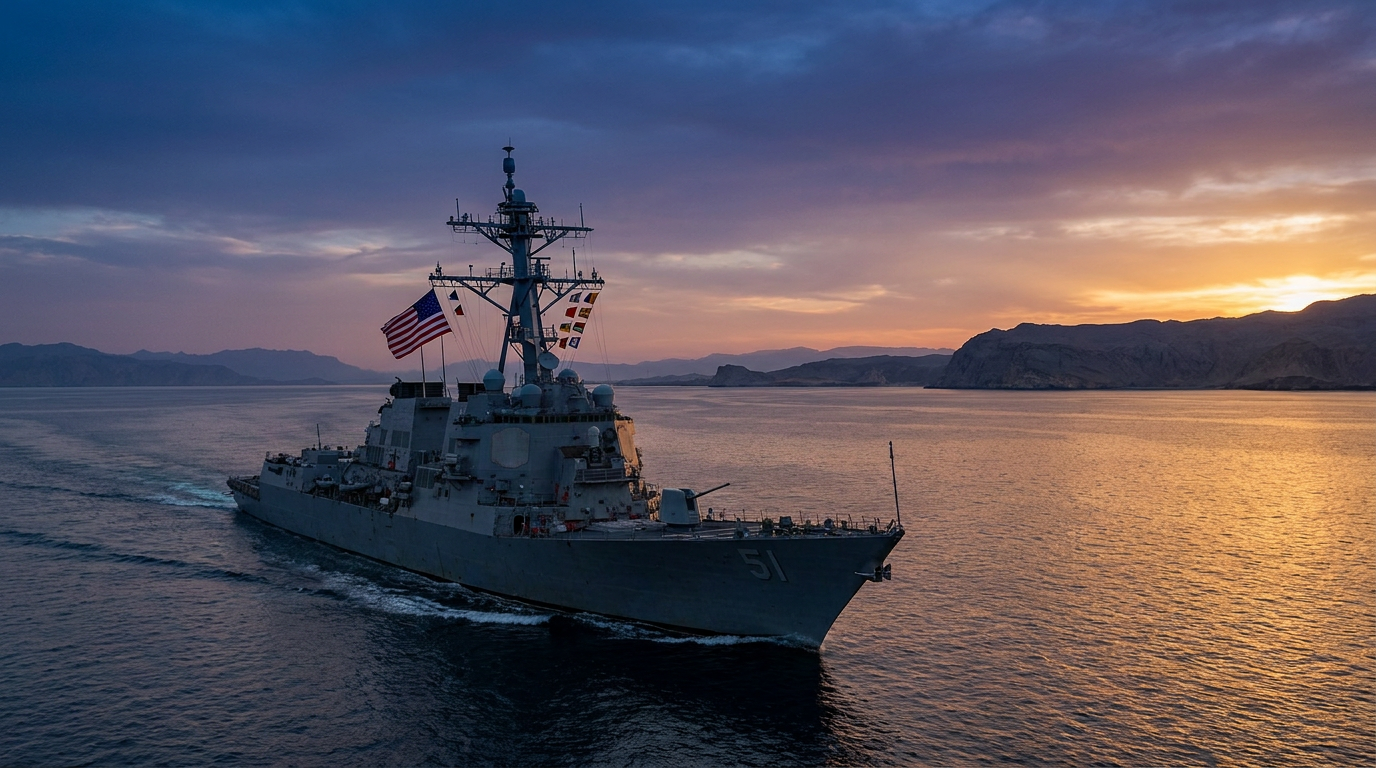
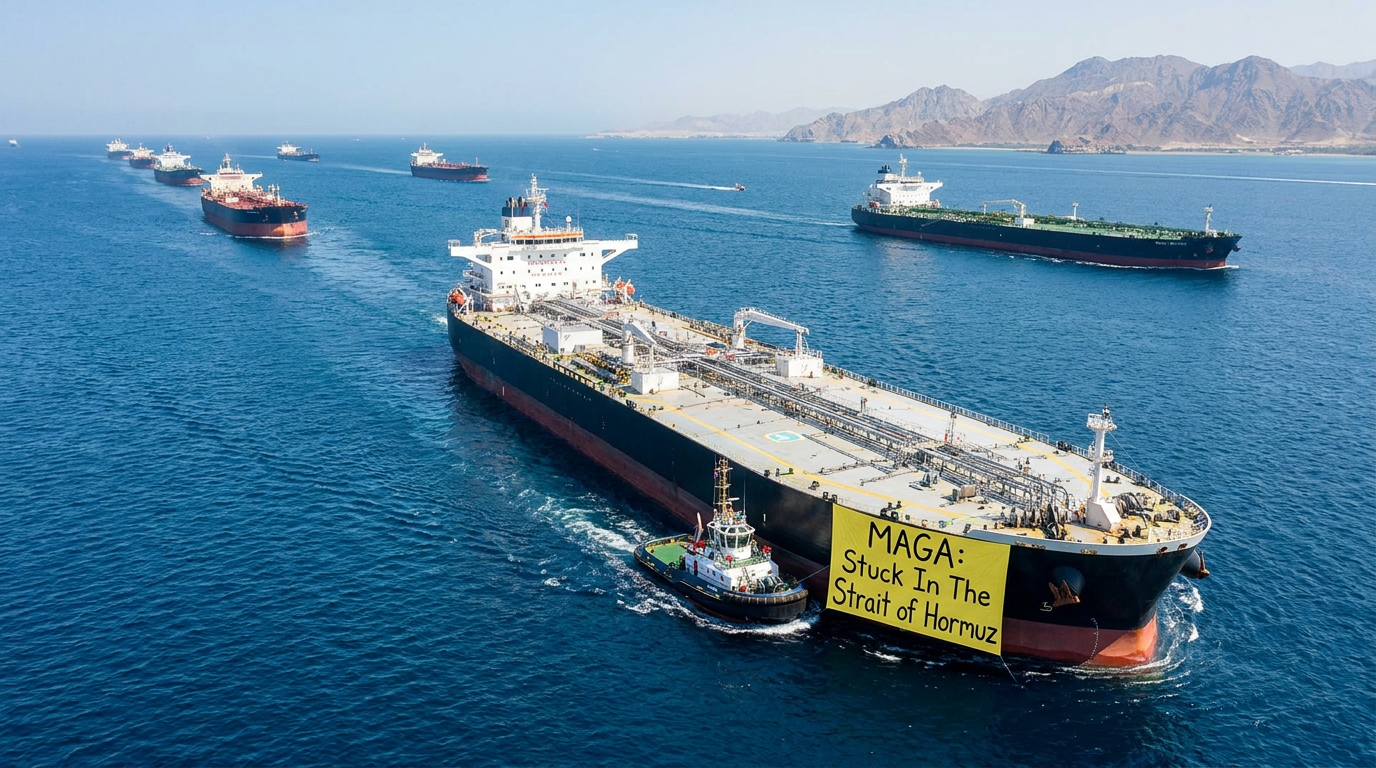
The reopening of the Strait of Hormuz remains the most critical economic deliverable of the MoU. The waterway, which handles a significant portion of the world's seaborne oil, was effectively sealed during the war, causing severe disruptions to global energy markets. While the agreement guarantees free passage for the initial 60 days, the long-term security architecture of the strait remains unresolved. The U.S. Navy currently maintains dominant oversight, but the eventual transition to a normalized maritime environment will require delicate coordination. Energy importers worldwide are watching closely, knowing that any renewed friction in the strait could instantly trigger a spike in oil prices and derail the fragile global economic recovery that has just begun to take hold.[1][3]
Ultimately, the Memorandum of Understanding represents a pause rather than a permanent resolution. The fundamental drivers of the conflict—Iran's regional influence, its ballistic missile capabilities, and the security imperatives of Israel and the Gulf states—remain largely unaddressed by the interim text. As the 60-day clock ticks down, negotiators face the daunting task of converting a military victory and a fragile ceasefire into a durable diplomatic architecture that can survive the deep-seated mistrust on all sides. Whether this agreement serves as the foundation for a new era of Middle Eastern stability or merely a brief interlude before the next cycle of violence will depend entirely on the political will of leaders in Washington, Tehran, and across the region.[2][3][6]
How we got here
February 2026
Iranian forces close the Strait of Hormuz, prompting a U.S.-led naval blockade.
April 2026
The U.S. military launches extensive strikes, destroying Iranian air defenses and naval vessels.
June 19, 2026
The U.S. and Iran digitally sign a Memorandum of Understanding to halt hostilities.
June 20, 2026
The Strait of Hormuz reopens for a 60-day period of free international passage.
Viewpoints in depth
U.S. Administration's View
The U.S. negotiated from a position of absolute military dominance.
The White House and its defenders argue that the three-month military campaign fundamentally altered the strategic landscape. By systematically destroying Iran's naval fleet and air defense systems, the U.S. forced Tehran to the negotiating table without having to offer financial incentives. Vice President J.D. Vance emphasizes that this leverage ensures Iran's nuclear program remains dismantled without the controversial cash transfers seen in previous diplomatic efforts.
Iranian State Security's View
Iran views the agreement with deep mistrust and maintains its right to retaliate.
For Iran's Supreme National Security Council, the MoU is a tactical pause rather than a surrender. Hardline factions within the government are projecting strength to a domestic audience, warning that any deviation by the U.S. will be met with immediate, pre-planned reciprocal action. They insist that the agreement must yield tangible economic relief and the lifting of sanctions, framing the reopening of the Strait of Hormuz as a mutual concession rather than a defeat.
European Allies' View
NATO partners are frustrated by unilateral U.S. actions and subsequent diplomatic demands.
European nations, exemplified by the public rift between the U.S. and Italy, have expressed unease over the trajectory of the conflict. Allies felt sidelined during the escalation of the war and are now pushing back against U.S. criticisms regarding logistical support. The diplomatic spat with Italian Prime Minister Giorgia Meloni highlights a broader European desire for a more collaborative, multilateral approach to Middle Eastern security and conflict resolution.
What we don't know
- Whether the 60-day ceasefire will be extended or if hostilities will resume.
- How the International Atomic Energy Agency will verify the status of heavily damaged nuclear sites.
- If the ongoing conflict in Lebanon will ultimately derail the U.S.-Iran diplomatic framework.
Key terms
- Memorandum of Understanding (MoU)
- A formal agreement between two or more parties that outlines the terms and details of a mutual understanding, often serving as an interim step before a final treaty.
- Strait of Hormuz
- A narrow, strategically vital waterway between the Persian Gulf and the Gulf of Oman through which a significant portion of the world's oil supply passes.
- IAEA
- The International Atomic Energy Agency, the United Nations watchdog responsible for monitoring and verifying nuclear programs worldwide.
Frequently asked
What does the U.S.-Iran Memorandum of Understanding actually do?
It establishes a 60-day ceasefire, reopens the Strait of Hormuz to international shipping, and bars Iran from enriching uranium.
Did the U.S. pay Iran as part of this agreement?
No. According to Vice President J.D. Vance, the agreement provides zero American dollars to the Iranian government, contrasting it with the 2015 nuclear deal.
Why are the U.S. and Italy arguing?
President Trump accused Italian Prime Minister Giorgia Meloni of denying the U.S. use of Italian landing strips during the war, a claim Meloni called 'completely made up'.
Sources
Source coverage
6 outlets
4 viewpoints surfaced





[1]Fox NewsU.S. Administration
Trump says Iran deal 'probably is unconditional surrender,' reveals details of covert maritime operation
Read on Fox News →Vance says 'United States wins either way' as he defends Trump's Iran deal against GOP skeptics
Read on Fox News →[3]Al JazeeraIranian State Security
Iran warns of 'reciprocal action' if US doesn't honour MOU commitments
Read on Al Jazeera →[4]The New York TimesRegional Combatants
Israel and Hezbollah Are Still Fighting, Several Cease-Fires Later
Read on The New York Times →[5]CBS NewsEuropean Allies
Italy nixes envoy's U.S. visit as leader Meloni 'stunned' by Trump comments
Read on CBS News →[6]Mehr News AgencyIranian State Security
Iran warns US of retaliation for any breach
Read on Mehr News Agency →
More in news politics
See all 7 stories →Strait of Hormuz
Iran Threatens to Close Strait of Hormuz Following Israeli Strikes in Lebanon
7 sources

Cognitive Security
Evidence Pack: Does 'Pre-Bunking' Actually Protect Voters From Misinformation?
6 sources

Strait of Hormuz
Iran Threatens to Re-Close Strait of Hormuz as Lebanon Ceasefire Collapses
8 sources
Strait of Hormuz
Iran Threatens to Reclose Strait of Hormuz Over Israeli Strikes in Lebanon, Testing Fragile US Truce
8 sources

Every angle. Every day.
Get news politics stories with full source coverage and perspective breakdowns delivered to your inbox.