
Iran Announces Closure of Strait of Hormuz, Citing US and Israeli Ceasefire Violations
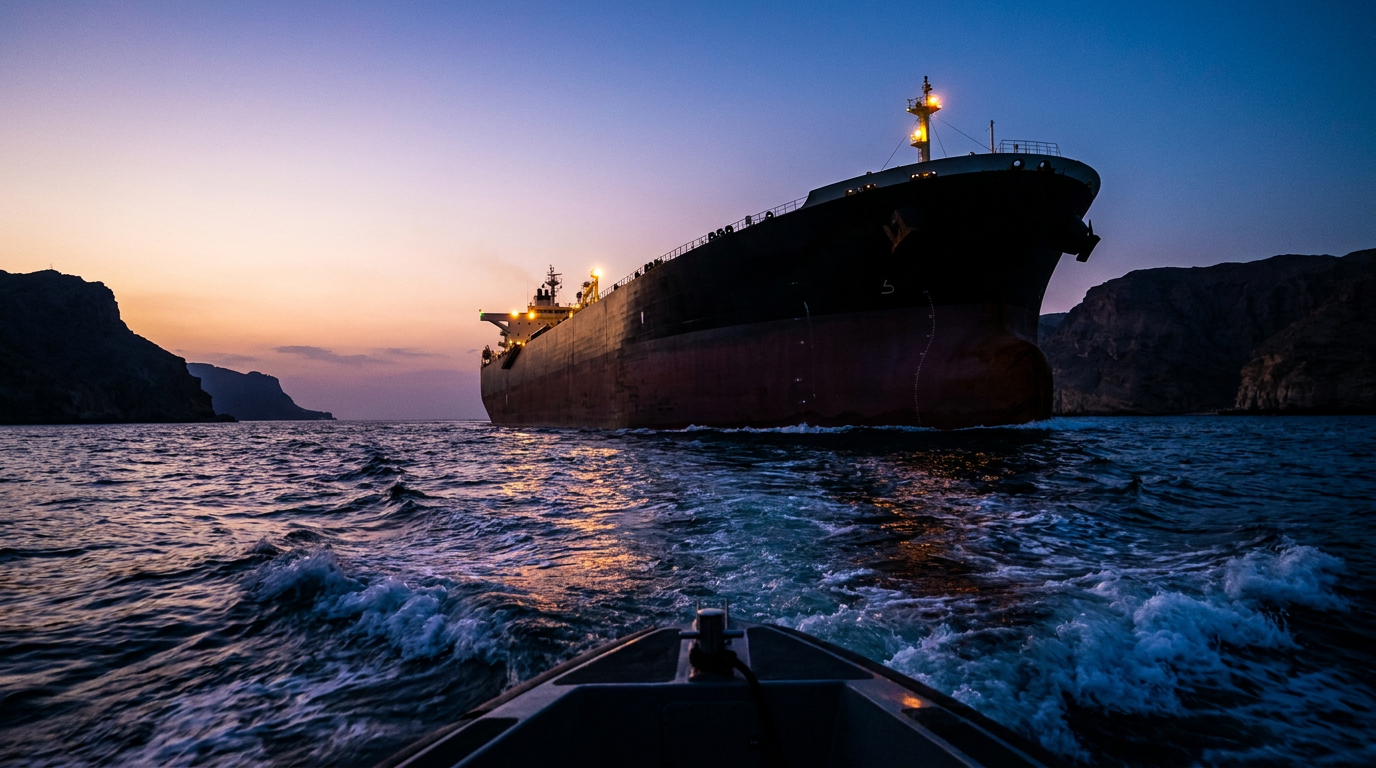
Just days after signing a memorandum of understanding with the U.S. to end a 110-day conflict, Iran's military command announced it is closing the Strait of Hormuz to vessel traffic. Tehran cited continued Israeli airstrikes in Lebanon as a breach of the agreement, threatening the fragile truce and global energy markets.
By Factlen Editorial Team
- Iranian Military Command
- Argues that the U.S. and Israel breached the 14-point MoU by continuing military operations in Lebanon, justifying the closure of the strait as a retaliatory first step.
- U.S. Administration
- Maintains that the ceasefire will hold, downplays the immediate closure of the strait, and emphasizes ongoing diplomatic talks in Switzerland.
- Israeli Government
- Asserts that it is not a party to the U.S.-Iran MoU and retains the right to conduct military operations against Hezbollah in Lebanon.
- Global Market Observers
- Focuses on the severe economic implications of a closed chokepoint and the fragile legal standing of the unratified MoU.
What's not represented
- · Lebanese Civilians
- · Global Shipping Companies
- · European Energy Importers
Why this matters
The Strait of Hormuz is a critical global chokepoint handling roughly a fifth of the world's oil supply. Its closure threatens to spike global energy prices and unravel a fragile 14-point U.S.-Iran peace deal that was signed just days ago to end a devastating 110-day regional war.
Key points
- Iran's military announced the closure of the Strait of Hormuz to vessel traffic on Saturday.
- Tehran cited continued Israeli airstrikes in Lebanon as a breach of the newly signed U.S.-Iran peace deal.
- The 14-point Memorandum of Understanding had required an end to military operations on all fronts.
- Israel, not a party to the deal, stated it was responding to over 50 projectiles fired by Hezbollah.
- U.S. Vice President JD Vance downplayed the closure, stating he saw no evidence the strait was physically blocked.
- Diplomats from the U.S. and Iran are traveling to Switzerland to attempt to salvage the fragile agreement.
Iran's Khatam al-Anbiya Central Headquarters announced on Saturday that the Strait of Hormuz will be closed to commercial vessel traffic, unraveling a nascent peace agreement just days after it was signed. The sudden declaration threatens to plunge the Middle East back into the devastating 110-day conflict that recently crippled global energy markets. According to Iranian state media, the military command framed the closure as a necessary "first step" in retaliation for what it described as severe breaches of the newly minted ceasefire by the United States and Israel.[2][3]
The trigger for the collapse centers on the northern border of Israel. Iranian officials cited "continuous ceasefire violations" by the Israeli military in southern Lebanon as the primary catalyst for shutting the waterway. Tehran argues that Washington failed to implement Clause 1 of the 14-point Memorandum of Understanding (MoU), which explicitly mandated an immediate and permanent end to military operations on all fronts, including Lebanon. By failing to restrain its ally, Iran claims the U.S. has demonstrated "bad faith" and effectively voided the terms that guaranteed safe passage for international shipping.[4][5][6]
The situation in Lebanon deteriorated rapidly over the weekend. Hours after a renewed truce reportedly took effect on Friday evening, Israeli warplanes and drones conducted deadly strikes across southern Lebanon and the Bekaa Valley, killing at least 16 people, according to Lebanon's Civil Defence service. The Israeli military justified the bombardment by stating it was responding to more than 50 projectiles launched overnight by Hezbollah, the heavily armed, Iran-backed militant group. Israel, which was notably excluded from the U.S.-Iran negotiations, maintains that it is not bound by the MoU and will not grant Hezbollah freedom of movement along its border.[1][3][4]

The 14-point MoU, signed earlier in the week by U.S. President Donald Trump and Iranian President Masoud Pezeshkian, was heralded as a breakthrough to end a conflict that had cost thousands of lives. Under its terms, the United States agreed to lift its naval blockade of Iranian ports and waive specific oil sanctions. In exchange, Iran committed to restoring toll-free commercial traffic through the Strait of Hormuz for a period of 60 days, while both sides prepared for broader negotiations regarding Iran's nuclear program. The inclusion of Lebanon in the text was a high-stakes gamble, effectively requiring Iran to rein in Hezbollah while demanding the U.S. restrain Israel.[6][7]
President Donald Trump and Iranian President Masoud Pezeshkian, was heralded as a breakthrough to end a conflict that had cost thousands of lives.
In Washington, the administration scrambled to project stability amid the escalating rhetoric. U.S. Vice President JD Vance downplayed the severity of the Iranian military's announcement, telling Fox News that he saw no immediate evidence that the strait had been physically barricaded to vessel traffic. Vance expressed confidence that the broader ceasefire framework could still hold and emphasized that diplomatic channels remain open. He confirmed that U.S. special envoy Steve Witkoff and Jared Kushner were already on the ground in Switzerland to salvage the agreement.[2][5]
Iranian diplomats are also converging on Switzerland, though their posture remains combative. Foreign Ministry spokesperson Esmail Baghaei confirmed that Iran's negotiating team, led by Foreign Minister Abbas Araqchi, is traveling to the talks. However, Baghaei warned that the trip is strictly to demand that the U.S. fulfill its obligations regarding Israel's military actions. He signaled that negotiations toward a final, binding treaty will not commence until the immediate military operations in Lebanon cease, warning that subsequent retaliatory steps have already been planned if the U.S. fails to comply.[5]

The economic stakes of the standoff are monumental. The Strait of Hormuz is the world's most critical chokepoint for energy transit, handling roughly a fifth of global oil consumption and massive quantities of liquefied natural gas. The previous 110-day closure severely disrupted global supply chains, forcing shipping companies to reroute vessels and causing severe volatility in energy markets. A renewed blockade would immediately threaten the sanctions relief outlined in the MoU, potentially cutting off Iran's newly restored access to world trade while simultaneously punishing Western economies at the gas pump.[6][7]
International law experts note that the current crisis exposes the structural fragility of the U.S.-Iran pact. Because the agreement is an informal Memorandum of Understanding rather than a formal treaty ratified by the U.S. Senate, it relies entirely on the mutual goodwill of the executive branches in Washington and Tehran. The document's ambitious scope—attempting to dictate the behavior of proxy forces and non-signatory allies like Israel and Hezbollah—created immediate vulnerabilities that both sides are now exploiting.[7]

As technical talks begin in Bürgenstock, Switzerland, the immediate fate of commercial shipping hangs in the balance. Shipping monitors have once again raised their threat assessments for the Persian Gulf, advising vessels to exercise extreme caution or halt transit entirely. The coming days will test whether the U.S. and Iran can compartmentalize the violence in Lebanon to save their bilateral economic and nuclear framework, or if the region will slide back into the devastating, multi-front war they just attempted to end.[1][5]
How we got here
June 17, 2026
The U.S. and Iran sign a 14-point Memorandum of Understanding to end a 110-day conflict and reopen the Strait of Hormuz.
June 19, 2026
A renewed ceasefire between Israel and Hezbollah is announced in Lebanon.
June 19-20, 2026
Hezbollah launches projectiles into Israel; Israel responds with deadly airstrikes in southern Lebanon.
June 20, 2026
Iran's military command announces the closure of the Strait of Hormuz, citing the Lebanon strikes as a breach of the MoU.
Viewpoints in depth
Iran's Military Stance
Viewing the Lebanon strikes as a fundamental breach of the peace deal.
Iran's Khatam al-Anbiya Central Headquarters and the Islamic Revolutionary Guard Corps view the 14-point MoU as a holistic agreement. Because Clause 1 explicitly calls for an end to military operations on all fronts—including Lebanon—Tehran argues that Israel's continued strikes against Hezbollah represent a U.S. failure to uphold its end of the bargain. By announcing the closure of the Strait of Hormuz, Iran is leveraging its most potent economic weapon to force Washington to restrain Israeli forces, warning that this is only the 'first step' if the bombardment continues.
The U.S. Diplomatic View
Attempting to salvage the framework while downplaying the immediate military escalation.
The U.S. administration, represented by Vice President JD Vance, is treating the Iranian announcement more as a negotiating tactic than an immediate physical blockade. Washington's priority is to keep the diplomatic track alive, dispatching envoys to Switzerland to address the grievances. The U.S. perspective relies on the assumption that Iran's desperate need for sanctions relief and economic normalization will ultimately outweigh its commitment to Hezbollah's immediate tactical position in southern Lebanon.
Israel's Security Imperative
Maintaining operational freedom against Hezbollah regardless of U.S.-Iran agreements.
Israel was not a signatory to the U.S.-Iran Memorandum of Understanding and does not consider itself bound by its terms. From the Israeli perspective, the overnight launch of more than 50 projectiles by Hezbollah necessitated an immediate and forceful military response. Israeli officials argue that they cannot allow an Iran-backed militant group to operate freely on their northern border, even if striking those targets complicates Washington's broader regional diplomacy and energy security goals.
What we don't know
- Whether the Strait of Hormuz has been physically barricaded by Iranian naval forces or if the announcement is primarily a diplomatic threat.
- If the United States has the leverage or willingness to force Israel to halt its military operations against Hezbollah in Lebanon.
- How global energy markets will react when trading opens following the weekend announcement of the strait's closure.
Key terms
- Strait of Hormuz
- A narrow, strategically vital waterway between the Persian Gulf and the Gulf of Oman, through which roughly 20% of the world's oil supply passes.
- Memorandum of Understanding (MoU)
- A formal, non-binding agreement between two or more parties outlining shared goals and intentions, often used as a stepping stone to a final treaty.
- Khatam al-Anbiya Central Headquarters
- The highest-level joint command center of the Iranian Armed Forces, responsible for coordinating military operations.
- Hezbollah
- A heavily armed, Iran-backed Shiite militant group and political party based in Lebanon.
Frequently asked
Why did Iran close the Strait of Hormuz again?
Iran's military cited continued Israeli airstrikes against Hezbollah in Lebanon, arguing that the U.S. failed to enforce a clause in the recent peace deal requiring an end to military operations on all fronts.
What did the U.S.-Iran peace deal actually say?
The 14-point Memorandum of Understanding required the U.S. to lift its naval blockade and sanctions, while Iran agreed to restore toll-free commercial shipping through the strait for 60 days. It also called for an end to regional hostilities.
Is Israel part of the U.S.-Iran agreement?
No. Israel was not a party to the negotiations and maintains it has the right to defend itself against Hezbollah attacks, complicating the U.S.'s ability to enforce the broader regional ceasefire.
Is the strait completely blocked right now?
While Iran's military announced the closure, U.S. Vice President JD Vance stated on Saturday that the U.S. has not yet seen evidence of a physical blockade, though shipping risks remain extremely high.
Sources
Source coverage
7 outlets
4 viewpoints surfaced







[1]AxiosU.S. Administration
Iran closing Strait of Hormuz over Israeli attacks on Lebanon
Read on Axios →[2]CBC NewsU.S. Administration
Iran threatens to shut Strait of Hormuz over U.S., Israeli truce violations
Read on CBC News →[3]The HinduIranian Military Command
Iran's military command says Strait of Hormuz is closed again over ceasefire violations
Read on The Hindu →[4]The Jerusalem PostIsraeli Government
Iran closes Strait of Hormuz, blames US for breaching deal
Read on The Jerusalem Post →[5]Arab NewsIranian Military Command
Iran closes Hormuz Strait again, says negotiating team heading to Switzerland
Read on Arab News →[6]The GuardianGlobal Market Observers
US-Iran deal takeaways: reopening the strait of Hormuz, waived oil sanctions and Lebanon
Read on The Guardian →[7]Chatham HouseGlobal Market Observers
Making peace is more difficult than starting wars: The US-Iran MoU
Read on Chatham House →
More in news politics
See all 5 stories →Labor Law
House Passes Landmark 'Faster Labor Contracts Act,' Setting Up Senate Showdown
7 sources
U.S.-Iran Deal
U.S. and Iran Sign Interim Agreement to Halt War as Regional Tensions Persist
6 sources
US-Iran Relations
US and Iran Reach Memorandum of Understanding to Halt Hostilities as Administration Defends Terms
9 sources
Every angle. Every day.
Get news politics stories with full source coverage and perspective breakdowns delivered to your inbox.