
The Science of Sleep Trackers: What Wearables Actually Measure
Consumer sleep trackers are highly accurate at detecting when you fall asleep, but clinical evidence shows they struggle to correctly identify specific sleep stages. While the data isn't perfect, studies suggest the behavioral nudges these devices provide can still lead to better rest.
By Factlen Editorial Team
- Clinical Sleep Researchers
- Argues that consumer devices cannot replace polysomnography and cautions against over-interpreting sleep stage data.
- Behavioral Health Advocates
- Focuses on the psychological benefits of tracking, noting that wearables successfully nudge users toward healthier bedtime routines.
- Consumer Tech Reviewers
- Evaluates devices based on user experience, comfort, and relative accuracy to help shoppers make informed purchasing decisions.
- Factlen Synthesis
- Synthesizes clinical data and consumer utility to provide a balanced, evidence-based verdict on wearable efficacy.
What's not represented
- · Individuals with diagnosed severe sleep disorders like sleep apnea
- · Developers of the proprietary algorithms at major tech companies
Why this matters
With over a third of adults now relying on wearables to grade their rest, understanding the scientific limitations of these devices is crucial. Misinterpreting flawed sleep stage data can cause unnecessary anxiety, while using the trackers correctly can lead to genuinely healthier bedtime habits.
Key points
- Over 35% of U.S. adults now use a wearable device or app to track their nightly sleep.
- Consumer trackers are highly accurate (85–95%) at detecting basic sleep and wake times.
- Sleep stage classification (Light, Deep, REM) remains significantly less accurate, ranging from 50% to 86% agreement with clinical tests.
- Studies show that wearing a tracker can genuinely improve sleep quality by encouraging healthier bedtime routines.
- Sleep doctors warn against 'orthosomnia,' where obsessing over a device's sleep score causes anxiety that worsens actual rest.
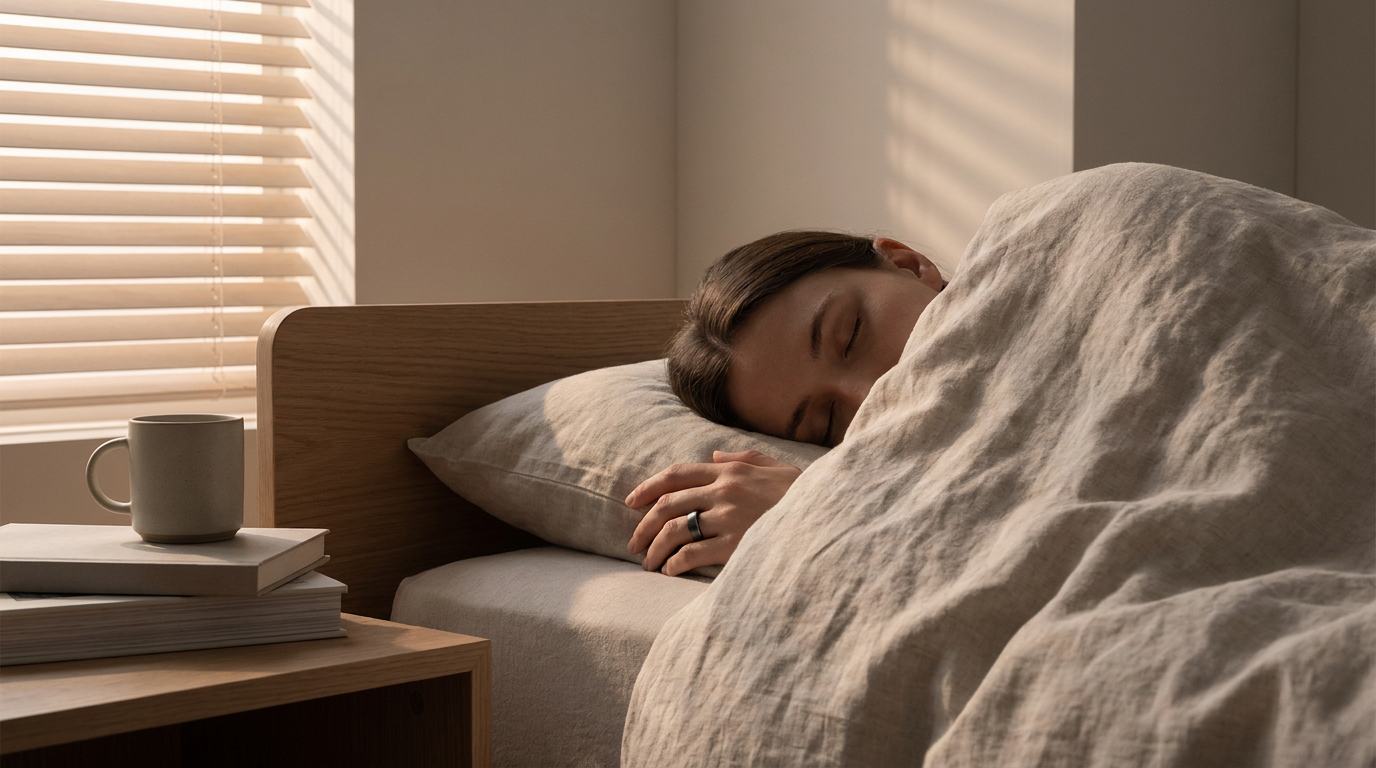
More than one-third of American adults now wake up and immediately check their wrists or fingers to see how they slept. The modern sleep tracker has evolved from a niche fitness gadget into a mainstream health staple, promising to decode the mysteries of our nightly rest.[5]
The appeal is undeniable. Devices like the Oura Ring, Whoop strap, and Apple Watch offer the illusion of a clinical sleep lab miniaturized into a sleek, everyday wearable. They deliver beautifully rendered graphs detailing exactly how much time we spent in Light, Deep, and REM sleep, neatly packaged with a daily readiness score.[3][4]
But as this technology matures in 2026, a critical question remains for consumers and physicians alike: are these devices actually telling the truth about our sleep? And more importantly, is the daily influx of biometric data actually helping us rest better?
To answer this, we have to separate what consumer wearables do exceptionally well from what they are merely guessing at. An evidence-based review of current clinical literature reveals a stark divide between a device's ability to measure the quantity of your sleep versus its quality.[7]

The strongest evidence supports the ability of modern wearables to detect the basic boundaries of sleep. If you want to know exactly when you drifted off and when you woke up, the science says you can trust your device.
Studies comparing consumer trackers to polysomnography (PSG)—the clinical gold standard that uses brainwave-monitoring electrodes—consistently show sleep/wake detection accuracy in the 85 to 95 percent range.[1][3]
By combining accelerometers, which detect micro-movements, with photoplethysmography (PPG) sensors that measure heart rate, these devices can reliably pinpoint your total sleep duration. For tracking basic habits and ensuring you are getting eight hours of rest, this level of accuracy is more than sufficient.[6]
For tracking basic habits and ensuring you are getting eight hours of rest, this level of accuracy is more than sufficient.
However, the evidence weakens significantly when trackers attempt to divide your night into specific sleep stages. Because consumer wearables do not measure actual brain activity (EEG), they must infer your sleep architecture from secondary markers like heart rate variability, temperature, and stillness.[1][7]

A landmark 35-person inpatient study conducted at Brigham and Women's Hospital found that stage classification accuracy drops to between 50 and 86 percent, depending on the device and the specific sleep stage being measured.[1]
In that clinical evaluation, the Oura Ring Gen 3 performed the best among consumer options, achieving roughly 76 to 79 percent sensitivity across all sleep stages. The Apple Watch Series 8 struggled more specifically with deep sleep, showing only a 50.5 percent sensitivity, while Fitbit devices demonstrated a tendency to overestimate light sleep.[1]
Clinical researchers warn that users should not panic over a low deep sleep score. If your tracker insists you only achieved 15 minutes of deep sleep, but you wake up feeling perfectly rested and energized, the algorithm is likely misinterpreting your unique physiological baseline, rather than uncovering a medical crisis.[6]
Beyond the raw accuracy of the sensors, the true value of a sleep tracker may lie in behavioral psychology. Do these devices actually improve our sleep, regardless of their technical limitations? The evidence suggests that for many, they do.
A randomized crossover trial published by the National Institutes of Health found that healthy participants who wore a tracker and received daily feedback experienced measurable improvements in their perceived nighttime sleep quality.[2]

The mechanism driving this improvement isn't technological magic; it is accountability. Seeing a tangible, daily record of bedtime habits encourages users to prioritize wind-down routines, limit late-night alcohol consumption, and maintain consistent circadian schedules. The tracker acts as a digital mirror, reflecting the consequences of our daytime choices.[2][5]
Yet, this constant surveillance comes with a transparent risk. For a growing subset of users, the daily grading of sleep creates a counterproductive cycle of performance anxiety.[5]
Sleep specialists increasingly report cases of orthosomnia—a medical term for an unhealthy preoccupation with achieving perfect sleep metrics. When users anchor their morning mood to an arbitrary score rather than their actual physical sensation, the tracker can induce the very insomnia it was purchased to prevent.[5][6]

Ultimately, the 2026 consensus among sleep scientists is clear: consumers should use wearables as directional compasses, not clinical diagnostics. They are highly effective tools for identifying broad lifestyle trends and reinforcing healthy habits, provided users are willing to take the nightly stage breakdowns with a healthy grain of salt.[6][7]
How we got here
Early 2010s
Basic actigraphy (movement tracking) is introduced in early fitness bands, offering rudimentary sleep duration estimates.
2018
The Oura Ring Gen 2 popularizes finger-based tracking, shifting the focus toward detailed heart rate variability and temperature metrics.
2024
Major clinical validations, including a Brigham and Women's Hospital study, benchmark consumer wearables against medical polysomnography.
2026
Over a third of U.S. adults now use sleep trackers, prompting the medical community to issue updated guidance on interpreting wearable data.
Viewpoints in depth
Clinical Sleep Researchers
The medical consensus on the limitations of wrist and finger-based sensors.
Sleep scientists emphasize that true sleep staging requires electroencephalography (EEG) to measure brainwaves. Because consumer wearables rely entirely on surrogate markers—like heart rate variability, skin temperature, and motion—they are inherently limited. While they excel at detecting when a user is completely still (asleep), they struggle to differentiate between the subtle physiological shifts of Light, Deep, and REM sleep. Researchers warn that these devices frequently miss micro-arousals, leading to an overestimation of sleep efficiency.
Behavioral Health Advocates
The psychological argument for why imperfect data still improves health.
Even if the staging algorithms are flawed, behavioral experts argue that the mere act of tracking sleep yields positive health outcomes. The 'Hawthorne effect'—where individuals modify an aspect of their behavior in response to their awareness of being observed—plays a massive role here. By gamifying sleep and providing a morning 'score,' wearables incentivize users to avoid late-night scrolling, reduce evening alcohol consumption, and maintain a consistent circadian rhythm. For many, this behavioral nudge is far more valuable than clinical accuracy.
What we don't know
- Whether the proprietary algorithms used by Apple, Oura, and Whoop will ever be able to match the accuracy of brainwave-measuring clinical equipment.
- The long-term psychological impact of gamifying sleep for the general population over multiple decades.
Key terms
- Polysomnography (PSG)
- The clinical gold standard for sleep studies, which uses electrodes to measure brainwaves, blood oxygen, heart rate, and breathing.
- Photoplethysmography (PPG)
- An optical sensor technology used in smartwatches and rings to measure heart rate and blood flow by shining light into the skin.
- Heart Rate Variability (HRV)
- The measure of the time variation between consecutive heartbeats, used by wearables to estimate physical recovery and sleep stages.
- Orthosomnia
- A medical term for an unhealthy preoccupation with sleep data, where the pursuit of a perfect sleep score causes anxiety and insomnia.
Frequently asked
Which sleep tracker is the most accurate?
Clinical studies indicate that the Oura Ring currently offers the highest accuracy for sleep stage classification among consumer wearables, while the Apple Watch and Whoop also perform exceptionally well for basic sleep/wake detection.
Can a sleep tracker diagnose sleep apnea?
No. While devices like the Apple Watch have FDA-authorized features to screen for breathing disturbances, they cannot officially diagnose sleep apnea. A clinical polysomnography test is required for a medical diagnosis.
Why does my tracker say I get no deep sleep?
Consumer devices often misclassify sleep stages because they rely on heart rate and movement rather than brainwaves. If you feel rested but your device reports low deep sleep, the algorithm is likely misinterpreting your personal physiological baseline.
What is orthosomnia?
Orthosomnia is an unhealthy obsession with achieving perfect sleep metrics. For some users, fixating on their wearable's daily sleep score causes anxiety that actually disrupts their ability to fall asleep.
Sources
Source coverage
7 outlets
4 viewpoints surfaced







[1]ResearchGateClinical Sleep Researchers
Accuracy of Oura Ring Gen3, Fitbit Sense 2, and Apple Watch Series 8 compared to polysomnography
Read on ResearchGate →[2]National Institutes of HealthBehavioral Health Advocates
Effect of wearable sleep trackers on sleep quality in healthy participants
Read on National Institutes of Health →[3]Sleep FoundationConsumer Tech Reviewers
Best Sleep Trackers of 2026
Read on Sleep Foundation →[4]ForbesConsumer Tech Reviewers
The 6 Best Sleep Trackers, Tested And Reviewed
Read on Forbes →[5]CBS NewsBehavioral Health Advocates
Do sleep trackers help you get better sleep?
Read on CBS News →[6]Cleveland ClinicClinical Sleep Researchers
Do Sleep Trackers Actually Work?
Read on Cleveland Clinic →[7]Factlen Editorial TeamFactlen Synthesis
Synthesis by Factlen editorial team
Read on Factlen Editorial Team →
Every angle. Every day.
Get shopping stories with full source coverage and perspective breakdowns delivered to your inbox.