
Europe's Sleeper Train Renaissance Accelerates in 2026 With New Routes and Next-Gen Cabins
Despite recent funding hurdles, Europe's night train network is expanding rapidly in 2026, driven by climate-conscious travelers and private rail cooperatives launching new cross-border routes.
By Factlen Editorial Team
- Rail Cooperatives
- Focus on expanding the network, modernizing rolling stock, and proving the economic viability of cross-border sleepers without permanent state subsidies.
- Climate-Conscious Travelers
- Value the 97% emissions reduction, the slow travel ethos, and the ability to seamlessly cross borders without the carbon guilt of short-haul flights.
- Aviation & Infrastructure Skeptics
- Note that despite the romance, cross-border rail remains logistically complex, vulnerable to subsidy cuts, and often more expensive upfront than budget airlines.
What's not represented
- · Budget Airline Executives
- · National Rail Infrastructure Managers
Why this matters
As airport congestion and climate concerns mount, the expansion of the European sleeper network offers travelers a practical, low-carbon alternative to short-haul flights, turning transit into a seamless overnight hotel experience.
Key points
- European Sleeper is reviving the canceled Paris-Berlin night train in March 2026.
- A new overnight route connecting Brussels to Milan via the Swiss Alps will launch in September 2026.
- Next-generation trains featuring single-person 'Mini Cabins' and en-suite showers are rolling out across Europe.
- Sleeper trains produce up to 97 percent fewer carbon emissions than equivalent short-haul flights.
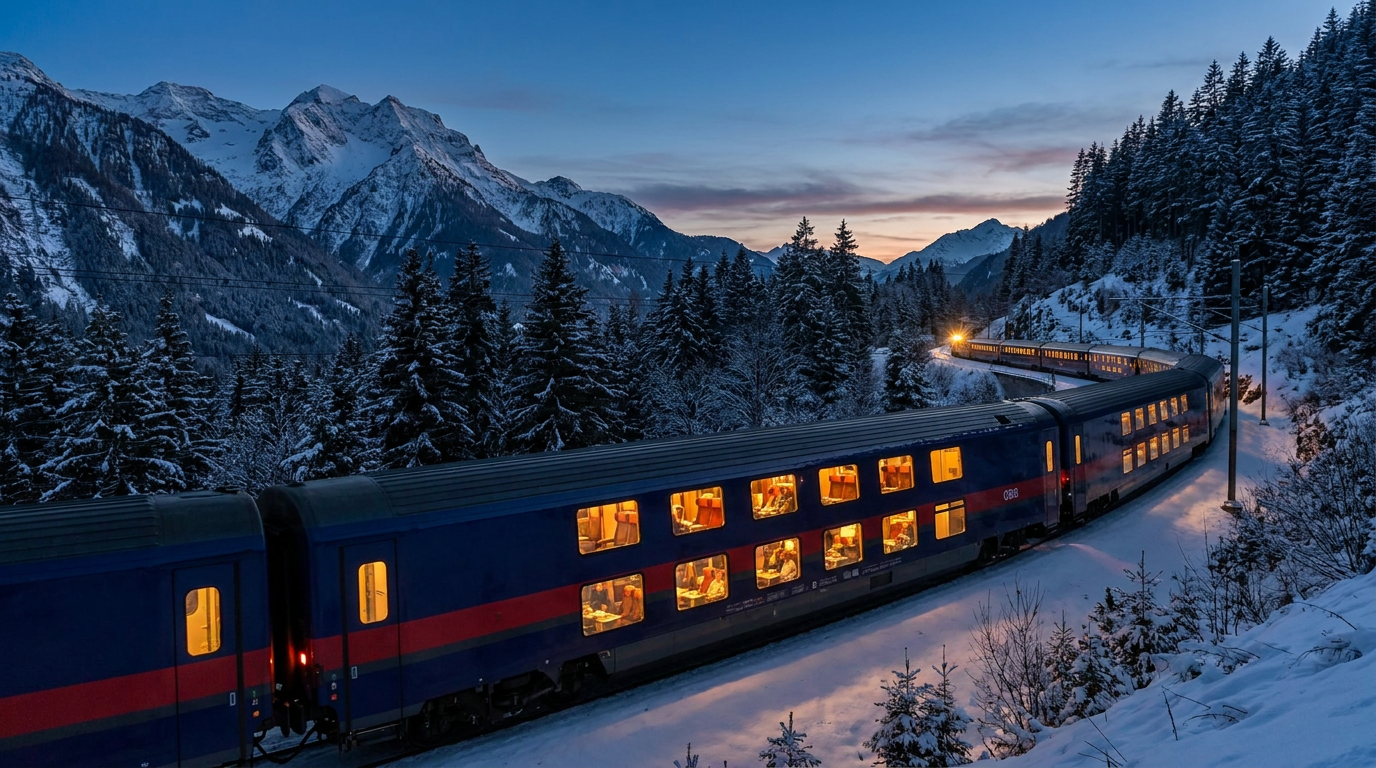
The romance of the European sleeper train—long associated with Agatha Christie novels and antique carriages—is undergoing a distinctly modern renaissance in 2026. Across the continent, a new wave of overnight rail routes is replacing the grueling rituals of airport security and short-haul flights with city-center to city-center convenience.[1]
This resurgence aligns with a broader shift in the 2026 travel landscape toward "regenerative tourism." Travelers are increasingly prioritizing "Vitamin T"—time, tranquility, and transformation—over the frantic pace of multi-city budget airline hopping.[7]
The environmental math is driving much of this behavioral change. According to industry sustainability data, carbon emissions for trips between major European capitals are up to 97 percent lower by train than by plane. For climate-conscious travelers, the sleeper train transforms transit from an ecological guilt trip into a sustainable hotel night on wheels.[3]
Yet the revival of the night train has not been without its political and financial hurdles. In late 2025, the movement faced a highly publicized setback when the French government abruptly cut state subsidies for the state-owned rail operator SNCF.[1][2]
That funding cut forced the cancellation of the popular ÖBB Nightjet service connecting Paris to Berlin and Vienna, a route that had been heralded as the poster child of the sleeper renaissance. For a brief moment, it appeared the night train revival might be derailing under the weight of cross-border economics.[2][5]

But the gap was rapidly filled by the private sector. European Sleeper, a Belgian-Dutch rail cooperative, stepped in to rescue the Paris-Berlin route. Operating without permanent state subsidies, the cooperative proved that passenger demand could sustain the model.[2][3]
The revived Paris-Berlin service will launch on March 26, 2026. Rerouted through Brussels, the new train will accommodate up to 700 passengers per journey, running three times a week and arriving in the German capital just in time for breakfast.[2][3]
European Sleeper is not stopping at the German border. On September 9, 2026, the cooperative will launch a highly anticipated southbound route connecting Brussels to Milan.[6]
On September 9, 2026, the cooperative will launch a highly anticipated southbound route connecting Brussels to Milan.
This 17-hour journey will depart Belgium in the early evening, winding down through Germany and the Swiss Alps overnight. Passengers will wake up to views of Lake Maggiore and the Italian countryside before pulling into Milan, effectively linking Northern Europe to the Mediterranean without a single boarding pass scan.[4][6]
Northern Europe is also seeing significant expansion. On April 15, 2026, a new night train operated by the Swiss Federal Railways (SBB) in partnership with Germany's RDC will begin service between Basel, Switzerland, and Malmö, Sweden.[1]
The 16-hour journey will connect Switzerland to Scandinavia via Copenhagen, offering a vital overland artery for travelers looking to bypass the heavily congested aviation corridors of Northern Europe.[1]
Beyond new routes, the physical hardware of the sleeper train is receiving a massive upgrade. Austria's ÖBB, the largest operator of night trains in Europe, is in the midst of rolling out 33 new seven-car Nightjet train sets throughout 2026.[5]
These next-generation trains are designed to solve the privacy concerns that historically deterred solo travelers. The new couchette cars feature "Mini Cabins"—single-person sleeping pods equipped with wireless charging, adjustable lighting, and secure luggage storage.[5]

For those willing to pay a premium, the upgraded sleeper cabins now include en-suite showers and private bathrooms, bridging the gap between public transit and a boutique hotel experience.[5]
Despite the upgraded amenities, operators face steep logistical challenges. Running an international night train requires navigating a labyrinth of cross-border regulations, varying track gauges, and high track-access charges levied by different national networks.[3][5]
Furthermore, passenger trains must compete for nighttime track access with freight trains, which are often given priority by national rail infrastructure managers during the overnight hours.[5]
Pricing also remains a friction point. While sleeper trains save travelers the cost of a hotel night, the upfront ticket price is frequently higher than a subsidized ultra-low-cost airline fare.[4]

Nevertheless, public sentiment is shifting rapidly. Recent behavioral surveys indicate that 69 percent of European travelers are now willing to take night trains, and nearly 40 percent are prepared to accept travel times exceeding five hours to avoid flying.[4]
How we got here
May 2023
European Sleeper launches its first open-access night train between Brussels and Berlin.
December 2025
The French government cuts subsidies, forcing the cancellation of the ÖBB Nightjet Paris-Berlin route.
March 2026
European Sleeper revives the Paris-Berlin route, running three times a week.
April 2026
A new night train launches connecting Basel, Switzerland, to Malmö, Sweden.
September 2026
A highly anticipated southbound sleeper route launches connecting Brussels to Milan via the Swiss Alps.
Viewpoints in depth
Rail Cooperatives
Focus on expanding the network and proving the economic viability of cross-border sleepers.
Private rail cooperatives and operators argue that the night train revival can be sustained without permanent state subsidies if the product is right. By launching new routes like Brussels-Milan and stepping in to save canceled routes like Paris-Berlin, these companies are proving that passenger demand exists. They emphasize that modernizing the rolling stock—such as introducing single-person pods and en-suite showers—is the key to attracting a broader demographic beyond backpackers and rail enthusiasts.
Climate-Conscious Travelers
Prioritize the massive reduction in carbon emissions and the ethos of slow travel.
For this demographic, the appeal of the sleeper train is fundamentally environmental. Citing the 97 percent reduction in carbon emissions compared to short-haul flights, these travelers view overnight rail as a cornerstone of 'regenerative tourism.' They argue that the travel experience should be about 'Vitamin T' (time, tranquility, and transformation) rather than rushing through airport security, and they are increasingly willing to accept longer travel times to align their vacations with their climate values.
Aviation & Infrastructure Skeptics
Highlight the logistical complexities and high costs that still hinder cross-border rail.
Skeptics within the aviation and infrastructure sectors point out that despite the romantic appeal, running international night trains remains a logistical nightmare. Operators must navigate varying track gauges, complex cross-border regulations, and exorbitant track-access charges. Furthermore, because passenger trains must compete with freight for nighttime track access, delays are common. They argue that until these structural issues are resolved, sleeper trains will remain a premium niche product, often costing significantly more upfront than a budget airline ticket.
What we don't know
- Whether open-access rail cooperatives can maintain long-term profitability without government subsidies.
- How budget airlines will adjust their pricing and routes in response to the growing popularity of sleeper trains.
- If national rail networks will eventually lower track-access charges to encourage more cross-border night services.
Key terms
- Regenerative tourism
- A travel model that seeks to actively improve and restore the destination's environment and community, rather than merely minimizing harm.
- Couchette
- A basic sleeping compartment on a European train, typically featuring fold-down bunks and shared bathroom facilities.
- Track-access charges
- Fees paid by train operating companies to national infrastructure managers for the right to run trains on their rail networks.
- Open-access operator
- A private train company that runs services on a commercial basis without state subsidies, purchasing track time on the open market.
Frequently asked
When does the Paris to Berlin sleeper train return?
The Paris-Berlin sleeper route will relaunch on March 26, 2026, operated by the Belgian-Dutch cooperative European Sleeper.
Are sleeper trains cheaper than flying?
Upfront ticket prices for sleeper trains are often higher than budget airline fares, but they save travelers the cost of a hotel night and expensive airport transfers.
Do the new night trains have private bathrooms?
Yes, the upgraded sleeper cabins on the new 2026 Nightjet trains feature en-suite showers and private toilets, though budget-friendly couchette options still use shared facilities.
What is a 'Mini Cabin'?
A Mini Cabin is a new single-person sleeping pod designed for solo travelers, featuring wireless charging, secure luggage storage, and privacy doors.
Sources
Source coverage
7 outlets
3 viewpoints surfaced







[1]ForbesRail Cooperatives
The Revival Of European Night Trains Continues With Three New Routes
Read on Forbes →[2]Time OutRail Cooperatives
The Paris-Berlin Sleeper Train is Returning in 2026
Read on Time Out →[3]AfarRail Cooperatives
Sleeper Trains in Europe Are Back on Track With New 2026 Routes
Read on Afar →[4]Yahoo NewsAviation & Infrastructure Skeptics
New European sleeper train routes are offering tourists an alternative to short-haul flights
Read on Yahoo News →[5]The TravelerClimate-Conscious Travelers
Europe's Night Trains Are Back on Track: New 2026 Routes
Read on The Traveler →[6]Travel Off PathAviation & Infrastructure Skeptics
New European Sleeper Service Linking Belgium To Italy Launches In September
Read on Travel Off Path →[7]Earth ChangersClimate-Conscious Travelers
Regenerative & Sustainable Travel Trends 2026
Read on Earth Changers →

Every angle. Every day.
Get lifestyle stories with full source coverage and perspective breakdowns delivered to your inbox.