
How Mushroom Leather Reached Commercial Scale to Disrupt the Fashion Industry
After years of laboratory development and limited-edition prototypes, mycelium-based leather is finally hitting commercial scale in 2026. The biodegradable material promises to deliver the premium feel of animal hide while using up to 99% less water.
By Factlen Editorial Team
- Biotech Innovators
- Focus on scaling biological manufacturing and disrupting traditional supply chains with superior material science.
- Luxury Fashion Houses
- Prioritize premium tactile feel, brand prestige, and meeting corporate sustainability targets without compromising quality.
- Environmental Advocates
- Emphasize lifecycle analysis, drastic reductions in water usage, and the critical need to avoid plastic coatings.
- Market Analysts
- Focus on unit economics, production bottlenecks, and the timeline for alternative materials to reach price parity.
What's not represented
- · Cattle farmers and traditional tanneries whose livelihoods are threatened by alternative materials
- · Garment workers in developing nations who may lack the specialized training required to process bio-textiles
Why this matters
For decades, consumers have been forced to choose between the environmental devastation of cattle farming and the toxic, plastic pollution of synthetic 'vegan' leathers. The commercial scaling of mycelium leather in 2026 finally offers a genuinely sustainable, biodegradable alternative that could permanently decarbonize the $261 billion global leather industry.
Key points
- Mycelium leather is graduating from lab prototypes to commercial-scale production in 2026.
- The material is grown from the root structure of fungi in vertical farming trays over 7 to 14 days.
- Producing mycelium leather uses up to 99% less water than traditional bovine leather.
- Luxury brands like Stella McCartney, Hermès, and Kering are heavily investing in the technology.
- While raw growth is cheap, specialized finishing makes the final product 2 to 4 times more expensive than cowhide.
- Pure mycelium is fully biodegradable, though some commercial variants use synthetic coatings for added durability.
The global leather goods market is an economic juggernaut, valued at over $261 billion annually and deeply embedded in the supply chains of everything from footwear to automotive interiors. Yet, that massive scale carries a staggering environmental cost that the fashion industry can no longer ignore. Producing just one square meter of bovine-finished leather requires up to 370 liters of water, placing immense strain on local aquifers. Furthermore, the traditional tanning process generates substantial solid and liquid waste, often relying on toxic chemicals like chromium to stabilize the animal hides and prevent them from rotting. For decades, the apparel industry has struggled to reconcile its reliance on this durable, luxurious material with its increasingly urgent climate commitments and the growing consumer demand for ethical production.[2][7]
The default alternative to animal hides has long been synthetic polyurethane or polyvinyl chloride (PVC), commonly known as "pleather" or vegan leather. While these synthetic materials solve the immediate animal welfare equation, they introduce a completely different ecological disaster. Synthetic leathers are essentially petroleum-based plastics extruded into flexible sheets. They require fossil fuel extraction, utilize toxic chemistries during manufacturing, and shed microplastics into the environment throughout their lifecycle. Most critically, when a synthetic leather jacket or handbag reaches the end of its life, it sits in a landfill for centuries, unable to decompose. Brands and consumers alike have been trapped in a lose-lose paradigm, forced to choose between the heavy footprint of animal agriculture and the toxic, permanent legacy of fossil fuels.[3][6]
In 2026, a third option has officially graduated from a laboratory novelty to a commercial reality: mycelium leather. Often referred to simply as "mushroom leather," this next-generation textile is rapidly scaling up, moving from limited-edition runway prototypes to full-scale manufacturing facilities capable of supplying global brands. Unlike traditional leather, which takes years to raise on a pasture, or synthetic leather, which is synthesized in a petrochemical plant, mycelium is grown quietly in vertical farming trays. The material has captured the attention of both Silicon Valley venture capitalists and heritage luxury houses, promising a fabric that looks, feels, and performs remarkably like premium calfskin, but with a fraction of the environmental footprint.[1][8]

To understand why this material is so revolutionary, one must look underground. Mycelium is the vegetative root structure of fungi—a sprawling, subterranean network of microscopic, thread-like filaments called hyphae. In nature, these threads form vast webs beneath the forest floor, breaking down organic matter and acting as the ecological connective tissue of the woods. Biotech innovators realized that by controlling the environment, they could coax these hyphae to grow upward and entangle themselves into a dense, solid sheet. This natural growth process is remarkably efficient, requiring minimal direct energy inputs beyond the initial sterilization of the growing environment.[1][6]
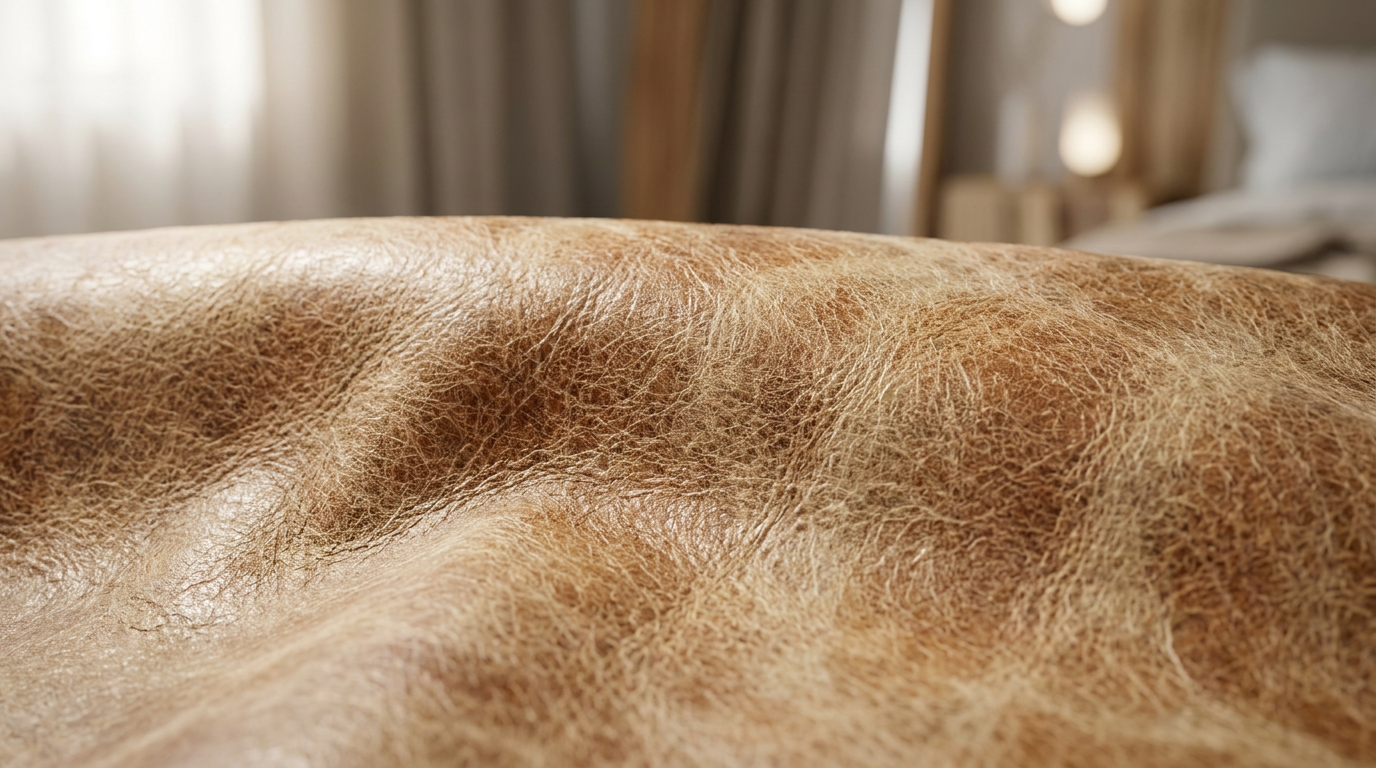
The resulting structure naturally mimics the triple-helix collagen matrix found in animal hides. This biological similarity is the key to mycelium leather's success in the high-end fashion market. Unlike synthetic plastics, which often feel cold and rigid, mycelium possesses a supple warmth, bounce, and sponginess. It has an absorptivity to the oils and heat that emanate from human fingers, allowing it to develop a natural patina over time—a hallmark of premium leather that synthetic alternatives have never been able to replicate. This tactile authenticity is what convinced some of the world's most discerning designers that fungi could replace cowhide.[1][5]
The resulting structure naturally mimics the triple-helix collagen matrix found in animal hides.
The production of mycelium leather is a marvel of modern bio-manufacturing, blending agriculture with advanced materials science. Companies like MycoWorks and Ecovative operate massive, sterile facilities that look more like semiconductor cleanrooms than traditional farms. Inside these plants, stacks of metal trays are filled with a substrate of agricultural waste—typically sawdust, hemp hurds, or corn stalks. The trays are inoculated with fungal spores and placed in dark, climate-controlled incubation rooms. Because the environment is tightly controlled, engineers can direct the mycelium’s growth, customizing the final material’s thickness, shape, and tensile strength before it is even harvested.[1][6]

The speed of this biological manufacturing is unprecedented in the textile industry. Over the course of just 7 to 14 days, the fungi feast on the agricultural waste, knitting themselves together into a thick, flexible foam that covers the surface of the tray. This rapid growth cycle stands in stark contrast to the years required to raise cattle for their hides. Once the mycelium reaches the desired density and thickness, the growth process is halted, and the raw sheets are peeled off the substrate blocks. The underlying agricultural waste can then be composted, creating a closed-loop system that generates virtually no unusable byproducts.[1][8]
After harvesting, the raw mycelium sheets undergo a tanning and finishing process to stabilize the fibers and enhance their durability for commercial use. Unlike conventional leather tanning, which relies heavily on heavy metals and produces toxic wastewater, mycelium is typically treated with plant-based dyes and eco-friendly chemistry, such as vinegar and alcohol. The environmental math of this entire lifecycle is compelling: producing mycelium leather requires up to 99 percent less water than bovine leather and generates significantly lower greenhouse gas emissions. Furthermore, because the core material is composed entirely of organic matter, pure mycelium leather is completely biodegradable and non-toxic.[3][6]

The fashion industry’s most prestigious names have been the primary catalysts for funding and adopting this technology. Stella McCartney, a long-time pioneer in cruelty-free fashion, debuted the world’s first commercially available mushroom leather handbag in collaboration with Bolt Threads, utilizing their Mylo material. Other heavyweights, including Hermès, Adidas, Lululemon, and Kering (the parent company of Gucci), have formed strategic consortiums to fund the research and development of these mycotextiles. For luxury brands, mycelium solves a critical brand-image problem: it allows them to meet aggressive corporate sustainability targets without compromising on the premium, tactile experience their customers demand.[4][5]
Despite the immense promise, 2026 represents a critical transition phase for the mycotextile industry: the leap from pilot projects to global commercial scale. Growing fungi in a controlled laboratory is vastly different from producing millions of square meters of consistent, flawless fabric. Early pioneers faced significant hurdles with biological contamination and the sheer capital expenditure required to build vertical farming infrastructure. However, the landscape is shifting rapidly. Facilities like MycoWorks’ 136,000-square-foot plant in Union, South Carolina, are now fully operational, utilizing automated robotics to monitor the incubation trays and achieve commercial volumes that were impossible just a few years ago.[1][4]
The remaining hurdles for mycelium leather are primarily economic. Currently, the finished material is two to four times more expensive than conventional leather, largely due to the bespoke finishing processes and the amortization of new factory builds. Interestingly, the raw biological growth is incredibly cheap—manufacturing a square meter of raw mycelium costs between 18 and 28 cents, compared to roughly $6 for raw animal hides. The cost inflation occurs during the specialized processing required to turn that raw foam into a durable textile. As production scales and the supplier ecosystem matures, industry analysts project that these costs will drop by 30 to 40 percent annually, eventually reaching price parity with premium calfskin.[3][4]

Durability and end-of-life processing represent the final frontier for researchers. While mycelium is naturally strong, achieving the exact tear resistance and flex strength of cowhide for high-stress applications like footwear sometimes requires hybridizing the sheets with woven fabrics, such as lyocell, or coating them in polylactic acid. While these reinforcements make the material more than twice as strong as animal leather, they can complicate its biodegradability, creating a tension between performance and pure environmental circularity. Nevertheless, as the technology matures and new extraction methods are developed, mycelium leather stands poised to fundamentally rewrite the material supply chain of the global fashion industry, offering a rare win-win for both consumers and the planet.[2][3][8]
How we got here
2017
Biotech company Bolt Threads partners with luxury designer Stella McCartney to begin developing Mylo, a mycelium-based leather alternative.
2021
Hermès unveils a prototype of its iconic Victoria bag crafted from a mycelium material developed in partnership with MycoWorks.
2022
Stella McCartney launches the Frayme bag, marking the first time a mushroom leather handbag is sold commercially to the public.
2024
MycoWorks opens a massive 136,000-square-foot commercial facility in South Carolina, signaling the shift from lab-scale to industrial production.
2026
Mycelium leather reaches a commercial tipping point, with multiple luxury brands integrating the material into their mainline collections as production costs begin to fall.
Viewpoints in depth
Biotech Innovators
Focus on scaling biological manufacturing and disrupting traditional supply chains with superior material science.
For the scientists and engineers at companies like MycoWorks and Ecovative, mycelium is not just a leather substitute; it is a programmable super-material. By controlling the temperature, humidity, and nutrient mix in their vertical farms, these innovators argue they can engineer textiles that outperform animal hides in specific metrics like tensile strength and weight. Their primary focus in 2026 is proving that biological manufacturing can move out of the boutique laboratory and into automated, high-yield factories capable of supplying global supply chains without succumbing to biological contamination.
Luxury Fashion Houses
Prioritize premium tactile feel, brand prestige, and meeting corporate sustainability targets without compromising quality.
Heritage brands and luxury conglomerates view mycelium as the holy grail of sustainable fashion. For decades, they have resisted synthetic 'vegan' leathers because polyurethane lacks the warmth, breathability, and aging characteristics (patina) that luxury consumers demand. Mycelium's natural cellular structure solves this problem, offering a genuine biological alternative that feels expensive. For these houses, investing in mycotextiles is a strategic imperative to future-proof their brands against tightening environmental regulations and shifting Gen-Z consumer values, even if the material currently commands a premium price.
Environmental Advocates
Emphasize lifecycle analysis, drastic reductions in water usage, and the critical need to avoid plastic coatings.
Sustainability researchers celebrate the staggering reductions in water usage and greenhouse gas emissions that mycelium leather offers compared to cattle farming. However, they maintain a critical eye on the finishing processes. Advocates point out that if mycelium sheets are heavily coated in synthetic polymers or polylactic acid to improve their tear resistance, the material loses its primary end-of-life advantage: biodegradability. This camp pushes the industry to prioritize pure, circular chemistry over extreme durability, arguing that a jacket that lasts 50 years but never decomposes is still an ecological failure.
Market Analysts
Focus on unit economics, production bottlenecks, and the timeline for alternative materials to reach price parity.
Financial and industry analysts view the mycelium trend through the lens of unit economics. While they acknowledge the massive total addressable market—disrupting a $261 billion leather industry—they caution that the transition will be slow. Analysts highlight that while raw mycelium is incredibly cheap to grow, the bespoke tanning and finishing processes currently make the final product two to four times more expensive than bovine leather. Their perspective is that mycelium will remain a luxury niche until the supplier ecosystem matures enough to drive costs down by at least 40 percent.
What we don't know
- Whether mycelium leather can ever reach true price parity with mass-market synthetic polyurethane for fast-fashion applications.
- The long-term aging and degradation profile of mycelium garments after a decade of heavy consumer wear.
- How tightening European Union regulations on 'vegan' labeling will classify bio-leathers that use synthetic polymer coatings for durability.
Key terms
- Mycelium
- The vegetative part of a fungus, consisting of a mass of branching, thread-like hyphae that typically grows underground.
- Hyphae
- The microscopic, branching filaments that make up the mycelium of a fungus, acting as the structural building blocks of mushroom leather.
- Polyurethane (PU)
- A synthetic, petroleum-based plastic commonly used to make traditional 'vegan leather' or pleather, known for its environmental persistence.
- Substrate
- The surface or material on which an organism grows; in this case, the agricultural waste (like sawdust) that feeds the growing fungi.
- Polylactic Acid (PLA)
- A biodegradable polymer derived from renewable resources like corn starch, sometimes used to coat mycelium leather to increase its tear resistance.
Frequently asked
Is mushroom leather as strong as real animal leather?
Raw mycelium leather has similar durability to synthetic leather but is generally less durable than cowhide. However, when treated with specific coatings or hybridized with fabrics like lyocell, its tear and flex strength can exceed that of animal leather.
Does mycelium leather smell like mushrooms?
No. After the raw mycelium is harvested, it undergoes a tanning and finishing process that neutralizes any earthy odors, leaving it with a neutral scent or a subtle, natural fragrance similar to traditional leather.
Is mushroom leather completely biodegradable?
Pure mycelium leather is 100% biodegradable and compostable. However, some commercial versions are coated with polylactic acid (PLA) or other synthetic finishes to increase durability, which can complicate or slow down the biodegradation process at the end of the product's life.
Why is mushroom leather currently so expensive?
While growing the raw fungal material is very cheap (costing mere cents per square meter), the specialized tanning, finishing, and processing required to turn it into a durable textile are currently done in smaller batches, driving the final cost to two to four times that of conventional leather.
Sources
Source coverage
8 outlets
4 viewpoints surfaced








[1]National GeographicBiotech Innovators
Mushroom leather? The future of fashion is closer than you think
Read on National Geographic →[2]MycoStoriesEnvironmental Advocates
University of Vienna Turns Mushroom Waste Into Sewable, Recyclable Leather Alternative
Read on MycoStories →[3]FaunalyticsEnvironmental Advocates
Fungi Fashion: The Sustainable Appeal Of Mycelium Leather
Read on Faunalytics →[4]Persistence Market ResearchMarket Analysts
Mycelium Leather Market Size and Trends Analysis
Read on Persistence Market Research →[5]Stella McCartney OfficialLuxury Fashion Houses
About Bolt Threads and Mylo™
Read on Stella McCartney Official →[6]Council of Fashion Designers of AmericaBiotech Innovators
Materials Index: Benefits of Mylo™
Read on Council of Fashion Designers of America →[7]Journal of Industrial EcologyEnvironmental Advocates
Environmental footprint of bovine leather production
Read on Journal of Industrial Ecology →[8]Factlen Editorial TeamMarket Analysts
Synthesis by Factlen editorial team
Read on Factlen Editorial Team →
Every angle. Every day.
Get lifestyle stories with full source coverage and perspective breakdowns delivered to your inbox.