
Herman Miller Aeron vs. Steelcase Gesture: Choosing the Right Premium Ergonomic Office Chair
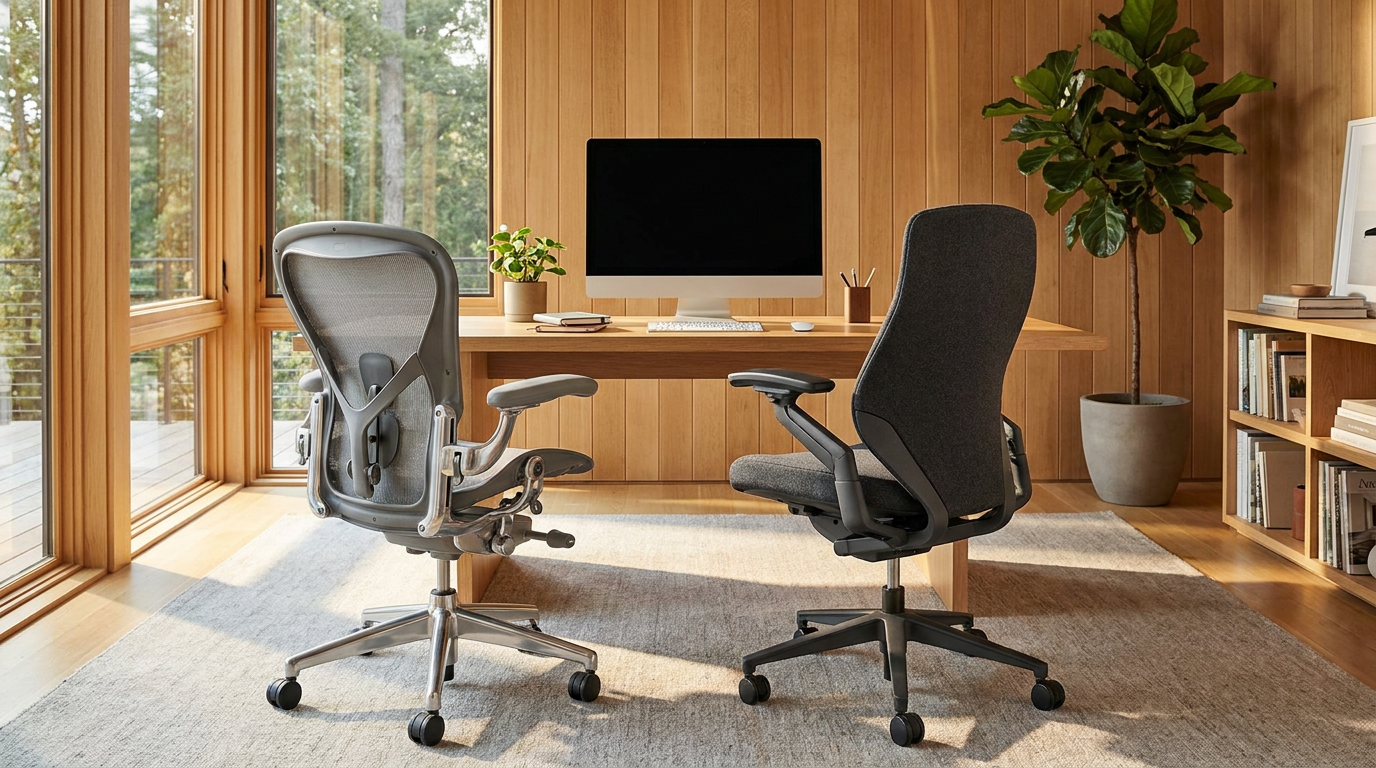
At the top of the premium office chair market, the Herman Miller Aeron and Steelcase Gesture offer radically different approaches to ergonomic support. While the Aeron enforces strict posture through breathable mesh, the Gesture accommodates dynamic movement with highly adjustable components.
By Factlen Editorial Team
- Dynamic Movement Proponents
- Values chairs that accommodate varied sitting positions, cross-legged postures, and frequent shifting.
- Strict Posture Advocates
- Argues that a premium chair should enforce biomechanically optimal, forward-facing posture with firm support.
- Value & Durability Analysts
- Focuses on the long-term return on investment, build quality scores, and warranty coverage.
What's not represented
- · Budget-constrained buyers who cannot afford a $1,500+ chair
- · Users who require specialized medical seating for severe spinal conditions
Why this matters
Investing in a premium office chair is a decade-long commitment that directly impacts your daily physical health, focus, and productivity. Understanding the mechanical trade-offs between the market's two leading models ensures you don't spend $1,500 on a chair that actively fights your natural sitting habits.
Key points
- The Herman Miller Aeron uses breathable mesh to enforce a strict, biomechanically optimal forward-facing posture.
- The Steelcase Gesture uses a flexible foam seat and back to accommodate dynamic movement and varied sitting positions.
- The Gesture features highly versatile 4D armrests that pivot from the back of the chair to support device usage.
- The Aeron lacks a seat depth adjustment and must be purchased in one of three specific sizes (A, B, or C).
- Both chairs feature exceptional build quality and are backed by comprehensive 12-year, 24/7 usage warranties.
Investing in a premium ergonomic office chair is one of the most consequential purchases for remote workers and office professionals in 2026. At the pinnacle of this market sit two undisputed titans: the Herman Miller Aeron and the Steelcase Gesture. Priced between $1,499 and $1,835, these chairs represent the gold standard of workplace seating, promising to alleviate back pain, reduce fatigue, and support neutral postures during long desk shifts. However, they achieve these goals through radically different design philosophies. Choosing between them is not a matter of identifying an objectively superior chair, but rather matching the chair's specific mechanical traits to your personal sitting habits, body type, and workspace needs.[1][2][6]
The fundamental divide between the two models lies in how they view the human body at work. The Herman Miller Aeron is a prescriptive chair. It is engineered to hold the user in a single, biomechanically optimal forward-facing posture, actively discouraging slouching or asymmetrical sitting. The Steelcase Gesture, introduced as a modern response to the proliferation of smartphones and tablets, is an accommodating chair. It assumes that modern workers constantly shift positions—leaning back to text, twisting to look at a second monitor, or pulling a foot up onto the seat. Understanding this philosophical split is the key to navigating the trade-offs between the two models.[2][4][6]
In the category of seat comfort, the trade-off analysis reveals two entirely different material approaches. FOR THE AERON: The proprietary 8Z Pellicle mesh provides unparalleled temperature control, ensuring the user never overheats, while delivering firm, hammock-like suspension that never flattens out. AGAINST THE AERON: The rigid plastic frame surrounding the mesh creates a hard boundary that restricts movement. EVIDENCE: Ergonomic testers at BTOD note that the Aeron's bladed seat edges actively punish users who attempt to tuck a leg underneath themselves, making it uncomfortable for non-traditional sitting. FOR THE GESTURE: Steelcase utilizes a high-quality foam pad with a flexible front edge, allowing users to sit cross-legged or sideways without hitting a hard frame. AGAINST THE GESTURE: The foam retains more heat than mesh and features a slight forward tilt that some users find less secure. EVIDENCE: User consensus on forums heavily favors the Gesture for dynamic sitters, praising its forgiving nature over long hours.[1][5]

When evaluating armrest adjustability, the comparison highlights a battle between plush comfort and mechanical range. FOR THE GESTURE: The chair features massive four-dimensional adjustability, with arms that pivot from the back of the chair rather than the seat. This allows them to support the user's elbows whether they are typing on a keyboard or holding a phone in their lap. AGAINST THE GESTURE: The arm pads themselves are relatively standard in their cushioning. EVIDENCE: Reviewers at ChairsFX highlight the Gesture's armrests as the most versatile on the market, perfectly accommodating the varied postures of modern tech workers. FOR THE AERON: The arm pads are exceptionally thick, squishy, and luxurious, providing a premium resting place for the elbows. AGAINST THE AERON: The arms lack width adjustment and have a limited pivot range, keeping the user locked into a standard typing position. EVIDENCE: Ergonomic analysts consistently rate the Aeron's arm pad comfort as best-in-class, but deduct points for the lack of dynamic articulation.[2][4]
Back support and recline mechanisms further differentiate the two models. FOR THE AERON: The chair features a synchro-tilt mechanism that provides a remarkably smooth, rocking-chair-like recline, paired with the highly effective PostureFit SL lumbar system that supports the sacrum and mid-back. AGAINST THE AERON: The backrest height is fixed, and the lumbar support cannot be adjusted vertically. EVIDENCE: Esquire magazine praises the Aeron's recline as the most fluid in the industry, noting that the chair moves effortlessly with the user's body weight. FOR THE GESTURE: The backrest is highly flexible, twisting and bending as the user stretches, and features a height-adjustable lumbar slider to target the exact curve of the lower back. AGAINST THE GESTURE: The recline is a more traditional tilt-lock system, which feels less like floating and more like leaning against a spring. EVIDENCE: TechGearLab testers confirm that the Gesture's LiveBack technology hugs the spine perfectly, making it the superior choice for users who need targeted, adjustable lower-back pressure.[3][4]

Back support and recline mechanisms further differentiate the two models.
Sizing and overall fit present another critical point of divergence for prospective buyers. FOR THE GESTURE: The chair is designed as a one-size-fits-most solution, accommodating a massive range of body types through its highly adjustable seat depth slider and versatile frame. AGAINST THE GESTURE: Exceptionally tall or short users might find the standard cylinder height slightly misaligned with their desk setup without custom ordering. EVIDENCE: Office managers frequently choose the Gesture for shared workspaces because it can be quickly adjusted to fit almost anyone who sits in it. FOR THE AERON: Herman Miller offers the chair in three distinct sizes (A, B, and C) to ensure a mathematically perfect fit for the specific user's height and weight. AGAINST THE AERON: The chair completely lacks a seat depth adjustment; if you buy the wrong size, the hard plastic frame will cut into the back of your knees or leave your thighs unsupported. EVIDENCE: Ergonomic experts warn that the Aeron requires careful sizing before purchase, as the lack of a seat slider makes it unforgiving for users who fall between the standard size brackets.[1][6]
Regarding build quality and long-term value, both chairs justify their premium price tags, though they allocate their engineering budgets differently. FOR THE AERON: The chair is constructed almost entirely of aluminum and high-grade mesh, making it the lightest and arguably the most durable chair in its class. AGAINST THE AERON: The starting price of $1,835 is significantly higher than its competitors. EVIDENCE: BTOD scores the Aeron a 95 out of 100 for build quality, noting that 20-year-old models are still frequently found in perfect working condition on the used market. FOR THE GESTURE: The chair utilizes custom-tooled components that fit together seamlessly, backed by Steelcase's legendary customer service. AGAINST THE GESTURE: The design incorporates substantially more plastic than the Aeron, which some buyers feel detracts from the premium aesthetic. EVIDENCE: Both chairs carry comprehensive 12-year, 24/7 usage warranties, ensuring that the cost per year of ownership drops to roughly $125 to $150—a better long-term value than replacing a cheap chair every two years.[1][6]

Synthesizing these trade-offs leads to clear recommendations. The Herman Miller Aeron FITS WELL WHEN the user works in a hot environment where breathability is paramount, prefers a firm and highly supportive seat, and maintains a strict, traditional forward-facing posture at their desk. It is the ultimate tool for focused, disciplined desk work. The Aeron DOES NOT FIT WHEN the user likes to sit cross-legged, tuck a foot under their thigh, or frequently shift their weight asymmetrically. The rigid plastic seat pan will actively cause pain for dynamic sitters, and the lack of seat depth adjustment makes it a poor choice for shared workstations where multiple people of varying heights will use the same chair.[1][2]
Conversely, the Steelcase Gesture FITS WELL WHEN the user is a dynamic sitter who frequently changes positions, uses multiple devices like tablets and smartphones, and requires highly adjustable armrests to support non-traditional postures. Its forgiving foam seat and flexible backrest make it incredibly accommodating for long, varied shifts. The Gesture DOES NOT FIT WHEN the user runs hot and requires maximum airflow, or when they prefer the floating, rocking-chair sensation of a premium synchro-tilt mechanism. Additionally, users who strongly prefer the aesthetic of polished aluminum over engineered plastics may find the Gesture's visual profile less striking than the iconic Herman Miller silhouette.[4][5]
Ultimately, the decision between the Aeron and the Gesture comes down to a choice between enforced perfection and accommodating flexibility. The Aeron demands that you sit correctly, rewarding you with unparalleled suspension and temperature control if you comply. The Gesture accepts that you will sit incorrectly, contorting its armrests and backrest to support you regardless of how you position your body. By honestly assessing your own daily sitting habits and workspace behaviors, you can confidently invest in the premium ergonomic chair that will best support your health and productivity for the next decade.[6]
How we got here
1994
Herman Miller introduces the original Aeron, revolutionizing the office furniture market by replacing foam with breathable mesh.
2013
Steelcase launches the Gesture, designed specifically to support the new postures created by the rise of smartphones and tablet computing.
2016
Herman Miller releases the Aeron Remastered, updating the iconic chair with 8Z Pellicle mesh and an improved tilt mechanism.
2026
Both chairs remain the top-scoring premium ergonomic options on the market, dominating reviews for build quality and long-term comfort.
Viewpoints in depth
Strict Posture Advocates
Users and reviewers who prioritize enforced ergonomic alignment.
This camp, often including physical therapists and traditional ergonomic reviewers, heavily favors the Herman Miller Aeron. They argue that the chair's rigid boundaries are a feature, not a bug. By making it physically uncomfortable to sit cross-legged or slouch asymmetrically, the Aeron actively trains the user to maintain a biomechanically neutral spine. For these users, the firm suspension mesh and fixed seat pan are essential tools for preventing long-term repetitive strain injuries during 40-hour work weeks.
Dynamic Movement Proponents
Modern workers who value the ability to shift, lean, and change postures.
This perspective dominates user forums and tech-worker communities. They argue that the human body is not meant to be locked into a single 'perfect' posture for eight hours a day. Instead, they champion the Steelcase Gesture for its forgiving foam seat and highly articulated armrests, which provide support whether the user is leaning back to read on a tablet, twisting to look at a second monitor, or pulling a leg up onto the seat. For this camp, the best ergonomic chair is the one that adapts to the user, rather than forcing the user to adapt to the chair.
What we don't know
- Whether Herman Miller will eventually release an Aeron model with an adjustable seat pan depth.
- How the long-term durability of the Gesture's foam seat compares to the Aeron's mesh past the 15-year mark.
Key terms
- Synchro-Tilt Mechanism
- A recline system where the backrest and seat pan tilt at different ratios (usually 2:1), allowing the user to lean back while keeping their feet flat on the floor.
- 4D Armrests
- Armrests that can be adjusted in four distinct directions: height, width, depth (forward/backward), and pivot (inward/outward angle).
- Seat Pan Slider
- A mechanical adjustment that allows the seat cushion to move forward or backward, accommodating different leg lengths to ensure proper thigh support.
- 8Z Pellicle Mesh
- Herman Miller's proprietary elastomeric suspension fabric, designed with eight zones of varying tension to provide targeted support and eliminate pressure points.
Frequently asked
Is the Herman Miller Aeron worth the high price?
Yes, for the right user. When amortized over its 12-year warranty, the cost per year is often lower than replacing mid-range chairs. Its exceptional build quality and mesh durability make it a long-term investment.
Can I sit cross-legged in the Herman Miller Aeron?
No. The Aeron features a rigid plastic frame around its mesh seat that will dig into your legs and cut off circulation if you attempt to sit cross-legged or tuck a foot under yourself.
Does the Steelcase Gesture run hot?
Because the Gesture uses a traditional fabric-covered foam seat and back, it retains more body heat than the fully mesh Aeron. However, the foam is high-quality and generally breathes well enough for standard office environments.
Which chair is better for tall people?
The Aeron Size C is specifically engineered for taller, heavier individuals, providing a mathematically scaled fit. The Gesture accommodates tall users well with its seat slider, but exceptionally tall individuals may need to order an extended cylinder.
Sources
Source coverage
6 outlets
3 viewpoints surfaced





[1]BTODValue & Durability Analysts
Herman Miller Aeron vs. Steelcase Gesture Review Comparison
Read on BTOD →[2]ChairsFXStrict Posture Advocates
Best Premium Ergonomic Office Chairs
Read on ChairsFX →[3]EsquireStrict Posture Advocates
The Best Office Chairs for 2026
Read on Esquire →[4]TechGearLabDynamic Movement Proponents
Best Office Chairs of 2026
Read on TechGearLab →[5]Reddit r/BuyItForLifeDynamic Movement Proponents
Aeron vs Gesture: Which one is the best?
Read on Reddit r/BuyItForLife →[6]Factlen Editorial TeamValue & Durability Analysts
Synthesis by Factlen editorial team
Read on Factlen Editorial Team →
Every angle. Every day.
Get shopping stories with full source coverage and perspective breakdowns delivered to your inbox.