
How MLB's New Robot Umpire Challenge System Actually Works
Major League Baseball's Automated Ball-Strike (ABS) challenge system has officially debuted in the 2026 season. Here is a deep dive into the Hawk-Eye technology, the new strike zone math, and why players chose a hybrid model over full automation.
By Factlen Editorial Team
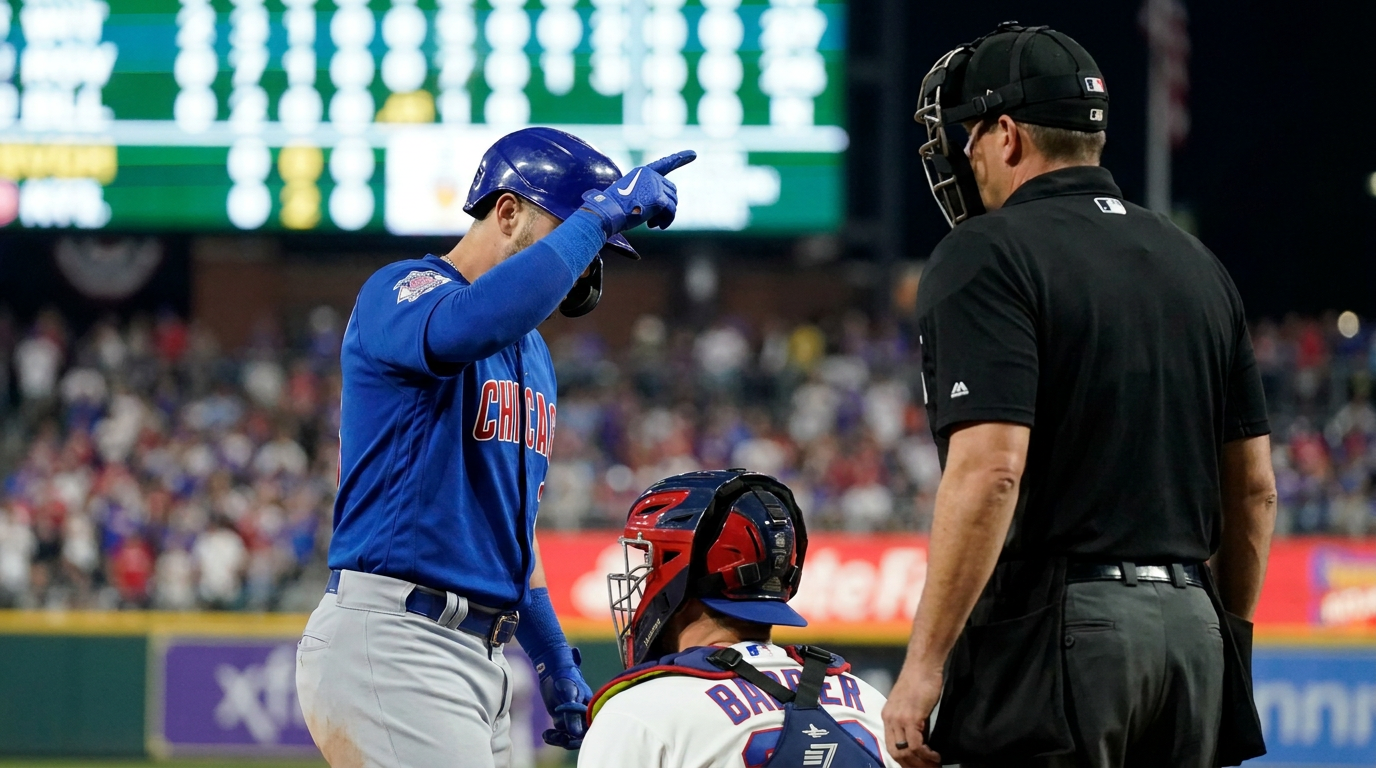
- Hybrid System Supporters
- Argue that the challenge system perfectly balances technological accuracy with the preservation of human elements like pitch framing.
- Full Automation Advocates
- Believe that if the technology is accurate to within a fraction of an inch, it should be used to call every single pitch to ensure total fairness.
- Baseball Traditionalists
- Value the historical continuity of the game and worry that introducing screens and reviews disrupts the natural rhythm of the sport.
What's not represented
- · Minor league umpires who tested the system for years before its major league debut.
Why this matters
For over a century, the umpire's call was final, leading to endless arguments and game-altering mistakes. The ABS system fundamentally changes the sport's relationship with technology, giving players direct agency to correct crucial errors while preserving the human element of the game.
Key points
- MLB introduced the Automated Ball-Strike (ABS) challenge system for the 2026 season, allowing players to appeal umpire calls.
- Hawk-Eye cameras track pitches with a one-sixth of an inch margin of error, displaying results on stadium videoboards.
- Teams receive two challenges per game, which are retained if the appeal is successful.
- Players preferred the challenge format over full automation to preserve the defensive art of pitch framing.
For more than a century, the home plate umpire's judgment was the undisputed law of baseball, a reality that spawned endless arguments, dirt-kicking manager tantrums, and game-altering mistakes. But as the 2026 Major League Baseball season unfolds, a subtle gesture has revolutionized the sport: a quick double-tap of the helmet. This signal triggers the Automated Ball-Strike (ABS) challenge system, a hybrid technological safety net that allows players to instantly appeal an umpire's call to a computer. After years of testing in the minor leagues, the system has arrived in the majors, fundamentally altering the dynamic between players, officials, and the strike zone.[1][3][6]
The mechanism of an ABS challenge is designed for speed and drama. When a batter, pitcher, or catcher believes a pitch was incorrectly called, they must immediately signal the umpire by tapping their head or helmet. The human umpire then steps back, and the stadium's attention turns to the massive videoboards in the outfield. Within seconds, a three-dimensional graphic tracks the pitch's exact flight path, revealing whether the ball clipped the zone or missed by a fraction of an inch. The entire process takes moments, injecting a theatrical suspense into the game without bogging down the pace of play.[2][4][5]
Powering this reveal is a sophisticated network of Hawk-Eye cameras installed in every major league stadium. The same optical tracking technology that fuels MLB's Statcast data now monitors the space above home plate with microscopic precision. According to the league, the system boasts a margin of error of approximately one-sixth of an inch. Unlike the traditional umpire's zone, which often morphs into an oval shape depending on the official's tendencies, the Hawk-Eye system enforces a rigid, two-dimensional rectangular plane located exactly 8.5 inches behind the front of home plate.[3][4][5]
Defining that rectangular plane required a mathematical consensus that baseball had never previously achieved. For ABS purposes, the width of the strike zone is permanently set at 17 inches, perfectly matching the width of home plate. The height, however, is dynamic and tailored to each individual batter. During spring training, MLB meticulously measured every player without cleats. The computer then calculates the bottom of the strike zone as exactly 27 percent of the player's measured height, while the top boundary is set at 53.5 percent. This creates a standardized, objective zone that eliminates the advantage of an exaggerated batting crouch.[2][4][5]

The rules governing the challenge system are strictly defined to prevent abuse and maintain the game's rhythm. Each team begins a game with two challenges. If a player challenges a call and the Hawk-Eye system proves them right—overturning a ball to a strike, or vice versa—the team retains that challenge. If the player is wrong and the umpire's original call stands, the challenge is lost. To account for the extended tension of free baseball, teams are awarded one additional challenge at the start of each extra inning, regardless of how many they burned during the first nine frames.[1][3][4]
Crucially, the power to initiate a review rests solely with the players directly involved in the pitch. Only the batter, the catcher, and the pitcher are permitted to signal for a challenge. Managers, bench coaches, and players in the dugout are strictly prohibited from calling for a review, a rule implemented to prevent teams from using dugout iPads or video-room analysts to double-check a pitch before deciding to challenge. The appeal must be instantaneous, relying entirely on the raw, on-field instincts of the athletes in the batter's box and on the mound.[1][4]
Crucially, the power to initiate a review rests solely with the players directly involved in the pitch.
Given the accuracy of the Hawk-Eye system, a natural question arises: why did MLB opt for a challenge system instead of fully automating every ball and strike call? The answer lies in the strong preference of the players themselves. During extensive minor league testing, MLB experimented with full automation, where an umpire wore an earpiece and simply relayed the computer's call on every pitch. However, players found the fully automated zone too rigid, complaining that it stripped away the nuance of the game and called strikes on breaking balls that technically clipped the zone but visually appeared unhittable.[1][3][6]
Furthermore, a fully automated system threatened to eradicate one of baseball's most subtle and valued defensive skills: pitch framing. Catchers spend years perfecting the art of receiving the ball smoothly, using their glove and body positioning to make borderline pitches look like strikes to the human umpire. The challenge system serves as a compromise, preserving the catcher's ability to steal strikes on the margins while providing a safety net against egregious misses. It keeps the human element intact for the vast majority of pitches, intervening only when a player feels strongly enough to risk a challenge.[2]

Early returns from the 2026 season suggest the hybrid approach is working exactly as intended. In the first 47 games of the regular season, exactly 94 calls were successfully overturned by the ABS system. Some of these corrections rectified obvious umpire blunders, while others hinged on literal millimeters of baseball leather grazing the digital boundary. The system has proven that while major league umpires are historically accurate—calling roughly 94 percent of pitches correctly—the technology is invaluable for the crucial percentage that slip through the cracks in high-leverage situations.[2][5]
The introduction of ABS has also sparked fascinating new strategic trends. Hitters and pitchers are quickly learning which pitches are worth challenging. Early data reveals that hitters are highly successful when challenging four-seam fastballs, winning 65.4 percent of those appeals. The straight trajectory of the heater makes it easier for a batter's naked eye to judge against the zone. Conversely, sweeping breaking balls and two-seam fastballs with heavy horizontal movement have proven notoriously difficult for players to accurately assess in real-time, leading to a high rate of failed challenges on those pitch types.[5]

The implementation of the objective strike zone has had a measurable impact on the game's broader offensive environment. Because the ABS height parameters are slightly more hitter-friendly than the traditional umpire's zone, batters are showing increased plate discipline. Early in the 2026 season, the league-wide walk rate spiked to 9.9 percent of plate appearances, a noticeable jump from the typical 8 to 9 percent seen in previous years. Correspondingly, hitters are swinging less frequently, trusting that the automated safety net will protect them if they take a borderline pitch.[6]
Beyond the geometry of the strike zone, the ABS system has dramatically improved the on-field temperament. Historically, arguments over balls and strikes were the primary catalyst for manager and player ejections, accounting for over 60 percent of all tossings in recent seasons. With the challenge system in place, the venom has been extracted from these disputes. If a batter disagrees with a called strike three, they no longer need to scream at the umpire; they simply tap their helmet. If the computer confirms the strike, the argument is definitively over, leaving no room for subjective debate.[2]

The seamless integration of the technology has won over many initial skeptics. Just as the pitch clock faced resistance before ultimately being embraced for improving the game's pace, the ABS challenge system is being lauded for enhancing fairness without sacrificing the sport's soul. The in-stadium experience has been universally praised, with crowds roaring in anticipation as the 3D graphic renders on the scoreboard, turning what used to be a moment of pure frustration into an interactive spectacle.[1][5]
As the 2026 season progresses, the Automated Ball-Strike challenge system stands as a testament to thoughtful technological integration. By listening to player feedback and resisting the urge to fully digitize the umpire's role, Major League Baseball has struck a delicate balance. The human official remains the authoritative voice on the field, the catcher's defensive artistry retains its value, and the players finally have the power to correct the game's most critical errors. The robot umpires have arrived, but they are serving the game, not running it.[1]
How we got here
2019
The independent Atlantic League becomes the first professional league to test automated ball-strike technology.
2022
MLB expands ABS testing to the Triple-A minor league level.
June 2024
Triple-A officially switches to the challenge-based ABS system rather than full automation.
September 2025
MLB's 11-person competition committee officially approves the challenge system for the 2026 major league season.
March 2026
The ABS challenge system makes its official regular-season debut in Major League Baseball.
Viewpoints in depth
The Players' Union
Advocating for the hybrid model to preserve pitch framing and human nuance.
For the players, the ABS challenge system represents a hard-fought compromise. While hitters wanted protection against egregious strike calls, catchers were fiercely protective of pitch framing—a skill that dictates millions of dollars in contract value. The union successfully argued that full automation would sterilize the game and penalize elite defensive catchers. The challenge system allows players to keep the human element of the game intact while providing a ripcord to pull when an umpire makes a clear mistake.
The Tech Advocates
Arguing that if the technology is accurate, it should call every pitch.
Data analysts and proponents of full automation view the challenge system as a half-measure. Their argument is rooted in pure mathematics: if the Hawk-Eye system is accurate to within one-sixth of an inch, relying on a human umpire who misses roughly 6 percent of calls is an unnecessary risk. They argue that pitch framing is essentially the art of deceiving the umpire, and that a sport generating billions of dollars should prioritize 100 percent objective fairness over traditional defensive aesthetics.
The Umpires
Adapting to the system as a safety net that reduces hostile arguments.
Major League umpires initially viewed automated strike zones as an existential threat to their profession. However, the challenge system has largely been embraced by officials as a pressure-release valve. Because players can instantly appeal a call, the vitriolic, face-to-face screaming matches that defined baseball for a century have virtually disappeared. Umpires retain their authority and rhythm behind the plate, but they no longer have to carry the burden of a single missed call deciding the outcome of a crucial game.
What we don't know
- Whether the slight increase in walk rates will stabilize as pitchers adjust to the rigid mathematical strike zone.
- If MLB will eventually transition to fully automated ball and strike calls in the future.
Key terms
- Automated Ball-Strike (ABS) System
- A technology network that uses cameras to track pitch locations and determine whether a pitch is a ball or a strike.
- Hawk-Eye
- The optical tracking camera system used in MLB stadiums to measure pitch flight paths with millimeter precision.
- Pitch Framing
- A catcher's defensive technique of receiving the ball in a way that makes borderline pitches look like strikes to a human umpire.
- Statcast
- MLB's high-speed, high-accuracy automated tool that analyzes player movements and athletic abilities.
Frequently asked
How many challenges does a team get?
Each team starts the game with two challenges. If a challenge is successful, the team retains it. Teams also receive one additional challenge at the start of each extra inning.
Who is allowed to challenge a pitch?
Only the batter, the catcher, and the pitcher can initiate a challenge. Managers and coaches in the dugout are not allowed to call for a review.
Why didn't MLB just automate every pitch?
Players strongly preferred the challenge system because it preserves the catcher's skill of pitch framing and prevents the strike zone from feeling too rigid on breaking balls.
How accurate is the robot umpire?
The Hawk-Eye tracking system has a margin of error of approximately one-sixth of an inch.
Sources
Source coverage
6 outlets
3 viewpoints surfaced






[1]CBS SportsHybrid System Supporters
MLB robot umpires get the green light: What to know about ABS challenge system that starts in 2026
Read on CBS Sports →[2]The GuardianBaseball Traditionalists
The robots are (almost) coming: MLB players allowed to challenge balls and strikes in 2026
Read on The Guardian →[3]AP NewsHybrid System Supporters
Robot umpires are coming to MLB. Here's how they work.
Read on AP News →[4]MLB.comHybrid System Supporters
Automated Ball-Strike (ABS) Challenge System
Read on MLB.com →[5]TSNFull Automation Advocates
Best, worst automated balls-and-strikes challenges from opening week
Read on TSN →[6]PBSBaseball Traditionalists
5 things to know about robot umpires coming to MLB
Read on PBS →
More in sports
See all 10 stories →MLB Preview
Cubs Seek Series Win Against Blue Jays as Wrigley Field Homestand Continues
6 sources
Interleague Clash
New York Yankees Host Cincinnati Reds in Saturday Matinee: Pitching Matchups, Lineups, and Stakes
6 sources
AL Central Matchup
Pre-Game Preview: Tigers Look to Build Momentum Against Division-Leading White Sox
8 sources
NWSL Expansion
NWSL Expansion Surges as Columbus Prepares to Host 2026 Challenge Cup
6 sources
Every angle. Every day.
Get sports stories with full source coverage and perspective breakdowns delivered to your inbox.