
Do At-Home LED Face Masks Work? The Clinical Evidence Behind Red Light Therapy
At-home LED masks promise clinical-grade skin rejuvenation and acne reduction through photobiomodulation. While peer-reviewed evidence supports the science, dermatologists warn that many consumer devices lack the power needed to deliver real results.
By Factlen Editorial Team
- Dermatologists & Clinical Researchers
- Value the proven mechanism of photobiomodulation but caution that consumer devices often lack the power of in-office treatments.
- Skincare Consumers & Reviewers
- View LED masks as a convenient, pain-free investment for long-term skin health, prioritizing ease of use and consistency.
- Regulatory & Safety Experts
- Focus on ensuring devices meet photobiological safety standards and clarifying the limits of 'FDA cleared' marketing claims.
What's not represented
- · Manufacturers of low-cost, non-cleared LED devices
- · Aestheticians offering in-office laser treatments
Why this matters
At-home LED masks cost hundreds of dollars and dominate skincare marketing, making it difficult to separate genuine medical science from expensive gimmicks. Understanding the clinical evidence helps consumers invest in devices that actually work and avoid those that don't.
Key points
- Photobiomodulation uses specific light wavelengths to stimulate cellular energy and boost collagen production.
- Clinical trials show consistent use can reduce crow's feet and increase skin firmness by up to 48% over 12 weeks.
- Blue light combined with red light is proven to reduce acne lesions by approximately 45%.
- Efficacy depends entirely on a device's power output (irradiance), which many cheaper consumer masks fail to disclose.
- 'FDA Cleared' indicates a device is safe for home use, but does not guarantee it will deliver clinical-grade anti-aging results.
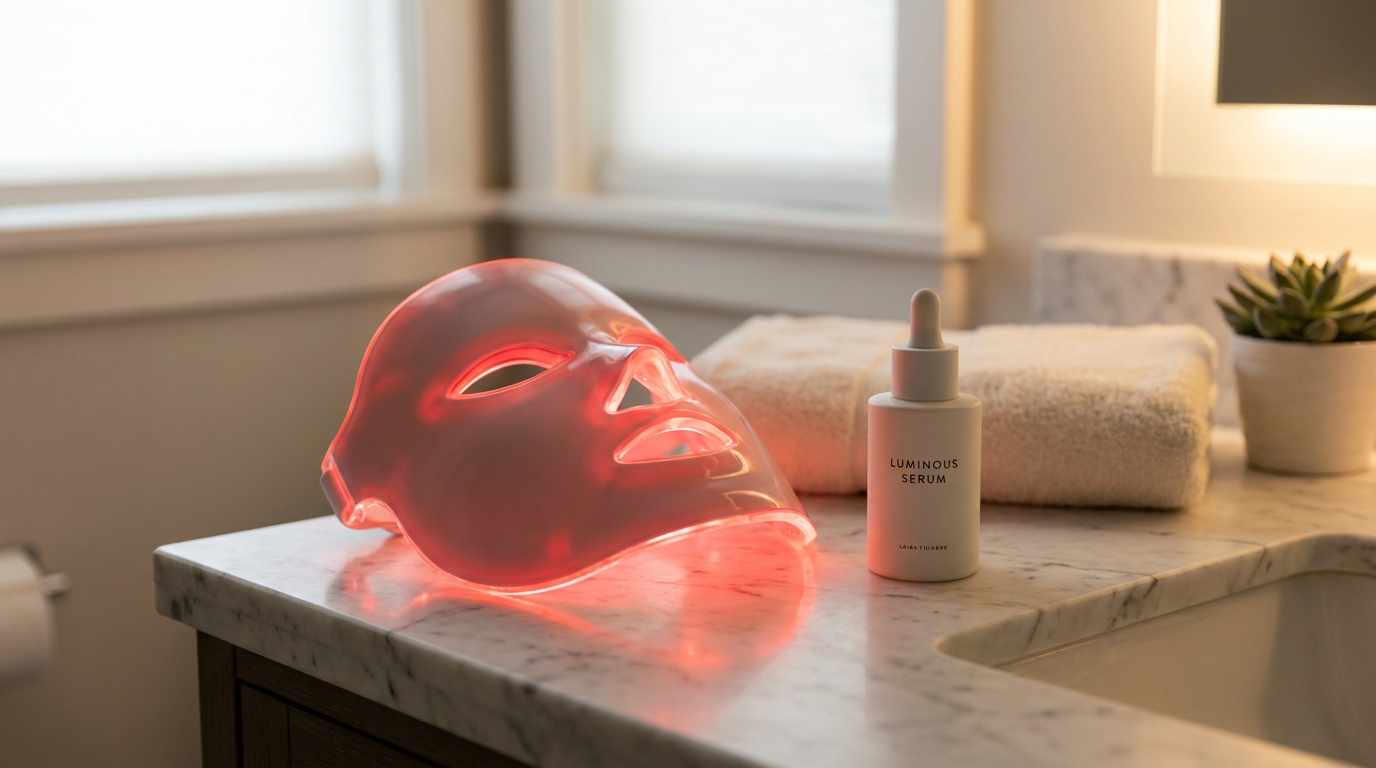
The rise of glowing, sci-fi-looking LED face masks has transformed the modern skincare routine. Once confined to the sterile rooms of high-end dermatology clinics, these illuminated devices now dominate social media feeds and retail shelves, promising clinical-grade skin rejuvenation from the comfort of a living room couch. Priced anywhere from $50 to over $500, they represent a massive shift in consumer beauty tech, moving away from harsh chemical peels and toward non-invasive, light-based treatments. But as the market floods with options, consumers are left navigating a maze of marketing claims, wondering if these glowing plastic shields are a genuine medical breakthrough or just an expensive aesthetic trend.[6][7]
The core question for anyone considering an LED mask is simple: Do they actually work? The answer lies in a decades-old scientific principle called photobiomodulation (PBM). Originally studied by NASA in the 1990s to promote plant growth and accelerate wound healing for astronauts in space, PBM has since become a cornerstone of dermatological research. The premise is that specific, highly calibrated wavelengths of light can penetrate the skin's surface and trigger biological changes at a cellular level, entirely without the use of heat or physical trauma to the tissue.[8]
The mechanism behind photobiomodulation is well-documented in medical literature. When red light (typically between 630 and 660 nanometers) and near-infrared light (810 to 850 nanometers) enter the skin, they are absorbed by mitochondria—the powerhouses of the cell. This absorption triggers an increase in the production of adenosine triphosphate (ATP), which is essentially cellular energy. With this surplus of energy, specialized cells called fibroblasts are stimulated to produce more collagen and elastin, the structural proteins responsible for keeping skin firm, plump, and youthful. Simultaneously, the light helps to reduce cellular inflammation and improve local blood circulation.[5][8]

When it comes to the specific claim of wrinkle reduction and anti-aging, the clinical evidence is robust. A 2025 multi-center, randomized, double-blind study published in the journal Medicine evaluated the efficacy of a home-use LED mask emitting red and near-infrared light. Researchers tracked participants over a 12-week period, requiring them to use the device consistently as part of their daily routine. The study was designed to measure objective changes in skin texture rather than just relying on self-reported consumer satisfaction.[2]
The results of that study, alongside similar clinical trials, paint a promising picture for dedicated users. Researchers recorded statistically significant improvements in the depth of periorbital wrinkles, commonly known as crow's feet, as well as overall skin firmness. Clinical ultrasound measurements used in related trials have frequently confirmed a measurable increase in collagen density—sometimes by as much as 48%—after three months of consistent use. However, dermatologists emphasize that these results are gradual; the skin is rebuilding its structural foundation, a process that takes weeks to manifest visibly.[2][8]
Beyond anti-aging, LED masks have also proven highly effective in the treatment of acne vulgaris, utilizing a different spectrum of light. While red light is used to calm the angry, red inflammation associated with breakouts, blue light (typically around 415 nanometers) serves a more aggressive, targeted purpose. Blue light penetrates just beneath the skin's surface and directly attacks Cutibacterium acnes, the specific bacteria responsible for causing acne infections, by inducing oxidative stress within the bacterial cells.[1]
The efficacy of this dual-light approach is supported by extensive data. A March 2025 meta-analysis published in JAMA Dermatology reviewed multiple clinical trials involving over 200 patients. The researchers found that at-home LED devices combining red and blue light reduced inflammatory acne lesions by approximately 45% over a four-to-eight-week period. For many patients, this offers a highly appealing, non-drying alternative to harsh topical treatments like benzoyl peroxide or prescription oral medications, which often carry frustrating side effects.[1]

The efficacy of this dual-light approach is supported by extensive data.
However, there is a significant catch to all of this promising data, and it comes down to a concept known as dosimetry. This is where the evidence gets complicated and where the consumer market often falls short of the clinical ideal. Clinical efficacy is entirely dependent on the precise "dose" of light delivered to the skin during a session. This involves a combination of the correct wavelength, the irradiance (which is the power output of the light, typically measured in milliwatts per square centimeter), and the total fluence (the total energy delivered over the duration of the treatment). If any of these variables are off, the treatment becomes ineffective.[5]
Many inexpensive consumer masks sold online do not disclose their irradiance levels, which often hover around a weak 20 to 40 mW/cm². In contrast, the clinical panels used in dermatology offices—and the devices used in the successful medical trials—often deliver 100 mW/cm² or more. If a mask lacks the power to push photons deep into the dermis, it will simply bounce off the surface and fail to trigger the necessary cellular response, regardless of how bright the LEDs appear to the naked eye.[5][8]
This discrepancy in power output brings up the complex regulatory reality of the "FDA Cleared" label, a badge proudly displayed by almost every premium LED mask on the market. Brands frequently boast about their FDA clearance in marketing materials to build consumer trust and justify higher price points. However, consumers often confuse this designation with FDA approval—a much higher, more rigorous regulatory bar that is generally reserved for prescription drugs and high-risk medical implants that require extensive clinical trials to prove their medical efficacy before they can be sold.[4]
In the United States, an "FDA Cleared" designation for a Class II medical device (a 510(k) clearance) simply means the manufacturer has proven the device is safe for its intended use. It verifies that the mask will not overheat, that the materials are skin-safe, and that it is substantially equivalent to existing technology already legally marketed. It absolutely does not mean the FDA has independently verified or endorsed the manufacturer's specific marketing claims regarding wrinkle reduction or collagen synthesis.[4][8]

Despite the regulatory nuances, LED therapy is widely celebrated by medical professionals for its excellent safety profile. A 2025 consensus review published in the Journal of Clinical and Aesthetic Dermatology affirmed that red light photobiomodulation is entirely safe for long-term use. Crucially, the review confirmed that these devices do not emit ultraviolet (UV) rays, meaning they do not induce DNA damage, accelerate photoaging, or increase the risk of skin cancer—a common fear among first-time users.[3]
There are, however, important safety caveats to keep in mind. Blue light carries a documented risk of photochemical retinopathy if the eyes are exposed for prolonged periods, making built-in eye shields or protective goggles a necessity rather than an option. Furthermore, individuals with darker skin tones may be at a slightly higher risk for side effects like erythema (redness) or dyspigmentation, as melanin can absorb certain wavelengths of light differently. Dermatologists recommend that users with skin of color monitor their skin closely when beginning a light therapy regimen.[3][5]
Within the broader market context, devices from established brands like Omnilux, CurrentBody, and Dr. Dennis Gross consistently dominate expert recommendations and rigorous consumer testing. These companies separate themselves from cheaper competitors by publicly publishing their clinical data, wavelength specifications, and irradiance levels, ensuring their devices closely mimic the parameters used in successful medical trials. While they often cost upwards of $300, reviewers note that the investment is necessary to secure a device capable of delivering actual biological changes.[6][7]
Ultimately, the clinical consensus is that at-home LED masks are not a gimmick, but they are also not a magic wand. They are a scientifically valid tool that requires immense consistency—often 10 to 20 minutes a day, three to five times a week, for several months—to yield subtle, gradual improvements. For consumers willing to put in the time, they offer a powerful, pain-free way to complement a standard skincare routine and invest in the long-term structural health of their skin.[6][8]
Viewpoints in depth
The Clinical Consensus
Medical professionals agree the science is sound, but execution varies wildly.
Dermatologists and clinical researchers largely agree that photobiomodulation is a scientifically valid mechanism for skin rejuvenation and acne reduction. However, their primary concern is dosimetry. While in-office LED panels deliver highly calibrated, powerful doses of light, the consumer market is flooded with underpowered devices. Medical professionals stress that without sufficient irradiance (power output) and the correct wavelengths, an at-home mask is essentially just an expensive flashlight. They advocate for devices backed by peer-reviewed, independent clinical trials rather than internal brand marketing.
The Consumer Perspective
Users are willing to invest in high-end devices if they offer a pain-free alternative to injectables.
For skincare enthusiasts and product reviewers, the appeal of LED masks lies in their non-invasive nature. Unlike chemical peels, retinoids, or injectables, red light therapy requires zero downtime and causes no physical discomfort. Consumers are increasingly willing to spend $300 to $500 on premium, FDA-cleared devices from reputable brands, viewing them as a long-term investment. The main challenge reported by users is the strict adherence required; because results are gradual and take months to manifest, maintaining a daily 10-minute routine is the biggest hurdle to success.
Regulatory Reality
Safety watchdogs emphasize the distinction between proven safety and proven efficacy.
Regulatory bodies and safety experts focus heavily on the 'FDA Cleared' designation, which is frequently misunderstood by the public. A 510(k) clearance simply means a device is safe for its intended use—specifically that it won't burn the skin or damage the eyes when used correctly—and is substantially equivalent to existing technology. It does not mean the FDA has validated the manufacturer's specific claims about wrinkle reduction or collagen synthesis. Safety experts also emphasize the critical need for eye protection, particularly when using devices that incorporate blue light, which carries a risk of retinal damage if misused.
What we don't know
- The exact irradiance and fluence levels of many popular consumer masks, as brands are not legally required to disclose these metrics.
- The long-term effects of daily LED mask use spanning multiple years, as most clinical trials track results over a 12-to-16-week period.
- How effectively at-home masks perform on darker skin tones compared to lighter skin tones, as diverse representation in photobiomodulation clinical trials remains limited.
Key terms
- Photobiomodulation (PBM)
- A process where specific wavelengths of light stimulate cellular function, increasing energy production and promoting tissue repair.
- Irradiance
- The power output of a light device over a specific area, usually measured in milliwatts per square centimeter (mW/cm²), which determines how effectively the light penetrates the skin.
- Near-Infrared Light (NIR)
- Invisible light wavelengths (typically 810–850 nm) that penetrate deeper into the skin and muscle than visible red light, aiding in inflammation reduction and deep tissue healing.
- Fibroblasts
- Cells within the skin's dermis layer that are responsible for producing collagen and elastin, the proteins that keep skin firm and youthful.
- FDA 510(k) Clearance
- A regulatory designation indicating that a medical device is safe and substantially equivalent to an already legally marketed device, though it does not verify efficacy claims.
Frequently asked
How long does it take to see results from an LED mask?
Clinical studies suggest minor improvements may be visible in 4 to 6 weeks, but significant changes in wrinkles and collagen density typically require 12 to 16 weeks of consistent use.
Is red light therapy safe for the eyes?
Red and near-infrared light are generally safe, but blue light carries a risk of retinal damage. Dermatologists strongly recommend using the built-in eye shields or protective goggles provided with the device.
Does 'FDA Cleared' mean the mask is guaranteed to work?
No. 'FDA Cleared' means the device has been deemed safe for home use and won't cause injury, but it does not mean the FDA has independently verified its anti-aging or acne-clearing claims.
Can red light therapy cause skin cancer?
No. LED masks do not emit ultraviolet (UV) light, which is the type of radiation responsible for DNA damage and skin cancer. Extensive reviews have found no association between photobiomodulation and cancer.
Sources
Source coverage
8 outlets
3 viewpoints surfaced








[1]JAMA DermatologyDermatologists & Clinical Researchers
Meta-Analysis of At-Home LED Devices for Acne Vulgaris
Read on JAMA Dermatology →[2]MedicineDermatologists & Clinical Researchers
Clinical study to evaluate the efficacy and safety of home-used LED and IRED mask for crow's feet
Read on Medicine →[3]Journal of Clinical and Aesthetic DermatologyDermatologists & Clinical Researchers
Consensus Review on Photobiomodulation and Safety
Read on Journal of Clinical and Aesthetic Dermatology →[4]U.S. Food and Drug AdministrationRegulatory & Safety Experts
510(k) Clearances for Class II Light Therapy Devices
Read on U.S. Food and Drug Administration →[5]Dermatology TimesDermatologists & Clinical Researchers
The Evidence Behind At-Home LED Masks
Read on Dermatology Times →[6]WirecutterSkincare Consumers & Reviewers
The Best Red-Light Therapy Skin Care Devices
Read on Wirecutter →[7]ForbesSkincare Consumers & Reviewers
The Best LED Face Masks, According To Experts And Rigorous Testing
Read on Forbes →[8]Factlen Editorial TeamRegulatory & Safety Experts
Synthesis by Factlen editorial team
Read on Factlen Editorial Team →


Every angle. Every day.
Get shopping stories with full source coverage and perspective breakdowns delivered to your inbox.