
US-Iran Peace Talks Halted as Lebanon Strikes Threaten Nuclear Framework
International mediators have suspended US-Iran peace negotiations in Switzerland following Israeli airstrikes in southern Lebanon that killed 16 people. The breakdown shatters a fragile ceasefire and complicates a controversial new nuclear framework proposed by the Trump administration.
By Factlen Editorial Team
- US Administration
- Pushing for a rapid diplomatic resolution and a new nuclear framework to cement post-war stability.
- Non-Proliferation Experts
- Highly critical of the proposed deal's lack of immediate IAEA inspections and uranium stockpile controls.
- Israeli Security Establishment
- Prioritizing the immediate neutralization of Hezbollah threats on the northern border, regardless of the impact on US-Iran talks.
- Lebanese & Regional Voices
- Focusing on the civilian toll of the strikes and accusing Israel of deliberately sabotaging the broader peace process.
What's not represented
- · Iranian domestic opposition groups
- · Lebanese civilians displaced by the fighting
Why this matters
The collapse of these talks risks reigniting direct conflict between the US and Iran, while the proposed nuclear framework's loopholes could fundamentally alter the balance of power and nuclear proliferation in the Middle East.
Key points
- Mediators suspended US-Iran peace talks in Switzerland due to escalating regional violence.
- Israeli airstrikes in southern Lebanon killed 16 people, breaking a renewed ceasefire with Hezbollah.
- The diplomatic breakdown threatens a new nuclear framework proposed by the Trump administration.
- Nuclear experts warn the proposed deal lacks immediate IAEA verification for Iran's uranium stockpile.
- Hezbollah has vowed retaliation, raising fears of a wider regional conflict.
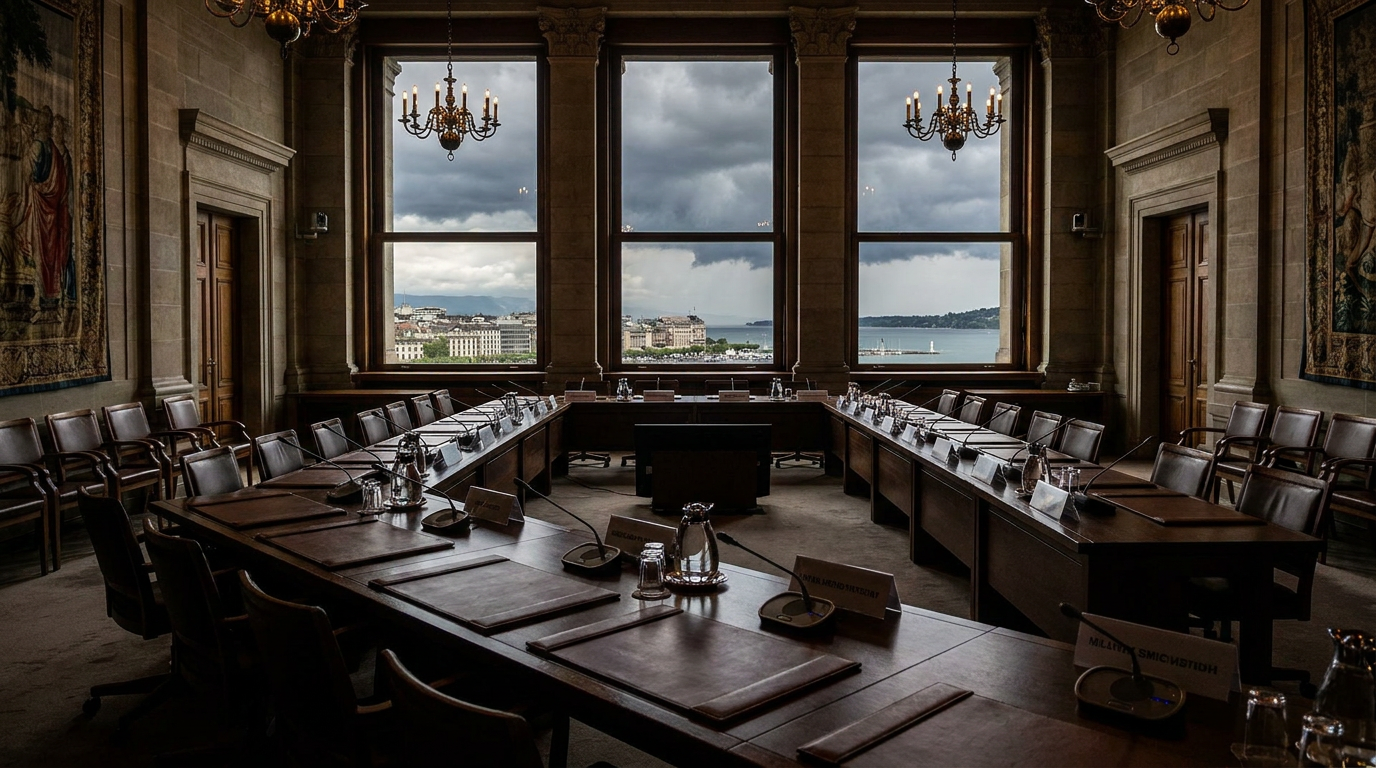
A fragile diplomatic window slammed shut on Saturday as international mediators abruptly suspended US-Iran peace negotiations in Switzerland. The collapse of the high-stakes talks follows a sudden escalation of violence in the Middle East, where Israeli airstrikes in southern Lebanon shattered a newly minted ceasefire. For the Trump administration, which has been aggressively pushing a controversial new nuclear framework in the aftermath of recent military confrontations with Tehran, the suspension represents a severe diplomatic setback. Negotiators had hoped the Geneva talks would cement a lasting post-war stability, but the rapid deterioration of the regional security environment has forced all parties back from the table.[4][7]
The immediate catalyst for the diplomatic breakdown occurred early Saturday morning in Lebanon's Nabatieh district. According to local authorities and civil defense agencies, a series of intense Israeli airstrikes targeted the area, killing at least 16 people and wounding a dozen more. Emergency personnel reported working through the early morning hours to pull survivors from the rubble of what locals described as a devastating bombardment. The strikes effectively nullified a renewed ceasefire agreement that had just begun to take hold, plunging the volatile border region back into active conflict.[2][8]

The Israeli military defended the operation, stating that the strikes were necessary to neutralize imminent threats from Hezbollah command centers embedded within civilian infrastructure. However, the timing of the bombardment has drawn fierce condemnation from regional actors who accuse Israel of deliberately sabotaging the broader US-Iran peace process. Hezbollah officials immediately vowed retaliation, ensuring that the cross-border violence would continue to escalate. This localized conflict has profound geopolitical ripple effects, as Hezbollah's status as Tehran's most powerful regional ally makes it impossible to decouple the violence in Lebanon from the diplomatic negotiations in Switzerland.[3][5]
Before the talks collapsed, the Trump administration was reportedly close to finalizing a new nuclear framework with Iran. The proposed deal was intended to replace previous agreements and establish a new baseline for Iranian nuclear activity following the recent period of direct military tension. Administration officials have touted the framework as a definitive solution to the Iranian nuclear threat, arguing that it would impose strict limits on Tehran's capabilities while offering a pathway to sanctions relief. However, the details of the proposal have sparked intense debate and alarm among non-proliferation experts and allied nations.[1][7]
Before the talks collapsed, the Trump administration was reportedly close to finalizing a new nuclear framework with Iran.
The most contentious element of the proposed framework is what nuclear experts are calling a dangerous "blind spot" regarding Iran's existing uranium stockpile. Critics warn that the current draft of the agreement would leave Tehran with too much control over its highly enriched uranium without mandating immediate, unfettered access for international inspectors. Unlike previous agreements that required the physical removal or dilution of enriched material before any sanctions relief was granted, the new framework reportedly relies on a phased approach that experts fear could be easily exploited.[1][6]

The International Atomic Energy Agency (IAEA) has privately and publicly expressed deep reservations about this phased approach. Without comprehensive baseline inspections to verify the exact size and location of Iran's nuclear material, the agency cannot guarantee that some of the stockpile hasn't been diverted to secret, undeclared facilities. Non-proliferation advocates argue that signing a deal without these ironclad verification mechanisms in place is a strategic error that could inadvertently legitimize Iran's status as a threshold nuclear state, fundamentally altering the balance of power in the Middle East.[1][6]
The intersection of these nuclear concerns with the renewed violence in Lebanon highlights the immense complexity of the current crisis. Tehran has historically used its regional proxy network, including Hezbollah, as leverage during nuclear negotiations. By turning up the heat on Israel's northern border, Iran can signal its willingness to destabilize the entire region if its diplomatic demands are not met. Conversely, Israel's aggressive military posture in Lebanon serves as a clear message that it will not be constrained by Washington's diplomatic timetable, especially if it believes the proposed nuclear deal is fundamentally flawed.[2][4][5]

The diplomatic fallout is now reverberating through Washington and European capitals. The White House is scrambling to salvage the framework, dispatching envoys to regional capitals in a desperate bid to de-escalate the situation in Lebanon and coax Iran back to the negotiating table in Switzerland. However, the political appetite for a flawed deal is rapidly diminishing. Lawmakers and national security analysts are increasingly vocal in their demands that any new agreement must comprehensively address both the nuclear blind spots and Iran's support for regional militant groups.[1][7][8]
For now, the path forward remains dangerously uncertain. Swiss mediators have indicated they are willing to reconvene the talks as soon as the security environment permits, but they acknowledge that a sustained cessation of hostilities in Lebanon is a prerequisite for any meaningful diplomatic progress. Until the guns fall silent in Nabatieh and international inspectors are granted the access they demand, the prospect of a comprehensive US-Iran peace deal remains a distant and fading hope, leaving the region bracing for the possibility of a wider and far more destructive conflict.[2][4][6]
How we got here
Early 2026
The US and Iran engage in a period of direct military confrontation.
May 2026
Mediators establish a fragile framework for renewed nuclear negotiations in Switzerland.
June 17, 2026
A renewed ceasefire is announced along the Israel-Lebanon border.
June 20, 2026
Israeli strikes in Nabatieh kill 16; Swiss peace talks are indefinitely suspended.
Viewpoints in depth
The Non-Proliferation Warning
Experts fear the proposed deal sacrifices crucial oversight for a quick diplomatic win.
Non-proliferation advocates and IAEA officials argue that the Trump administration's proposed framework contains fatal flaws regarding verification. By allowing a phased approach to inspections rather than demanding immediate baseline access, the deal could theoretically allow Tehran to obscure portions of its highly enriched uranium stockpile. Critics maintain that without ironclad, upfront verification, any sanctions relief effectively subsidizes a threshold nuclear state.
Israel's Security Imperative
The IDF maintains that immediate border threats supersede international diplomatic timetables.
From the perspective of the Israeli security establishment, the strikes in Nabatieh were a non-negotiable operational necessity. Military officials argue that Hezbollah was actively using the ceasefire window to reposition command assets and prepare for imminent attacks. For Israel, the prospect of a flawed US-Iran nuclear deal only heightens the need to aggressively degrade Iran's proxy forces on its borders, regardless of how it impacts negotiations in Geneva.
Tehran's Leverage
Iran utilizes regional instability to extract concessions at the negotiating table.
Regional analysts note that the breakdown of the ceasefire serves a dual purpose for Tehran. By allowing Hezbollah to escalate tensions, Iran demonstrates its capacity to destabilize the entire Middle East at will. This proxy violence acts as a powerful form of leverage, signaling to Washington and European mediators that a failure to meet Iranian demands in the nuclear framework will result in an unacceptable level of regional chaos.
What we don't know
- Whether the IAEA will demand revisions to the nuclear framework before endorsing it.
- How long the suspension of the Geneva talks will last.
- The extent of Hezbollah's planned retaliation for the Nabatieh strikes.
Key terms
- IAEA
- The International Atomic Energy Agency, the UN watchdog responsible for monitoring nuclear programs.
- Highly Enriched Uranium
- Uranium that has been processed to a purity level close to what is required for a nuclear weapon.
- Nabatieh
- A city and district in southern Lebanon that has been a frequent flashpoint in cross-border conflicts.
Frequently asked
Why were the US-Iran talks happening in Switzerland?
Switzerland frequently acts as a neutral mediator and protecting power for US interests in Iran, hosting indirect diplomatic negotiations.
What is the nuclear 'blind spot'?
Experts warn the proposed framework allows Iran to maintain control over its current uranium stockpile without immediate, unfettered access for IAEA inspectors.
How does Hezbollah connect to the nuclear deal?
Hezbollah is a key Iranian ally; escalating conflict between Israel and Hezbollah creates political pressure that derails broader US-Iran diplomatic efforts.
Sources
Source coverage
8 outlets
4 viewpoints surfaced








[1]Fox NewsUS Administration
Trump’s new Iran deal faces nuclear blind spot over uranium stockpile, experts warn
Read on Fox News →[2]The GuardianLebanese & Regional Voices
Israeli strikes kill at least 16 in southern Lebanon despite reports of renewed ceasefire
Read on The Guardian →[3]Al JazeeraLebanese & Regional Voices
Hezbollah vows retaliation after Israeli strikes in Nabatieh shatter ceasefire
Read on Al Jazeera →[4]ReutersNon-Proliferation Experts
Swiss mediators suspend US-Iran nuclear talks amid escalating Middle East violence
Read on Reuters →[5]The Times of IsraelIsraeli Security Establishment
IDF confirms strikes on Hezbollah command centers in southern Lebanon
Read on The Times of Israel →[6]Associated PressNon-Proliferation Experts
IAEA chief expresses concern over uranium monitoring gaps in proposed US-Iran framework
Read on Associated Press →[7]CNNUS Administration
White House scrambles to salvage Iran nuclear framework after Geneva talks collapse
Read on CNN →[8]BBC NewsLebanese & Regional Voices
Lebanon death toll rises to 16 as fragile border truce unravels
Read on BBC News →
More in news politics
See all 8 stories →Universal Meals
Fact-Checking the Impact of Universal School Meals: What the 2026 Data Shows
6 sources

Strait of Hormuz
Iran Closes Strait of Hormuz, Shattering Three-Day-Old Ceasefire Over Lebanon Strikes
7 sources

Strait of Hormuz
Iran Closes Strait of Hormuz as U.S.-Brokered Ceasefire Collapses Over Lebanon Strikes
9 sources

Islamabad Memorandum
US and Iran Sign 'Islamabad Memorandum' to End 110-Day War and Reopen Strait of Hormuz
8 sources

Every angle. Every day.
Get news politics stories with full source coverage and perspective breakdowns delivered to your inbox.