
Mid-Drive vs. Hub Motor: Which E-Bike Architecture Is Right for You?
Choosing between a mid-drive and hub motor dictates an e-bike's hill-climbing power, maintenance needs, and price. Here is how to match the right drivetrain to your riding style.
By Factlen Editorial Team
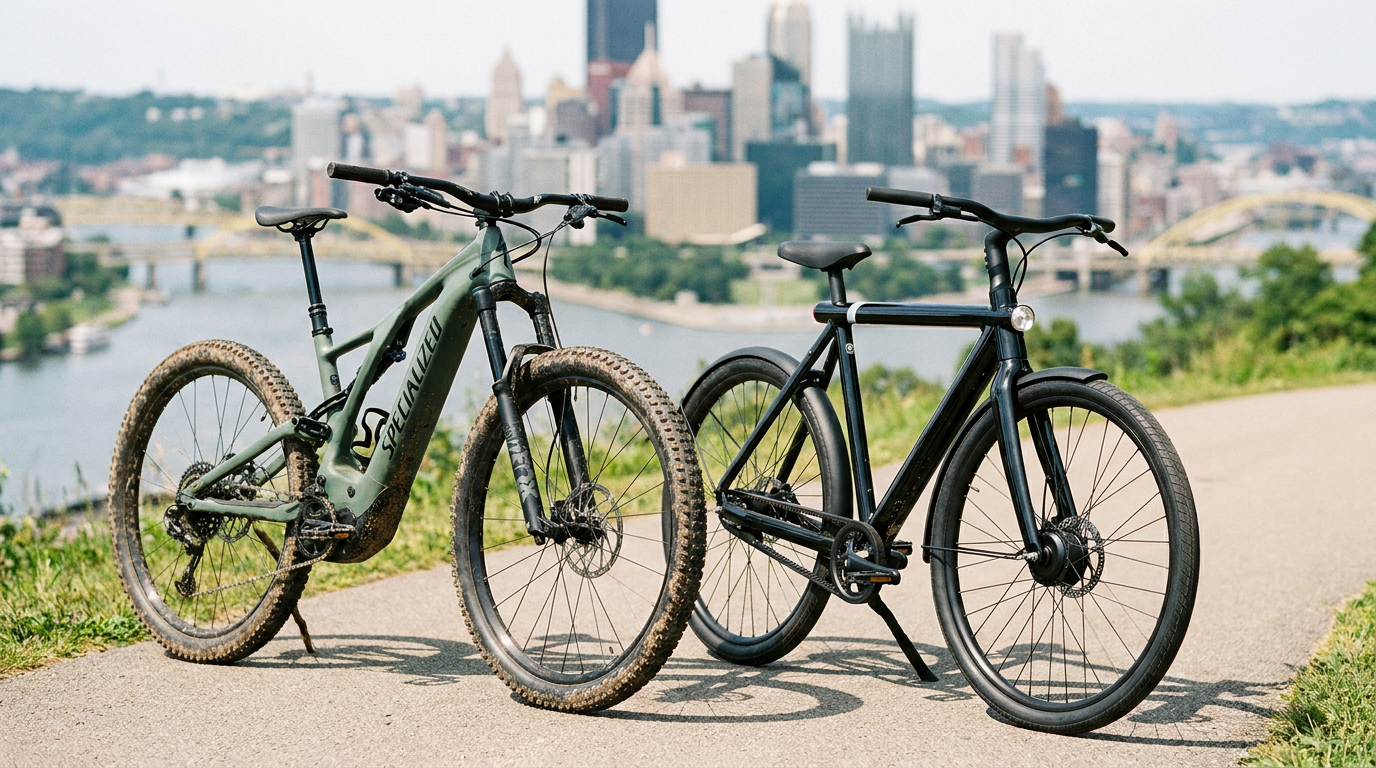
- Urban Commuters & Budget Buyers
- Values simplicity, low upfront cost, minimal drivetrain maintenance, and the ability to use a throttle on flat city streets.
- Performance & Trail Riders
- Prioritizes maximum torque, gear leverage, and balanced weight distribution for steep hills and technical off-road terrain.
- Long-Distance Tourers
- Focuses on battery efficiency, natural pedal feel, and the long-term technological evolution of e-bike drivetrains.
What's not represented
- · Local Bike Shop Mechanics
- · Heavy Cargo Delivery Riders
Why this matters
Choosing the wrong electric bike motor can lead to thousands of dollars wasted on a machine that either struggles to climb your local hills or requires constant, expensive drivetrain maintenance. Understanding the mechanical differences ensures you buy a bike that actually fits your daily commute or weekend trail rides.
Key points
- Hub motors operate independently of the bike's gears, offering a simple, low-maintenance, and cost-effective solution for flat terrain.
- Mid-drive motors channel power through the chain and cassette, leveraging the bike's gears for superior hill-climbing torque.
- Because they operate at optimal RPMs, mid-drive systems can extract 20 to 40 percent more range from the same size battery.
- Hub motors add unsprung weight to the wheels, while mid-drives center the weight low in the frame for better balance and handling.
- The high torque of a mid-drive accelerates wear on standard bicycle chains and gears, requiring more frequent mechanical maintenance.
The electric bicycle has transitioned from a niche novelty to a dominant force in modern transportation, fundamentally changing how people commute, explore, and exercise. As buyers navigate an increasingly crowded market in 2026, they are often overwhelmed by battery sizes, frame geometries, and smart features. Yet, industry experts agree that the single most consequential decision a buyer makes is the type of motor that powers the bike. This choice dictates not only the price tag but the fundamental physics of how the bicycle interacts with the road.[5]
At the heart of this decision is the debate between hub motors and mid-drive motors. While both systems use electricity to assist the rider, their engineering philosophies are entirely different. A hub motor is built directly into the center of the front or rear wheel, applying rotational force straight to the axle. In contrast, a mid-drive motor is integrated into the bike’s bottom bracket—the area between the pedals—and drives power through the bicycle’s existing chain and gears.[1][5]
Hub motors represent the older, simpler, and more ubiquitous technology, powering the vast majority of entry-level and budget-friendly electric bikes on the market today. Because the motor operates independently of the bicycle’s drivetrain, it acts essentially like a secondary engine strapped to the wheel. This mechanical isolation is the hub motor's greatest strength. It places zero additional stress on the chain, cassette, or derailleur, meaning the standard bicycle components wear out at a normal, human-powered rate.[1][2]

This simplicity also translates to significant cost savings. Hub motor e-bikes typically range from $1,200 to $2,500, making them highly accessible for casual riders and daily commuters. Furthermore, because the motor does not rely on the rider's pedaling input to turn the chain, hub systems are easily paired with a throttle. This allows riders to cruise without pedaling at all, a feature highly valued by commuters who want to arrive at work without breaking a sweat.[3][5]
However, the direct-drive nature of a hub motor introduces distinct physical limitations, most notably when the road tilts upward. Because a hub motor only has a single gear ratio, it cannot adapt to changing terrain. When a rider hits a steep hill, the wheel slows down, forcing the motor to operate at a low, inefficient RPM. This high-load, low-speed scenario draws massive amounts of current from the battery, generating excess heat and rapidly draining the bike's range.[1][4]
Mid-drive motors were engineered specifically to solve this physics problem. By placing the motor at the pedals, the system channels its power through the bicycle’s mechanical gears. When a rider shifts into a low gear to tackle a steep incline, the motor benefits from that exact same mechanical advantage. This gear multiplication allows a mid-drive system to produce massive amounts of effective torque at the rear wheel without overexerting the electrical components.[1][4]
The real-world difference on a hill is staggering. A 500-watt mid-drive motor in a low gear will easily outperform a 1,000-watt hub motor on a 15 percent grade. Because the mid-drive motor is allowed to spin at its optimal, high-efficiency RPM regardless of how slowly the bike is moving, it runs cooler and preserves battery life. Manufacturers note that this efficiency can yield a 20 to 40 percent range advantage over a comparable hub motor setup.[1][4]

A 500-watt mid-drive motor in a low gear will easily outperform a 1,000-watt hub motor on a 15 percent grade.
Beyond hill-climbing, mid-drive systems fundamentally alter the handling and balance of the bicycle. A hub motor adds significant unsprung weight to the rear or front wheel, which can make the bike feel rear-heavy and sluggish in corners. A mid-drive motor concentrates its mass low and perfectly centered between the wheels. For mountain bikers navigating technical trails or commuters dodging potholes, this centralized center of gravity makes the e-bike handle much more like a traditional, agile bicycle.[2][3]
The ride feel of a mid-drive is also distinctly more natural. Most mid-drive systems utilize advanced torque sensors that measure exactly how hard the rider is pushing on the pedals, amplifying that exact effort in real-time. Riders often describe this as feeling like they have bionic legs. Conversely, many budget hub motors rely on basic cadence sensors, which simply detect whether the pedals are turning and deliver a fixed surge of power, resulting in a ride that can feel jerky or akin to being pushed from behind.[1][3]
Yet, the mid-drive's mechanical integration comes with a steep trade-off in maintenance. Because the motor’s substantial torque—often ranging from 70 to 120 Newton-meters—is channeled directly through the chain and cassette, drivetrain wear is accelerated significantly. Riders who fail to shift gears properly or who constantly ride in high gears under heavy load will find themselves replacing snapped chains and stripped cassettes far more frequently than they would on a hub-motor bike.[2][4]

Cost is another major barrier for mid-drive adoption. The precision engineering required to integrate a motor into a custom-designed frame bottom bracket, combined with the sophisticated torque sensors, pushes the starting price of quality mid-drive bikes well into the $2,000 to $4,000 range. For a casual weekend rider navigating flat beach boardwalks, this premium is often difficult to justify.[3][5]
Maintenance scenarios also highlight a surprising advantage for mid-drives when it comes to the most common bicycle repair: a flat tire. Because a hub motor is bolted directly into the wheel and tethered by heavy electrical cables, removing the rear wheel to patch a tube can be a frustrating, tool-heavy ordeal on the side of the road. A mid-drive bike utilizes standard quick-release or thru-axle wheels, making flat repairs identical to those on a conventional bicycle.[1][3]
When analyzing long-term motor reliability, however, the hub motor reclaims the crown. Gearless direct-drive hub motors have virtually no moving internal parts to wear out. High-end custom builders note that a quality hub motor can last for decades of daily abuse, whereas the internal nylon gears and bearings of a mid-drive motor will eventually require specialized servicing or outright replacement.[2]

Ultimately, the decision requires buyers to honestly assess their local geography and riding style rather than simply chasing maximum wattage. A hub motor fits perfectly when the terrain is predominantly flat, the budget is capped, and the rider prioritizes low maintenance and throttle-only cruising. It is the undisputed champion of the accessible urban commute.[2][3][5]
Conversely, a mid-drive system is the necessary choice when the route involves steep hills, off-road trails, or heavy cargo. It fits perfectly for the cycling enthusiast who wants a natural, gear-leveraged pedal assist and is willing to pay a premium for superior balance and efficiency. By matching the motor architecture to the actual demands of the ride, consumers can ensure their investment delivers years of reliable, empowering transportation.[1][2][4][5]
How we got here
Early 2000s
Direct-drive hub motors dominate the early e-bike market due to their mechanical simplicity and low manufacturing cost.
2014
Major manufacturers like Bosch and Yamaha popularize the modern mid-drive motor, shifting the industry focus toward gear-integrated power.
2020
The pandemic-fueled e-bike boom creates a massive split in the market between budget hub-motor commuters and premium mid-drive mountain bikes.
2026
Advanced torque sensors and automatic electronic shifting begin blurring the lines, making mid-drives smoother and hub motors more responsive.
Viewpoints in depth
The commuter's view
Prioritizing reliability, cost, and sweat-free travel on paved city streets.
For daily urban commuters, the e-bike is a utilitarian car replacement rather than a piece of sporting equipment. This camp heavily favors hub motors because they require almost zero daily maintenance and don't snap chains under heavy load. The ability to use a throttle to accelerate away from traffic lights without pedaling is seen as a crucial safety and comfort feature, allowing riders to arrive at the office without sweating.
The off-road enthusiast's view
Demanding maximum torque, balance, and agility for technical mountain trails.
Mountain bikers and backcountry hunters view the hub motor as a fundamental liability. Adding ten pounds of unsprung weight to a rear wheel ruins the performance of expensive suspension systems and makes the bike dangerously rear-heavy on jumps or drops. This camp insists on mid-drive motors because leveraging the bike's mechanical gears is the only way to physically drag a heavy bicycle and a rider up a steep dirt grade without overheating the electronics.
What we don't know
- Whether automatic electronic shifting (e-CVT) will eventually become cheap enough to eliminate the drivetrain wear issues of mid-drive motors.
- How upcoming battery density breakthroughs might offset the weight and efficiency penalties of budget hub motors.
Key terms
- Torque (Nm)
- A measurement of rotational force that determines how quickly an e-bike accelerates and how easily it climbs steep hills.
- Cadence Sensor
- A basic sensor that detects whether the pedals are turning, delivering a fixed amount of motor power regardless of how hard you push.
- Torque Sensor
- An advanced sensor that measures the exact physical force you apply to the pedals, amplifying your effort proportionally for a natural ride feel.
- Unsprung Weight
- The mass of components like a hub motor that are not supported by the bike's suspension, which can negatively affect handling on rough terrain.
- Drivetrain
- The mechanical system—including the chain, cassette, and derailleur—that transmits power from the pedals to the rear wheel.
Frequently asked
Can a hub motor climb steep hills?
Yes, but it operates inefficiently at low speeds, drawing excessive battery power and risking overheating on long, sustained climbs compared to a geared mid-drive.
Do I have to pedal an electric bike?
It depends on the motor setup. Most hub motor bikes offer a throttle for pedaling-free riding, while mid-drive systems typically require you to pedal to engage the assist.
Which motor type requires more maintenance?
Mid-drive motors put significant stress on the bike's chain and cassette, requiring more frequent drivetrain replacements, whereas hub motors are largely maintenance-free.
Why are mid-drive electric bikes more expensive?
They require custom-designed frames to house the motor at the bottom bracket and use more sophisticated torque sensors to measure pedaling effort.
Sources
Source coverage
5 outlets
3 viewpoints surfaced



[1]EVELOLong-Distance Tourers
Mid-Drive vs Hub Motor eBikes: Which is Best?
Read on EVELO →[2]Hi Power CyclesPerformance & Trail Riders
Mid-Drive vs. Hub Motor: Which Is Better in 2026?
Read on Hi Power Cycles →[3]Cycle VoltaUrban Commuters & Budget Buyers
Hub Motor vs. Mid-Drive Motor: Which Is Better?
Read on Cycle Volta →[4]Ebike GenerationPerformance & Trail Riders
Mid-Drive vs Hub Motor: The Fundamental Choice for Hunting
Read on Ebike Generation →[5]Factlen Editorial TeamLong-Distance Tourers
Synthesis by Factlen editorial team
Read on Factlen Editorial Team →

More in shopping
See all 7 stories →Auto Market
EV vs. PHEV: The Ultimate 2026 Buyer's Guide to Electrified Cars
7 sources
Display Tech
OLED vs. Mini-LED: The 2026 TV Buyer's Guide
5 sources

Bluetooth Tech
How Auracast and Bluetooth LE Audio Are Rewriting the Rules of Wireless Headphones
9 sources

AI Hardware
What is an AI PC? A Buyer's Guide to NPUs and Next-Gen Laptops
8 sources

Every angle. Every day.
Get shopping stories with full source coverage and perspective breakdowns delivered to your inbox.