
Smart Rings vs. Smartwatches: Choosing the Right Health Tracker in 2026
As smart rings match the biometric accuracy of flagship smartwatches, choosing between the two form factors comes down to prioritizing either passive sleep tracking or real-time workout coaching.
By Factlen Editorial Team
- Sleep & Recovery Minimalists
- Argue that passive, screen-free devices yield better long-term health data because they are comfortable enough to wear 24/7.
- Active Fitness Enthusiasts
- Value real-time pacing, GPS routing, and live heart-rate zones that only a wrist-mounted screen can provide during workouts.
- Tech Ecosystem Integrators
- Prefer the all-in-one utility of a smartwatch that combines health tracking with smartphone notifications and cellular connectivity.
What's not represented
- · Traditional watchmakers
- · Medical professionals diagnosing sleep disorders
Why this matters
Choosing the right wearable dictates whether you actually collect the health data you need; a device that annoys you or dies mid-day represents hundreds of dollars wasted, while the right fit can permanently improve your sleep and fitness habits.
Key points
- Smart rings excel at passive sleep tracking due to their lightweight design and multi-day battery life.
- Smartwatches remain the superior choice for active workouts, offering real-time pacing and GPS routing.
- Clinical studies show smart rings achieve up to 98 percent accuracy in sleep staging by minimizing positional drift.
- The choice ultimately depends on whether a user wants an active fitness coach or a silent health observer.
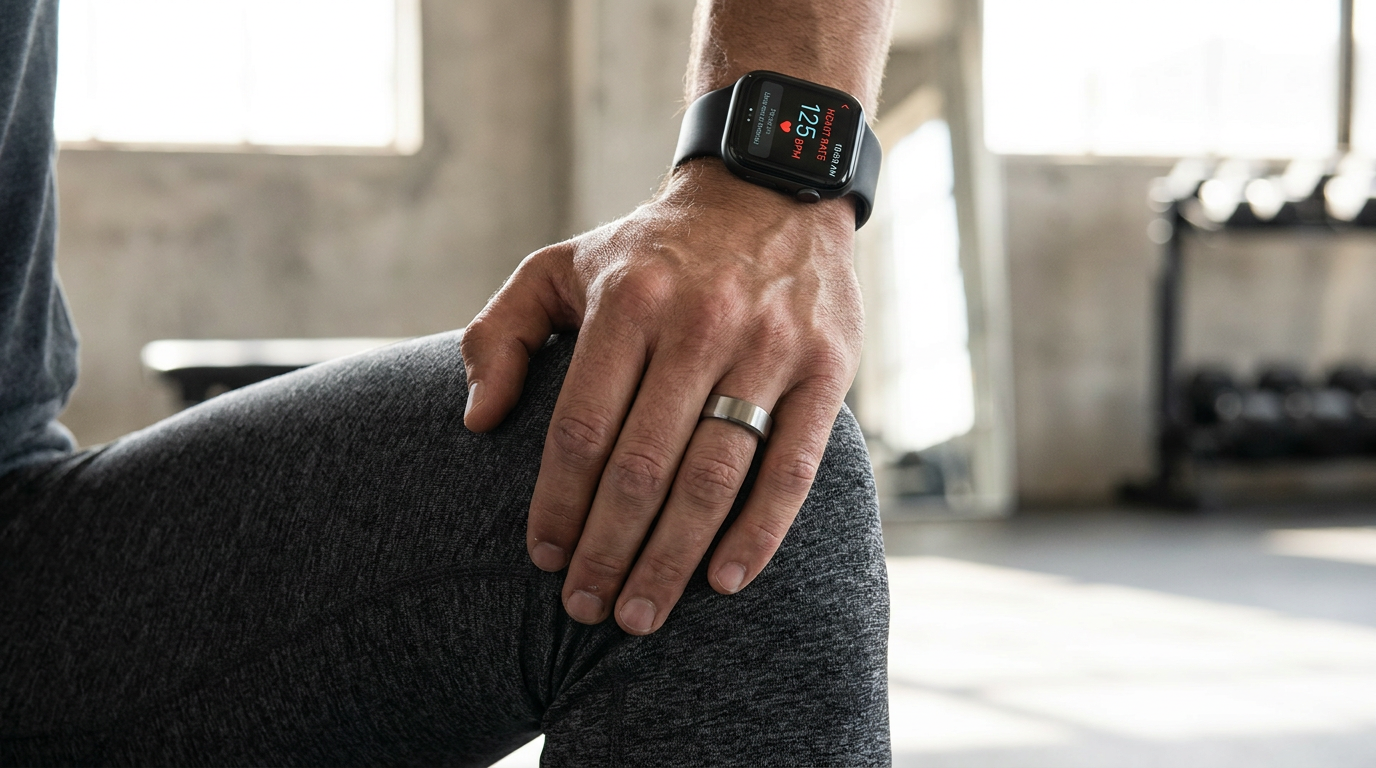
The wearable technology market has fractured into two distinct philosophies in 2026. On one side, flagship smartwatches like the Apple Watch Series 11 and Samsung Galaxy Watch 7 continue to dominate the wrist with vibrant screens and cellular connectivity. On the other, a new generation of smart rings, led by the Oura Ring 5 and Samsung Galaxy Ring, has miniaturized clinical-grade sensors into a few grams of titanium, offering a screen-free alternative to health monitoring.[1][4][8]
The decision between these two form factors is no longer about which device possesses the better sensors, as both utilize advanced photoplethysmography and accelerometers to track heart rate and movement. Instead, the choice hinges on how a user prefers to interact with their health data. The smartwatch acts as an active coach, demanding attention and providing real-time feedback, while the smart ring serves as a passive observer, collecting data silently in the background.[2][6]
For the smart ring, the primary argument centers on frictionless, continuous data collection, particularly regarding sleep and recovery. Because rings weigh between four and eight grams and lack a glowing screen, users are significantly more likely to wear them overnight. This high compliance rate ensures a continuous stream of biometric data, which is essential for establishing accurate baselines for heart rate variability and resting heart rate.[2][7]
The evidence strongly supports the ring form factor for nocturnal tracking. Recent validation studies published in medical journals demonstrate that top-tier smart rings achieve a 96 to 98 percent correlation with clinical sleep-staging equipment. This high accuracy is driven by the finger's dense capillary network, which provides a stronger pulse signal than the wrist, and the snug fit of a ring, which prevents the positional drift that often plagues loose-fitting watches during the night.[2][5]

Against the smart ring, the most significant drawback is its complete lack of real-time utility during active movement. Because rings lack a display and built-in GPS, they cannot provide live pacing, distance tracking, or heart rate zones while a user is running or cycling. Furthermore, testers frequently note that rings can be uncomfortable or prone to scratching when lifting heavy weights or gripping handlebars, making them less ideal for dedicated strength training.[1][3]
For the smartwatch, the core advantage lies in its versatility and active workout guidance. A wrist-mounted display allows athletes to monitor their exertion levels instantly, adjusting their pace or resting between intervals based on live biometric feedback. The inclusion of standalone GPS and cellular connectivity means users can leave their smartphones at home while still tracking complex routes and remaining reachable in emergencies.[1][2]
The evidence for the smartwatch's superiority in active scenarios is overwhelming. Fitness experts and Olympic-level testers consistently highlight that devices like the Apple Watch provide indispensable real-time metrics that rings simply cannot match. Advanced features such as electrocardiogram readings, fall detection, and automatic workout recognition rely on the larger processing power and battery capacity housed within a watch chassis.[1][3]
The evidence for the smartwatch's superiority in active scenarios is overwhelming.
Against the smartwatch, the primary compromises are battery anxiety and physical intrusion. Even the most efficient flagship smartwatches in 2026 typically require charging every 18 to 36 hours. This frequent charging cycle inevitably creates gaps in a user's health data, often forcing them to choose between tracking their sleep or having enough battery for a morning workout. Additionally, many users find the bulk of a smartwatch irritating to wear to bed, leading to incomplete recovery metrics.[4][7]
Battery life remains one of the starkest dividing lines between the two categories. A smart ring can comfortably last four to nine days on a single charge, allowing users to integrate it into their lives with minimal friction. In contrast, managing a smartwatch's battery requires building a daily charging habit, which can frustrate users who simply want their technology to work invisibly in the background.[2][4]

Ecosystem lock-in also plays a crucial role in the modern wearable market. Devices like the Galaxy Ring and Apple Watch are designed to integrate seamlessly with their respective smartphone ecosystems, often reserving their best features for users who stay within the walled garden. Independent options like the Oura Ring bypass these restrictions and sync with multiple platforms, though they typically require a monthly subscription fee to unlock comprehensive data analysis.[1][6][8]
When evaluating the long-term financial commitment, buyers must weigh upfront costs against recurring fees. Smartwatches generally demand a higher initial investment but include all software features out of the box. Smart rings often cost slightly less upfront but may tie their deepest insights to a subscription model, and their tiny, sealed batteries cannot be replaced once they inevitably degrade after a few years of continuous charging.[3][7]
Ultimately, the smart ring fits well when a user prioritizes sleep optimization, recovery tracking, and long-term health awareness over daily fitness coaching. It is the ideal choice for individuals who suffer from screen fatigue, prefer to wear traditional mechanical watches on their wrists, or simply want a device that disappears into their daily routine while silently building a comprehensive health profile.[2][6]
Conversely, the smart ring does not fit well when a user is a dedicated runner, cyclist, or data-driven athlete who relies on live pacing and heart rate zones to structure their training. It is also a poor choice for those who want the convenience of wrist-based text notifications, mobile payments, and music playback without needing to pull out a smartphone.[1][2]

The smartwatch fits well when a user wants a comprehensive, all-in-one health and lifestyle companion. It excels for individuals who train regularly and need real-time feedback, as well as those who value advanced medical features like on-demand ECGs and irregular heart rhythm notifications. It remains the undisputed champion for active, outdoor exercise tracking.[1][3]
However, the smartwatch does not fit well when a user struggles with the discipline of daily charging, finds bulky wristwear uncomfortable during sleep, or feels overwhelmed by the constant barrage of notifications. For these users, the quiet, persistent observation of a smart ring offers a far more sustainable path to understanding their personal health.[2][6]
How we got here
2015
The first Apple Watch launches, establishing the wrist as the primary home for consumer health tracking.
2018
Oura introduces its second-generation ring, proving that miniaturized sensors can accurately track sleep from the finger.
2024
Samsung enters the smart ring market with the Galaxy Ring, signaling mainstream tech adoption of the form factor.
2026
Flagship smart rings and smartwatches reach sensor parity, shifting the consumer choice entirely to form factor and lifestyle fit.
Viewpoints in depth
Sleep & Recovery Minimalists
Advocates for passive, unobtrusive health tracking.
This camp argues that the best wearable is the one you forget you are wearing. By prioritizing comfort and multi-day battery life, smart rings ensure that users capture 100 percent of their overnight recovery data. They believe that reviewing a comprehensive health score each morning is far more sustainable for long-term habit building than being constantly interrupted by wrist notifications and battery warnings.
Active Fitness Enthusiasts
Athletes who rely on real-time data to optimize performance.
For dedicated runners, cyclists, and gym-goers, health tracking is an active pursuit that requires immediate feedback. This perspective values the ability to glance at a wrist to check heart rate zones, adjust pacing, or follow a GPS route without carrying a phone. They view the daily charging requirement of a smartwatch as a minor trade-off for having a powerful, interactive fitness computer strapped to their arm.
Tech Ecosystem Integrators
Users who view health tracking as just one feature of a broader digital life.
This group prefers the smartwatch because it serves as an extension of their smartphone. Beyond counting steps and logging sleep, they rely on their wearables to triage emails, pay for groceries, and take quick phone calls. For these users, a smart ring feels too limited in its utility to justify the high price tag, as it cannot replace the connectivity and convenience of a wrist-mounted screen.
What we don't know
- How long the sealed, non-replaceable batteries in modern smart rings will last before degrading completely.
- Whether future software updates will allow smart rings to provide real-time haptic feedback for workout pacing.
Key terms
- Photoplethysmography (PPG)
- An optical sensor technology that uses light to measure blood flow and calculate heart rate.
- Heart Rate Variability (HRV)
- The fluctuation in the time intervals between adjacent heartbeats, used as a key indicator of physical recovery and stress.
- Sleep Staging
- The process of categorizing sleep into distinct phases, such as light, deep, and REM sleep, to evaluate overall rest quality.
- Positional Drift
- When a wearable device shifts out of its optimal placement on the body, leading to inaccurate or dropped sensor readings.
Frequently asked
Can I wear a smart ring while lifting weights?
While possible, many users find smart rings uncomfortable or prone to scratching when gripping heavy barbells or dumbbells.
Do smart rings require a monthly subscription?
It depends on the brand. The Oura Ring requires a monthly fee for full data access, while the Samsung Galaxy Ring currently does not.
Which device is better for tracking runs?
A smartwatch is significantly better for running, as it provides real-time pacing, live heart rate zones, and built-in GPS mapping.
Are smart rings actually as accurate as smartwatches?
Yes, and often more accurate for sleep tracking. The finger provides a stronger pulse signal than the wrist, and rings shift less during the night.
Sources
Source coverage
8 outlets
3 viewpoints surfaced








[1]ForbesActive Fitness Enthusiasts
Oura Ring Vs. Apple Watch: Which Is The Better Health Tracker?
Read on Forbes →[2]AskVoraSleep & Recovery Minimalists
Smart Ring vs Smartwatch: The 2026 Wearable Decision Guide
Read on AskVora →[3]Garage Gym ReviewsActive Fitness Enthusiasts
Oura Ring vs Apple Watch: Which Is Best For Fitness & Health Tracking?
Read on Garage Gym Reviews →[4]Woman & HomeSleep & Recovery Minimalists
I tracked my sleep with the Oura Ring 5 and Apple Watch Series 11—here's the verdict
Read on Woman & Home →[5]LiveWorkSleepSleep & Recovery Minimalists
Oura Ring vs Apple Watch: Sleep Tracking Accuracy in 2026
Read on LiveWorkSleep →[6]SamMobileTech Ecosystem Integrators
Why you may want to wear a Galaxy Watch instead of a Galaxy Ring
Read on SamMobile →[7]JointCorpTech Ecosystem Integrators
Smart Ring vs Fitness Tracker vs Smartwatch: Ultimate Comparison 2026
Read on JointCorp →[8]SamsungTech Ecosystem Integrators
Smart ring vs smartwatch: Which is best for fitness & health tracking?
Read on Samsung →

More in shopping
See all 7 stories →Carry-On Luggage
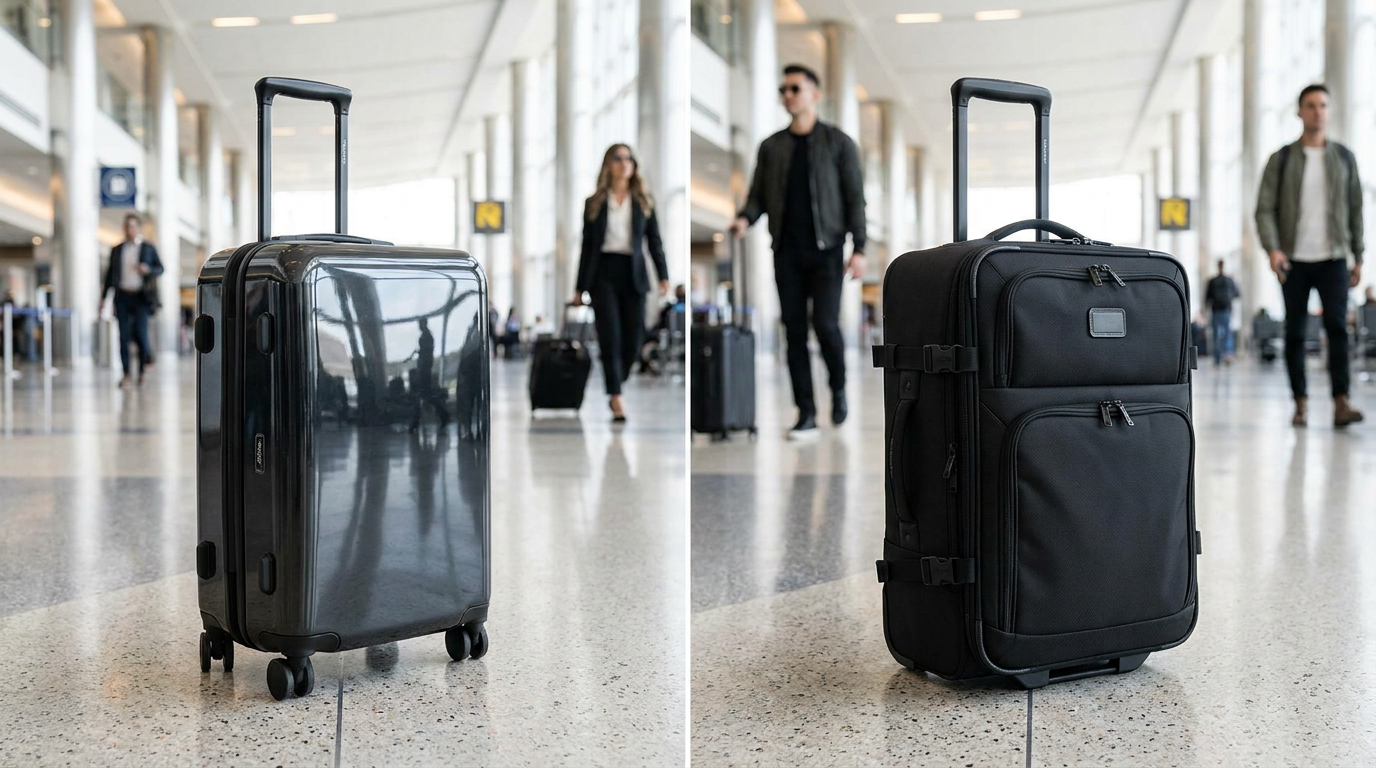
Hardside vs. Softside Luggage: The 2026 Durability and Trade-Off Analysis
6 sources
Premium TVs
OLED vs. Mini-LED in 2026: How to Choose the Right Premium TV for Your Room
7 sources

Auto Market
EV vs. PHEV: The Ultimate 2026 Buyer's Guide to Electrified Cars
7 sources

Display Tech
OLED vs. Mini-LED: The 2026 TV Buyer's Guide
5 sources

Every angle. Every day.
Get shopping stories with full source coverage and perspective breakdowns delivered to your inbox.