
Amazon, Walmart, and Target Launch Overlapping Summer Mega-Sales in Historic June Retail Showdown
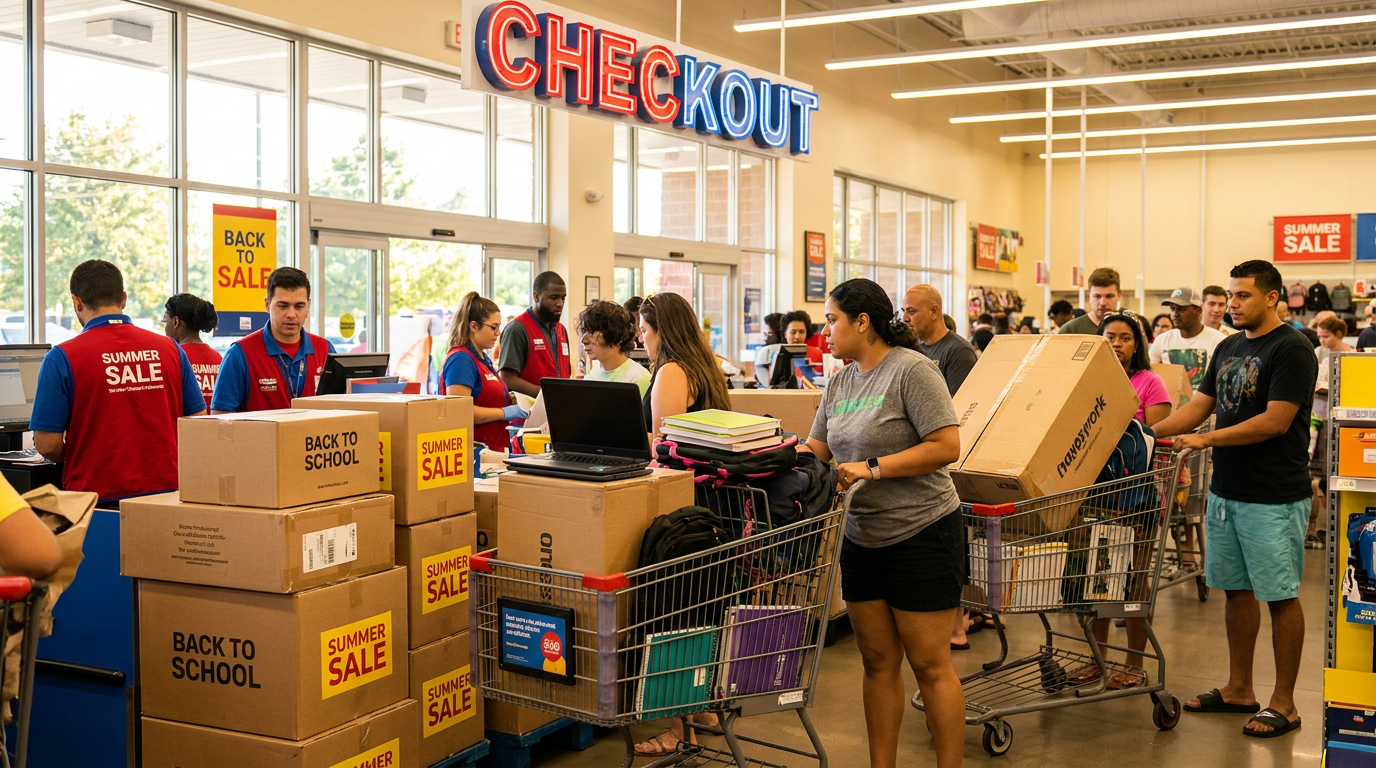
The traditional July shopping season has been moved up as Amazon, Walmart, and Target announce massive, overlapping discount events starting June 22. Consumers stand to benefit from aggressive price cuts across tech, home goods, and back-to-school essentials as the retail giants battle for summer spending.
By Factlen Editorial Team
- Consumer Tech Analysts
- Deal hunters and reviewers focused on maximizing savings on electronics and home goods.
- Retail Giants
- Major corporations aiming to capture early summer spending and boost subscription memberships.
- Lifestyle & Deal Curators
- Curators helping everyday shoppers navigate the sales for back-to-school and household essentials.
What's not represented
- · Small Business Owners
- · Warehouse Workers
Why this matters
With inflation continuing to squeeze household budgets, this concentrated week of overlapping mega-sales offers consumers a rare opportunity to secure Black Friday-level discounts on big-ticket items, everyday essentials, and back-to-school supplies well before the late-summer rush.
Key points
- Amazon, Walmart, and Target are all launching massive summer sales events in the final week of June 2026.
- The shift from July to June represents a strategic move to capture early back-to-school and summer spending.
- Walmart Deals runs June 22-28, while Amazon Prime Day and Target Circle Deal Days run June 23-26.
- Shoppers can expect discounts of up to 65% on tech, home appliances, and everyday essentials.
- Retailers are using early-access perks to aggressively drive sign-ups for their paid subscription tiers.
The traditional July shopping lull has been officially canceled for consumers looking to stretch their dollars. In a massive shift for the 2026 retail calendar, America's largest big-box and e-commerce retailers have pulled their marquee summer discount events forward into late June, creating an unprecedented, overlapping week of mega-sales. Instead of waiting for the mid-summer slump, shoppers are now facing a concentrated blitz of discounts that rivals the intensity of Black Friday. This synchronized push represents a major win for budget-conscious households, offering a rare chance to secure deep discounts on everything from high-end electronics to basic pantry staples well before the traditional late-summer shopping season begins.[1][2][3]
Amazon fired the opening salvo in this summer retail war by announcing that its annual Prime Day will run from June 23 through June 26. Breaking from its historical mid-July placement, the e-commerce titan has not only moved the date up but also stretched the event to four full days. The company is promising millions of member-exclusive deals globally, with early teasers indicating discounts of up to 65% on Amazon's proprietary devices, alongside steep price cuts on books, streaming services, and smart home technology. By expanding the window, Amazon aims to give shoppers more time to browse without the frantic 48-hour ticking clock of previous years.[1][4][8]
Not to be outmaneuvered in the battle for consumer dollars, Walmart quickly countered with "Walmart Deals," a massive seven-day savings event running from June 22 to June 28. By intentionally launching a full 24 hours before Amazon's start time, Walmart is making a calculated play to capture early consumer spending before shoppers even open the Amazon app. The Arkansas-based retail giant is advertising discounts of up to 50% across a wide swath of categories, including tech, home appliances, toys, and outdoor patio furniture, ensuring that both online and in-store shoppers have access to the aggressive markdowns.[2][5][6]

Target completed the retail trifecta shortly after, scheduling its own "Target Circle Deal Days" for the exact same June 23 to June 26 window as Amazon's Prime Day. The Minneapolis-based retailer is heavily emphasizing back-to-school preparation and summer apparel, offering up to 45% off thousands of items. Target's strategy leans into its reputation for trend-forward style and home goods, with significant markdowns planned for owned brands like A New Day and Pillowfort, as well as national mainstays like Keurig and JanSport. The simultaneous scheduling guarantees a head-to-head showdown for digital foot traffic throughout the final week of June.[3]
Retail analysts note that this synchronized June rush is a direct response to an increasingly price-sensitive consumer base. With inflation and economic uncertainty still squeezing household budgets, retailers are using these aggressive, early-summer promotions to clear out seasonal inventory and jump-start back-to-school shopping earlier than ever. By offering Black Friday-level deals in June, the big three are attempting to unlock discretionary spending that might otherwise remain dormant until the fall. It is a high-stakes game of retail chicken, where no single company can afford to sit out while its competitors dominate the summer narrative.[6][7]
Retail analysts note that this synchronized June rush is a direct response to an increasingly price-sensitive consumer base.
Beyond merely moving merchandise, these overlapping sales represent a fierce battle for long-term subscription loyalty. The modern retail landscape is increasingly driven by recurring membership revenue, and these summer mega-events serve as the ultimate customer acquisition tool. While Amazon's event strictly requires a $99-per-year Prime membership to access the vast majority of its deals, Walmart and Target are leveraging their respective sales to drive sign-ups for their own premium tiers. They are offering tantalizing early-access perks and deep discounts on the subscription fees themselves to convince shoppers to commit to their retail ecosystems for the entire year.[1][2][3]

Walmart+ members, for instance, receive exclusive early access to high-demand "Deal drops" starting at midnight on June 22, giving them first pick of limited-inventory electronics and home goods before the general public is allowed to shop. Similarly, Target is offering its Target Circle 360 paid members a 24-hour head start on June 22. To sweeten the deal, Target is also offering a 50% discount on the first year of a new Target Circle 360 membership for guests who enroll during the promotional window, aggressively undercutting the cost of Amazon Prime in a bid to win over hesitant shoppers.[2][3][5]
Across all three platforms, the deepest and most highly anticipated price cuts are concentrated in electronics, floor care, and kitchen appliances. Amazon is heavily discounting its proprietary Echo, Kindle, and Blink security devices, utilizing the sale to further embed its hardware into consumers' homes. Meanwhile, Walmart and Target are slashing prices on premium third-party brands that rarely see significant markdowns outside of the holiday season. Shoppers can expect aggressive price matching on coveted items from Dyson, Ninja, Apple, and Bissell, making it an ideal time to upgrade aging household appliances or secure high-end tech.[1][4][5]

Beyond big-ticket technology and appliances, the retailers are also aggressively discounting everyday essentials to drive volume and foot traffic. Target's sale features 40% off back-to-school supplies, including writing tools from Sharpie and Expo, allowing parents to check off their supply lists months in advance. Walmart is rolling back prices on groceries, pet care, and personal hygiene products, recognizing that many consumers are looking for relief on daily necessities just as much as they are hunting for a new television. This blend of luxury discounts and practical savings ensures the sales appeal to the broadest possible demographic.[2][3]
For consumers, this concentrated week of retail warfare offers a rare opportunity to maximize savings, provided they navigate the overlapping events strategically. Deal experts and consumer advocates advise shoppers to build their wishlists early, set firm budgets to avoid impulse purchases, and cross-reference prices across all three platforms before hitting the checkout button. Because the competition is so fierce, retailers will likely trigger real-time price matching throughout the week, meaning the most diligent shoppers who compare Amazon, Walmart, and Target side-by-side will walk away with the absolute best bargains of the summer.[4][7][8]
How we got here
July 2015
Amazon launches the first Prime Day as a 24-hour mid-summer sales event.
2019–2023
Prime Day expands to a 48-hour event, prompting Walmart and Target to launch competing July sales.
March 2026
Target announces permanent price cuts on thousands of items to win back inflation-weary shoppers.
June 2026
Amazon, Walmart, and Target simultaneously move their summer mega-sales up to late June, expanding them to 4-7 days.
Viewpoints in depth
Consumer Tech Analysts
Focus on the strategic timing and hardware discounts.
Tech and deal analysts view the shift to June as a massive win for consumers looking to upgrade their gadgets. By expanding Prime Day to four days and forcing competitors to match the timing, shoppers have more leverage to compare prices on high-ticket items like laptops, smart home devices, and televisions. Analysts note that Amazon's aggressive 65% discounts on its own hardware are designed to lock users into the Alexa ecosystem, while Walmart and Target are countering by offering better deals on third-party premium brands like Apple and Dyson.
Retail Strategists
Focus on the battle for subscription revenue and market share.
Industry strategists argue that these summer sales are no longer just about clearing inventory; they are high-stakes customer acquisition drives for paid membership programs. With Amazon Prime, Walmart+, and Target Circle 360 all vying for recurring revenue, the actual profit margins on the discounted televisions or backpacks are secondary. The true goal is to use early-access perks and exclusive deals to lock consumers into a specific retailer's ecosystem for the rest of the year, ensuring they return for everyday grocery and household purchases long after the summer sale ends.
What we don't know
- Whether the aggressive June discounts will cannibalize traditional back-to-school sales in August.
- Exactly how much inventory retailers have allocated for their steepest 'doorbuster' tech deals.
- If supply chain logistics and delivery networks can handle the simultaneous surge in orders across all three major platforms.
Key terms
- Amazon Prime
- A $99-per-year paid subscription service offering free delivery, streaming video, and exclusive access to Prime Day deals.
- Walmart+
- Walmart's premium membership tier that provides free shipping, grocery delivery, and early access to special sales events.
- Target Circle 360
- Target's paid loyalty program offering unlimited same-day delivery and early access to major promotional events.
- Price Matching
- A retail practice where a store guarantees to match a competitor's lower price on an identical item.
Frequently asked
Do I need a paid membership to shop these sales?
Amazon Prime Day requires a Prime membership to access the vast majority of deals. Walmart Deals and Target Circle Deal Days are open to everyone, but paid members get early access to the best discounts.
When exactly do the sales start?
Walmart Deals begins online at 12:01 a.m. ET on June 22. Amazon Prime Day and Target Circle Deal Days both officially kick off on June 23.
What items usually have the biggest discounts?
Amazon heavily discounts its own smart devices (Echo, Blink, Kindle), while all three retailers offer steep price cuts on floor care, kitchen appliances, televisions, and back-to-school supplies.
Can I get a free trial to access the deals?
Yes, Amazon offers a 30-day free trial for new Prime members, and Walmart offers a 30-day trial of Walmart+ for $1, allowing shoppers to access the sales without a long-term commitment.
Sources
Source coverage
8 outlets
3 viewpoints surfaced








[1]AmazonRetail Giants
Prime Day 2026 deals preview: See the best deals to shop June 23-26
Read on Amazon →[2]WalmartRetail Giants
Walmart Deals Days 2026 Is Coming: What to Know to Get the Best Deals
Read on Walmart →[3]TargetRetail Giants
New, Deep Savings for Back-to-School and Summer: Target Circle Deal Days Delivers Value with Style
Read on Target →[4]CNETConsumer Tech Analysts
What are the dates for Amazon Prime Day?
Read on CNET →[5]NBC NewsLifestyle & Deal Curators
Walmart Deals Days 2026 is coming soon with discounts across tech, home, beauty
Read on NBC News →[6]MashableConsumer Tech Analysts
The best Walmart Summer Deals to shop before Prime Day
Read on Mashable →[7]ForbesLifestyle & Deal Curators
Amazon Prime Day 2026: June Dates And The Best Early Deals
Read on Forbes →[8]Tech AdvisorConsumer Tech Analysts
When is Prime Day 2026?
Read on Tech Advisor →


Every angle. Every day.
Get shopping stories with full source coverage and perspective breakdowns delivered to your inbox.