
How Sports Science and Biometrics Are Saving Esports Careers
Professional gaming teams are increasingly adopting traditional sports science—from biometric eye-tracking to mandatory physical therapy—to combat burnout and extend player careers.
By Factlen Editorial Team
- Clinical & Sports Science
- Advocates for mandatory physical therapy and exercise to prevent chronic injuries in gamers.
- Industry & Performance
- Focuses on using biometrics and ergonomics to maximize competitive advantage and team ROI.
- Editorial Synthesis
- Analyzes the structural shift in how the esports industry treats player longevity and health.
What's not represented
- · Amateur gamers lacking access to clinical care
- · Tournament organizers setting grueling schedules
Why this matters
The average esports professional retires by age 25 due to chronic pain and mental burnout. By adopting traditional sports science and biometrics, the multi-billion-dollar gaming industry is transforming a short-lived, physically destructive grind into a sustainable, long-term career path.
Key points
- The average esports professional has historically retired by age 25 due to repetitive strain injuries and mental burnout.
- Up to 70% of competitive gamers experience significant wrist or hand pain during their careers.
- Top esports organizations are now employing physical therapists and sports psychologists to treat gamers like traditional athletes.
- Biometric monitoring is being used to track heart rate and skin conductivity to predict and prevent cognitive fatigue, known as 'tilt'.
- Clinical studies show that aerobic exercise reduces a gamer's perceived cognitive fatigue by over 30% during tournaments.
The average professional esports athlete retires by age 25. Unlike traditional sports where careers can span decades, competitive gaming has historically been a young person's grind, characterized by grueling 12-to-16-hour daily practice sessions and an inevitable physical breakdown. For years, the industry accepted this high attrition rate as the cost of doing business, cycling through teenage prodigies who would inevitably burn out or break down before their late twenties. Players were expected to sacrifice their physical well-being for a shot at fleeting glory, often leaving the competitive scene with chronic pain and limited post-career prospects. But as the financial stakes of the industry have skyrocketed, this disposable approach to human talent is no longer viable.[1][5][8]
The stakes are higher than ever. With the International Olympic Committee officially recognizing esports and tournament prize pools routinely crossing the multi-million-dollar mark, the pressure to perform is immense. Yet, the human body was not designed to execute 500 to 600 actions per minute (APM) while seated in a static, forward-leaning position for hours on end. The sheer mechanical repetition required to compete at the highest levels of titles like League of Legends or StarCraft places an unnatural load on the delicate tendons and nerves of the upper extremities. Without proper intervention, the musculoskeletal system simply cannot sustain this level of micro-athleticism over a multi-year career.[5][7]
The result of this unchecked physical stress has been an epidemic of Repetitive Strain Injuries (RSIs) across the competitive landscape. According to recent clinical surveys, up to 70% of competitive gamers report experiencing significant wrist or hand pain during their careers. Conditions like carpal tunnel syndrome, De Quervain's tenosynovitis—often colloquially referred to as 'gamer's thumb'—and severe cervical spine sprains have prematurely ended the careers of some of the world's most promising digital athletes. Furthermore, because many young players dismiss early warning signs to avoid losing their starting roster spots, these injuries are often well-established and chronic by the time they finally seek medical help.[1][5][6]
But a structural paradigm shift is currently underway. To protect their multi-million-dollar investments and ensure the long-term health of their rosters, top-tier esports organizations are abandoning the archaic 'grind until you break' mentality. In its place, they are adopting the rigorous, data-driven methodologies of traditional sports science. The modern esports ecosystem is beginning to understand that a player's peak performance is dictated not solely by the hours spent clicking a mouse, but by a holistic combination of physical conditioning, ergonomic support, and psychological resilience. Treat the gamer as a true athlete, the logic goes, and the in-game results will naturally follow, while simultaneously extending the player's competitive lifespan by years.[2][7][8]

Today's elite esports training facilities look less like dimly lit LAN centers and more like high-performance athletic laboratories. Franchised teams now routinely employ dedicated physical therapists, sports psychologists, and strength and conditioning coaches as core members of their staff. These professionals conduct comprehensive ergonomic assessments, monitor sleep quality, and design individualized recovery protocols. The goal is no longer just to practice the game mechanics, but to optimize the human machine operating the peripherals, ensuring that players can sustain high-level cognitive and physical output throughout grueling, multi-week tournament circuits.[5][6][7]
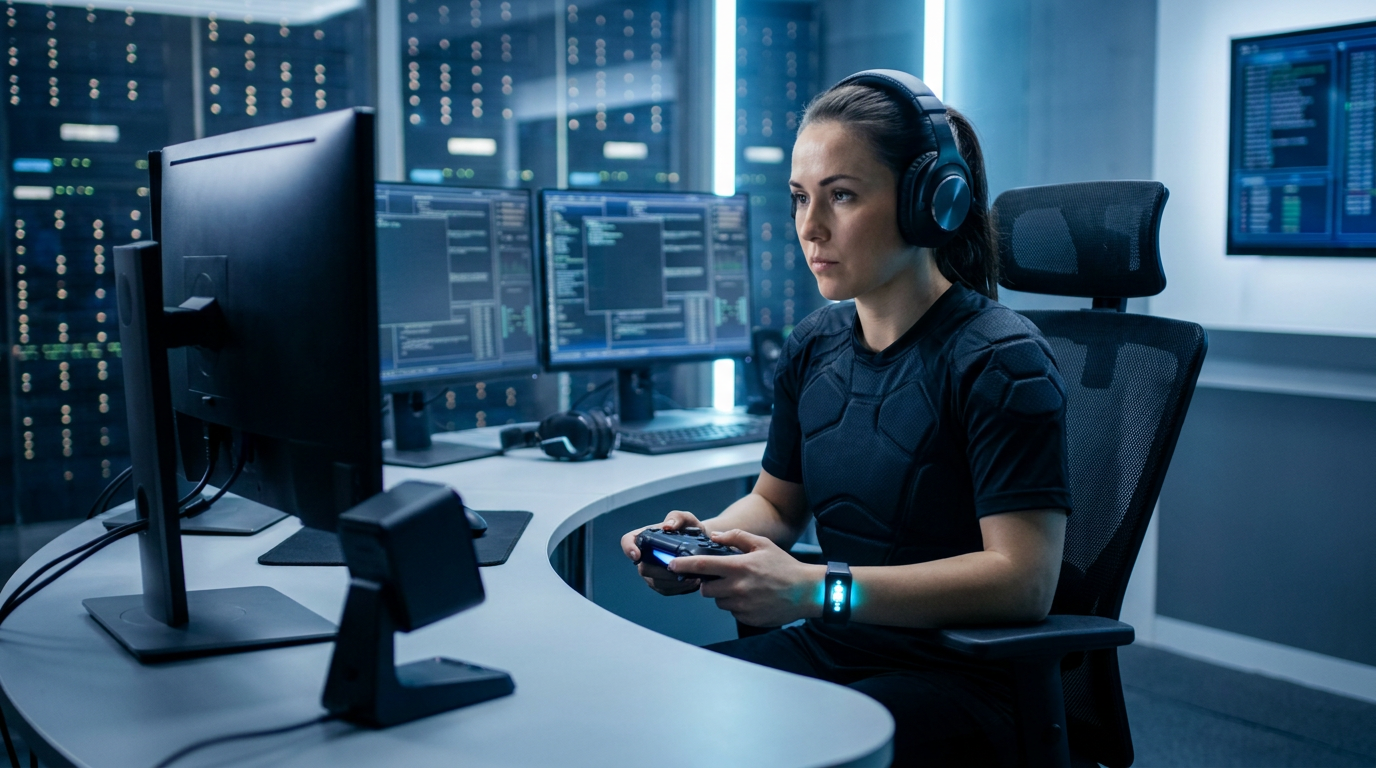
A major component of this evolution is the integration of biometric monitoring. Researchers and hardware manufacturers are collaborating to understand exactly what happens to a player's body and brain during high-stakes competition. For example, a recent six-month study conducted by Arizona State University and gaming peripheral brand HyperX tracked the physiological responses of experienced gamers. Using wristband health monitors and webcams, the researchers gathered continuous data on heart rates, skin conductivity, eye movements, and facial expressions while the subjects played intense competitive matches.[3]
By feeding this wealth of biometric data into machine learning algorithms, the researchers discovered breakthrough methods for predicting when a player is reaching their cognitive tipping point. In the gaming community, this state of emotional frustration and degraded decision-making is commonly known as 'tilt.' The study revealed that no single biometric variable could predict tilt on its own; rather, it was the complex interplay of physiological stress markers that signaled an impending collapse in a player's performance and emotional regulation.[3][7]
Identifying the physiological precursors to tilt allows coaching staff to intervene proactively before a player's performance actually degrades on the server. If a wearable monitoring device detects a sudden spike in heart rate variability or irregular skin conductivity during a practice block, a coach can immediately mandate a screen break, initiate targeted breathing exercises, or adjust the training load. This real-time management of mental fatigue is a game-changer, transforming psychological resilience from an intangible trait into a measurable, trainable metric.[2][3]
Identifying the physiological precursors to tilt allows coaching staff to intervene proactively before a player's performance actually degrades on the server.
Hardware manufacturers are also leveraging sports science to fundamentally redesign the tools of the trade. Companies like BenQ's ZOWIE division have established dedicated Esports Science Labs in major tech hubs including Taipei, Suzhou, and Eindhoven. These research facilities use quantitative biometric data—such as muscle tension mapping and motion capture—to engineer mice and keyboards that actively reduce physical strain. By analyzing how different grip styles and inward-curved designs affect the fast-twitch muscles of the hand, engineers can create peripherals that lower the risk of musculoskeletal injuries during prolonged use.[4][7]

Beyond ergonomics and high-tech biometrics, structured physical exercise is becoming a mandatory component of a professional gamer's daily routine. While it might initially seem counterintuitive that lifting weights or running on a treadmill could improve performance in a sedentary digital game, the clinical evidence supporting the connection is overwhelming. Sports scientists have proven that the cardiovascular system plays a critical role in sustaining the intense focus and rapid information processing required for top-tier esports.[1][8]
Studies published in medical journals demonstrate that aerobic and strength training significantly improve a player's attention span, emotional regulation, and postural control. One notable intervention study found that implementing a complete physical exercise program reduced players' perceived cognitive fatigue by over 30%. Furthermore, the physically active gamers maintained their jumping ability and joint mobility, and showed marked improvements in their ability to process complex on-screen information during the final hours of a long tournament day, giving them a distinct competitive advantage over their sedentary peers.[1][8]
Physical therapy is also shifting from a reactive treatment to a proactive, preventative necessity. Physiotherapists specializing in esports medicine are teaching players how to actively counteract the specific physical tolls of gaming. This includes targeted exercises to strengthen the posterior chain, correct the forward-head posture that causes severe neck pain, and improve the endurance of the forearm muscles. By treating the body before it breaks down, these clinicians are helping players build the physical armor necessary to withstand the rigors of professional play.[5][6]

Even simple, low-tech interventions are being strictly enforced to preserve player health. The '20-20-20 rule'—taking a 20-second break every 20 minutes to look at an object 20 feet away—is now a standard protocol during practice blocks to prevent severe eye strain and mental burnout. Teams are also enforcing mandatory hydration schedules and optimizing the lighting in training rooms to protect players' circadian rhythms, ensuring that the critical restorative power of deep sleep is not compromised by excessive blue light exposure.[5][7][8]
The widespread adoption of these holistic health models is slowly but surely changing the trajectory of esports careers. By treating gamers as true athletes and providing them with the necessary medical, ergonomic, and psychological support, the industry is paving the way for longer, healthier, and vastly more sustainable professional lives. The narrative that gaming is inherently destructive to the body is being rewritten by organizations willing to invest in the human element of their digital sports.[7][8]
The days of the 24-year-old washed-up esports veteran may soon be a relic of the past. As sports science continues to deeply permeate the competitive gaming ecosystem, the next generation of digital athletes will be equipped with the tools, knowledge, and medical support they need. They are no longer just training to win the next world championship; they are training to enjoy lifelong, pain-free careers in the industry they love, proving that the future of esports is as much about physical health as it is about digital skill.[7]
How we got here
2019
Early sports science papers highlight the need for holistic health management in esports, noting high rates of musculoskeletal injuries.
2021
Hardware manufacturers establish dedicated Esports Science Labs to engineer ergonomically optimized peripherals.
2023
Arizona State University and HyperX publish breakthrough research using biometrics to predict cognitive fatigue and 'tilt' in gamers.
2024
The International Olympic Committee officially recognizes esports, further accelerating the professionalization and athletic standards of competitive gaming.
2026
Top-tier esports organizations routinely mandate physical therapy, aerobic exercise, and biometric monitoring as core components of player contracts.
Viewpoints in depth
Sports Scientists & Physiotherapists
Argue that esports must adopt traditional athletic training models to prevent chronic injuries.
Clinicians emphasize that the human body was not designed to execute 600 actions per minute while seated in a static position. They advocate for mandatory physical exercise, ergonomic interventions, and treating gamers like traditional athletes to prevent long-term musculoskeletal damage. From their perspective, the historical attrition rate in esports is a preventable medical failure, not an inevitable reality of the game.
Esports Organizations & Hardware Brands
Focus on optimizing performance and protecting their investments through data and ergonomic design.
For franchised teams and hardware manufacturers, sports science is as much about competitive advantage as it is about health. Teams are investing heavily in sports science labs and biometric tracking to gain an edge on the server. Preventing 'tilt' and extending a star player's career directly translates to tournament wins, higher merchandise sales, and a better return on investment for multi-million-dollar player contracts.
The Players
Balance the immediate pressure to win with the long-term need for physical sustainability.
Many young professionals initially resist taking breaks or doing physical therapy because time away from the screen feels like falling behind the competitive meta. However, as older veterans speak out about their chronic pain and early retirements, the culture within the player base is shifting. Gamers are increasingly embracing wellness routines, recognizing that physical health is a prerequisite for a long, lucrative career.
What we don't know
- Whether the adoption of sports science will successfully extend the average esports career past the age of 30 on a widespread scale.
- How smaller, non-franchised teams will afford the high costs of dedicated physical therapists and biometric monitoring equipment.
Key terms
- Repetitive Strain Injury (RSI)
- Damage to muscles, tendons, or nerves caused by repetitive motions and constant use, common in the wrists and hands of gamers.
- Actions Per Minute (APM)
- A metric measuring how many clicks and keystrokes a player can perform in one minute, often reaching 500-600 in elite competitive play.
- Tilt
- A poker term adopted by gamers to describe a state of emotional frustration that leads to poor decision-making and degraded performance.
- Heart Rate Variability (HRV)
- The variation in time between consecutive heartbeats, used by sports scientists as a biometric indicator of a player's stress and fatigue levels.
- De Quervain's Tenosynovitis
- An inflammation of the tendons on the thumb side of the wrist, frequently referred to as 'gamer's thumb' due to repetitive controller or mouse use.
Frequently asked
Why do esports players retire so young?
Historically, players retire by their mid-20s due to physical burnout and repetitive strain injuries (RSIs) like carpal tunnel syndrome, caused by playing 8 to 16 hours a day.
How does physical exercise help gamers?
Aerobic and strength training improve postural control, emotional regulation, and cognitive endurance, reducing perceived fatigue by over 30% during long tournaments.
What is 'tilt' in esports?
Tilt is a state of emotional frustration and cognitive fatigue that degrades a player's decision-making. Teams are now using biometric data to predict and prevent it.
What are the most common gaming injuries?
The most common injuries are trunk and cervical spine sprains from poor posture, followed by wrist and hand issues like tendinopathy (gamer's thumb) and carpal tunnel syndrome.
Sources
Source coverage
8 outlets
3 viewpoints surfaced







[1]MDPIClinical & Sports Science
Injuries and Overuse Damages in Esports
Read on MDPI →[2]International Journal of EsportsClinical & Sports Science
Physiological monitoring devices in esports
Read on International Journal of Esports →[3]HyperXIndustry & Performance
HyperX Gaming Peripherals Leveraged for Performance Testing in Study to Help Predict Player Performance
Read on HyperX →[4]BenQ ZOWIEIndustry & Performance
Sports Science in ZOWIE Mouse Design
Read on BenQ ZOWIE →[5]ResearchGateClinical & Sports Science
Upper Limb Musculoskeletal Injuries in Esports
Read on ResearchGate →[6]Burnaby PhysioCareClinical & Sports Science
Virtual Therapy for Your Virtual Gaming
Read on Burnaby PhysioCare →[7]Factlen Editorial TeamEditorial Synthesis
Synthesis by Factlen editorial team
Read on Factlen Editorial Team →[8]Springer MedizinClinical & Sports Science
Health and well-being in esports
Read on Springer Medizin →
Every angle. Every day.
Get gaming esports stories with full source coverage and perspective breakdowns delivered to your inbox.