
US-Iran Peace Talks Collapse Following Israeli Strikes in Lebanon
Highly anticipated diplomatic talks between the United States and Iran in Switzerland have been abruptly canceled after a surge in Israeli military strikes against Hezbollah targets in Lebanon. The breakdown of the backchannel threatens to escalate regional tensions and has already triggered a spike in global energy markets.
By Factlen Editorial Team
- US & Western Diplomats
- View the talks as essential for preventing a regional war and hope to resume technical discussions once the immediate military escalation subsides.
- Iranian & Allied Officials
- Consider the Israeli strikes a breach of good faith and refuse to negotiate under military pressure, accusing the US of complicity.
- Israeli Security Establishment
- Prioritizes neutralizing immediate threats from Hezbollah on its northern border, regardless of how it impacts US-Iran diplomatic timelines.
- Global Energy Markets
- Focused on the geopolitical risk premium, fearing that a breakdown in diplomacy could lead to supply disruptions in the Strait of Hormuz.
What's not represented
- · Lebanese civilians displaced by the cross-border strikes
- · Swiss and Omani mediators facilitating the backchannel
Why this matters
The collapse of this diplomatic backchannel removes the primary guardrail preventing a direct regional war in the Middle East. For consumers, the immediate consequence is a spike in global oil prices, which could drive up inflation and gasoline costs if the Strait of Hormuz faces disruptions.
Key points
- Indirect US-Iran peace talks in Geneva were abruptly canceled just before they were scheduled to begin.
- Iran delayed its delegation in response to a wave of Israeli airstrikes against Hezbollah targets in Lebanon.
- The talks aimed to secure an unwritten agreement capping Iran's nuclear enrichment in exchange for sanctions relief.
- Global oil prices spiked above $86 per barrel due to renewed fears of a broader Middle Eastern conflict.
- US officials maintain they were not given advance notice of the Israeli strikes but hope to resume diplomacy soon.
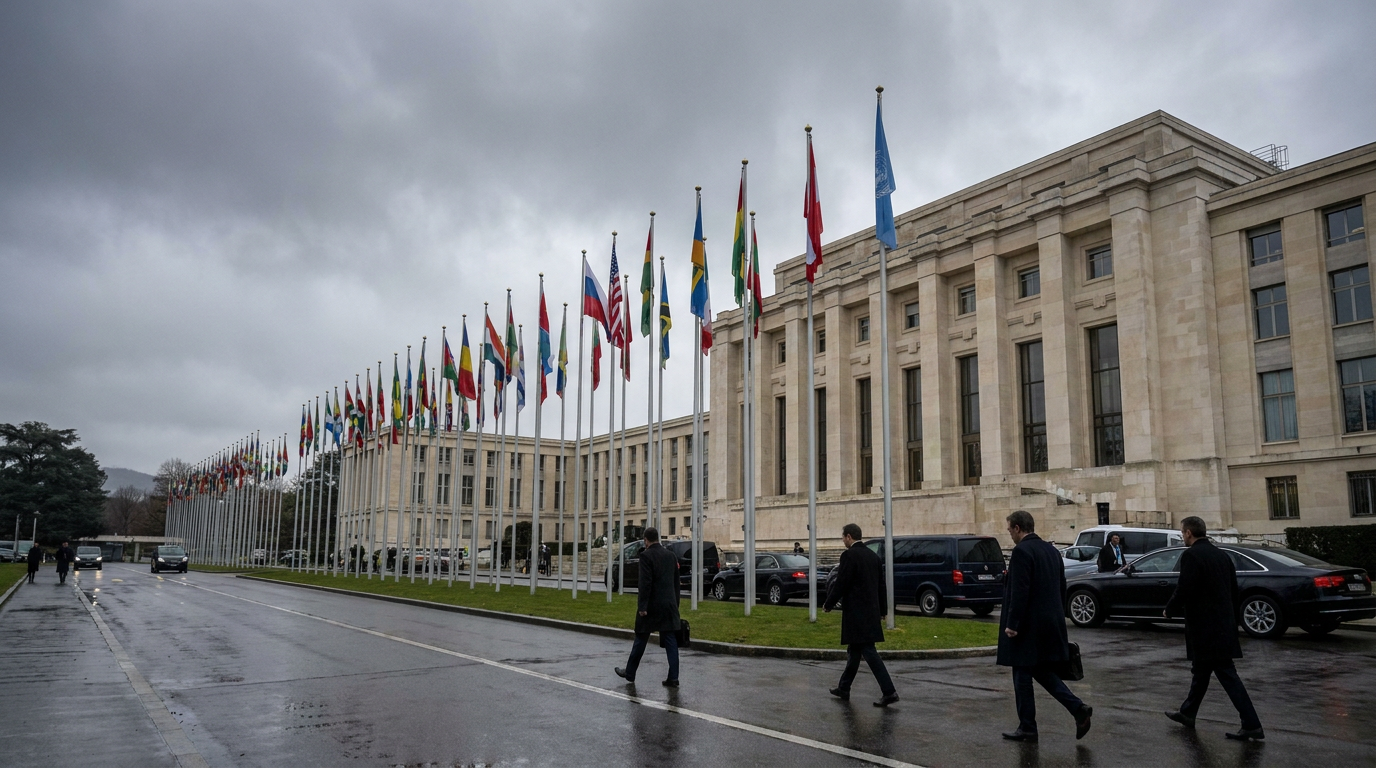
A highly anticipated round of indirect diplomacy between the United States and Iran has collapsed just hours before delegations were scheduled to meet in Geneva, Switzerland. The talks, which aimed to establish a framework for regional de-escalation and place new caps on Tehran's nuclear enrichment program, were abruptly canceled on Friday morning. The breakdown marks a severe setback for international efforts to stabilize the Middle East, effectively severing the most promising diplomatic backchannel established in the past year.[1][2]
The immediate catalyst for the diplomatic rupture was a sudden and intense wave of Israeli military strikes across southern Lebanon. Overnight, the Israel Defense Forces (IDF) launched more than 30 targeted airstrikes against strongholds belonging to Hezbollah, the heavily armed Lebanese militant group backed by Iran. The strikes, which Israeli officials described as necessary preemptive actions against imminent threats, dramatically altered the geopolitical calculus on the ground and made the optics of Iranian diplomats sitting down with American counterparts politically untenable in Tehran.[3][5]
In Washington, the sudden cancellation sent the White House scrambling to salvage the diplomatic framework. US officials maintain that they were not given advance notice of the specific timing or scale of the Israeli operations in Lebanon, though they broadly support Israel's right to defend its northern border. The State Department expressed disappointment over the suspended talks, emphasizing that the US still looks forward to beginning technical discussions as soon as possible, viewing diplomacy as the only viable path to long-term regional stability.[1][4][6]
Tehran's response was swift and unequivocal. Iranian state media and the Foreign Ministry announced that the delegation's trip to Geneva was indefinitely delayed, citing the Israeli aggression against Lebanon. Iranian officials publicly accused the United States of complicity, arguing that Washington cannot simultaneously act as a broker for regional peace while continuing to supply the munitions used in the strikes against Hezbollah. For Iran's leadership, proceeding with the talks under the shadow of the bombardment would have been viewed domestically and regionally as a capitulation.[3][7]

To understand the gravity of this collapse, it is essential to examine the mechanism of the proposed Geneva talks. These were not formal treaty negotiations, but rather "proximity talks" mediated by Swiss and Omani diplomats. The core objective was an unwritten understanding: Iran would agree to cap its uranium enrichment at 60 percent and rein in its proxy forces across Iraq, Syria, and Yemen. In exchange, the United States would unfreeze select Iranian financial assets held abroad and refrain from imposing new economic sanctions.[2][6]
The entanglement of Hezbollah in this diplomatic equation highlights the complex web of Middle Eastern geopolitics. Hezbollah is not merely an Iranian proxy; it is the crown jewel of Tehran's "Axis of Resistance" and serves as Iran's primary deterrent against Israeli military action. When Israel strikes Hezbollah infrastructure in Lebanon, Iran views it as a direct degradation of its own strategic depth. Consequently, any US-Iran de-escalation agreement implicitly requires a quiet Lebanese-Israeli border, a condition that evaporated overnight.[3][5]
The entanglement of Hezbollah in this diplomatic equation highlights the complex web of Middle Eastern geopolitics.
From the Israeli perspective, the security imperative on its northern border supersedes any diplomatic timelines set by Washington and Tehran. The Israeli security establishment has grown increasingly alarmed by Hezbollah's stockpiling of precision-guided munitions and the displacement of tens of thousands of Israeli citizens from northern communities. Israeli officials have repeatedly signaled that they are not bound by any informal US-Iran understandings and will take unilateral action to neutralize threats, regardless of the diplomatic fallout in Geneva.[5]

The collapse of the talks sent immediate shockwaves through global financial markets, particularly the energy sector. Brent crude, the international benchmark for oil prices, spiked above $86 per barrel in early European trading, reflecting a sudden injection of geopolitical risk premium. Traders had previously priced in a degree of optimism that the Geneva talks would succeed in cooling regional tensions and keeping crucial maritime shipping lanes open.[8]
The primary fear driving the oil market reaction is the vulnerability of the Strait of Hormuz. Roughly 20 percent of the world's total oil consumption passes through this narrow waterway between the Persian Gulf and the Gulf of Oman. If the diplomatic breakdown leads to a broader regional conflict, energy analysts warn that Iran could retaliate by harassing commercial shipping or attempting to close the strait entirely, a move that would severely disrupt global supply chains and drive up inflation worldwide.[8]
The diplomatic failure also carries significant domestic political implications in the United States. With a crucial election approaching, the administration is under intense pressure to demonstrate foreign policy competence and prevent the US from being dragged into another Middle Eastern war. Critics in Congress have already seized on the collapse, arguing that the administration's strategy of offering sanctions relief in exchange for unwritten promises has failed to deter Iranian aggression or rein in its proxy networks.[4]

European mediators, who have invested heavily in facilitating the backchannel, are now working to prevent a total severing of communications. Swiss diplomats are reportedly shuttling messages between Washington and Tehran, attempting to establish a cooling-off period. The European Union has expressed deep concern over the escalation, warning that the absence of a diplomatic off-ramp significantly increases the likelihood of a miscalculation that could ignite a wider, uncontrollable conflict.[1][2]
The immediate future of US-Iran relations now hangs in a state of profound uncertainty. The technical teams that were supposed to be mapping out sanctions relief and nuclear caps are instead analyzing military deployments and strike patterns. Diplomatic sources indicate that it could take weeks, or even months, to rebuild enough mutual trust to reschedule the Geneva meetings, assuming the security situation in Lebanon does not deteriorate further.[6]
Ultimately, the events of the past 24 hours underscore the fragility of Middle Eastern diplomacy. The attempt to compartmentalize the US-Iran nuclear portfolio from the ongoing kinetic conflicts involving Israel and Hezbollah has proven unworkable. Until a broader framework can address the interconnected security dilemmas of all regional actors, the risk of a minor skirmish spiraling into a major regional war remains dangerously high.[2][6]
How we got here
Early 2026
US and Iranian officials begin quietly utilizing Omani and Swiss backchannels to explore a de-escalation framework.
June 17, 2026
Diplomatic sources confirm that delegations are traveling to Geneva to finalize an unwritten understanding on nuclear caps and sanctions.
June 18, 2026 (Overnight)
The Israeli military launches a wave of over 30 airstrikes against Hezbollah infrastructure in southern Lebanon.
June 19, 2026
Iran officially delays its delegation's trip to Switzerland, effectively canceling the talks and citing US complicity in the strikes.
Viewpoints in depth
The US Administration's View
Washington sees diplomacy as the only viable off-ramp to prevent a wider regional war.
For the US administration, the proximity talks were a pragmatic attempt to put a lid on the Middle East's overlapping crises during a sensitive election year. US officials argue that an unwritten understanding—trading limited sanctions relief for a freeze on 60 percent uranium enrichment and a leash on proxy attacks—is the most realistic way to prevent Iran from crossing the nuclear threshold. They view the sudden Israeli escalation as an unfortunate complication but maintain that the underlying logic for the talks remains sound, hoping to resume technical discussions once the immediate anger subsides.
Iran & The Axis of Resistance's View
Tehran views the strikes as a breach of trust and refuses to negotiate under active military pressure.
Iranian leadership operates on the premise that the United States and Israel are deeply coordinated. From Tehran's perspective, Washington cannot act as a neutral broker offering sanctions relief while simultaneously providing the munitions Israel uses to degrade Hezbollah, Iran's most important regional ally. Proceeding with the Geneva talks while southern Lebanon was under bombardment would have projected weakness to both domestic hardliners and regional proxy forces. Consequently, Iran demands a cessation of Israeli strikes as a prerequisite for returning to the diplomatic table.
Israel's Security View
Israel prioritizes immediate border security over international diplomatic timelines.
The Israeli security establishment is fundamentally skeptical of the US-Iran backchannel, viewing it as a mechanism that enriches Tehran without permanently dismantling its nuclear infrastructure or proxy networks. More pressing for Israel is the immediate tactical situation on its northern border, where Hezbollah's presence has forced the evacuation of tens of thousands of Israeli civilians. Israeli officials assert their right to preemptive self-defense, arguing that they cannot allow Hezbollah to stockpile precision munitions merely to preserve the optics of a diplomatic meeting in Switzerland.
What we don't know
- Whether the timing of the Israeli strikes was intentionally designed to disrupt the Geneva talks.
- How long it will take for Swiss and Omani mediators to rebuild enough trust to reschedule the meetings.
- If Iran or Hezbollah will launch retaliatory strikes that could further escalate the conflict.
Key terms
- Proximity Talks
- A form of indirect diplomacy where opposing sides do not meet face-to-face, but instead communicate through a third-party mediator who shuttles between them.
- Hezbollah
- A heavily armed Lebanese militant group and political party backed by Iran, considered a key component of Tehran's regional "Axis of Resistance."
- Strait of Hormuz
- A narrow, strategically vital waterway between the Persian Gulf and the Gulf of Oman through which approximately 20 percent of the world's oil supply passes.
- Uranium Enrichment
- The process of increasing the concentration of the U-235 isotope in uranium, which can be used for civilian nuclear power or, at higher purities, for nuclear weapons.
Frequently asked
Why were the US and Iran meeting in Switzerland?
The US and Iran do not have formal diplomatic relations. They use "proximity talks" where mediators, such as Swiss or Omani diplomats, shuttle messages between the two delegations located in separate rooms or buildings.
What was the goal of the canceled talks?
The talks aimed to establish an unwritten understanding where Iran would cap its nuclear enrichment and restrain its proxy forces in exchange for the US unfreezing certain Iranian financial assets and pausing new sanctions.
How does this affect global oil prices?
The collapse of diplomacy increases the risk of a broader regional conflict, which could threaten oil shipping lanes like the Strait of Hormuz. This geopolitical risk caused Brent crude prices to spike above $86 per barrel.
Will the talks be rescheduled?
It is currently uncertain. The US has expressed a desire to resume technical talks, but Iranian officials have indefinitely delayed their delegation, and rebuilding the necessary trust could take weeks or months.
Sources
Source coverage
8 outlets
4 viewpoints surfaced








[1]The GuardianUS & Western Diplomats
US-Iran peace talks abruptly cancelled amid renewed Israeli strikes in Lebanon
Read on The Guardian →[2]ReutersUS & Western Diplomats
US-Iran nuclear and regional stability talks suspended in Switzerland after Lebanon escalation
Read on Reuters →[3]Al JazeeraIranian & Allied Officials
Tehran halts US negotiations, cites Israeli aggression in southern Lebanon
Read on Al Jazeera →[4]Fox NewsIsraeli Security Establishment
White House scrambles as Iran pulls out of Switzerland peace talks following Israel strikes
Read on Fox News →[5]Times of IsraelIsraeli Security Establishment
IDF strikes Hezbollah strongholds in Lebanon; US-Iran talks collapse
Read on Times of Israel →[6]AxiosUS & Western Diplomats
Inside the collapse of the US-Iran backchannel in Geneva
Read on Axios →[7]Tehran TimesIranian & Allied Officials
Foreign Ministry delays Geneva delegation, condemns US complicity in Lebanon attacks
Read on Tehran Times →[8]BloombergGlobal Energy Markets
Oil spikes above $86 as US-Iran diplomatic collapse threatens Strait of Hormuz
Read on Bloomberg →
More in news politics
See all 5 stories →Electoral Reform
Fact-Checking the Claims: Does Ranked-Choice Voting Actually Reduce Political Polarization?
7 sources
Voice Forensics
Can You Actually Detect AI-Generated Political Audio? An Evidence Pack
6 sources

US-Iran Relations
US-Iran Peace Talks in Switzerland Cancelled Amid Escalating Israel-Hezbollah Clashes
7 sources
Every angle. Every day.
Get news politics stories with full source coverage and perspective breakdowns delivered to your inbox.