
Can You Actually Detect AI-Generated Political Audio? An Evidence Pack
As voice cloning disrupts global elections, a new generation of forensic tools claims to spot synthetic audio with up to 98% accuracy. Here is the evidence on how they work, where they fail, and how fact-checkers are fighting back.
By Factlen Editorial Team
- Academic Researchers
- Focuses on the limitations of current models, emphasizing the need for tools that generalize across new languages and unseen AI generators.
- Commercial Security Firms
- Highlights the high benchmark accuracy of enterprise detection systems and their necessity in preventing automated fraud.
- Fact-Checkers & Analysts
- Advocates for a multi-layered approach, combining algorithmic detection with manual acoustic analysis and traditional sourcing.
What's not represented
- · Social media platform moderators
- · Open-source AI developers
Why this matters
Synthetic audio is the most accessible and convincing form of digital deception available today, requiring only seconds of reference audio to clone a voice. Understanding how to detect these fakes empowers voters, journalists, and businesses to verify reality before reacting to inflammatory or fraudulent claims.
Key points
- Enterprise AI detection tools can identify synthetic audio with up to 98% accuracy in controlled environments.
- Detectors work by analyzing Mel-Spectrograms to find digital artifacts invisible to the human ear.
- Social media compression degrades these artifacts, significantly lowering real-world detection rates.
- Fact-checkers use a 'transcript-first' method to spot unnatural pacing and structural anomalies.
- A lack of audible breathing and perfectly static background noise are key indicators of AI generation.
- Verification requires combining AI detection scores with manual acoustic analysis and traditional sourcing.
The era of the audio deepfake has arrived, bringing with it a wave of synthetic political robocalls, cloned executive voices, and fabricated leaked recordings. Because high-quality voice cloning now requires only a few seconds of reference audio and a few dollars in computing power, the barrier to entry for digital deception has effectively vanished. But the narrative that society is defenseless against this technology is fundamentally flawed. A robust ecosystem of forensic detection tools and verification methodologies has evolved in parallel, equipping fact-checkers with the means to fight back.[6]
The commercial detection market is currently dominated by enterprise-grade platforms—such as Reality Defender, Sensity AI, and Aurigin—that claim remarkable success rates. On standardized academic benchmarks, these systems routinely report accuracy levels between 95% and 98% when identifying text-to-speech synthesis, voice conversion, and replay attacks. They achieve this not by listening to the audio as a human would, but by analyzing the mathematical structure of the sound waves.[2][5]
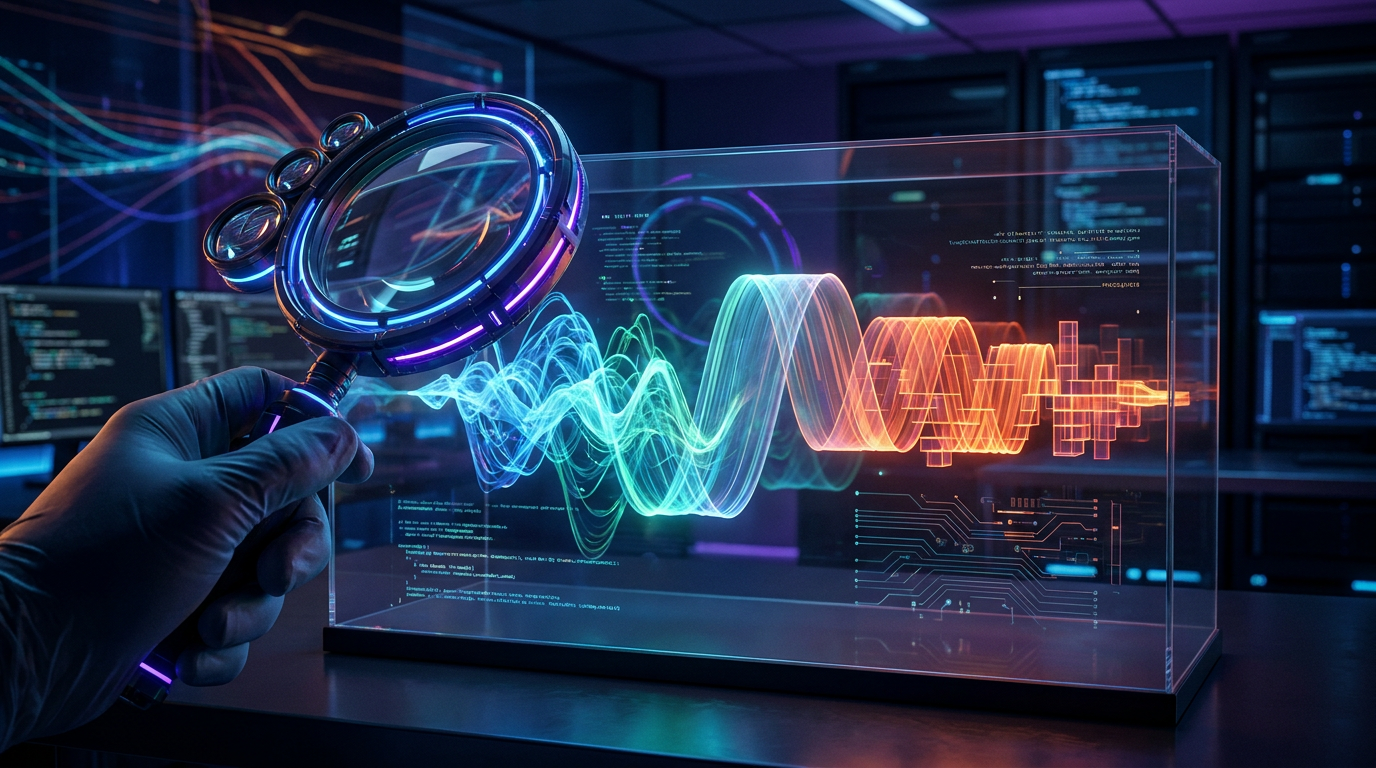
At the core of modern audio forensics is the Mel-Spectrogram, a visual representation of the spectrum of frequencies in a sound as they vary over time. When a human speaks, their vocal tract, breath, and the physical constraints of their mouth create complex, organic acoustic signatures. AI voice generators, despite sounding indistinguishable to the human ear, often fail to perfectly replicate these micro-structures. They leave behind subtle digital artifacts—tiny anomalies in high-frequency bands or unnatural phase alignments that a machine learning model can spot.[2][3]

To find these artifacts, researchers deploy advanced neural networks. Early detection models relied on Convolutional Neural Networks (CNNs) to scan spectrograms like images, looking for the visual "fingerprints" of specific AI generators. More recently, the field has shifted toward Transformer-based foundation models. These systems are trained on millions of hours of both authentic and synthetic speech across dozens of languages, allowing them to understand the fundamental physics of human speech and flag anything that deviates from those physical laws.[3][6]
However, the evidence shows a significant gap between laboratory benchmarks and real-world application. Academic researchers note that while detection models perform exceptionally well on "in-domain" data—audio generated by the exact AI models they were trained to recognize—their accuracy can drop when faced with "zero-shot" scenarios involving entirely new, unseen voice cloning algorithms.[2][3]
However, the evidence shows a significant gap between laboratory benchmarks and real-world application.
The most severe degradation in detection accuracy comes from social media compression. When a bad actor uploads a synthetic audio clip to platforms like X, TikTok, or WhatsApp, the platform's compression algorithms strip away much of the high-frequency data to save bandwidth. This process inadvertently destroys the very digital artifacts that forensic tools rely on. In some independent tests of real-world political robocalls, open-source detectors returned accuracy scores closer to 70%, highlighting the danger of relying on a single algorithmic verdict.[1][6]

Because black-box AI detectors can be brittle, digital investigators and journalists have developed a complementary, low-tech approach: the "transcript-first" methodology. Rather than immediately feeding a suspicious clip into a forensic tool, analysts first convert the audio into clean, timestamped text. This strips away the emotional shading of the voice and exposes the structural architecture of the speech.[4]
When viewed as text, AI-generated speech often reveals its synthetic nature through unnatural pacing. Humans use filler words, hesitate, and vary their sentence structures dynamically. AI models, particularly those optimized for clean text-to-speech, tend to produce breathless runs of text, perfectly uniform pauses, and a lack of natural conversational rhythm. By isolating the text, fact-checkers can spot these structural anomalies that the ear might gloss over.[4][6]
Analysts also listen for specific acoustic cues that current AI struggles to fake consistently. The most prominent is breathing. Extended passages of speech without an audible inhale every five to ten words are a strong indicator of synthesis. Additionally, real recordings capture the subtle, shifting "room tone" of a physical space. A perfectly static background noise across an entire clip often suggests that the room tone was artificially looped or generated after the fact.[1][4]

The consensus among media forensics experts is that no single tool should be trusted as a definitive oracle. Instead, verification requires a multi-layered approach. A high-confidence score from an enterprise AI detector provides a strong initial signal, but it must be corroborated by acoustic analysis, transcript review, and traditional journalistic cross-checking of the source and context.[1][6]
Looking forward, the defense against synthetic audio is evolving rapidly. The next generation of detection frameworks, such as the academic SONAR benchmark, is pushing developers to build models with robust cross-lingual generalization, ensuring that tools work just as well on Hindi or Arabic deepfakes as they do on English ones. Simultaneously, the push for cryptographic watermarking at the point of generation promises to make identifying synthetic media a matter of reading metadata rather than running complex forensic analysis.[2][6]
The arms race between generative AI and forensic detection will undoubtedly continue. But the current evidence is clear: society is not flying blind. Through a combination of advanced spectrogram analysis, transcript-driven investigation, and critical listening, the tools to separate authentic human voices from synthetic fabrications are already in our hands.[6]
Viewpoints in depth
Academic Researchers
Focuses on the limitations of current models and the need for robust generalization.
Academic computer scientists emphasize that while current detection models boast high accuracy, those numbers are often achieved on 'in-domain' datasets. Their primary concern is 'zero-shot generalization'—the ability of a security system to catch a deepfake generated by a brand-new, unseen algorithm. Researchers argue that the field must move beyond simple artifact detection and develop foundation models that understand the fundamental physics of human speech, making them resilient against future advancements in voice cloning.
Commercial Security Firms
Highlights the high benchmark accuracy of enterprise systems and their necessity in preventing fraud.
Companies building enterprise-grade detection APIs argue that the technology is already highly effective for its primary use cases: preventing automated fraud, securing biometric authentication, and flagging synthetic media at scale. They point to benchmark accuracies exceeding 98% and stress that continuous model retraining against the latest open-source cloning tools keeps them ahead of bad actors. For these firms, the solution to the deepfake crisis is widespread API integration across telecommunications and social platforms.
Fact-Checkers & Analysts
Advocates for a multi-layered approach combining algorithmic detection with manual investigation.
Digital investigators and journalists operate on the front lines, where audio is often heavily compressed and context is highly contested. They argue that black-box AI detectors are insufficient on their own, as a false positive can unfairly discredit a genuine whistleblower, while a false negative can allow a damaging deepfake to spread. This camp champions a hybrid approach: using AI tools as a preliminary signal, but relying heavily on transcript analysis, acoustic cue verification (like breathing patterns), and traditional source-checking to make the final editorial call.
What we don't know
- Whether cryptographic watermarking standards will be universally adopted by open-source AI developers.
- How quickly detection models can adapt to the next generation of highly efficient, low-artifact voice synthesizers.
- The exact false-positive rate of enterprise tools when deployed at the scale of billions of daily social media posts.
Key terms
- Mel-Spectrogram
- A visual representation of the spectrum of frequencies in a sound as they vary over time, used by AI models to "see" the acoustic fingerprints of audio.
- Zero-Shot Generalization
- The ability of a detection model to accurately identify synthetic audio created by a brand-new AI generator it was never explicitly trained on.
- Replay Attack
- A spoofing technique where a genuine recording of a person's voice is played back into a microphone to bypass voice authentication systems.
- Room Tone
- The subtle, natural background noise present in any physical recording space, which AI generators often struggle to replicate consistently.
Frequently asked
Can free online tools accurately detect AI audio?
Free tools can provide a useful initial signal, but their accuracy is often lower than enterprise systems, especially on heavily compressed social media audio. Experts advise never relying on a single free tool for a definitive verdict.
What is the 'transcript-first' method?
It is an investigative technique where audio is converted to text before analysis. This allows fact-checkers to visually spot unnatural pacing, repetitive structures, and a lack of human filler words without being distracted by the emotional tone of the voice.
Why does social media make deepfakes harder to detect?
Platforms like X and TikTok compress audio files to save bandwidth. This compression strips away the high-frequency acoustic data and subtle digital artifacts that forensic AI models rely on to identify synthetic generation.
Sources
Source coverage
6 outlets
3 viewpoints surfaced






[1]Poynter InstituteFact-Checkers & Analysts
Testing free online tools for AI audio detection
Read on Poynter Institute →[2]MDPI Applied SciencesAcademic Researchers
Audio Deepfake Detection: A Survey of Recent Advancements
Read on MDPI Applied Sciences →[3]arXivAcademic Researchers
Audio Deepfake Detection: A Comprehensive Survey
Read on arXiv →[4]Sky-ScribeFact-Checkers & Analysts
Free AI Voice Detector: How to Spot Fake Audio Fast
Read on Sky-Scribe →[5]AuriginCommercial Security Firms
Secure Every Voice Interaction in the Deepfake Era
Read on Aurigin →[6]Factlen Editorial TeamFact-Checkers & Analysts
Synthesis by Factlen editorial team
Read on Factlen Editorial Team →
More in news politics
See all 6 stories →US-Iran Ceasefire
US and Iran Sign 14-Point Ceasefire Agreement to End 15-Week War
8 sources

US-Iran Peace Deal
Inside the 14-Point U.S.-Iran Ceasefire: What the Historic MoU Actually Does
7 sources

Sports & Religion
Justice Department Launches Civil Rights Probe Into MLB Over Giants' Pride Hat Bible Verses
6 sources

US-Iran Deal
US and Iran Sign Draft Peace Deal, But Switzerland Implementation Talks Abruptly Cancelled
9 sources

Every angle. Every day.
Get news politics stories with full source coverage and perspective breakdowns delivered to your inbox.