
UN Agencies Launch Urgent $202 Million Appeal as El Niño Threatens 8.8 Million People
The FAO and WFP have issued an unprecedented joint appeal to fund anticipatory climate action across 22 high-risk countries as forecasters warn of a rapidly developing El Niño.
By Factlen Editorial Team
- Humanitarian Organizations
- Focus on the urgent need for anticipatory funding to save lives and prevent food crises.
- Climate Scientists
- Focus on the unprecedented ocean temperatures and the compounding effects of global warming.
- Economic & Trade Analysts
- Focus on the macroeconomic fallout, supply chain disruptions, and agricultural market impacts.
What's not represented
- · Local farmers and agricultural workers in the 22 targeted countries who will directly face the crop failures.
- · Donor nations and international financial institutions who must decide whether to fund the $202 million appeal.
Why this matters
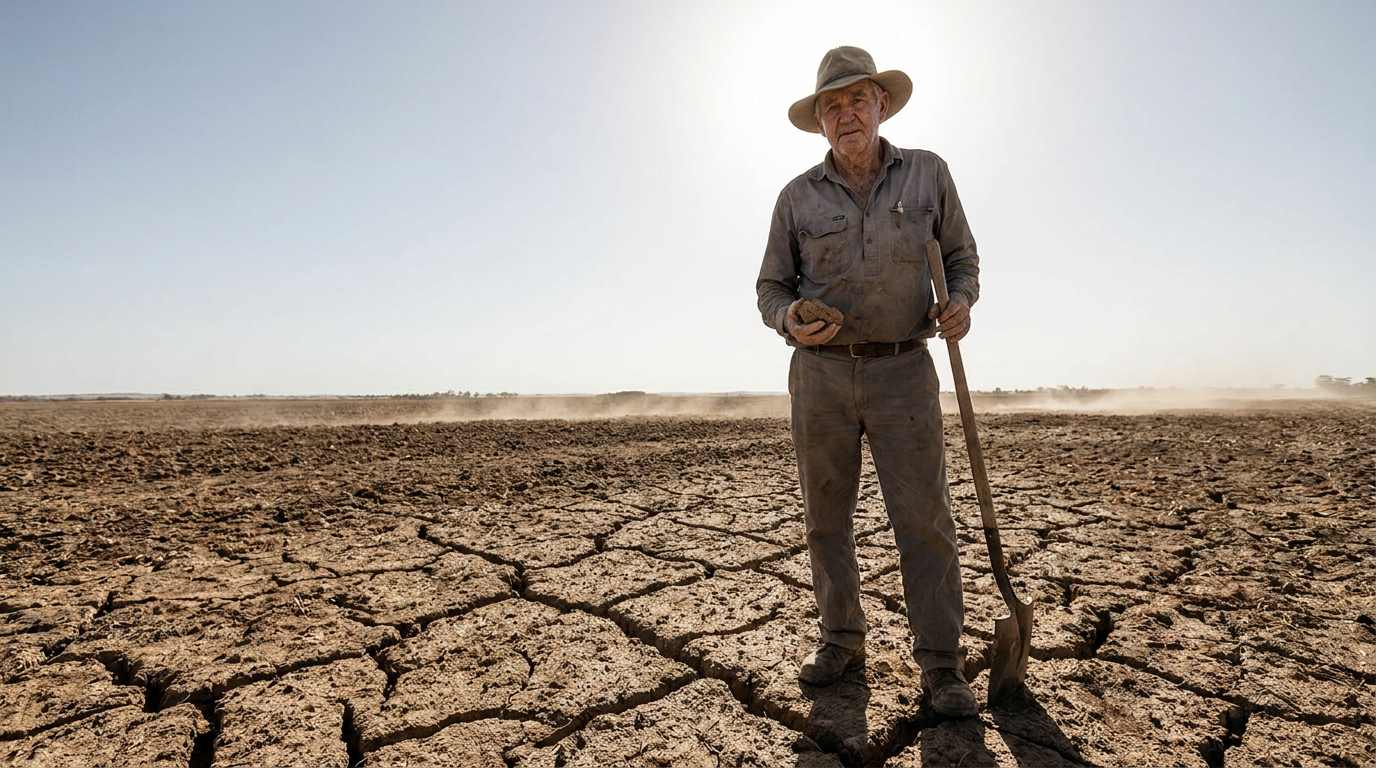
A severe El Niño threatens to disrupt global food supplies, trigger extreme weather, and displace millions in already vulnerable regions. The UN's shift toward 'anticipatory action' represents a critical test of whether the international community can fund disaster prevention rather than just reacting to famines after they occur.
Key points
- The FAO and WFP launched a $202 million appeal to protect 8.8 million people from El Niño.
- The WMO forecasts an 80% chance of El Niño emerging between June and August 2026.
- Funds will support 'anticipatory action' like cash assistance and drought-resistant seeds.
- May 2026 was the second warmest May on record, with exceptionally high ocean temperatures.
- 22 high-risk countries across Africa, Asia, and Latin America are targeted for immediate intervention.
- El Niño is expected to bring severe droughts to some regions and intense flooding to others.
With global temperatures already shattering records and ocean waters warming at an unprecedented pace, the United Nations has issued an urgent warning: a potentially devastating El Niño is forming, and the window to protect millions of lives is rapidly closing. In an unprecedented move, the Food and Agriculture Organization (FAO) and the World Food Programme (WFP) have launched a joint $202 million "Anticipatory Action Appeal" to shield 8.8 million people across 22 high-risk countries from the impending climate shock.[1][3][4]
The appeal marks a structural shift in how the international community handles climate disasters, moving away from reacting to famines after they unfold and toward financing preventative measures before the weather turns. The funds are designed to be deployed immediately, allowing agencies to distribute drought-tolerant seeds, reinforce flood defenses, and provide direct cash assistance to vulnerable households before agricultural seasons are disrupted.[3][4]
The urgency is driven by alarming new data from the World Meteorological Organization (WMO), which estimates an 80 percent probability that El Niño conditions will fully emerge between June and August 2026. That likelihood rises to 90 percent by November. Unusually warm subsurface waters in the central and eastern equatorial Pacific have created a massive reservoir of heat, prompting the WMO to warn that the event will likely reach at least moderate strength, with the potential to become severe.[2]

This developing El Niño arrives against a backdrop of already extreme global heat. The European Union's Copernicus Climate Change Service confirmed that May 2026 was the second warmest May on record globally, trailing only 2024. Global average surface air temperatures sat 1.42°C above the pre-industrial average, while sea surface temperatures reached exceptionally high levels. Western Europe has already endured an unusually early and intense heatwave, which scientists view as a harbinger of the extreme weather the new climate baseline will produce.[5][7]
This developing El Niño arrives against a backdrop of already extreme global heat.
Climate scientists emphasize that while El Niño is a natural phenomenon, its impacts are now supercharged by human-induced global warming. The combination of a warming baseline and a strong El Niño acts as "fuel on the fire," increasing the likelihood of fierce heatwaves, prolonged droughts, and catastrophic flooding. Researchers warn that the climate system is accumulating heat faster than at any time in the known record, pushing the planet dangerously close to the 1.5°C threshold.[2][6]

The humanitarian consequences of these shifting weather patterns are expected to be severe. The FAO and WFP have identified 22 priority countries across Africa, Asia, the Pacific, and Latin America that face the greatest risk. Southern Africa and Central America are bracing for significantly drier conditions that could decimate harvests, while the Horn of Africa and parts of Asia face an elevated risk of intense storms and flooding.[3][4]
These climate shocks will hit regions already buckling under the weight of acute food insecurity, economic instability, and ongoing conflicts. In Africa alone, extreme weather events affected at least 13 million people in 2025, with severe flooding in Nigeria and the Democratic Republic of the Congo claiming hundreds of lives. Aid agencies warn that without immediate anticipatory funding, the compounding crises could push millions of families beyond their coping limits.[1][4]

Beyond the immediate humanitarian toll, economic analysts are urging governments and markets to treat the impending El Niño as a major global economic risk. Shifting rainfall patterns threaten to disrupt global agricultural supply chains and strain critical infrastructure. Analysts are closely monitoring key trade routes, such as the Panama Canal, where prolonged drought conditions could eventually force transit restrictions, echoing the logistical bottlenecks seen during previous severe El Niño events.[8]
For the UN agencies leading the appeal, the math is straightforward: investing in preparedness is vastly more effective and less costly than funding emergency relief after a disaster strikes. However, the appeal arrives at a challenging moment for global humanitarian operations, which are already stretched thin by rising needs and constrained budgets. The success of the $202 million initiative will depend on whether donor nations are willing to finance prevention in a world increasingly defined by perpetual crisis.[1][3]
How we got here
Late 2023 - Early 2024
A strong El Niño event contributes to 2024 becoming the hottest year on record.
April - May 2026
Sea surface temperatures in the central and eastern equatorial Pacific rapidly approach El Niño thresholds.
June 2026
Copernicus confirms May 2026 was the second warmest May on record globally.
June 18, 2026
The FAO and WFP launch their first-ever joint Anticipatory Action Appeal for $202 million.
August - November 2026
WMO forecasts an 80% to 90% probability that El Niño conditions will be fully established.
Viewpoints in depth
Humanitarian Agencies
UN organizations argue that funding disaster prevention is a moral and economic imperative.
Agencies like the FAO and WFP stress that the traditional model of humanitarian aid—waiting for a crisis to peak before surging funds—is no longer viable in a warming world. By utilizing advanced meteorological forecasting, they argue that the international community can deploy 'anticipatory action' such as cash transfers and resilient seeds months before a harvest fails. They point to data showing that early interventions are significantly cheaper and vastly more effective at preserving human life and dignity than emergency famine relief.
Climate Scientists
Researchers focus on the unprecedented baseline temperatures amplifying the El Niño effect.
The scientific community emphasizes that while El Niño is a cyclical, natural phenomenon, it is now occurring on top of a drastically altered climate baseline. Organizations like Copernicus and the WMO point to the fact that oceans have been absorbing record amounts of heat, creating a massive thermal reservoir. Scientists warn that this combination makes extreme weather events—from European heat domes to African droughts—both more likely and more severe, pushing global average temperatures dangerously close to the 1.5°C Paris Agreement threshold.
Economic & Trade Analysts
Market watchers view the impending weather shift as a major macroeconomic risk.
For economic analysts, a strong El Niño represents a systemic threat to global supply chains and agricultural markets. They note that shifting rainfall patterns can decimate crop yields in major exporting regions, driving up global food prices and exacerbating inflation. Furthermore, analysts warn that prolonged droughts in critical transit corridors, such as the Panama Canal, could force shipping restrictions, creating logistical bottlenecks that ripple through the global economy long after the weather event has peaked.
What we don't know
- The exact peak intensity of the developing El Niño remains uncertain, though models suggest it will be at least moderate.
- It is unclear if donor nations will fully fund the $202 million anticipatory appeal before the operational window closes.
- The precise regional distribution of the most severe weather impacts will depend on how the El Niño interacts with other climate drivers like the Indian Ocean Dipole.
Key terms
- El Niño
- A natural climate pattern characterized by unusually warm ocean temperatures in the central and eastern Pacific, which alters global weather patterns.
- Anticipatory Action
- A humanitarian strategy that uses weather forecasts and risk analysis to trigger funding and interventions before a disaster strikes.
- Sea Surface Temperature Anomaly
- The difference between the current temperature of the ocean's surface and the long-term historical average for that specific location and time of year.
- Pre-industrial Average
- The baseline global temperature recorded between 1850 and 1900, used by scientists to measure how much the Earth has warmed due to human activity.
Frequently asked
What is the UN's anticipatory action appeal?
It is a $202 million funding request by the FAO and WFP to provide preventative aid—such as drought-resistant seeds and cash—to 8.8 million people before El Niño causes severe weather damage.
When is El Niño expected to hit?
The World Meteorological Organization estimates an 80% chance that El Niño conditions will emerge between June and August 2026, with a 90% chance it will persist into November.
Which regions are most at risk?
The UN has identified 22 priority countries. Southern Africa and Central America face high risks of severe drought, while the Horn of Africa and parts of Asia are at risk of intense flooding.
How does global warming affect El Niño?
While El Niño is a natural cycle, it is now occurring on top of a warmer global baseline. Scientists warn this combination intensifies the severity of heatwaves, droughts, and storms.
Sources
Source coverage
8 outlets
3 viewpoints surfaced







[1]UN NewsHumanitarian Organizations
Climate shocks accelerating as El Niño threat looms over already vulnerable regions
Read on UN News →[2]WMOClimate Scientists
WMO: Prepare for El Niño
Read on WMO →[3]FAOHumanitarian Organizations
Joint FAO/WFP News Release: El Niño Anticipatory Action Appeal
Read on FAO →[4]WFPHumanitarian Organizations
FAO and WFP issue an appeal for anticipatory action at scale
Read on WFP →[5]CopernicusClimate Scientists
May 2026 was second warmest May on record, Copernicus says
Read on Copernicus →[6]Inside Climate NewsClimate Scientists
Scientists Warn of Summer Heat Spikes as Global Warming Edges Toward 2C
Read on Inside Climate News →[7]Down To EarthEconomic & Trade Analysts
Early, intense European heatwaves and record Pacific warmth signal El Niño's advance
Read on Down To Earth →[8]Edge ConsultancyEconomic & Trade Analysts
El Niño should be treated as a global economic risk
Read on Edge Consultancy →
More in news politics
See all 5 stories →US-Iran Truce
US-Iran Peace Talks in Switzerland Postponed Amid Renewed Lebanon Clashes
10 sources

US-Iran Deal
US-Iran Talks in Switzerland Postponed as Trump's Peace Deal Faces Domestic and Regional Backlash
8 sources

US-Iran Deal
US-Iran Peace Talks Postponed as Regional Violence Flares and Hormuz Remains Mined
8 sources

Every angle. Every day.
Get news politics stories with full source coverage and perspective breakdowns delivered to your inbox.