
Inside Formula 1's 2026 Engine Revolution: The Race to 100% Sustainable Fuel
Formula 1 is overhauling its regulations in 2026, mandating that all cars run on 100% advanced sustainable fuels in a bid to decarbonize the internal combustion engine.
By Factlen Editorial Team
- Fuel & Energy Suppliers
- View the regulations as a high-speed R&D laboratory to develop and eventually scale drop-in synthetic fuels for global consumer vehicles.
- Motorsport Governing Bodies
- Focused on achieving net-zero emissions by 2030 while maintaining the sport's high-performance spectacle and technical relevance.
- Environmental Analysts
- Cautiously optimistic but emphasize the massive renewable energy requirements needed to produce synthetic fuels at a commercial scale.
What's not represented
- · Electric Vehicle Advocates
- · Consumer Road Car Manufacturers
Why this matters
Formula 1's mandate to use 100% sustainable fuels by 2026 serves as a high-speed laboratory for decarbonizing the internal combustion engine. If successful, this 'drop-in' synthetic fuel technology could eventually be scaled to power the 1.4 billion existing gas-powered cars on the road today, offering a parallel climate solution alongside electric vehicles.
Key points
- Formula 1 will mandate 100% Advanced Sustainable Fuel (ASF) for all cars starting in the 2026 season.
- The synthetic fuel is a 'drop-in' solution, meaning it works in existing internal combustion engines without modifications.
- The fuel is created by combining green hydrogen with carbon captured from the air, municipal waste, or non-food biomass.
- The 2026 power units will feature a 50/50 power split between the combustion engine and a vastly upgraded electrical system.
- The FIA has introduced strict auditing to trace fuel origins and prevent 'greenwashing' via mass balancing.
- Energy suppliers hope to use F1 as a testbed to eventually scale these fuels for the 1.4 billion passenger cars globally.
The 2026 Formula 1 season marks the most sweeping regulatory reset in the sport's 76-year history. While the introduction of active aerodynamics and a radically redesigned hybrid power unit have dominated the headlines, the most consequential change is entirely invisible to the naked eye.[1][6]
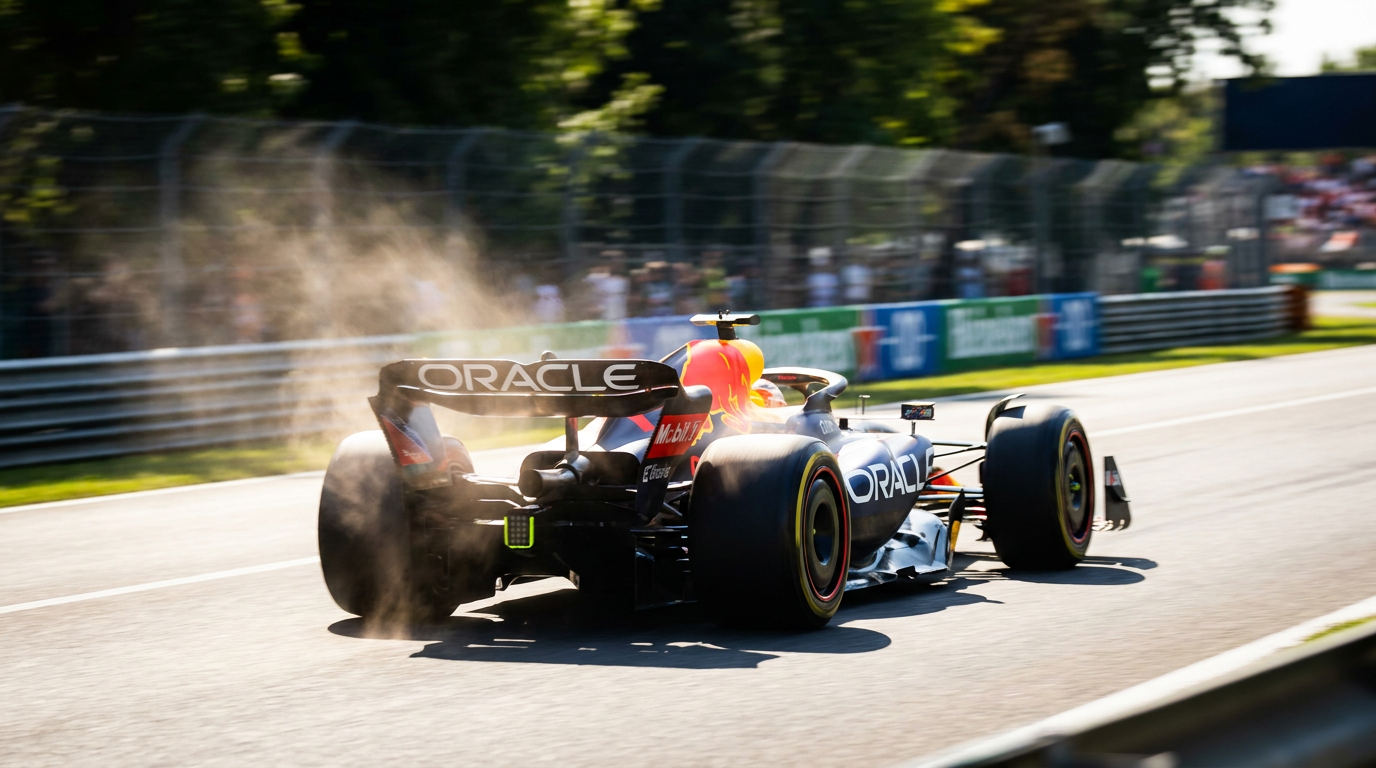
Starting in 2026, every car on the Formula 1 grid will be powered by 100% Advanced Sustainable Fuel (ASF). This mandate represents a fundamental shift for the pinnacle of motorsport, transitioning the series away from fossil fuels while maintaining the high-revving, visceral spectacle of the internal combustion engine.[1][3]
The new fuel regulations are not merely a sustainability initiative; they are a fiercely contested performance battleground. Because the 2026 rules cap the energy density and flow rate of the fuel, manufacturers are engaged in a quiet development war to engineer blends that maximize combustion efficiency, power delivery, and thermal reliability.[1][5]
To understand the significance of this shift, it is essential to define what Advanced Sustainable Fuel actually is. Unlike conventional petrol derived from crude oil, F1's 2026 fuel is entirely synthetic. It is engineered by extracting carbon from existing sources—such as municipal waste, non-food biomass, or direct air carbon capture—and combining it with green hydrogen.[1][4]

This closed-loop process ensures that no new fossil carbon is introduced into the atmosphere. When the fuel is burned on the track, the carbon emitted is simply returning to the cycle from which it was recently extracted, rendering the combustion process net-zero.[3][4]
Crucially, these are "drop-in" fuels. They are chemically designed to mimic the properties of traditional fossil fuels, meaning they can be used in high-performance internal combustion engines without requiring any structural modifications to the power unit.[1][2]
This drop-in capability is the linchpin of Formula 1's broader technological philosophy. Rather than committing exclusively to battery electrification, the sport is betting that decarbonizing the liquid fuel itself is a parallel and necessary pathway to reducing global emissions.[2][5]
The engineering challenge is immense. Fuel chemists at companies like Aramco and Petronas are cherry-picking specific molecules to create bespoke blends that meet the FIA's strict specifications. These blends must withstand extreme temperatures and pressures while delivering the explosive power required to propel a car to 220 miles per hour.[2][5]

Fuel chemists at companies like Aramco and Petronas are cherry-picking specific molecules to create bespoke blends that meet the FIA's strict specifications.
The fuel must also operate in harmony with the radically altered 2026 power units. The 1.6-liter V6 turbocharged engine remains, but the complex Motor Generator Unit-Heat (MGU-H) has been eliminated. In its place, the electrical output from the Motor Generator Unit-Kinetic (MGU-K) has been nearly tripled, jumping from 120 kilowatts to 350 kilowatts.[4][6]
This creates a roughly 50/50 power split between the internal combustion engine and the electrical system. Because the electrical system will deploy and harvest massive amounts of energy, the internal combustion engine will frequently act as a generator, requiring the sustainable fuel to perform efficiently across a much wider range of operating windows.[3][6]
The efficiency gains are staggering. A decade ago, a Formula 1 car consumed approximately 160 kilograms of fuel per race. Under the 2026 regulations, that allowance is expected to drop to just 70 kilograms, demanding unprecedented thermal efficiency from both the engine and the synthetic fuel.[4][6]

To prevent "greenwashing" and ensure the integrity of the initiative, the FIA has implemented one of the most rigorous auditing frameworks in global sports. Partnering with independent verification bodies, the governing body established the Sustainable Racing Fuel Assurance Scheme (SRFAS).[3][5]
This scheme mandates that every component of the fuel be traced back to its origin. Furthermore, the FIA has explicitly banned "mass balancing"—a common industry practice where manufacturers mix fossil and renewable materials in the same production system and allocate the renewable credits on paper. In F1, the physical fuel in the tank must be 100% sustainable.[4][7]
The ultimate goal extends far beyond the racetrack. With more than 1.4 billion internal combustion engine vehicles currently on the world's roads, transitioning the global fleet entirely to electric vehicles will take decades.[2][3]
Formula 1 and its energy partners view the 2026 regulations as a high-speed laboratory. By proving that synthetic drop-in fuels can deliver elite performance under the most demanding conditions imaginable, they hope to accelerate the commercialization and scaling of these fuels for everyday passenger cars.[2][5]

However, significant hurdles remain before synthetic fuels can reach the mass market. The production process—particularly electrolysis for green hydrogen and direct air carbon capture—is currently highly energy-intensive and expensive.[1][3]
For these fuels to be genuinely sustainable at scale, the massive amounts of electricity required to produce them must come entirely from renewable sources like wind and solar. If the production grid relies on fossil fuels, the environmental benefits of the synthetic fuel are entirely negated.[1][3]
Despite these scaling challenges, Formula 1's 2026 regulations represent a vital proof of concept. By forcing the world's brightest automotive engineers to solve the puzzle of sustainable combustion, the sport is ensuring that its technological legacy will continue to shape the future of global transportation.[1][7]
How we got here
2014
Formula 1 introduces the 1.6-liter V6 turbo hybrid power units, beginning the sport's push toward greater energy efficiency.
2020
The FIA announces its goal for Formula 1 to achieve a net-zero carbon footprint by the year 2030.
2022
F1 transitions to E10 fuel, a blend consisting of 90% fossil fuels and 10% renewable ethanol.
2023
Formula 2 and Formula 3 begin testing sustainable fuels, successfully running cars on blends provided by Aramco.
March 2026
The new engine regulations take effect, requiring all Formula 1 cars to race on 100% Advanced Sustainable Fuel.
Viewpoints in depth
Motorsport Governing Bodies
Focused on achieving net-zero emissions by 2030 while maintaining the sport's high-performance spectacle and technical relevance.
For the FIA and Formula 1 management, the 2026 regulations are an existential necessity. By mandating 100% sustainable fuels, the governing bodies aim to prove that the internal combustion engine still has a place in a decarbonizing world. They argue that maintaining the visceral sound and fury of a combustion engine is essential to the sport's entertainment value, but it can only be justified if the emissions are net-zero. The strict auditing framework, including the ban on mass balancing, is their mechanism to ensure the sport's environmental claims withstand global scrutiny.
Fuel & Energy Suppliers
View the regulations as a high-speed R&D laboratory to develop and eventually scale drop-in synthetic fuels for global consumer vehicles.
Energy giants like Aramco and Petronas see Formula 1 as the ultimate stress test for their chemical engineering. Because the 2026 rules cap fuel flow and total race allowance, these companies are forced to extract maximum thermal efficiency from every drop of synthetic fuel. Their broader argument is that while electric vehicles are the future of new car sales, the 1.4 billion gas-powered cars already on the road require an immediate decarbonization solution. They believe the drop-in fuels perfected on the racetrack will eventually be pumped into everyday passenger cars.
Environmental Analysts
Cautiously optimistic but emphasize the massive renewable energy requirements needed to produce synthetic fuels at a commercial scale.
Climate scientists and environmental analysts acknowledge the technical achievement of F1's closed-loop carbon cycle, but they frequently point to the immense energy intensity of the production process. Creating green hydrogen via electrolysis and capturing carbon directly from the atmosphere requires vast amounts of electricity. Analysts argue that unless this electricity is sourced entirely from wind, solar, or nuclear power, the synthetic fuels are not truly sustainable. They caution that while e-fuels are perfect for niche applications like motorsport or aviation, they may be too expensive and inefficient to scale for the global passenger car market.
What we don't know
- Whether the cost of producing synthetic e-fuels will ever drop low enough to make them commercially viable for everyday drivers.
- How the new 50/50 power split between combustion and electrical energy will affect the quality of wheel-to-wheel racing on track.
- If the global renewable energy grid can expand fast enough to support the massive electricity demands of scaling e-fuel production.
Key terms
- Advanced Sustainable Fuel (ASF)
- A synthetic fuel made from non-food biomass, municipal waste, or captured carbon that introduces no new fossil carbon into the atmosphere when burned.
- Drop-in Fuel
- A renewable or synthetic fuel that can be used interchangeably with conventional petroleum fuels in existing engines and infrastructure.
- MGU-K
- Motor Generator Unit-Kinetic; a component of the hybrid engine that recovers energy generated under braking and converts it into electrical power.
- Mass Balancing
- An accounting method in manufacturing where fossil and renewable materials are mixed, and sustainability credits are allocated on paper; this practice is banned under F1's 2026 rules.
Frequently asked
What is a drop-in fuel?
A drop-in fuel is a synthetic alternative designed to be chemically identical to traditional fossil fuels, meaning it can be used in existing internal combustion engines without requiring any modifications.
Will the 2026 F1 cars still have combustion engines?
Yes. The cars will continue to use a 1.6-liter V6 turbocharged internal combustion engine, but it will be paired with a much more powerful electrical system, creating a 50/50 power split.
Where does the carbon in sustainable fuel come from?
The carbon is extracted from existing sources, such as municipal waste, non-food biomass (like agricultural stalks), or captured directly from the atmosphere or industrial emissions.
Does this mean F1 cars will be slower?
No. The advanced sustainable fuels are engineered for elite performance, and the massive increase in electrical power (up to 350kW) ensures the cars will remain incredibly fast and agile.
Sources
Source coverage
7 outlets
3 viewpoints surfaced







[1]Formula 1 OfficialMotorsport Governing Bodies
2026 REGULATIONS EXPLAINED: All you need to know about F1's Advanced Sustainable Fuels
Read on Formula 1 Official →[2]AramcoFuel & Energy Suppliers
Formula 1 with Aramco: Fueling progress on the racetrack
Read on Aramco →[3]BBC Science FocusEnvironmental Analysts
F1 is switching to 100% sustainable fuel. But is it just greenwashing?
Read on BBC Science Focus →[4]Sustain FuelsFuel & Energy Suppliers
F1 2026 Regulations: What they mean for sustainable fuel
Read on Sustain Fuels →[5]SectorFuel & Energy Suppliers
Formula 1's 2026 sustainable fuel regulations explained
Read on Sector →[6]Coffee Corner MotorsportMotorsport Governing Bodies
F1 2026 Rules Explained: What’s Changing and Why It Matters
Read on Coffee Corner Motorsport →[7]Factlen Editorial TeamEnvironmental Analysts
Synthesis by Factlen editorial team
Read on Factlen Editorial Team →

More in sports
See all 6 stories →Climate Tech
How All-Weather Snowmaking is Saving the Ski Industry from Climate Change
6 sources

Esports Accessibility
How Adaptive Technology is Transforming Competitive Esports
6 sources

Fixture Release
Premier League Unveils 2026/27 Fixtures With Focus on Player Welfare and New Managerial Eras
7 sources

NBA Finals
New York Knicks Win 2026 NBA Finals, Ending 53-Year Championship Drought
6 sources

Every angle. Every day.
Get sports stories with full source coverage and perspective breakdowns delivered to your inbox.