
The Neuroscience of Swimming: How the Water Reshapes the Brain
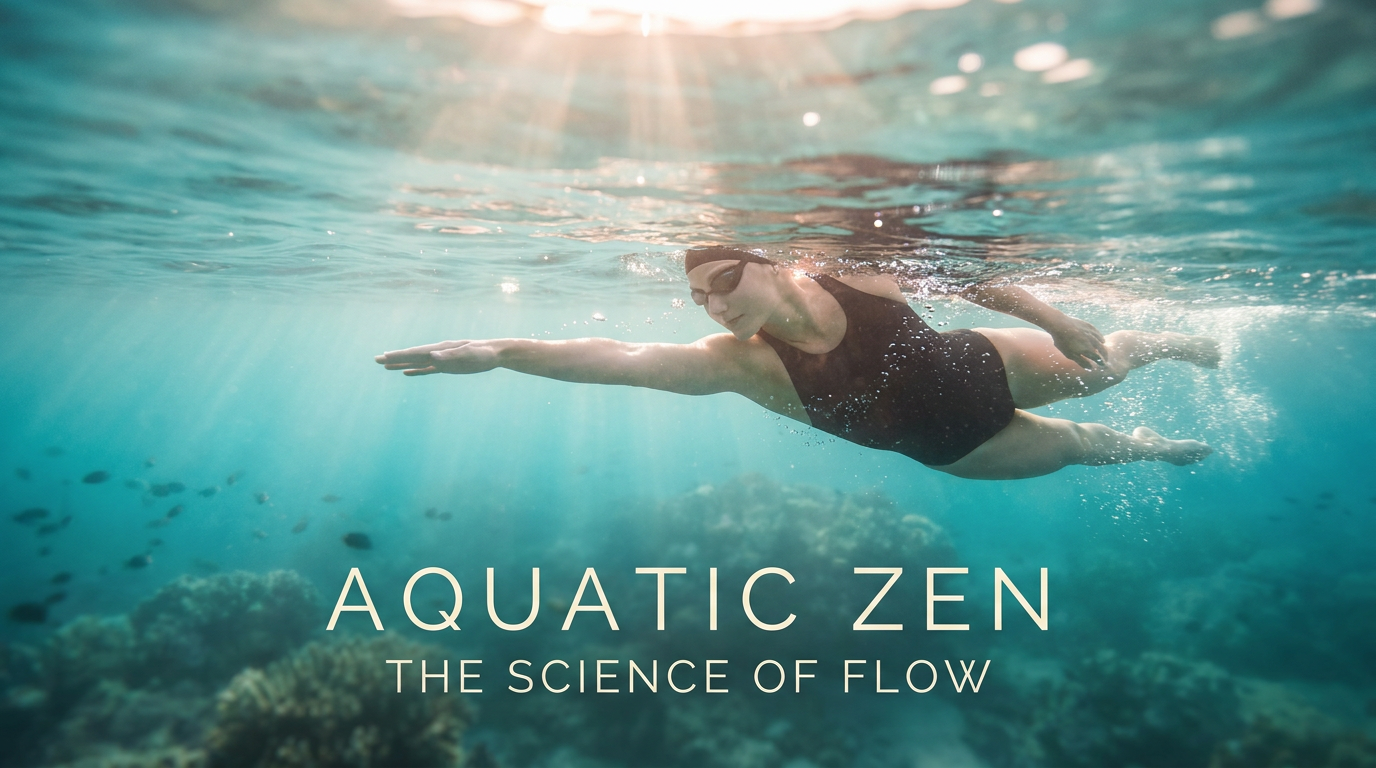
Emerging research reveals that swimming does more than build cardiovascular endurance—it actively stimulates the creation of new neurons, enhances memory, and protects against cognitive decline.
By Factlen Editorial Team
- Neurobiology Researchers
- Focuses on the cellular and molecular changes in the brain triggered by aquatic exercise.
- Gerontologists & Aging Specialists
- Views swimming primarily as a non-pharmacological tool to delay cognitive decline.
- Sports & Clinical Psychologists
- Highlights the acute mental health benefits and the psychological impact of the water environment.
What's not represented
- · Land-based athletes comparing cognitive benefits
- · Public health officials focused on pool accessibility
Why this matters
Understanding how aquatic exercise changes the brain offers a powerful, non-pharmacological tool for improving mental health, boosting daily focus, and protecting against age-related cognitive decline.
Key points
- Swimming stimulates neurogenesis, the creation of new neurons in the brain's memory centers.
- The exercise triggers the release of BDNF, a protein crucial for neuronal survival and growth.
- Older adults who swim regularly maintain larger brain volumes and face a lower risk of Alzheimer's.
- The complex coordination required for swimming actively engages and improves executive functions.
- Water's buoyancy and sensory isolation induce a 'Blue Mind' state, significantly lowering stress and anxiety.
Swimming is widely celebrated for its low-impact cardiovascular benefits, but a growing body of neurobiological research suggests its most profound effects may actually occur above the neck.[5]
While all aerobic exercise benefits the central nervous system, swimming uniquely combines sensory isolation, rhythmic breathing, and complex bilateral motor coordination. This combination creates an environment that not only builds physical endurance but actively reshapes the brain's architecture.[5]
At the cellular level, regular swimming has been shown to stimulate neurogenesis—the creation of new neurons. This growth occurs predominantly in the hippocampus, the brain region responsible for memory consolidation and learning.[3]
The primary driver of this structural brain growth is a protein called Brain-Derived Neurotrophic Factor (BDNF). Often described by neuroscientists as a biological fertilizer for the brain, BDNF supports the survival of existing neurons and encourages the growth of new synapses.[3]

Studies examining the effects of swimming on chronic stress reveal that the exercise significantly induces the expression of BDNF and its downstream peptides. In animal models, this neurotrophic boost effectively reversed stress-induced neural atrophy, demonstrating a clear antidepressant effect.[4]
This neurobiological resilience has profound implications for cognitive aging. As populations age globally, cerebral decline represents a predominant cause of autonomy loss, making non-pharmacological interventions increasingly critical.[1]
Research published in the Journal of Alzheimer's Disease tracked older adults over several years, finding that those who engaged in regular calorie-burning activities like swimming maintained significantly more robust brain volume in areas critical for memory and thinking.[2]
The longitudinal data revealed that these highly active individuals were half as likely to develop Alzheimer's disease over a five-year period compared to their sedentary peers, underscoring the protective power of aquatic exercise.[2]
Beyond long-term neuroprotection, swimming also sharpens immediate executive function. A cross-sectional study using a multitask approach found that older adults who swam regularly performed significantly better on tests of behavioral inhibition, working memory updating, and cognitive flexibility.[1]

Beyond long-term neuroprotection, swimming also sharpens immediate executive function.
The cognitive load required to swim contributes heavily to these benefits. Unlike running or cycling on a stationary bike, swimming requires constant, conscious coordination of the upper and lower body, synchronized with precise breath control.[5]
This continuous cross-hemisphere communication forces the brain to actively engage its executive functions. The swimmer must constantly process spatial awareness, water resistance, and timing, essentially providing a rigorous cognitive workout alongside the physical one.[5]
Furthermore, the unique physical environment of water plays a crucial role in mental health. The buoyancy of water reduces sensory input and gravitational pull, creating a mildly meditative state often referred to by environmental psychologists as the "Blue Mind" effect.[5]

This sensory relief lowers cortisol levels and quiets the sympathetic nervous system, providing an acute psychological reset that land-based exercises, which often involve high impact and environmental noise, struggle to match.[5]
Animal models further support these mood-regulating benefits. Rodents exposed to chronic unpredictable mild stress showed significant improvements in depressive symptoms and memory retention after a regimen of regular swimming, highlighting the water's therapeutic potential.[4]

Crucially, the neurological benefits of swimming are accessible across the human lifespan. From toddlers developing bilateral coordination to seniors preserving critical brain volume, the water offers a scalable, low-impact environment for cognitive enhancement.[5]
As researchers continue to map the intricate relationship between physical movement and brain health, the pool is increasingly viewed not just as a place for athletic conditioning, but as a vital therapeutic space for building lifelong neurological resilience.[5]
How we got here
1990s
Researchers first confirm that adult human brains can generate new neurons (neurogenesis), overturning decades of neurological dogma.
2014
The concept of 'Blue Mind' is popularized, linking the physical properties of water to measurable reductions in human stress and anxiety.
2016
A landmark multi-year study links regular aerobic activities like swimming to a 50% reduction in Alzheimer's risk among older adults.
2021
Cross-sectional studies confirm that regular swimming specifically enhances executive functions and behavioral inhibition in aging populations.
Viewpoints in depth
Neurobiology Researchers
Focuses on the cellular and molecular changes in the brain triggered by aquatic exercise.
This camp emphasizes the role of Brain-Derived Neurotrophic Factor (BDNF) and neurogenesis. Researchers point to evidence showing that swimming actively stimulates the growth of new neurons in the hippocampus and subventricular zone. For neurobiologists, the pool is essentially a laboratory for synaptic plasticity, where the combination of aerobic exertion and motor coordination creates the ideal chemical environment for brain growth and resilience against stress-induced neural atrophy.
Gerontologists & Aging Specialists
Views swimming primarily as a non-pharmacological tool to delay cognitive decline.
Aging specialists focus on the macroscopic benefits of swimming, particularly the preservation of brain volume. They highlight longitudinal studies showing that regular swimmers maintain better executive function, working memory, and cognitive flexibility as they age. For this group, the low-impact nature of swimming makes it the perfect lifelong intervention to ward off dementia and Alzheimer's disease, offering a sustainable way to maintain autonomy in later life.
Sports & Clinical Psychologists
Highlights the acute mental health benefits and the psychological impact of the water environment.
Psychologists emphasize the 'Blue Mind' effect—the meditative state induced by water's buoyancy and sensory isolation. They argue that swimming offers a unique psychological reset by lowering cortisol levels and quieting the sympathetic nervous system. From this perspective, the rhythmic breathing and cross-hemisphere coordination required in swimming serve as a form of moving mindfulness, providing immediate relief from anxiety and depression.
What we don't know
- The exact optimal dosage (duration and frequency) of swimming required to maximize neurogenesis.
- How the cognitive benefits of swimming directly compare to other highly coordinated aerobic exercises like dance or martial arts in controlled, head-to-head trials.
Key terms
- Neurogenesis
- The process by which new neurons are formed in the brain, particularly in the hippocampus.
- BDNF (Brain-Derived Neurotrophic Factor)
- A protein that acts like fertilizer for the brain, promoting the survival of existing neurons and the growth of new connections.
- Hippocampus
- A complex brain structure embedded deep into the temporal lobe that plays a major role in learning and memory.
- Executive Function
- A set of mental skills that include working memory, flexible thinking, and self-control, required for managing daily life.
- Blue Mind
- A mildly meditative state characterized by calm, peacefulness, and general happiness triggered by being in, on, or under water.
Frequently asked
How long do I need to swim to see cognitive benefits?
Studies suggest that even a single 20-minute session of moderate-intensity swimming can provide an acute boost to cognitive performance and focus.
Does the stroke I swim matter for brain health?
While any aerobic swimming boosts blood flow, complex strokes that require bilateral coordination and rhythmic breathing, like freestyle or breaststroke, provide the highest cognitive load and executive function benefits.
Can swimming prevent Alzheimer's disease?
While no exercise guarantees prevention, research shows that older adults who engage in regular aerobic activities like swimming have significantly larger brain volumes in memory-critical areas and a lower risk of developing dementia.
Sources
Source coverage
5 outlets
3 viewpoints surfaced





[1]National Center for Biotechnology InformationGerontologists & Aging Specialists
Swimming as a Positive Moderator of Cognitive Aging: A Cross-Sectional Study with a Multitask Approach
Read on National Center for Biotechnology Information →[2]Journal of Alzheimer's DiseaseGerontologists & Aging Specialists
Swim, Jog or Dance: Any Activity Is Good for the Brain
Read on Journal of Alzheimer's Disease →[3]Frontiers in Cellular NeuroscienceNeurobiology Researchers
Exercise-Mediated Neurogenesis in the Hippocampus via BDNF
Read on Frontiers in Cellular Neuroscience →[4]Neural PlasticityNeurobiology Researchers
The Impacts of Swimming Exercise on Hippocampal Expression of Neurotrophic Factors in Rats Exposed to Chronic Unpredictable Mild Stress
Read on Neural Plasticity →[5]Factlen Editorial TeamSports & Clinical Psychologists
Synthesis by Factlen editorial team
Read on Factlen Editorial Team →
Every angle. Every day.
Get fitness stories with full source coverage and perspective breakdowns delivered to your inbox.