
The 120V Revolution: How Heat Pump Washer-Dryer Combos Actually Work
A new generation of all-in-one laundry machines uses heat pump technology to wash and dry clothes in a single cycle, plugging into a standard wall outlet and requiring no exhaust vent.
By Factlen Editorial Team
- Energy & Electrification Advocates
- Organizations focused on reducing residential carbon footprints and grid strain.
- Appliance Manufacturers
- The companies designing and marketing the new heat pump technology.
- Consumer Tech Reviewers
- Independent testers evaluating appliance performance and usability.
- Appliance Repair Technicians
- The professionals who service and maintain residential laundry machines.
What's not represented
- · Large households doing 5+ loads of laundry per week
- · Landlords managing multi-family rental properties
Why this matters
These machines eliminate the need for 240V wiring and exterior ductwork, making it possible to install full-size laundry anywhere with a water line, while cutting drying energy use by up to 50%.
Key points
- New all-in-one washer-dryer combos use heat pump technology to wash and dry clothes in a single, continuous cycle.
- The machines plug into a standard 120V household outlet, eliminating the need for a dedicated 240V circuit.
- Because they are ventless, they extract moisture by condensing it into water and draining it, requiring no exterior ductwork.
- Heat pump drying uses 40 to 50 percent less energy than traditional electric resistance dryers.
- Modern units feature full-size drums and can complete a wash-and-dry cycle in under two hours.
The traditional American laundry routine is defined by the transfer. You wash a load, wait for the chime, and haul the heavy, wet clothes into a separate dryer. If you forget, the clothes sit and sour, requiring a second wash.[8]
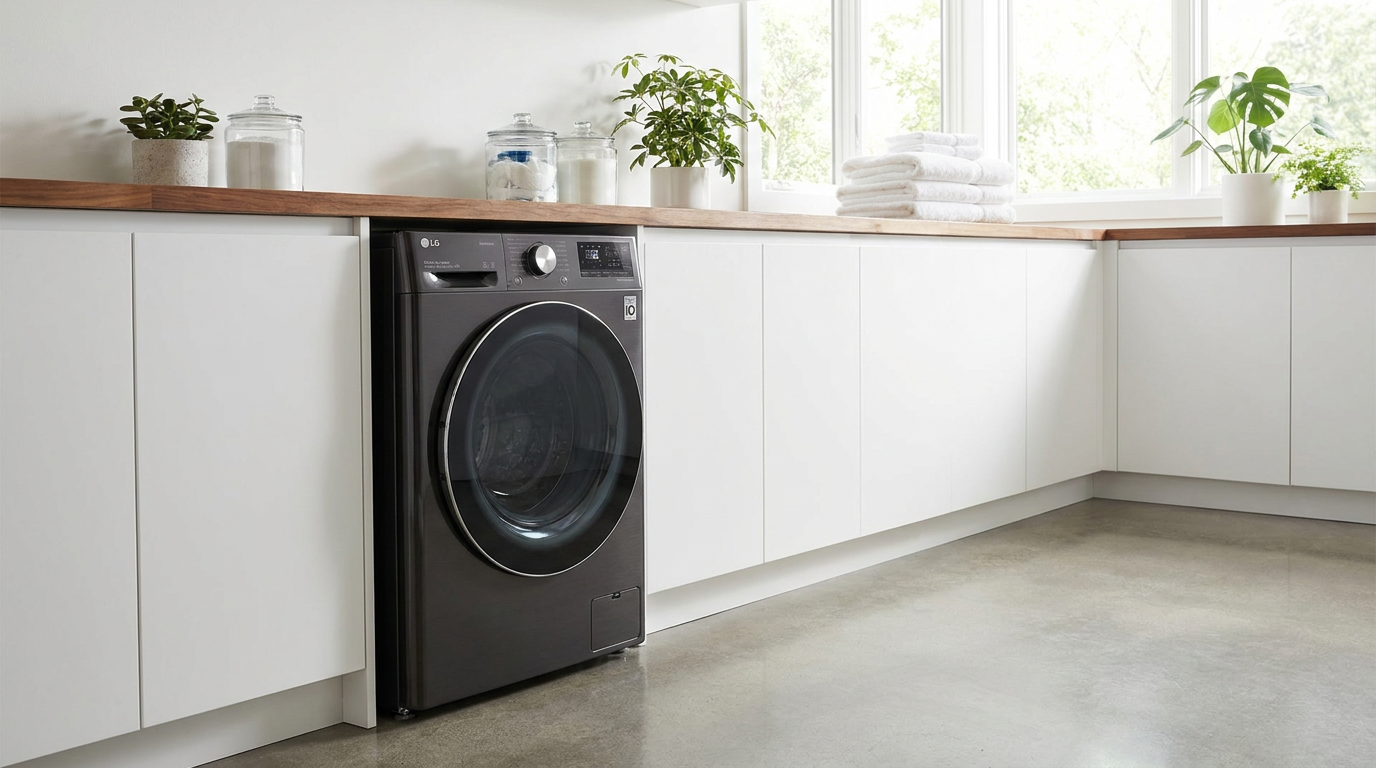
But a quiet revolution is reshaping the appliance aisle. A new generation of all-in-one washer-dryer combos has arrived, promising to handle both tasks in a single, continuous cycle. Unlike the tiny, underpowered combo units of the past, these new machines are full-sized and packed with advanced technology.[1][2]
The secret behind this leap forward is the integration of heat pump technology. By replacing the traditional electric heating element with a closed-loop heat pump, manufacturers like GE, LG, and Samsung have created machines that dry clothes efficiently without needing an exhaust vent.[1][2][5][6]
To understand the breakthrough, it helps to look at how conventional dryers operate. Traditional vented dryers—whether gas or electric—pull in room air, heat it to high temperatures, tumble it through the clothes, and then blow that hot, moisture-laden air outside through a duct.[3][4]
This conventional method is inherently wasteful. It literally blows heated air out of the house, forcing the home's heating system to work harder to replace it. Furthermore, traditional electric dryers require a dedicated 240-volt electrical circuit to power their energy-hungry resistance coils.[3][4]
Heat pump dryers operate on an entirely different principle, functioning essentially like an air conditioner in reverse. Instead of generating heat with a glowing coil, the machine uses a refrigerant system to capture and move heat.[3][4]

Inside the drum, the system pushes warm air through the tumbling clothes to extract moisture. That damp air is then passed over a cold evaporator coil, which condenses the moisture into liquid water. The water is simply pumped out through the same drain hose used by the washing machine.[3][4][7]
Because the air is recycled rather than exhausted, the system is remarkably efficient. According to energy advocates, heat pump dryers use 40 to 50 percent less energy than standard vented models.[3][5]

Because the air is recycled rather than exhausted, the system is remarkably efficient.
The elimination of the heating element also solves the voltage problem. These new full-size combo units plug into a standard 120-volt household outlet. This frees up valuable space in the home's electrical breaker box and eliminates the need to hire an electrician when upgrading a laundry room.[1][4]
The ventless design offers unprecedented architectural freedom. Without the need to route a four-inch exhaust duct to the exterior of the building, a washer-dryer can now be installed in a hallway closet, a kitchen, or a bathroom—anywhere with a standard outlet and a water connection.[4][5]

Historically, the American market rejected combo units because they were too small and too slow. Older condenser-based models often took up to five hours to finish a single load.[1]
The latest models have solved the capacity issue. Machines like the GE Profile UltraFast and the Samsung Bespoke AI boast drum capacities of 4.8 to 5.3 cubic feet, matching or exceeding standard standalone washers.[2][6]
Cycle times have also plummeted. In independent testing, modern heat pump combos can complete a full wash-and-dry cycle in roughly 85 to 120 minutes, depending on the load size and settings. While this is slightly longer than running two separate machines simultaneously, the "set it and forget it" convenience means users can start a load before work and return to dry clothes.[2][3][5]

Beyond convenience, the technology is gentler on fabrics. Because heat pumps dry clothes at lower temperatures than traditional resistance heaters, they cause less wear and tear on elastics and delicate fibers, extending the lifespan of the wardrobe.[1][6]
The machines also feature smart quality-of-life upgrades. Many include bulk detergent dispensers that hold enough soap for dozens of loads, automatically releasing the precise amount needed based on the load's weight and soil level.[1][5]
However, the transition is not without friction. Appliance repair technicians note that these machines are highly complex, combining the water systems of a washer with the sealed refrigerant systems of a refrigerator. If the heat pump fails, the user loses both their washer and their dryer at the same time.[7]
Maintenance is also critical. Because there is no exhaust vent to blow lint outside, all lint is captured in a multi-stage filter on the front of the machine. Users must be diligent about cleaning this filter after every cycle to maintain airflow and drying efficiency.[1][7]
Despite these maintenance requirements, the shift toward 120V heat pump combos represents one of the most significant appliance innovations in decades. By merging two chores into one and drastically cutting energy use, these machines are redefining the modern laundry day.[8]
How we got here
Pre-2023
Combo units in the US were mostly small, European-style condenser models that took up to five hours to dry a load.
Mid-2023
GE introduces the Profile UltraFast Combo, proving that a full-size, 120V heat pump unit could dry clothes quickly.
Jan 2024
LG unveils its WashCombo at CES, adding a direct-drive motor and built-in water heater to the 120V category.
Late 2024
Samsung releases the Bespoke AI Laundry Combo, pushing drum capacity to a massive 5.3 cubic feet.
Viewpoints in depth
Energy & Electrification Advocates
Organizations focused on reducing residential carbon footprints.
This camp views 120V heat pump combos as a critical tool for home electrification. By eliminating the need for a 240V circuit, these machines allow homeowners to upgrade from fossil gas dryers without triggering expensive electrical panel upgrades. Advocates emphasize that the 40 to 50 percent reduction in energy use significantly lowers grid strain during peak hours.
Appliance Manufacturers
The companies designing and marketing the new technology.
Manufacturers frame the all-in-one combo as the ultimate convenience upgrade. They highlight the 'set it and forget it' nature of the machines, arguing that eliminating the chore of transferring wet clothes gives users their weekends back. They also point to smart features like automatic detergent dispensing and app connectivity as proof that laundry is finally entering the modern smart-home era.
Consumer Tech Reviewers
Independent testers evaluating appliance performance.
Reviewers are largely enthusiastic but maintain a pragmatic focus on cycle times and usability. While they praise the massive leap in performance compared to older combo units, they note that a 2-hour wash-and-dry cycle is still slower than running two separate machines simultaneously. They often advise that these units are perfect for small families or apartments, but may create a bottleneck for large households doing multiple loads back-to-back.
Appliance Repair Technicians
The professionals who service and maintain laundry machines.
Technicians offer a more cautious perspective, warning about the complexity of combining water and sealed refrigerant systems in a single chassis. They emphasize that if the heat pump fails, the user loses both their washer and dryer at once. This camp strongly advocates for meticulous maintenance, particularly cleaning the lint filter after every cycle, to prevent airflow blockages that can damage the compressor.
What we don't know
- How the sealed heat pump compressors will hold up after 7 to 10 years of daily use, as the technology is still relatively new to the US market.
- Whether the high upfront cost ($1,500 to $3,000) will drop significantly as more competitors enter the 120V combo space.
Key terms
- Heat Pump
- A highly efficient system that moves heat from one place to another using a refrigerant cycle, rather than generating it from scratch.
- Ventless Dryer
- A dryer that extracts moisture by condensing it into liquid water and draining it away, eliminating the need for an exterior exhaust duct.
- Inverter Compressor
- A variable-speed motor that adjusts its power output based on demand, reducing both energy consumption and operating noise.
- 120V Outlet
- The standard electrical wall socket found throughout North American homes, as opposed to the heavy-duty 240V circuits required for traditional electric dryers.
Frequently asked
Can I wash a load without drying it?
Yes. All modern combo units allow you to run wash-only or dry-only cycles, giving you the flexibility to hang-dry delicate items.
Do I need a special electrical outlet?
No. Unlike traditional electric dryers that require a 240V circuit, these heat pump combos plug into a standard 120V household outlet.
Where does the lint go if there is no vent?
The lint is captured in a multi-stage filter located on the front of the machine, which must be manually cleaned by the user on a regular basis.
Will the machine heat up my laundry room?
Slightly, but much less than a traditional vented dryer. The heat pump system is mostly sealed, though some ambient warmth is released into the room.
Sources
Source coverage
8 outlets
4 viewpoints surfaced








[1]ElectrekConsumer Tech Reviewers
There is a revolution in all-in-one washer-dryers happening right now
Read on Electrek →[2]ReviewedConsumer Tech Reviewers
GE Profile vs. Samsung Bespoke: Which heat pump combo is best?
Read on Reviewed →[3]Rewiring AmericaEnergy & Electrification Advocates
Washer/heat pump dryer combo: what is it?
Read on Rewiring America →[4]Efficiency VermontEnergy & Electrification Advocates
Heat pump washer-dryers: Easy installation, safe operation
Read on Efficiency Vermont →[5]GE AppliancesAppliance Manufacturers
GE Profile UltraFast Washer and Dryer Combo
Read on GE Appliances →[6]SamsungAppliance Manufacturers
Bespoke AI Laundry Combo
Read on Samsung →[7]Yale ApplianceAppliance Repair Technicians
Do All-In-One Washer-Dryer Combos Actually Work?
Read on Yale Appliance →[8]Factlen Editorial Team
Synthesis by Factlen editorial team
Read on Factlen Editorial Team →


Every angle. Every day.
Get shopping stories with full source coverage and perspective breakdowns delivered to your inbox.