
Smart Ring vs. Smartwatch: Which Wearable Fits Your Health Goals in 2026?
As smart rings challenge the dominance of smartwatches, choosing the right wearable comes down to a fundamental trade-off between passive recovery tracking and active workout metrics.
By Factlen Editorial Team
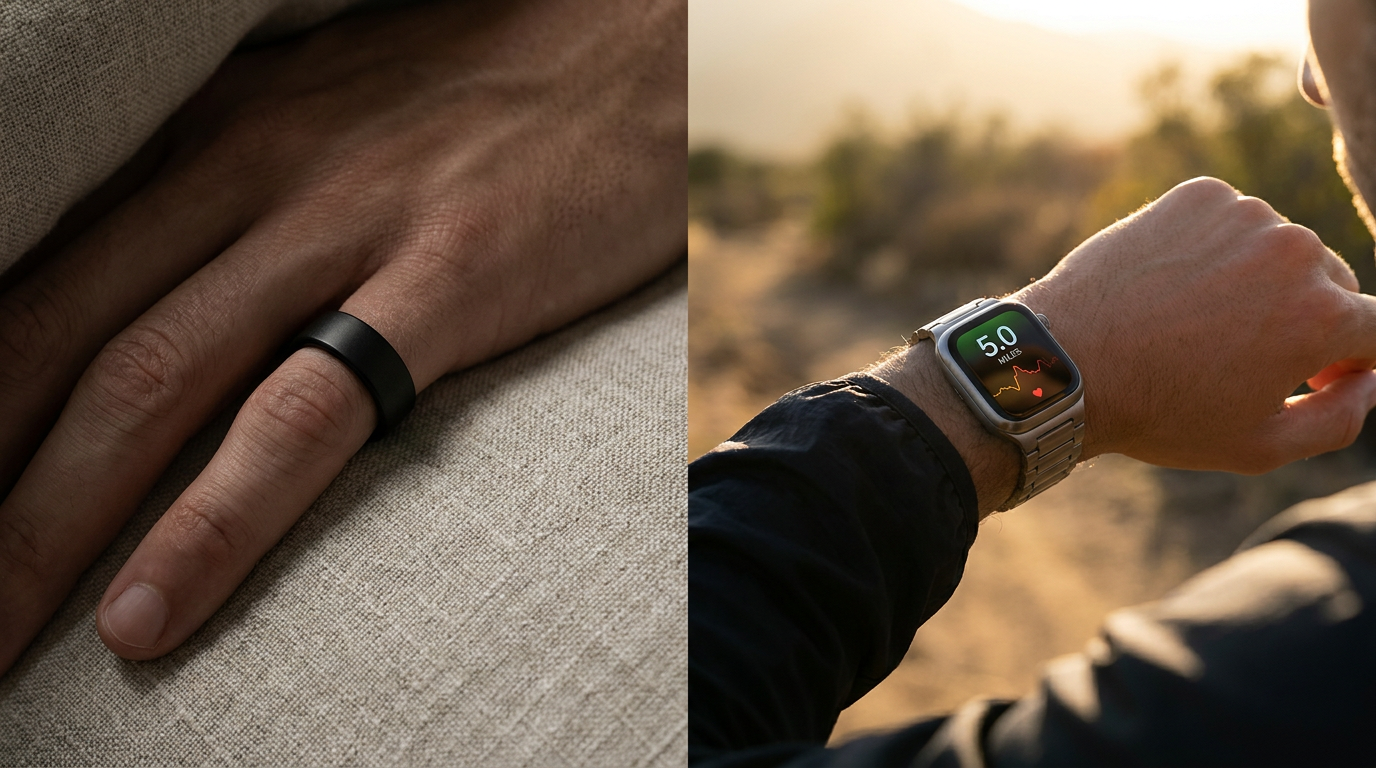
- Sleep & Recovery Optimizers
- Prioritize overnight data accuracy, heart rate variability, and 24/7 physical comfort over real-time alerts.
- Active Training Enthusiasts
- Value live workout feedback, built-in GPS mapping, and the ability to leave their smartphone at home.
- Digital Minimalists
- Seek to collect comprehensive health data without adding another distracting screen or notification source to their lives.
What's not represented
- · Traditional watchmakers
- · Medical professionals diagnosing sleep apnea
Why this matters
Spending $300 to $500 on the wrong wearable form factor means you either won't wear it consistently or won't get the data you actually need. Understanding the physiological differences between wrist and finger sensors ensures you buy a tool that actively improves your daily habits.
Key points
- Smart rings excel at passive tracking, offering superior sleep data and 5-to-8-day battery life.
- Smartwatches dominate active tracking, providing real-time GPS, pacing alerts, and workout metrics.
- Finger-based sensors are highly accurate at rest but struggle during grip-heavy exercises like weightlifting.
- Smartwatches are the only form factor currently capable of taking FDA-cleared electrocardiograms (ECGs).
- Many users are adopting a hybrid approach, wearing a watch during the day and a ring at night.
The wearable technology market in 2026 has fractured into two distinct philosophies: the active companion and the passive observer. On one side, smartwatches like the Apple Watch Series 11 and Samsung Galaxy Watch 7 serve as wrist-mounted command centers, extending the smartphone's interface directly onto the user's arm. On the other side, smart rings like the Oura Ring 4 and the Samsung Galaxy Ring 2 offer screenless, virtually invisible health monitoring. Choosing between these two form factors is no longer just a matter of aesthetic preference; it represents a fundamental decision about how an individual wants to interact with their personal health data and what specific metrics they value most.[1][3]
The core trade-off between these devices comes down to real-time engagement versus continuous background data collection. For the smartwatch, the primary argument is immediate, actionable utility. It provides glanceable metrics, turn-by-turn GPS routing, and instant notifications that keep the user connected without needing to pull out a phone. Against the smartwatch is its physical bulk and the psychological weight of constant connectivity. The evidence from user behavior patterns shows that many people remove their watches at night for comfort or during the day when they need deep focus, creating significant, recurring gaps in their longitudinal health data.[6]
For the smart ring, the primary argument is frictionless, round-the-clock wearability. Against it is the complete lack of real-time feedback and its inability to provide actionable data mid-workout. The evidence supporting the ring form factor lies heavily in user compliance. Because modern smart rings weigh just four to eight grams and lack a glowing, vibrating screen, users are far more likely to wear them continuously, particularly during sleep. This uninterrupted physical contact allows the ring's algorithms to build a much more complete and accurate picture of a user's baseline health, stress levels, and overnight recovery.[2][4]
When comparing sensor accuracy, the physiological differences between the finger and the wrist dictate each device's inherent strengths. The finger contains dense capillary networks located very close to the skin's surface, making optical heart rate sensors highly accurate for resting measurements. Clinical validations of wearable technology consistently show that finger-based sensors achieve up to 99 percent accuracy for resting heart rate and heart rate variability when compared to medical-grade equipment. This anatomical advantage makes rings exceptionally well-suited for overnight recovery tracking and detecting the subtle shifts in baseline body temperature that often precede illness.[5]

Sleep tracking is where the smart ring establishes its most definitive lead over the smartwatch. Because the ring is unobtrusive, it does not interfere with sleep posture or illuminate the room with an accidental screen wake. The sensors track the delicate balance of REM, core, and deep sleep stages by monitoring micro-movements, respiration rate, and overnight temperature fluctuations. While premium smartwatches possess the same sensors, their physical footprint means a significant portion of users simply refuse to wear them to bed, rendering their advanced sleep algorithms useless for those individuals.[2][5]
However, the smart ring's sensor advantage evaporates entirely during active movement. Smartwatches dominate the workout category because wrist placement is far less susceptible to the "noise" created by flexing muscles and gripping objects. When a user grips a barbell, holds bicycle handlebars, or swings a tennis racket, the blood flow in the fingers is temporarily restricted and the ring shifts position, frequently causing optical sensors to drop the heart rate signal entirely. The wrist, while further from the densest capillaries, remains relatively stable during most athletic movements.[1][5]
Beyond sensor stability, the smartwatch provides the essential real-time feedback loop that serious athletes require. A runner attempting to maintain a specific heart rate zone or a cyclist tracking their split times cannot wait until their workout is over to review the data on a smartphone app. The smartwatch's bright OLED display, combined with built-in GPS tracking and audible pacing alerts, makes it an indispensable active training tool. Rings simply cannot replicate this live coaching experience, relegating them to the role of a passive data logger during exercise.[1][4]
Beyond sensor stability, the smartwatch provides the essential real-time feedback loop that serious athletes require.
Smartwatches also possess the physical internal volume necessary to house advanced medical sensors that have not yet been miniaturized for the finger. The electrical heart sensors required for FDA-cleared electrocardiogram readings and the detection of atrial fibrillation remain exclusive to the smartwatch form factor. Additionally, the inclusion of accelerometers paired with cellular connectivity allows smartwatches to offer life-saving features like automatic hard fall detection and emergency SOS calling—capabilities that a screenless, unconnected ring cannot provide.[5]
Battery life represents another stark contrast in the daily experience of owning these devices, directly impacting the quality of the data collected. A standard feature-rich smartwatch requires charging every 24 to 36 hours, heavily driven by its display and continuous background syncing. This frequent charging cycle often forces users to choose between tracking their sleep overnight or tracking their morning workout, as the device must spend at least an hour on the charger. This daily friction is a primary reason why smartwatch users frequently abandon health tracking altogether.[2][3]

In contrast, smart rings typically operate for five to eight days on a single charge, virtually eliminating battery anxiety. Furthermore, devices like the Samsung Galaxy Ring utilize portable charging cases similar to wireless earbuds, allowing users to top up the battery while traveling without needing to find a wall outlet. This extended battery life ensures continuous overnight data collection and allows the ring to seamlessly blend into the user's lifestyle, requiring attention only once a week rather than every single day.[3][4]
The financial trade-offs between the two form factors extend well beyond the initial retail purchase price. While a premium smartwatch might cost between $300 and $500 upfront, it generally provides lifetime access to all native health features and data without recurring fees. Smart rings often carry a slightly lower initial price tag but frequently rely on mandatory subscription models to unlock their most valuable insights. Over a three-year lifespan, a $10 monthly subscription can make a smart ring significantly more expensive than a flagship smartwatch, though brands like Samsung are beginning to abandon this model to remain competitive.[5][6]
For users who refuse to compromise on either active tracking or passive recovery, a hybrid ecosystem approach has emerged as the ultimate solution in 2026. Platforms like Samsung Health now seamlessly integrate data from both a smartwatch and a smart ring worn simultaneously. The software intelligently pulls active workout data and GPS from the watch, while relying on the ring for overnight sleep stages and resting heart rate. This dual-device strategy even extends the watch's battery life by allowing it to power down its optical sensors when the ring is providing a stronger signal.[3][4]

Evaluating the smart ring requires understanding its specific ideal use cases and limitations. The ring fits exceptionally well when your primary health goals center around sleep optimization, stress management, and tracking long-term physiological trends. It is the perfect companion for digital minimalists who want the benefits of biometric tracking without the distraction of a glowing screen tapping their wrist. It also serves as the only viable option for watch enthusiasts who wish to wear traditional mechanical timepieces while still gathering comprehensive 24/7 health data.[2][6]
However, the smart ring has distinct limitations that buyers must acknowledge. It does not fit well when your fitness routine demands real-time pacing, heart rate zone alerts, or GPS route tracking. Because it lacks a display and a vibration motor, it cannot guide you through a complex interval workout or alert you to an incoming phone call. Furthermore, individuals who frequently lift heavy weights or participate in sports that require a tight, continuous grip often find rings uncomfortable or prone to scratching, making them a poor fit for dedicated strength training.[1][6]
The smartwatch, by contrast, thrives in active, dynamic environments. It fits well when you are a dedicated athlete who relies on live feedback to adjust your effort mid-workout. The inclusion of built-in GPS, cellular connectivity, and onboard music storage makes it the ultimate standalone tool for runners and cyclists who want to leave their smartphones at home. It is also the superior choice for older adults or individuals with specific medical concerns, thanks to exclusive features like on-demand electrocardiograms and automatic emergency response.[1][4]

Despite its vast capabilities, the smartwatch is not universally appropriate for every user. It does not fit well when you suffer from notification fatigue and are actively trying to reduce your daily screen time and digital interruptions. For many users, the physical bulk of a 45-millimeter aluminum or titanium case makes it deeply uncomfortable to wear to bed, severely compromising its utility as a reliable sleep tracker. Finally, it is a poor fit for anyone who travels frequently and despises the anxiety of managing yet another proprietary charging cable every single day.[2][3]
How we got here
2015
Apple Watch launches, establishing the wrist as the default location for wearable health tracking.
2018
Oura Gen 2 is released, proving that comprehensive sleep and recovery tracking can be miniaturized into a ring.
2024
Samsung enters the smart ring market, validating the form factor for mainstream Android users.
2026
Hybrid tracking emerges, with software ecosystems seamlessly merging data from both rings and watches worn simultaneously.
Viewpoints in depth
Sleep & Recovery Optimizers
Prioritize overnight data accuracy, heart rate variability, and 24/7 physical comfort over real-time alerts.
This camp views health tracking as a passive, background process. They argue that the most valuable biometric data—resting heart rate, heart rate variability, and sleep architecture—is gathered when the body is completely at rest. Because smart rings are virtually weightless and lack a screen, this group finds them far superior for overnight wear. They point out that a smartwatch's advanced sleep algorithms are useless if the device is sitting on a charger or is too uncomfortable to wear to bed.
Active Training Enthusiasts
Value live workout feedback, built-in GPS mapping, and the ability to leave their smartphone at home.
For dedicated athletes, a wearable must be an active participant in their training regimen. This group relies on smartwatches for real-time pacing, heart rate zone alerts, and on-wrist music controls. They argue that smart rings are fundamentally flawed for serious fitness because they cannot provide mid-workout guidance and frequently lose heart rate signals during grip-heavy activities like weightlifting or cycling. To this camp, the necessity of daily charging is a minor inconvenience compared to the utility of a wrist-mounted computer.
Digital Minimalists
Seek to collect comprehensive health data without adding another distracting screen or notification source to their lives.
This perspective is driven by a desire to disconnect. Digital minimalists argue that smartwatches, by mirroring smartphone notifications, actively contribute to anxiety and screen fatigue. They champion the smart ring because it silently collects vital health data without ever buzzing with an email alert or demanding immediate attention. For this group, the ring's lack of a screen is not a missing feature, but its primary selling point, allowing them to stay informed about their health without being constantly plugged in.
What we don't know
- Whether smart rings will eventually be able to house the electrical sensors required for FDA-cleared ECG readings.
- If Apple will enter the smart ring market to compete directly with Samsung and Oura.
Key terms
- PPG Sensor
- An optical sensor that uses light to measure changes in blood volume, commonly used in wearables to track heart rate.
- Heart Rate Variability (HRV)
- The variation in time between each heartbeat, used by wearables as a primary indicator of physical recovery and stress.
- Electrocardiogram (ECG)
- A medical test that records the electrical signal from the heart, available on premium smartwatches to detect irregular rhythms.
Frequently asked
Can I use a smart ring for weightlifting?
It is generally not recommended. Gripping heavy barbells can scratch the ring, be uncomfortable, and cause the optical sensors to lose your heart rate signal due to restricted blood flow.
Do all smart rings require a monthly subscription?
No. While Oura requires a monthly fee for full data access, newer competitors like the Samsung Galaxy Ring and RingConn offer their health insights subscription-free.
Which device is more accurate for tracking sleep?
Smart rings are generally more accurate for sleep tracking because the finger provides a stronger pulse signal at rest, and the lightweight design ensures users actually wear them all night.
Can I wear a smartwatch and a smart ring at the same time?
Yes. Ecosystems like Samsung Health now allow you to wear both simultaneously, automatically pulling workout data from the watch and sleep data from the ring to create one unified profile.
Sources
Source coverage
6 outlets
3 viewpoints surfaced






[1]ForbesActive Training Enthusiasts
Oura Ring Vs. Apple Watch: Fitness Tracking
Read on Forbes →[2]PreventionSleep & Recovery Optimizers
Oura Ring vs. Apple Watch: I Wore Both for 6 Months to Find the Best Health Tracker
Read on Prevention →[3]WareableDigital Minimalists
Samsung Galaxy Ring vs Galaxy Watch – what's the difference?
Read on Wareable →[4]Android PoliceActive Training Enthusiasts
7 reasons the Galaxy Ring is a better purchase than a Galaxy Watch
Read on Android Police →[5]JointCorpSleep & Recovery Optimizers
Smart Ring vs Fitness Tracker vs Smartwatch: Ultimate Comparison 2026
Read on JointCorp →[6]Factlen Editorial TeamDigital Minimalists
Synthesis by Factlen editorial team
Read on Factlen Editorial Team →


Every angle. Every day.
Get shopping stories with full source coverage and perspective breakdowns delivered to your inbox.