
Stem Cell Transplant Yields 15-Year Remission for Severe Autoimmune Disease
Two patients with neuromyelitis optica, a devastating condition that causes blindness and paralysis, have remained symptom-free for over 15 years after receiving donor stem cells. The breakthrough provides the first evidence that an allogeneic transplant can effectively 'reboot' the immune system to functionally cure the disease.
By Factlen Editorial Team
- Clinical Researchers
- Focus on the unprecedented durability of the remission and the proof-of-concept for a functional cure.
- Transplant Specialists
- Emphasize the severe risks of allogeneic transplants and the need for rigorous patient selection.
- Patient Advocacy Groups
- Highlight the life-changing potential of living drug-free, while acknowledging the current experimental nature of the treatment.
What's not represented
- · Health Insurance Providers
- · Medical Ethics Committees
Why this matters
For decades, severe autoimmune diseases have been viewed as lifelong conditions requiring constant, heavy medication. This breakthrough provides powerful proof-of-concept that replacing a defective immune system with donor cells could offer a permanent, drug-free cure.
Key points
- Two patients with neuromyelitis optica (NMO) have achieved a 15-year drug-free remission following an allogeneic stem cell transplant.
- The procedure involves wiping out the patient's defective immune system with chemotherapy and replacing it with healthy donor cells.
- Unlike autologous transplants that use a patient's own cells, donor cells lack the genetic flaw that triggers the autoimmune attack.
- While the results offer proof-of-concept for a functional cure, the severe risks of donor transplants mean larger trials are needed before widespread use.
For patients diagnosed with severe autoimmune neurological disorders, the standard of care has long been a lifelong regimen of immunosuppressive drugs. A newly published medical milestone, however, provides compelling evidence that a functional cure may be possible.[1]
According to a study published in the journal Med and highlighted by Nature, two individuals suffering from neuromyelitis optica (NMO) have achieved an unprecedented 15-year remission following an experimental stem cell transplant.[1][2]
The central claim of the research is that allogeneic—or donor-derived—haematopoietic stem-cell transplantation (HSCT) can effectively "reboot" a defective immune system, halting the progression of NMO indefinitely without the need for ongoing medication.[2]
To evaluate this claim, it is necessary to understand the pathology of NMO, also known as neuromyelitis optica spectrum disorder (NMOSD).[4]

The evidence is strong that NMOSD is driven by a specific, targeted autoimmune attack. Unlike multiple sclerosis, which affects the brain more broadly, NMOSD specifically targets the optic nerves and the spinal cord.[4]
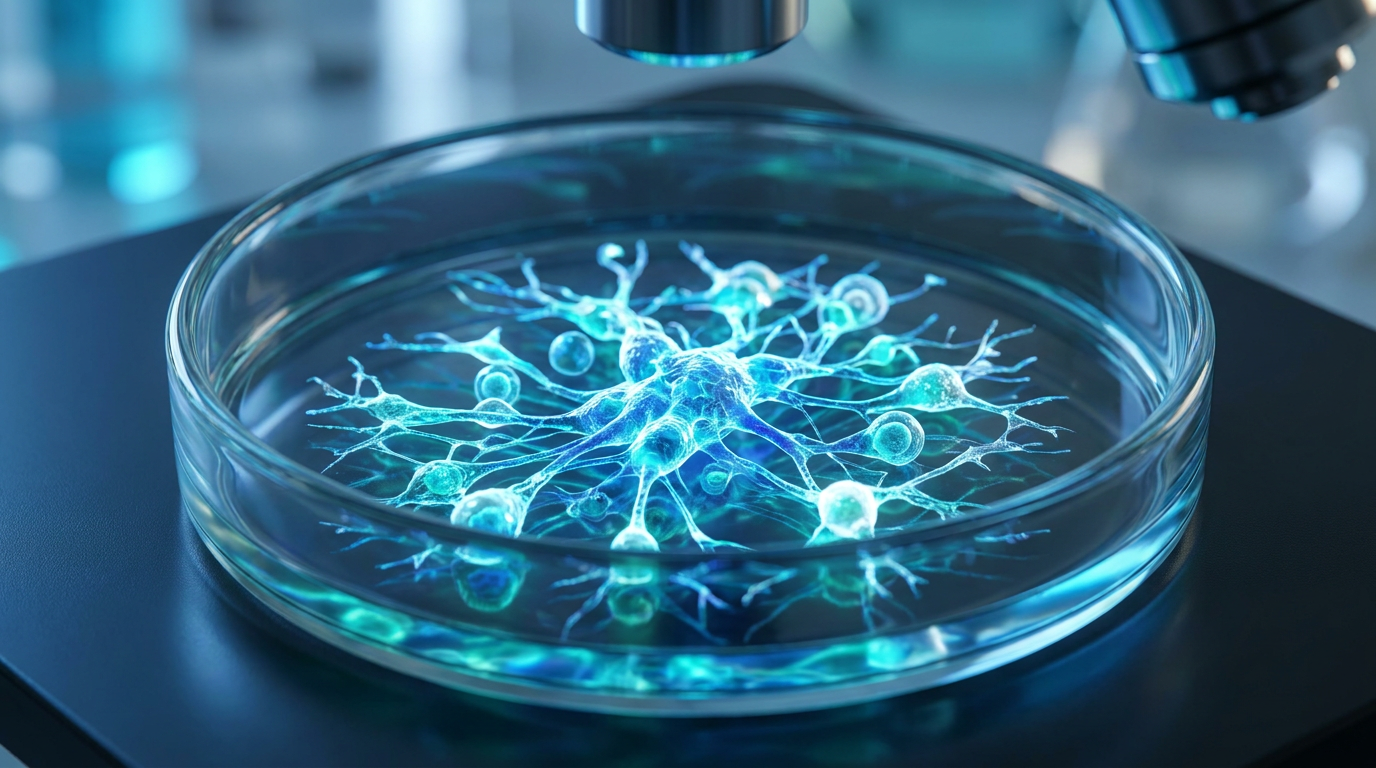
Clinical consensus shows that in most patients, the immune system mistakenly produces antibodies against aquaporin-4 (AQP4), a protein found on the surface of star-shaped brain cells called astrocytes.[4]
When these antibodies attack, they trigger severe inflammation that strips away the protective myelin sheath around nerves. The documented clinical outcomes include profound and often irreversible neurological damage, such as blindness, paralysis, and loss of bowel or bladder control.[4]
Historically, the evidence base for treatments has focused on disease management. Standard protocols rely on continuous immunosuppression to prevent relapses, rather than attempting to reverse the underlying immune dysfunction.[5]
The new approach fundamentally alters the immune system. The procedure, allogeneic HSCT, is designed to destroy the patient's defective immune system and replace it with a healthy one from a donor.[2][5]

The procedure, allogeneic HSCT, is designed to destroy the patient's defective immune system and replace it with a healthy one from a donor.
The treatment protocol documented in the Med study is intense. The two patients underwent a rigorous pre-transplant conditioning regimen that included the chemotherapy drugs fludarabine and treosulfan, combined with a B-cell depleting antibody treatment.[1][2]
This conditioning phase aims to completely wipe out the rogue immune cells responsible for the AQP4 attacks, creating a blank slate for the new donor stem cells to engraft and rebuild a healthy immune network.[2]
The distinction between allogeneic (donor) and autologous (self) stem cell transplants is a critical variable in evaluating the evidence.[3][5]
Autologous transplants, which use the patient's own stem cells, have been explored for NMOSD with some success. Because the cells belong to the patient, the risk of fatal immune rejection is low.[3]
However, longitudinal data suggests a lingering risk with autologous procedures: because they use the patient's own genetic material, the newly generated immune system may eventually "remember" its autoimmune flaw and trigger a relapse.[3][5]

By using allogeneic donor cells, researchers provided these two patients with an entirely new immune system that lacks the genetic predisposition to attack the optic nerve and spinal cord.[2]
The clinical outcomes for these two cases are extraordinary. Both the man and the woman treated in the study have remained completely free of NMOSD symptoms and have not required any immunosuppressive medications for more than a decade and a half.[1][2]
Despite the profound success, the uncertainty surrounding the treatment remains high. The primary weakness in the evidence is the sample size: a two-patient cohort is not sufficient to establish a broad standard of care.[6]
Furthermore, allogeneic stem cell transplants carry severe, well-documented risks. The most notable is Graft-versus-Host Disease (GVHD), a potentially fatal complication where the new donor immune system attacks the recipient's tissues.[5]
The intense chemotherapy required for pre-transplant conditioning also leaves patients highly vulnerable to severe, opportunistic infections during the recovery period. Because of these risks, allogeneic HSCT has traditionally been reserved for fatal blood cancers rather than autoimmune diseases.[5]

The researchers acknowledge these limitations, noting that while the 15-year remission is a landmark achievement, the procedure's high risk profile means it is not yet ready for widespread clinical use.[2]
Nevertheless, the findings provide powerful proof-of-concept. Scientists argue that the results strongly warrant larger, carefully controlled clinical trials to refine the conditioning regimens, quantify the risks, and improve the safety of the procedure.[1][6]
For the broader field of immunology, the study offers a paradigm-shifting piece of evidence: a demonstration that severe autoimmune diseases might eventually be permanently banished, rather than just managed.[6]
How we got here
Late 19th Century
Neuromyelitis optica is first described as a distinct clinical syndrome, often confused with multiple sclerosis.
2004
Researchers discover the AQP4 antibody, allowing doctors to definitively distinguish NMO from multiple sclerosis.
2010s
Autologous stem cell transplants are tested for NMO, showing some success but with a risk of the autoimmune attacks eventually returning.
June 2026
Researchers publish a landmark study in the journal Med detailing a 15-year drug-free remission in two NMO patients treated with allogeneic donor stem cells.
Viewpoints in depth
Clinical Researchers
Focus on the unprecedented durability of the remission and the proof-of-concept for a functional cure.
For researchers studying refractory autoimmune diseases, the 15-year milestone is a watershed moment. The primary excitement stems from the fact that the patients have remained entirely off immunosuppressive drugs. This provides concrete evidence that an allogeneic transplant doesn't just suppress the disease, but effectively replaces the defective immune architecture with a healthy, non-reactive system.
Transplant Specialists
Emphasize the severe risks of allogeneic transplants and the need for rigorous patient selection.
While acknowledging the success, transplant specialists caution that allogeneic HSCT is one of the most aggressive medical procedures available. The risk of Graft-versus-Host Disease (GVHD)—where the donor cells attack the recipient's body—and the vulnerability to fatal infections during the conditioning phase mean this treatment cannot be taken lightly. They argue it should currently be reserved only for the most severe, treatment-resistant cases.
Patient Advocacy Groups
Highlight the life-changing potential of living drug-free, while acknowledging the current experimental nature of the treatment.
For the NMOSD community, the prospect of a permanent cure is profoundly uplifting. Patients currently face a lifetime of expensive, heavy immunosuppressive therapies that carry their own long-term side effects. Advocates view this breakthrough as a beacon of hope, though they stress the importance of funding larger trials to make the procedure safer and more accessible to a broader patient population.
What we don't know
- Whether the 15-year remission observed in these two patients can be reliably replicated in a larger, diverse clinical cohort.
- How to optimally balance the intense chemotherapy conditioning required to wipe out the old immune system with the need to minimize fatal infection risks.
- Which specific subgroups of NMO patients would benefit most from the severe risks of an allogeneic transplant versus standard immunosuppressive drugs.
Key terms
- Neuromyelitis Optica (NMO)
- A rare autoimmune disorder characterized by inflammation of the optic nerve and spinal cord.
- Allogeneic Transplant
- A procedure using stem cells or tissues from a genetically matched donor, rather than the patient's own body.
- Autologous Transplant
- A medical procedure that uses the patient's own stem cells, minimizing the risk of rejection but carrying a risk of disease relapse.
- Aquaporin-4 (AQP4)
- A protein in the central nervous system that is mistakenly targeted by the immune system in most NMO patients.
- Graft-versus-Host Disease (GVHD)
- A severe complication of allogeneic transplants where the donated immune cells attack the recipient's healthy tissues.
- Conditioning Regimen
- The intense chemotherapy or radiation given before a transplant to wipe out the existing immune system and make room for new cells.
Frequently asked
What is Neuromyelitis Optica (NMO)?
NMO is a rare autoimmune disease where the immune system mistakenly attacks the optic nerves and spinal cord, leading to vision loss and paralysis.
How does an allogeneic stem cell transplant work?
It involves destroying the patient's defective immune system with chemotherapy and replacing it with healthy blood-forming stem cells from a donor.
Why is this study significant?
It provides the first published evidence that an allogeneic transplant can induce long-term, drug-free remission (over 15 years) in NMO patients.
Is this treatment available to the public?
Not yet. Because of the severe risks associated with donor transplants, the procedure remains experimental for autoimmune diseases and requires larger clinical trials.
Sources
Source coverage
6 outlets
3 viewpoints surfaced






[1]NatureClinical Researchers
Stem cells banish severe autoimmune disease for 15 years
Read on Nature →[2]MedClinical Researchers
Long-term remission of neuromyelitis optica with allogeneic hematopoietic stem cell transplant
Read on Med →[3]NeurologyTransplant Specialists
Autologous nonmyeloablative hematopoietic stem cell transplantation for neuromyelitis optica
Read on Neurology →[4]WikipediaPatient Advocacy Groups
Neuromyelitis optica spectrum disorders
Read on Wikipedia →[5]National Institutes of HealthTransplant Specialists
Hematopoietic Stem Cell Transplantation in Autoimmune Diseases
Read on National Institutes of Health →[6]Factlen Editorial TeamClinical Researchers
Synthesis by Factlen editorial team
Read on Factlen Editorial Team →


Every angle. Every day.
Get science stories with full source coverage and perspective breakdowns delivered to your inbox.