
Shingles Vaccine Lowers Dementia Risk by 24 Percent in Major New Study
A new study of over 500,000 Medicare patients reveals that older adults who receive the recombinant shingles vaccine have a 24 percent lower risk of developing dementia. The findings add to a compounding body of evidence suggesting that preventing viral neuroinflammation could be a key to cognitive longevity.
By Factlen Editorial Team
- Public Health Researchers
- Focus on the population-level data and rigorous statistical methods proving the protective link.
- Immunologists & Neurologists
- Focus on the biological mechanisms, debating whether the protection stems from preventing viral neuroinflammation or from the vaccine's immune-boosting adjuvant.
- Geriatric Care Providers
- Focus on the immediate clinical application, advocating for nursing home admissions as a critical intervention point.
What's not represented
- · Patients currently living with early-stage dementia
- · Health insurance actuaries evaluating long-term care costs
Why this matters
Dementia is one of the most devastating and costly conditions of aging, with virtually no preventative treatments available. The discovery that a routine, widely available shingles vaccine could reduce the risk of cognitive decline by nearly a quarter offers millions of older adults an immediate, accessible way to protect their long-term brain health.
Key points
- A new study found that older adults in skilled nursing facilities who received the recombinant shingles vaccine had a 24% lower risk of developing dementia.
- The absolute risk of dementia dropped by 5.8 percentage points, potentially preventing one in 17 cases.
- Researchers believe the vaccine may protect the brain by preventing viral neuroinflammation or by boosting the immune system's ability to clear toxic proteins.
- The findings align with previous major studies from Oxford and Stanford that also linked shingles vaccination to improved cognitive longevity.
- Advanced statistical methods were used to account for 'healthy vaccinee bias,' confirming the protective effect remains robust.
Dementia remains one of the most daunting frontiers in modern medicine, a looming threat with few preventative tools. But a growing body of evidence suggests that a highly effective shield might already be sitting in pharmacy freezers worldwide. A new study published in the Annals of Internal Medicine reveals that the recombinant shingles vaccine—widely known as Shingrix—significantly lowers the risk of developing dementia in older adults. The findings add substantial weight to a medical mystery that has captivated neurologists for years: the apparent link between viral infections, immune responses, and long-term cognitive decline. By analyzing hundreds of thousands of patient records, researchers have provided the clearest picture yet that protecting the body against a common, painful skin rash may simultaneously protect the brain's delicate architecture.[1][3]
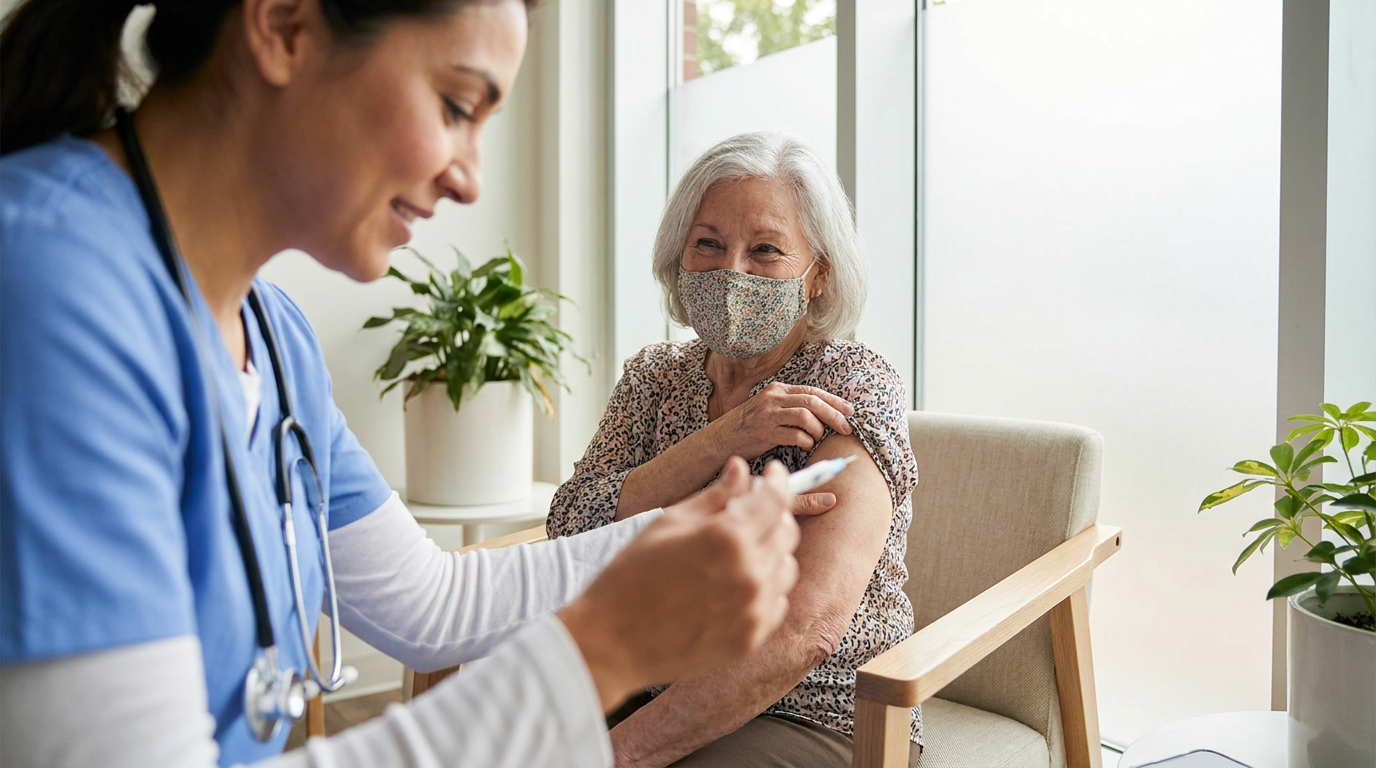
The latest breakthrough comes from researchers at the Brown University School of Public Health, who analyzed Medicare and electronic health records from more than 500,000 adults aged 66 and older. The study focused on a highly specific and vulnerable demographic: patients who had recently been admitted to skilled nursing facilities for short- or long-term care. The researchers compared the cognitive outcomes of patients who received at least one dose of the recombinant zoster vaccine within a year of their admission against those who remained unvaccinated. After a four-year follow-up period, the results were striking. The vaccinated group experienced a 24 percent lower relative risk of being diagnosed with any form of dementia compared to their unvaccinated peers.[2][4]
Beyond the relative risk, the absolute numbers paint a compelling picture of the vaccine's potential real-world impact. According to the data, 24.6 percent of the unvaccinated adults developed dementia within the four-year window. Among those who received the shingles vaccine, that incidence rate dropped to 18.8 percent—an absolute risk reduction of 5.8 percentage points. Lead study author Dr. Kaleen Hayes noted that this translates to roughly one in 17 dementia cases potentially being prevented simply through vaccination. For a disease that currently lacks a definitive cure and places an immense emotional and financial burden on families and healthcare systems, a preventative intervention of this magnitude is considered highly significant by public health experts.[3][4]

The Brown University study is particularly valuable because it examines a population that is often excluded from traditional clinical trials. Older adults entering skilled nursing facilities are at an elevated risk for both shingles outbreaks and rapid cognitive decline. Historically, this demographic has also seen lower uptake of the newer recombinant vaccine. By demonstrating such a pronounced protective effect in this specific high-risk group, the research provides a powerful new incentive for geriatric care providers. Admission to a nursing facility is increasingly being viewed not just as a transition of care, but as a critical intervention window where administering a routine vaccine could fundamentally alter a patient's cognitive trajectory.[2][4]
How exactly does a vaccine designed to prevent a blistering skin rash end up protecting the brain? The answer lies in the complex behavior of the varicella-zoster virus. After causing chickenpox in childhood, the virus does not leave the body; instead, it retreats into the nervous system, lying dormant in nerve cells for decades. As the immune system naturally weakens with age, the virus can reactivate, traveling down nerve pathways to cause the painful condition known as shingles. This reactivation is not just a localized skin event—it triggers widespread inflammation throughout the body, including within the nervous system itself.[2][7]
Neurologists increasingly suspect that this viral reactivation wreaks havoc on the brain's vascular network. Severe shingles infections can cause acute neuroinflammation and have been shown to significantly increase the risk of stroke in the months following an outbreak. Strokes and microscopic vascular damage are known catalysts for vascular dementia and can accelerate the pathology of Alzheimer's disease. By training the immune system to suppress the varicella-zoster virus and prevent these inflammatory outbreaks, the vaccine may be indirectly shielding the brain's delicate blood vessels from cumulative, irreversible damage.[2][4]
However, preventing viral reactivation is only one half of the leading scientific theory. The other half focuses on the specific ingredients inside the modern shingles vaccine. Shingrix contains an adjuvant called AS01—a compound explicitly designed to provoke a highly robust, generalized immune response. Some immunologists hypothesize that this powerful adjuvant acts like a systemic workout for the immune system. By activating immune cells, the vaccine might inadvertently stimulate the brain's own immune defenders, known as microglia, prompting them to clear out the toxic amyloid plaques and tau tangles that are the hallmarks of Alzheimer's disease.[5][7]

However, preventing viral reactivation is only one half of the leading scientific theory.
The Brown University findings do not exist in a vacuum; they are the latest pillar in a rapidly compounding tower of evidence. In July 2024, a massive study published in Nature Medicine by researchers at the University of Oxford analyzed data from over 200,000 Americans. That study specifically compared the newer recombinant vaccine (Shingrix) against the older, live-attenuated vaccine (Zostavax). The Oxford team found that patients who received the newer, adjuvant-boosted vaccine had a 17 percent lower risk of developing dementia over six years compared to those who received the older formulation, strongly hinting that the adjuvant itself plays a crucial neuroprotective role.[5]
Further supporting the viral link, a landmark 2025 study published in Nature examined a unique natural experiment in Wales. Due to a strict birth-date cutoff for vaccine eligibility, researchers were able to compare a large cohort of older adults who received the older live-attenuated shingles vaccine against a nearly identical cohort that was ineligible. The Stanford-led analysis revealed that the vaccinated Welsh adults were 20 percent less likely to develop dementia over a seven-year period. Crucially, that study also found that the vaccine appeared to slow the progression of the disease in patients who had already been diagnosed with mild cognitive impairment.[6]
Across all of these major studies, a fascinating and unexplained demographic pattern has emerged: the protective effect of the shingles vaccine appears to be statistically stronger in women than in men. In the recent Brown University analysis, the association between the recombinant vaccine and lowered dementia risk was highly robust for female patients, but the data showed a weaker, attenuated effect for male patients. Researchers are actively investigating whether this discrepancy is rooted in biological differences in how male and female immune systems respond to the AS01 adjuvant, or if it reflects differing baseline risks for viral neuroinflammation.[2][6]
Despite the overwhelming consistency of the data, scientists are careful to highlight the inherent uncertainties of observational research. The most persistent confounding factor is known as 'healthy vaccinee bias.' This is the epidemiological reality that individuals who proactively seek out and receive vaccinations tend to have better overall health habits. They may exercise more, eat healthier diets, and have better access to routine medical care—all of which independently lower the risk of developing dementia. Disentangling the specific chemical effect of the vaccine from the general lifestyle of the person receiving it is notoriously difficult.[2][7]
To combat this bias, the Brown University researchers employed an advanced statistical technique known as 'target trial emulation.' This method uses massive datasets to artificially mimic the rigorous, randomized conditions of a clinical trial. The team meticulously adjusted for dozens of variables, including underlying health conditions, age, socioeconomic status, and the receipt of other routine vaccines like the flu shot. Even after stripping away these confounding factors to the greatest extent statistically possible, the 24 percent reduction in dementia risk remained steadfast, giving researchers high confidence in the result.[2][3]

For the medical community, the immediate clinical implications are profound. While researchers caution against prescribing the shingles vaccine explicitly as a dementia preventative until randomized controlled trials are completed, the dual benefits are impossible to ignore. The vaccine is already strongly recommended for older adults to prevent the excruciating pain and long-term nerve damage associated with shingles. The revelation that it likely provides a substantial secondary shield against cognitive decline makes the case for widespread vaccination nearly unassailable, particularly in high-risk nursing home environments.[3][4]
The gold standard of medical evidence—a randomized, double-blind, placebo-controlled trial specifically designed to test the shingles vaccine against dementia—remains a logistical challenge. Because the vaccine is already approved and recommended for older adults, withholding it from a control group to study dementia outcomes presents significant ethical hurdles. Consequently, the medical field will likely have to rely on increasingly sophisticated observational data and target trial emulations to solidify the connection. Fortunately, the sheer volume and quality of the data emerging from institutions like Brown, Oxford, and Stanford are providing a remarkably clear consensus.[4][7]
Ultimately, the story of the shingles vaccine and dementia represents a paradigm shift in how science approaches neurodegenerative disease. For decades, Alzheimer's research has been defined by billions of dollars spent on drugs targeting brain plaques, often with marginal success. The mounting evidence that a widely available, relatively inexpensive viral vaccine can reduce dementia risk by a quarter is forcing the field to broaden its horizons. It points toward a future where cognitive longevity is achieved not just by treating the brain in isolation, but by aggressively managing the body's lifelong relationship with viruses and inflammation.[7]
How we got here
2017
The FDA approves the recombinant zoster vaccine (Shingrix), replacing older live-attenuated vaccines.
July 2024
A Nature Medicine study reveals the newer recombinant vaccine is associated with a 17% lower dementia risk.
April 2025
A Nature study on a Welsh public health policy finds the older shingles vaccine lowered dementia risk by 20%.
June 2026
Brown University researchers publish data showing a 24% risk reduction among highly vulnerable nursing home residents.
Viewpoints in depth
Public Health Researchers
Focus on the population-level data and rigorous statistical methods proving the protective link.
Epidemiologists emphasize the sheer scale and consistency of the observational data. By utilizing target trial emulation across hundreds of thousands of Medicare records, researchers argue they have effectively neutralized the 'healthy vaccinee bias.' For public health officials, the exact biological mechanism is secondary to the statistical reality: administering a widely available, safe vaccine to older adults correlates with a massive reduction in dementia incidence, presenting an immediate opportunity to alleviate a global health crisis.
Immunologists & Neurologists
Focus on the biological mechanisms, debating whether the protection stems from preventing viral neuroinflammation or from the vaccine's immune-boosting adjuvant.
The medical science community is deeply engaged in unraveling the 'why' behind the data. One camp of neurologists points to the varicella-zoster virus itself, arguing that preventing its reactivation saves the brain's vascular network from inflammatory damage and micro-strokes. Conversely, many immunologists suspect the hero is actually the AS01 adjuvant inside the newer vaccine. They hypothesize that this chemical additive provokes a generalized immune system response that inadvertently stimulates the brain's microglial cells to clear out the toxic proteins responsible for Alzheimer's disease.
Geriatric Care Providers
Focus on the immediate clinical application, advocating for nursing home admissions as a critical intervention point.
For doctors and nurses working in skilled nursing facilities, the findings offer a highly actionable protocol. Older adults entering long-term care are at peak risk for both shingles outbreaks and rapid cognitive decline, yet historically have low vaccination rates. Geriatric specialists view these studies as a mandate to integrate the recombinant shingles vaccine into standard admission procedures, transforming a routine preventative measure into a frontline defense against dementia.
What we don't know
- Whether the protective effect comes from stopping the virus itself, or if the vaccine's immune-boosting ingredients (adjuvants) are providing a general defense for the brain.
- Why the protective association appears to be statistically stronger in women than in men across multiple international studies.
- Whether these observational findings will eventually be confirmed by gold-standard randomized controlled trials designed specifically for dementia prevention.
Key terms
- Recombinant Zoster Vaccine (RZV)
- A newer type of shingles vaccine that uses a piece of the virus combined with an immune-boosting ingredient to create a strong defense.
- Target Trial Emulation
- An advanced statistical method that uses massive amounts of observational health data to mimic the rigorous conditions of a randomized clinical trial.
- Adjuvant
- An ingredient used in some vaccines that helps create a stronger, more robust immune response in the person receiving the shot.
- Neuroinflammation
- Inflammation of the nervous tissue, often triggered by infection, which is increasingly linked to neurodegenerative diseases like dementia.
- Healthy Vaccinee Bias
- A statistical distortion where people who choose to get vaccinated also tend to have healthier lifestyles overall, making it harder to isolate the vaccine's specific effect.
Frequently asked
Does the shingles vaccine cure dementia?
No, it does not cure or reverse dementia. The research indicates it may significantly lower the risk of developing the disease in the future.
Which shingles vaccine was studied?
The recent 2026 study focused on the recombinant zoster vaccine (RZV), commonly known as Shingrix, which is the primary vaccine currently used in the U.S.
How does a skin rash virus affect the brain?
The virus that causes shingles lives dormant in the nervous system. When it reactivates, it can cause neuroinflammation and increase stroke risk, both of which are linked to cognitive decline.
Is this effect proven beyond a doubt?
While multiple large-scale observational studies show a strong link, scientists note that randomized controlled trials are still needed to definitively prove the vaccine directly prevents dementia.
Sources
Source coverage
7 outlets
3 viewpoints surfaced






[1]STAT NewsPublic Health Researchers
Shingles vaccine may lower dementia risk, new study finds
Read on STAT News →[2]MedPage TodayGeriatric Care Providers
Study Looks at Risk for Dementia After Shingles Vaccine in High-Risk Group
Read on MedPage Today →[3]Annals of Internal MedicinePublic Health Researchers
Dementia risk after recombinant herpes zoster vaccination in older adults with a recent skilled-nursing facility stay: a target trial emulation
Read on Annals of Internal Medicine →[4]Brown University School of Public HealthPublic Health Researchers
Shingles vaccine may protect against dementia
Read on Brown University School of Public Health →[5]Nature MedicineImmunologists & Neurologists
The recombinant shingles vaccine is associated with lower risk of dementia
Read on Nature Medicine →Shingles vaccination and risk of dementia: a natural experiment
Read on Nature →[7]Factlen Editorial TeamImmunologists & Neurologists
Synthesis by Factlen editorial team
Read on Factlen Editorial Team →
More in health
See all 5 stories →Longevity Tech
The Science of 'Exercise Mimetics': How New Longevity Drugs Aim to Replicate the Benefits of a Workout
5 sources

Vaccine Research
Routine Shingles Vaccine Linked to Significant Drop in Dementia Risk
7 sources
Exercise Therapy
Exercise Rivals Medication as First-Line Treatment for Depression and Anxiety, Massive Reviews Find
7 sources

Every angle. Every day.
Get health stories with full source coverage and perspective breakdowns delivered to your inbox.