
Routine Shingles Vaccine Linked to Significant Drop in Dementia Risk
Multiple large-scale studies reveal that older adults who receive the recombinant shingles vaccine experience a 24% to 51% lower risk of developing dementia.
By Factlen Editorial Team
- Epidemiologists & Public Health Researchers
- Focus on the robust statistical link and real-world data across multiple cohorts.
- Immunologists & Virologists
- Focus on the biological mechanisms of viral reactivation and neuroinflammation.
- Cautious Skeptics
- Emphasize the need for randomized controlled trials before declaring causality.
What's not represented
- · Neurologists treating active dementia patients
- · Health insurance actuaries evaluating preventative coverage
Why this matters
Dementia currently affects millions globally with no known cure. If a widely available, routine immunization can simultaneously prevent a debilitating physical illness and delay cognitive decline, it represents one of the most accessible and actionable public health victories in modern medicine.
Key points
- A massive study of 500,000 Medicare beneficiaries found the Shingrix vaccine lowers dementia risk by 24% over four years.
- A separate study of adults 65 and older observed an even higher 51% risk reduction.
- Scientists believe the vaccine prevents viral reactivation that causes brain-damaging neuroinflammation.
- The vaccine's immune-boosting adjuvant (AS01) may also play a role in clearing cellular debris.
- While observational data is strong, randomized controlled trials are underway to definitively prove causality.
Billions of dollars and decades of research have been poured into finding a cure for dementia, often ending in disappointment. But a powerful tool to protect the aging brain might already be sitting in the refrigerators of local pharmacies.
A cascade of recent epidemiological studies has revealed a startling pattern: older adults who receive the routine shingles vaccine are significantly less likely to develop dementia. The latest evidence, published in June 2026 in the Annals of Internal Medicine, adds immense weight to this unexpected medical breakthrough.[1][2]
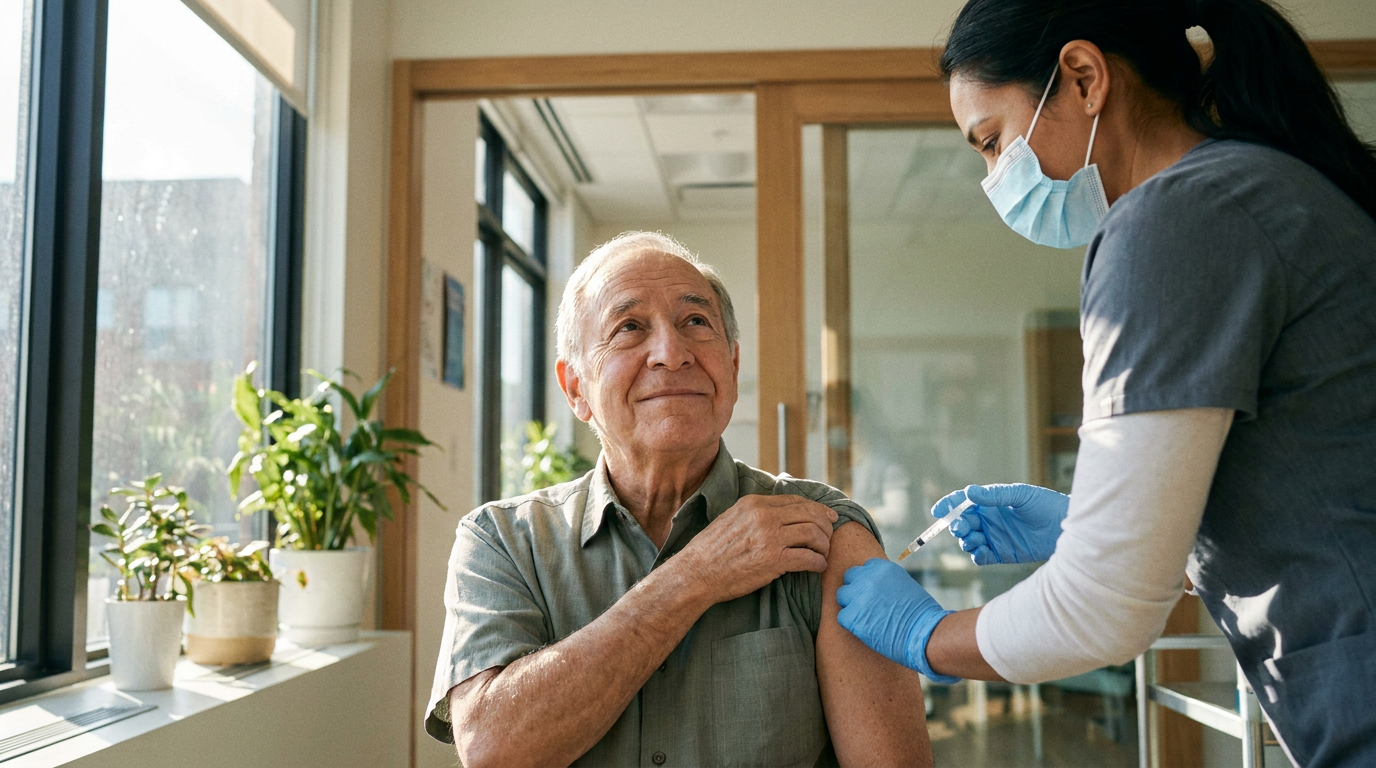
Led by researchers at the Brown University School of Public Health, the new study analyzed health records from more than 500,000 Medicare beneficiaries aged 66 and older. These individuals had all been admitted to skilled nursing facilities for short-term rehabilitation or long-term care.[1][3]
The findings were stark. Patients who received at least one dose of the recombinant shingles vaccine—widely known as Shingrix—experienced a 24 percent lower risk of being diagnosed with dementia over the following four years compared to their unvaccinated peers.[1][2][7]
In absolute terms, the cumulative risk of developing dementia was 18.8 percent for the vaccinated group, compared to 24.6 percent for those who did not receive the shot. According to Kaley Hayes, the study's lead author, this translates to roughly one in 17 dementia cases potentially being prevented through vaccination.[1][2]

This research builds upon a growing mountain of data pointing in the same direction. In February 2026, a massive real-world study published in Nature Communications examined over 300,000 adults aged 65 and older. That cohort showed an even more dramatic effect, with two doses of Shingrix associated with a 51 percent lower observed risk of dementia.[4][5]
The Nature Communications study found that the protective effect applied to both Alzheimer's disease and vascular dementia, and was particularly pronounced in women. Similar signals have been detected in populations across Wales, Australia, and Canada over the past two years.[4][6]
How could a vaccine designed to prevent a painful skin rash protect the brain from cognitive decline? The answer likely lies in the complex relationship between viral infections and neuroinflammation.[4][5]
How could a vaccine designed to prevent a painful skin rash protect the brain from cognitive decline?
Shingles is caused by the varicella-zoster virus, the exact same pathogen responsible for chickenpox. After a childhood chickenpox infection, the virus never truly leaves the body; it lies dormant in the nervous system for decades.[5][6]
As the immune system naturally weakens with age, the virus can reactivate, traveling down nerve fibers to cause the blistering, agonizing rash known as shingles. But scientists now suspect the damage extends far beyond the skin.[4][5]
When the varicella-zoster virus reactivates, it can trigger severe neuroinflammation and damage cerebral blood vessels. This inflammatory cascade is increasingly viewed as a potential catalyst for the accumulation of toxic proteins—like amyloid plaques and tau tangles—that are the hallmarks of Alzheimer's disease.[2][4]

Furthermore, severe shingles infections have been independently linked to an increased risk of stroke, which is a primary driver of vascular dementia. By aggressively suppressing the reactivation of the virus, the Shingrix vaccine may be cutting off these neurological insults before they can begin.[2][3]
There is also a second, more intriguing biological hypothesis centered on the vaccine's specific formulation. Shingrix is a recombinant vaccine that utilizes a powerful immune-boosting ingredient called the AS01 adjuvant.[5][6]
Some immunologists theorize that this adjuvant does more than just train the body to fight shingles. The robust, generalized immune activation triggered by AS01 might help clear out cellular debris in the brain or reset sluggish immune responses, offering a broad neuroprotective benefit. This theory gained traction after the new RSV vaccine, Arexvy—which uses the exact same AS01 adjuvant—was also linked to a reduction in dementia diagnoses.[2][5]
Despite the compelling data, researchers emphasize that these observational studies cannot definitively prove cause and effect. The most significant confounding factor is the "healthy vaccinee" bias: people who proactively get their recommended shots tend to be more health-conscious, exercise more, and have better access to medical care, all of which independently lower dementia risk.[1][2][4]

While the Brown University team used advanced statistical techniques—known as target trial emulation—to adjust for these lifestyle and health differences, residual confounding can never be entirely eliminated in retrospective data.[1][2]
For this reason, the scientific community is calling for rigorous, randomized controlled trials to settle the debate. GlaxoSmithKline, the manufacturer of Shingrix, is currently sponsoring a massive Phase 4 clinical trial in Finland to test the vaccine's direct impact on dementia incidence, though results are not expected until 2030.[3][4]
In the meantime, the clinical implications are immediate. Uptake of the shingles vaccine remains surprisingly low, particularly among vulnerable populations in skilled nursing facilities who are at the highest risk for both the virus and cognitive decline.[1][2]
Public health officials hope that the prospect of protecting one's memory and independence will serve as a powerful new motivator. If a widely available, routine immunization can simultaneously prevent a debilitating physical illness and delay the onset of dementia, it represents one of the most accessible public health victories in modern medicine.[1][5]
How we got here
2017
The FDA approves Shingrix, a highly effective recombinant vaccine for shingles, replacing the older live-attenuated version.
2024–2025
Early observational studies in Wales, Australia, and Canada begin detecting a link between shingles vaccination and delayed dementia onset.
February 2026
A study in Nature Communications reports a 51% lower risk of dementia among adults 65 and older who received two doses of Shingrix.
June 2026
Brown University researchers publish data showing a 24% dementia risk reduction among highly vulnerable skilled nursing facility residents.
2030 (Expected)
Results are anticipated from a massive Phase 4 randomized controlled trial in Finland designed to definitively test the vaccine's impact on dementia.
Viewpoints in depth
Epidemiologists & Public Health Researchers
Focus on the robust statistical link and real-world data across multiple cohorts.
Public health experts point to the sheer volume and consistency of the data as highly compelling. Across different countries, healthcare systems, and demographic groups, the signal remains clear: those who receive the shingles vaccine develop dementia at significantly lower rates. While acknowledging the limitations of observational data, epidemiologists argue that the effect size—ranging from a 24% to 51% risk reduction—is too large to be entirely explained away by confounding variables like the healthy vaccinee bias.
Immunologists & Virologists
Focus on the biological mechanisms of viral reactivation and neuroinflammation.
Researchers studying the biology of aging and immunity believe the vaccine's protective effect is rooted in preventing the varicella-zoster virus from wreaking havoc on the nervous system. By stopping the virus from reactivating, the vaccine prevents the severe neuroinflammation and vascular damage that can accelerate cognitive decline. Additionally, immunologists are highly interested in the AS01 adjuvant used in Shingrix, hypothesizing that its powerful immune-stimulating properties might help the body clear out toxic proteins in the brain.
Cautious Skeptics
Emphasize the need for randomized controlled trials before declaring causality.
While optimistic about the findings, cautious medical professionals warn against declaring the shingles vaccine a definitive cure or preventative treatment for dementia. They highlight the 'healthy vaccinee' bias, noting that individuals who stay up-to-date on their immunizations often engage in other brain-healthy behaviors, such as exercising regularly and managing their blood pressure. Until the results of ongoing randomized controlled trials are published, skeptics argue that the link remains an association rather than a proven cause-and-effect relationship.
What we don't know
- Whether the vaccine directly prevents dementia, or if vaccinated individuals simply lead healthier lifestyles (the 'healthy vaccinee' bias).
- Exactly how much of the protective effect comes from stopping the virus versus the general immune boost provided by the vaccine's adjuvant.
- How long the neuroprotective benefits of the vaccine last beyond the initial four-to-seven-year study windows.
Key terms
- Recombinant Vaccine
- A vaccine produced through genetic engineering that uses a specific piece of the germ (like a protein) to trigger a strong immune response, rather than using a live virus.
- Varicella-Zoster Virus
- The virus that causes chickenpox in childhood and can reactivate decades later to cause shingles.
- Adjuvant
- An ingredient added to a vaccine that helps create a stronger, more robust immune response in the patient's body.
- Neuroinflammation
- Inflammation of the nervous tissue in the brain or spinal cord, often triggered by infection or injury, which is linked to neurodegenerative diseases.
- Healthy Vaccinee Bias
- A statistical distortion in observational studies where people who choose to get vaccinated also tend to have healthier overall lifestyles, making the vaccine appear more effective than it actually is.
- Target Trial Emulation
- An advanced statistical method used in observational research to mimic the design and rigor of a randomized controlled trial as closely as possible.
Frequently asked
Does the older shingles vaccine also lower dementia risk?
Yes, earlier studies on the discontinued live-attenuated vaccine (Zostavax) also showed a reduction in dementia risk, though the newer recombinant vaccine (Shingrix) appears to offer even stronger protection.
How does the shingles vaccine protect the brain?
Scientists believe it prevents the varicella-zoster virus from reactivating and causing neuroinflammation. The vaccine's immune-boosting adjuvant may also help the body clear out toxic proteins in the brain.
Who is eligible to receive the Shingrix vaccine?
In the United States, the CDC recommends two doses of Shingrix for healthy adults aged 50 and older, as well as for adults 19 and older who have weakened immune systems.
Are there clinical trials proving the vaccine prevents dementia?
Not yet. Current evidence is based on large observational studies. A randomized controlled trial is currently underway in Finland to definitively prove cause and effect, with results expected in 2030.
Sources
Source coverage
7 outlets
3 viewpoints surfaced







[1]Brown UniversityEpidemiologists & Public Health Researchers
Study suggests shingles vaccine may lower dementia risk
Read on Brown University →[2]MedPage TodayEpidemiologists & Public Health Researchers
Study Looks at Risk for Dementia After Shingles Vaccine in High-Risk Group
Read on MedPage Today →[3]CIDRAPEpidemiologists & Public Health Researchers
Shingles vaccine lowers dementia risk in nursing home residents
Read on CIDRAP →[4]News-MedicalImmunologists & Virologists
Study suggests shingles vaccine may help lower Alzheimer's and dementia risk
Read on News-Medical →[5]ZME ScienceImmunologists & Virologists
A Routine Vaccine For Shingles Could Be The Secret To Slashing Your Dementia Risk By 51%
Read on ZME Science →[6]The People's PharmacyImmunologists & Virologists
New Evidence Strengthens the Case for Shingrix Dementia Prevention
Read on The People's Pharmacy →[7]STAT NewsCautious Skeptics
STAT+: Shingles vaccine may lower dementia risk, new study finds
Read on STAT News →
Every angle. Every day.
Get health stories with full source coverage and perspective breakdowns delivered to your inbox.