
The End of the Food Pyramid: How OTC Glucose Monitors Sparked the Precision Nutrition Era
Over-the-counter continuous glucose monitors are moving from diabetes management to mainstream wellness, proving that one-size-fits-all diets fail because individual metabolic responses vary wildly.
By Factlen Editorial Team
- Metabolic Optimization Advocates
- Argue that real-time biofeedback empowers individuals to prevent metabolic dysfunction.
- Medical Traditionalists
- Caution that continuous monitoring in healthy individuals may be unnecessary and anxiety-inducing.
- Nutritional Scientists
- Focus on the data proving that one-size-fits-all dietary guidelines are fundamentally flawed.
What's not represented
- · Health insurance providers evaluating coverage for preventative wearables
- · Low-income populations priced out of OTC metabolic tracking
Why this matters
The shift from generalized food pyramids to precision nutrition means you no longer have to guess which foods work for your body. By understanding your unique metabolic responses through real-time data, you can make targeted dietary changes that stabilize your energy, improve your focus, and optimize your long-term health.
Key points
- The FDA's 2024 clearance of over-the-counter CGMs has transformed a diabetes management tool into a mainstream wellness wearable.
- Precision nutrition relies on the fact that individual glucose responses to the exact same foods vary wildly based on genetics and gut bacteria.
- Real-time biofeedback from CGMs helps users identify their unique 'trigger foods' and encourages immediate behavioral changes, like post-meal walks.
- Medical traditionalists warn that hyper-fixation on normal, transient glucose spikes could lead to unnecessary dietary restrictions and anxiety.
For decades, dietary guidance operated on a fundamental assumption of biological uniformity. The food pyramids and standardized macronutrient ratios of the late 20th century presumed that a calorie of carbohydrate would behave identically in every human body. That consensus has definitively fractured. In its place, the era of precision nutrition has arrived, driven by the realization that individual metabolic responses to identical foods vary wildly. A bowl of oatmeal might provide steady, sustained energy for one person, while triggering a massive glycemic spike and subsequent crash in another. This shift from generalized advice to personalized data is fundamentally rewriting how health-conscious adults approach their daily diets, moving the focus from what is universally "healthy" to what is biologically optimal for the individual.[1][7]
The catalyst for this nutritional revolution is the mainstreaming of continuous glucose monitors (CGMs). Originally developed as vital medical devices for individuals managing Type 1 and Type 2 diabetes, CGMs have crossed the chasm into consumer wellness. The transition accelerated sharply following the U.S. Food and Drug Administration's landmark 2024 decisions to clear the first over-the-counter (OTC) biosensors, including Dexcom's Stelo and Abbott's Lingo, for adults without diabetes. By 2026, these wearable sensors have become as ubiquitous in fitness circles as heart-rate monitors and step counters were a decade prior, transforming abstract metabolic concepts into visible, actionable metrics.[2][8]
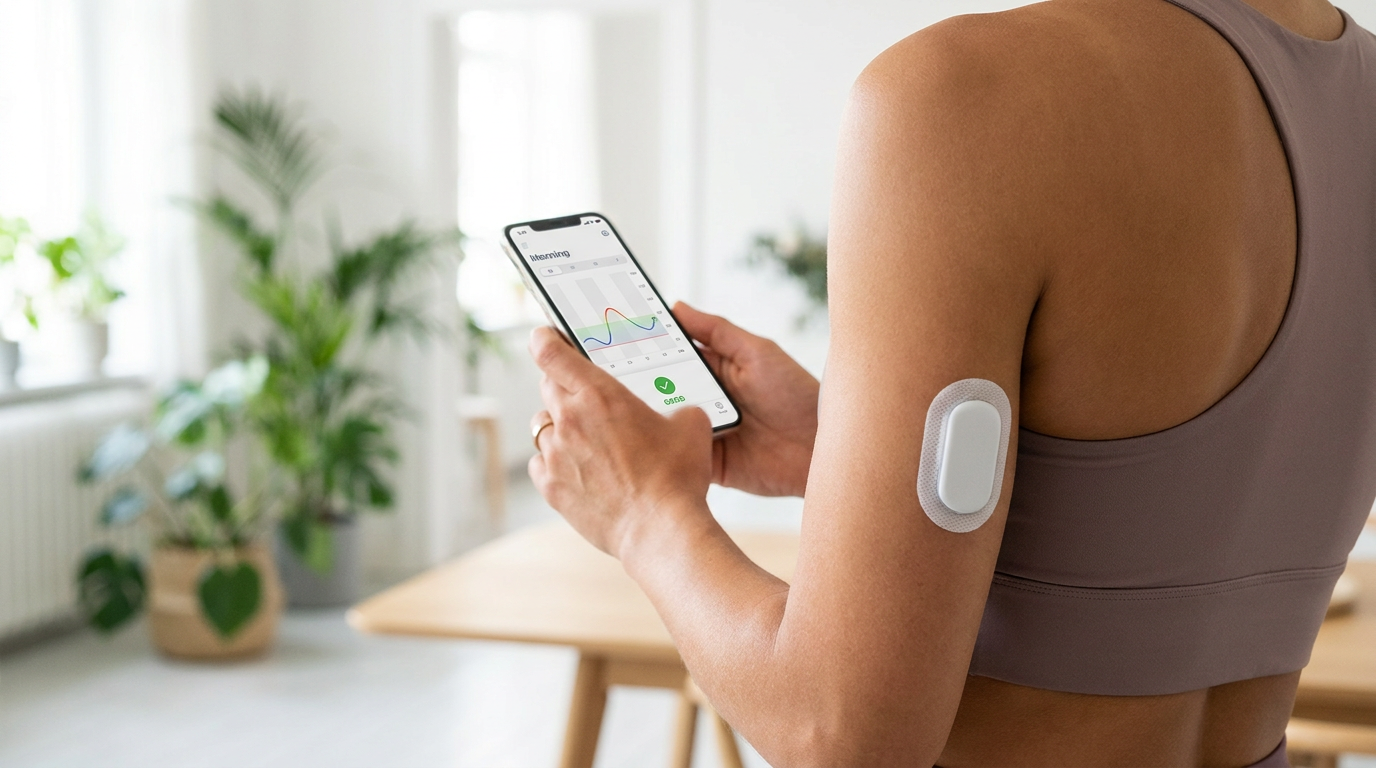
Understanding how these devices function requires dispelling a common misconception: they do not actually measure blood. Instead, a user applies a small, water-resistant patch to the back of their upper arm, which inserts a flexible, hair-thin filament just beneath the skin. This sensor continuously measures glucose concentrations in the interstitial fluid—the liquid surrounding the body's cells. The device then transmits this data via Bluetooth to a smartphone application every few minutes, generating a real-time "glucose curve." For the first time, individuals can watch a live broadcast of their own metabolism, observing exactly how their morning coffee, a stressful meeting, or a poor night of sleep influences their internal chemistry.[1][4]
The data generated by these consumer wearables has provided massive, real-world validation for the core premise of precision nutrition: biochemical individuality. Large-scale studies analyzing continuous glucose data have demonstrated that postprandial (post-meal) glucose responses are highly idiosyncratic. When thousands of participants are fed the exact same standardized meal—such as a specific ratio of bread and butter—their glucose curves scatter in wildly different directions. Nutritional scientists have identified that these divergent responses are heavily influenced by factors entirely unique to the individual, including their specific genetic variants, baseline insulin sensitivity, and, crucially, the composition of their gut microbiome.[3][4]

The implications of this variability are profound. It suggests that the traditional approach of prescribing a universal "healthy diet" is inherently flawed. For instance, a 2025 meta-analysis published in the Journal of Nutritional Genomics reviewed dozens of randomized controlled trials and found a 25 percent improvement in glycemic control among prediabetic individuals who utilized genotype-informed diets compared to those following standard low-fat guidelines. By harnessing an individual's unique biological makeup, precision nutrition interventions have demonstrated significantly greater efficacy in improving metabolic health markers, challenging long-held dogmas about carbohydrate restriction and fat intake.[4][6]
Beyond the biochemistry, the true power of OTC continuous glucose monitors lies in their capacity for behavioral modification. Traditional dietary advice often fails because the feedback loop is too slow; eating a poor diet today might not manifest as weight gain or elevated HbA1c levels for months or years. A CGM, however, provides immediate, undeniable biofeedback. Watching a steep, red spike form on a smartphone screen thirty minutes after consuming a sugary pastry triggers a visceral psychological response. This instant visual feedback serves as a powerful behavioral motivator, effectively gamifying metabolic health and encouraging users to make healthier choices in real time.[1][8]
Beyond the biochemistry, the true power of OTC continuous glucose monitors lies in their capacity for behavioral modification.
This real-time feedback loop has popularized the concept of "Time in Range" (TIR) among the general public. Rather than focusing solely on a single fasting glucose measurement taken once a year at a doctor's office, users aim to keep their glucose levels within a tight, stable band—typically between 70 and 140 milligrams per deciliter—throughout the day. By minimizing the extreme peaks and subsequent reactive valleys, individuals often report significant improvements in subjective well-being, including more stable energy levels, sharper cognitive focus, and a dramatic reduction in afternoon fatigue and sugar cravings.[1][5]
The actionable insights gleaned from this data often translate into simple, highly effective lifestyle tweaks. One of the most common behavioral changes observed among CGM users is the adoption of the post-meal walk. Users quickly discover that engaging in light physical activity, such as a 15-minute stroll immediately after consuming a carbohydrate-heavy meal, can dramatically blunt the subsequent glucose spike. The working muscles act as a sink, absorbing the circulating glucose independent of insulin. Seeing this physiological mechanism play out in real time on a graph turns abstract medical advice into a proven, personalized strategy.[1][8]

Despite the enthusiasm surrounding precision nutrition, the widespread adoption of OTC glucose monitors has generated considerable skepticism within the medical community. Medical traditionalists and endocrinologists frequently caution that transient glucose spikes after meals are a perfectly normal physiological response, not necessarily a harbinger of impending metabolic disease. A healthy pancreas is designed to release insulin to manage these fluctuations. Critics argue that marketing these devices to healthy, non-diabetic individuals risks pathologizing normal human biology, potentially leading users to unnecessarily restrict their diets based on a misunderstanding of what constitutes a dangerous glucose excursion.[2][5]
This clinical skepticism is closely tied to concerns about "data-driven anxiety" and the potential for disordered eating. Constantly monitoring a biometric data stream can foster an unhealthy obsession with achieving a perfectly flat glucose line. In pursuit of this unattainable ideal, users might begin eliminating highly nutritious, fiber-rich foods—such as legumes, whole grains, and certain fruits—simply because they cause a temporary rise in glucose. Nutritionists warn that this hyper-fixation on a single metric ignores the broader context of a healthy diet, potentially compromising long-term gut health and micronutrient intake in the name of short-term glycemic control.[1][7]
Furthermore, the accessibility of precision nutrition remains a significant hurdle. While OTC continuous glucose monitors no longer require a prescription, they are not inexpensive, with monthly costs for sensors and accompanying app subscriptions often exceeding a hundred dollars. Because these devices are generally not covered by insurance for non-diabetic use, they risk becoming a luxury wellness tool available only to the affluent. Public health advocates worry that the precision nutrition revolution could inadvertently widen existing health disparities, providing cutting-edge preventative tools to those who already possess the resources to maintain their health, while leaving vulnerable populations reliant on outdated, generalized guidelines.[1][6]

Looking ahead, the utility of continuous glucose monitoring is being exponentially amplified by the integration of artificial intelligence. In 2026, the raw data streams generated by these biosensors are increasingly fed into sophisticated AI-powered nutrition platforms. These virtual coaches utilize machine learning algorithms to analyze an individual's glucose responses, cross-referencing them with data from other wearables tracking sleep, stress, and physical activity. The result is a dynamic, continuously evolving meal plan that adapts to the user's real-time metabolic state, moving the industry closer to the holy grail of truly automated, personalized preventative healthcare.[1][6]
Ultimately, the rise of precision nutrition and over-the-counter continuous glucose monitors represents a fundamental shift in the paradigm of preventative medicine. By providing individuals with the tools to observe and optimize their metabolic function in real time, the focus is shifting from managing chronic disease after it has developed to preventing metabolic dysfunction years before a clinical diagnosis of prediabetes is ever made. While the technology requires careful interpretation to avoid unnecessary anxiety, the transition away from blind dieting toward data-driven, personalized nutrition is an empowering evolution that promises to make individuals significantly more capable stewards of their own long-term health.[1][7]
How we got here
Pre-2024
Continuous glucose monitors are strictly prescription-only medical devices used primarily for managing Type 1 and Type 2 diabetes.
March 2024
The FDA clears Dexcom's Stelo as the first over-the-counter CGM available without a prescription.
June 2024
Abbott receives FDA clearance for its Lingo and Libre Rio over-the-counter continuous glucose monitors.
2025–2026
OTC CGMs surge in popularity within the general wellness market, driving the rapid expansion of AI-powered precision nutrition platforms.
Viewpoints in depth
Metabolic Optimization Advocates
Argue that real-time biofeedback empowers individuals to prevent metabolic dysfunction.
This camp, comprising longevity researchers, biohackers, and progressive dietitians, views OTC CGMs as a revolutionary tool for preventative health. They argue that waiting for an annual HbA1c test to detect metabolic dysfunction is akin to driving a car without a dashboard and waiting for the engine to smoke. By providing immediate, actionable data, they believe CGMs empower individuals to identify their unique trigger foods and make sustainable lifestyle changes long before chronic disease sets in.
Medical Traditionalists
Caution that continuous monitoring in healthy individuals may be unnecessary and anxiety-inducing.
Endocrinologists and traditional medical bodies emphasize that transient glucose spikes after meals are a normal, healthy physiological response. They express concern that marketing medical devices to the general wellness market risks pathologizing normal human biology. This camp warns of 'data-driven anxiety,' where users become overly fixated on achieving a perfectly flat glucose line, potentially leading to orthorexia and the unnecessary elimination of healthy, fiber-rich foods.
Nutritional Scientists
Focus on the data proving that one-size-fits-all dietary guidelines are fundamentally flawed.
Researchers in nutrigenomics and microbiome science see the widespread use of CGMs as massive validation of biochemical individuality. They point to large-scale studies demonstrating that genetic variants and gut bacteria dictate carbohydrate metabolism. For this camp, the primary value of the precision nutrition movement is the definitive end of universal food pyramids, paving the way for dietary recommendations tailored to an individual's specific biological makeup.
What we don't know
- Whether the long-term use of CGMs by healthy individuals actually prevents the onset of chronic metabolic diseases decades later.
- How accurately AI nutrition coaches can predict glucose responses based solely on microbiome and genetic data without continuous sensor input.
Key terms
- Precision Nutrition
- An approach to diet that tailors recommendations to an individual's unique genetics, microbiome, and metabolic responses, rather than using universal guidelines.
- Interstitial Fluid
- The fluid found in the spaces around cells, which is where continuous glucose monitors measure glucose concentrations instead of drawing actual blood.
- Time in Range (TIR)
- The percentage of time a person's glucose levels remain within a target, stable band (often 70–140 mg/dL), minimizing extreme peaks and crashes.
- Postprandial
- The period immediately following a meal, during which blood glucose levels naturally rise as food is digested.
- Nutrigenomics
- The study of how an individual's genetic makeup affects their response to specific nutrients and diets.
Frequently asked
What is a continuous glucose monitor (CGM)?
A CGM is a wearable biosensor, typically attached to the back of the upper arm, that measures glucose levels in the body's interstitial fluid every few minutes and sends the data to a smartphone.
Do I need a prescription to buy a CGM?
As of 2024, the FDA cleared several CGMs, including Dexcom's Stelo and Abbott's Lingo, for over-the-counter purchase without a prescription for adults who do not use insulin.
Why would a non-diabetic use a glucose monitor?
Many health-conscious individuals use them to discover how their unique biology responds to specific foods, stress, and exercise, allowing them to optimize their diet for stable energy and long-term metabolic health.
Does a CGM actually measure my blood?
No. The tiny filament sits just beneath the skin and measures glucose in the interstitial fluid (the fluid surrounding your cells), which closely correlates with blood glucose levels.
Sources
Source coverage
8 outlets
3 viewpoints surfaced








[1]Factlen Editorial TeamNutritional Scientists
Synthesis by Factlen editorial team
Read on Factlen Editorial Team →[2]U.S. Food and Drug AdministrationMedical Traditionalists
FDA Clears First Over-the-Counter Continuous Glucose Monitor
Read on U.S. Food and Drug Administration →[3]PLOS OneNutritional Scientists
Metabolic health and its association with lifestyle habits: A cross-sectional study
Read on PLOS One →[4]Journal of Nutritional GenomicsNutritional Scientists
Analyzing the Data: Precision Nutrition's Impact on Health Metrics
Read on Journal of Nutritional Genomics →[5]American Journal of Managed CareMedical Traditionalists
Flash CGM associated with event reduction in nonintensive diabetes therapy
Read on American Journal of Managed Care →[6]Global Nutrition ReportMetabolic Optimization Advocates
2026 Developments: Technology and Trends Shaping Nutrition Today
Read on Global Nutrition Report →[7]National Institutes of Health (NIH)Nutritional Scientists
Precision Nutrition: The Future of Diet and Health
Read on National Institutes of Health (NIH) →[8]Precision NutritionMetabolic Optimization Advocates
Continuous Glucose Monitors: Are They Worth It for Non-Diabetics?
Read on Precision Nutrition →

More in health
See all 6 stories →Dementia Research
Shingles Vaccine Lowers Dementia Risk by 24 Percent in Major New Study
7 sources

Clinical Evidence
Massive 2026 Evidence Synthesis Finds Exercise Matches or Outperforms Medication for Depression
5 sources

Metabolic Health
The Science of Circadian Eating: Why When You Eat Matters as Much as What You Eat
6 sources

Longevity Science
The Science of 'Exercise Mimetics': How New Longevity Drugs Aim to Put a Workout in a Pill
7 sources

Every angle. Every day.
Get health stories with full source coverage and perspective breakdowns delivered to your inbox.