
Dolly Parton's Imagination Library Surpasses 314 Million Books as Global Study Proves Literacy Impact
The country music icon's childhood literacy program is now gifting 3.4 million books a month, backed by new international research showing profound benefits for early childhood development.
By Factlen Editorial Team
- Early Education Researchers
- Focus on the measurable cognitive benefits of early and consistent book access.
- Participating Families
- Value the routine, bonding, and financial relief the program provides.
- Program Administrators
- View the program as a vital community outreach tool that drives broader library engagement.
What's not represented
- · Educators receiving these children in kindergarten
- · Publishing industry analysts tracking the impact of bulk philanthropic book purchases
Why this matters
Early childhood literacy is one of the strongest predictors of lifelong educational and economic success. This program provides a scalable, proven model for closing the preparation gap before children even enter kindergarten.
Key points
- The Imagination Library has officially gifted over 314 million books since its inception in 1995.
- A new study of 86,000 caregivers shows significant literacy improvements after receiving just 10 books.
- The program currently mails 3.4 million books every month across five different countries.
- New 2026 initiatives include expanded bilingual English/Spanish collections and Braille/audio options.
- The program operates via a hybrid model: the Dollywood Foundation manages logistics while local affiliates fund the postage.
When Dolly Parton launched the Imagination Library in 1995, she started with a simple premise: mail a free book every month to children in her home county of Sevier, Tennessee, from birth until they start kindergarten. Three decades later, that local initiative has evolved into one of the most expansive and effective philanthropic infrastructures in the world.[1][7]
As of the spring of 2026, the Imagination Library has officially gifted more than 314 million books to children across the United States, Canada, the United Kingdom, Australia, and the Republic of Ireland. The logistical scale of the operation is staggering, with the program now mailing over 3.4 million books every single month to registered families.[1]
But the 2026 milestone is not just about volume; it is about proven efficacy. A newly released, groundbreaking international study—the largest dataset ever collected on shared book reading—has quantified the exact impact of Parton's initiative on early childhood development.[1][7]

Led by researcher Dr. Claire Galea, the study tracked more than 86,000 caregivers across five countries over a twelve-month period. The research compared families actively enrolled in the Imagination Library with those who had not yet begun receiving books, looking for differences in developmental milestones.[1]
The findings revealed that it takes remarkably little time for the program to alter a child's trajectory. After receiving just 10 books in the mail, children demonstrated significantly stronger early literacy skills, including advanced vocabulary development and heightened phonological awareness. These are the exact metrics that help close the preparation gap before a child ever steps foot in a classroom.[1][7]
Beyond raw academic metrics, the study highlighted profound shifts in family dynamics. Children enrolled in the Imagination Library were far more likely to be read to regularly and to actively participate during shared reading time. Caregivers reported adopting more interactive reading behaviors, such as discussing the illustrations and encouraging toddlers to hold and explore the physical books themselves.[1]

Beyond raw academic metrics, the study highlighted profound shifts in family dynamics.
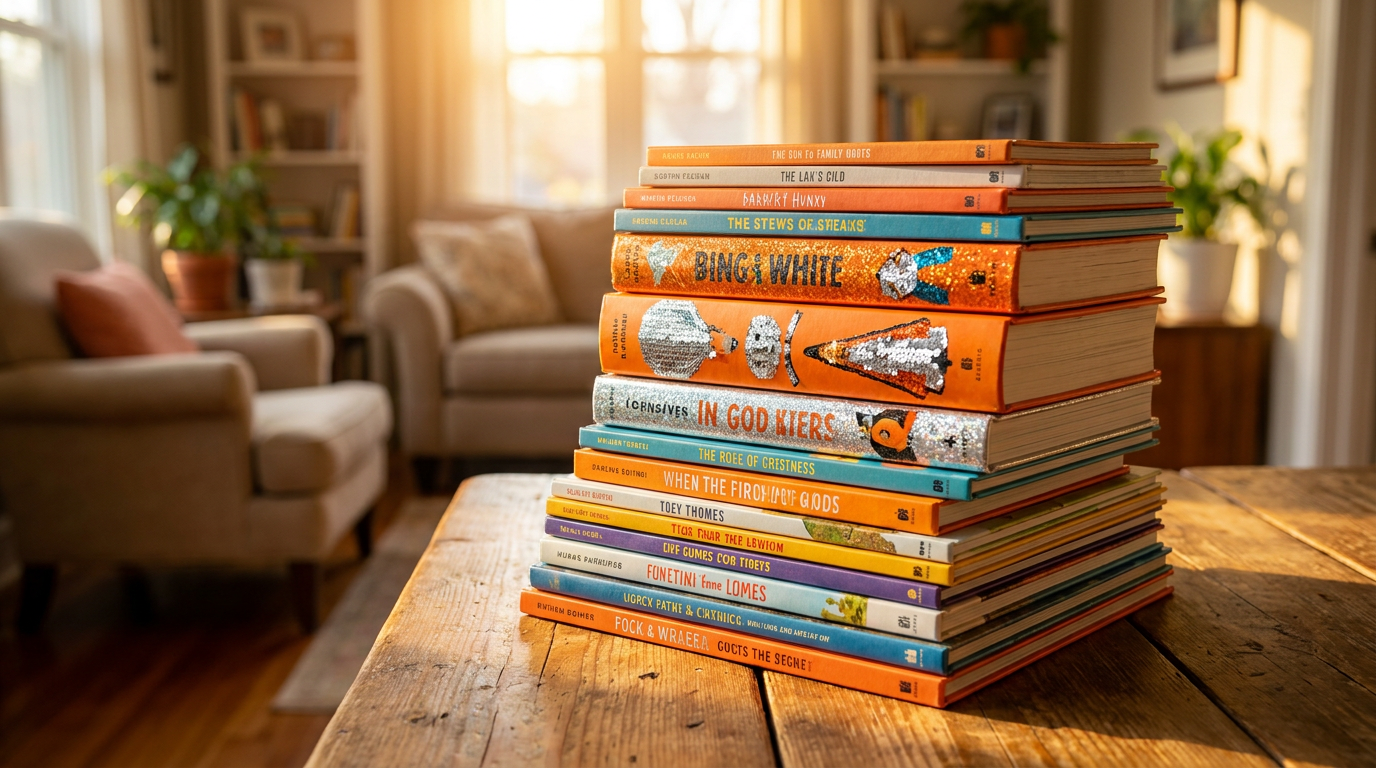
The curation of the library is handled with meticulous care. Each year, a Blue Ribbon Book Selection Committee—comprised of early literacy experts, academics, and librarians—selects age-appropriate titles that reflect a wide range of family experiences. The goal is to ensure that every child can see themselves reflected in the stories and themes.[2][4][5]
The journey always begins with the same classic: the first book a registered child receives is "The Little Engine That Could." From there, the selections grow with the child, culminating in the month they turn five years old, when they receive "Look Out Kindergarten, Here I Come!" to mark their graduation from the program.[4]
In 2026, the program is placing a massive emphasis on accessibility and inclusion. Several state-wide chapters, including those in Colorado and Ohio, have rolled out robust bilingual English/Spanish collections. Families can now opt in to receive bilingual books every month, exposing children to a second language and providing a wider variety of culturally resonant titles.[3][4]
The initiative has also partnered with the American Printing House (APH) to ensure that children with visual impairments are not left behind. APH selects specific titles from the Imagination Library collection and converts them into Braille and print hybrid books, which are mailed at no cost to the family. Audio versions are also made available for use on specialized digital playback devices.[4][6]

The funding model that makes this possible relies on a unique public-private partnership. The Dollywood Foundation covers the overhead, the database management, and the negotiation of bulk publishing costs with Penguin Random House. Local affiliates—ranging from state governments and library districts to local Rotary clubs and United Way chapters—step in to cover the actual wholesale cost of the books and the postage for their specific communities.[2][5][7]
Parton famously founded the program in honor of her father, Robert Parton, a hardworking farmer who never learned to read or write. She has frequently noted that his inability to read limited his opportunities, and she designed the Imagination Library to ensure that income would never be a barrier to a child's access to literature.[2][7]
In an era where celebrity philanthropy often takes the form of one-off galas or temporary awareness campaigns, the Imagination Library stands out as a piece of permanent, generational infrastructure. By simply putting a book in a child's hand every month, the program is quietly rewriting the educational future of millions.[7]
How we got here
1995
Dolly Parton launches the Imagination Library in Sevier County, Tennessee, in honor of her father.
2000
The program expands nationally across the United States.
2006
The Imagination Library launches internationally, beginning with Canada.
2018
The program celebrates gifting its 100 millionth book.
March 2026
The library surpasses 314 million books gifted and releases a landmark international study on its efficacy.
Viewpoints in depth
Early Education Researchers
Focus on the measurable cognitive benefits of early and consistent book access.
For developmental psychologists and literacy researchers, the Imagination Library serves as a massive, real-world laboratory. The 2026 data confirms what educators have long hypothesized: consistent access to physical books in the home fundamentally alters brain development in the first five years of life. Researchers emphasize that the gains in phonological awareness and vocabulary are not just academic head-starts; they are critical cognitive foundations that prevent children from falling behind before formal schooling even begins.
Participating Families
Value the routine, bonding, and financial relief the program provides.
For parents and caregivers, the arrival of a new book each month becomes a highly anticipated family event. Families report that the program removes the financial friction of building a home library, which is especially crucial during periods of economic inflation. Furthermore, caregivers note that the curated, age-appropriate nature of the books introduces them to diverse stories and interactive reading techniques they might not have discovered on their own.
Local Library Districts
View the program as a vital community outreach tool that drives broader library engagement.
Local library systems and municipal governments often serve as the funding affiliates that pay the wholesale and postage costs for their specific zip codes. Administrators view this not as a competing service, but as a gateway. By registering newborns into the Imagination Library, local branches establish a relationship with families from day one, which frequently translates into higher in-person library attendance and greater participation in community literacy programs as the children grow.
What we don't know
- While the program operates in five countries, it is not yet universally available in every zip code, as expansion depends on securing local funding affiliates.
- Long-term longitudinal data tracking the 2026 study cohort into their high school years is still decades away.
Key terms
- Phonological Awareness
- The ability to recognize and manipulate the spoken parts of sentences and words, a critical precursor to reading.
- Blue Ribbon Book Selection Committee
- A panel of early childhood literacy experts who curate the specific books mailed out by the Imagination Library each year.
- Preparation Gap
- The disparity in cognitive and academic skills between children of different socioeconomic backgrounds before they enter kindergarten.
Frequently asked
Who is eligible for the Imagination Library?
Any child from birth to age five is eligible, regardless of family income, provided they live in a zip code where a local affiliate has funded the program.
How much does it cost families?
The program is completely free for registered families. There are no registration fees or shipping costs.
What kind of books do children receive?
Children receive high-quality, age-appropriate books published by Penguin Random House, starting with 'The Little Engine That Could' and ending with 'Look Out Kindergarten, Here I Come!'
Are there books available in other languages?
Yes, the program offers bilingual English/Spanish collections, and families in participating areas can opt in to receive these.
Sources
Source coverage
7 outlets
3 viewpoints surfaced




[1]Dolly Parton OfficialEarly Education Researchers
Dolly Parton's Imagination Library Celebrates Spring Impact and Global Research Milestone
Read on Dolly Parton Official →[2]City of Palo Alto LibraryProgram Administrators
Dolly Parton's Imagination Library in Santa Clara County
Read on City of Palo Alto Library →[3]Ohio Imagination LibraryProgram Administrators
2026 Book Lists — Ohio Imagination Library
Read on Ohio Imagination Library →[4]Imagination Library ColoradoParticipating Families
2026 Book List | ImaginationLibraryCo
Read on Imagination Library Colorado →[5]Imagination Library AustraliaParticipating Families
The 2026 Book List - Dolly Parton's Imagination Library Australia
Read on Imagination Library Australia →[6]American Printing House for the BlindProgram Administrators
Braille Tales and Audio Imagination Library Collaboration
Read on American Printing House for the Blind →[7]Factlen Editorial TeamEarly Education Researchers
Synthesis by Factlen editorial team
Read on Factlen Editorial Team →
Every angle. Every day.
Get entertainment stories with full source coverage and perspective breakdowns delivered to your inbox.