
How Data Center REITs Are Financing the Physical Foundation of the AI Boom
As artificial intelligence drives unprecedented demand for computing power, specialized real estate investment trusts are racing to build and finance the massive, power-hungry facilities that make the digital economy possible.
By Factlen Editorial Team
- Infrastructure Bulls
- Argue that power scarcity and the massive AI capex cycle have created an impenetrable moat for established data center operators.
- Capital Realists
- Focus on the immense capital costs of building AI facilities and the risk of overleveraging if AI monetization slows down.
- Technology Operators
- Emphasize the shift toward edge computing, low-latency interconnection, and advanced liquid cooling as the true differentiators in the inference era.
What's not represented
- · Local utility providers managing grid strain
- · Environmental advocates monitoring data center energy and water usage
Why this matters
The artificial intelligence revolution cannot happen in the cloud alone—it requires massive amounts of physical land, specialized cooling, and raw electricity. Understanding how data center REITs operate and fund this infrastructure provides a critical window into the true cost and physical constraints of the global AI boom.
Key points
- Data center REITs provide the physical real estate, power, and cooling required to house the global AI infrastructure.
- Major tech companies are projected to spend nearly $700 billion on digital infrastructure in 2026.
- Power grid constraints have made existing data centers with secured electricity highly valuable assets.
- REITs are increasingly using private capital funds and asset-backed securities to finance $1 billion+ campus developments.
- The industry is shifting toward urban data centers to support low-latency AI inference workloads.
- Advanced liquid cooling is replacing traditional air conditioning to manage the intense heat of modern GPUs.
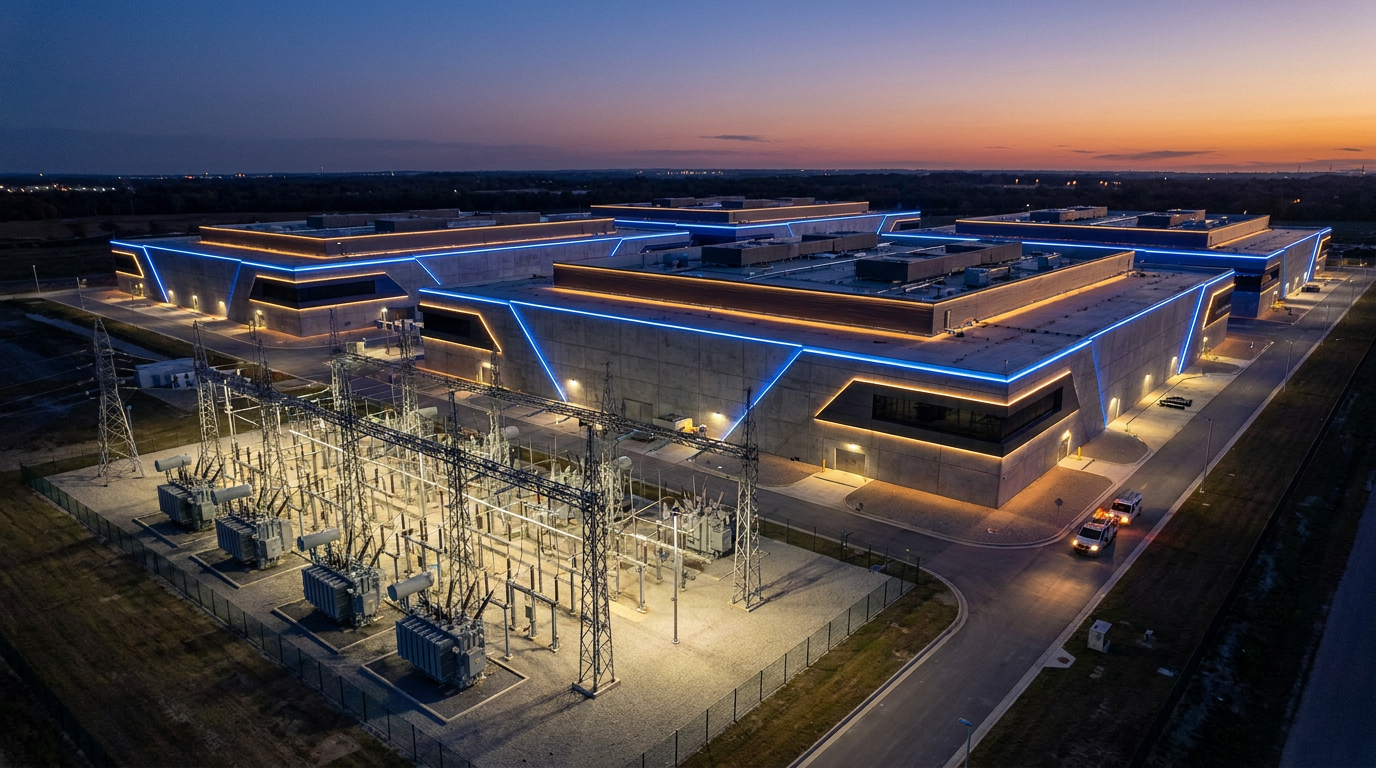
Artificial intelligence is frequently described in ethereal, intangible terms—we speak of clouds, neural networks, and virtual agents floating in the digital ether. But the reality of the AI revolution is intensely, undeniably physical. The entire ecosystem lives inside massive, windowless fortresses of concrete and steel, humming with the deafening roar of industrial cooling systems and glowing with the LED indicators of millions of servers. As the demand for generative AI and machine learning models skyrockets, the physical footprint required to sustain these technologies has become one of the most critical bottlenecks in the global economy. Enter the Data Center Real Estate Investment Trust (REIT). These specialized real estate companies do not build the AI models, write the code, or manufacture the silicon chips; instead, they build and manage the highly engineered houses where the artificial intelligence actually lives and breathes.[7]
The underlying business model of a data center REIT is straightforward in concept but staggeringly complex in execution. Unlike traditional commercial real estate landlords who lease office space by the square foot, data center operators lease capacity primarily by the megawatt. They acquire strategic parcels of land, negotiate massive power allocations from local utility grids, construct the physical shell of the building, and install industrial-grade redundancies for power, cooling, and security. They then lease this specialized capacity to "hyperscalers"—the massive cloud providers like Amazon Web Services, Microsoft Azure, and Google Cloud—as well as large enterprise customers. Because the cost of moving server equipment is prohibitively high, these leases are incredibly sticky, typically structured as five- to fifteen-year contracts that provide the REIT with highly predictable, long-term cash flows.[7]
In 2026, the generative AI boom has fundamentally altered the scale and trajectory of this real estate sector, transforming it from a niche alternative asset class into the foundational bedrock of the modern economy. The sheer volume of capital flowing into digital infrastructure is unprecedented. Industry projections indicate that the "big four" tech giants—Alphabet, Microsoft, Amazon, and Meta—are on track to spend nearly $700 billion on infrastructure capital expenditures this year alone. This massive influx of spending is a direct response to the computational intensity of AI workloads, which require densely packed clusters of specialized Graphics Processing Units (GPUs) that consume vastly more resources than the traditional central processing units used in the previous era of cloud computing.[3]
This unprecedented wave of capital deployment has shifted the industry's primary development bottleneck from the acquisition of real estate to the procurement of raw electricity. A single modern AI training campus, designed to house tens of thousands of advanced GPUs working in tandem to train next-generation foundational models, can now require between 100 and 500 megawatts of continuous power. To put that figure into perspective, a 500-megawatt facility consumes roughly the same amount of electricity as a mid-sized American city. Utility providers across the globe are struggling to upgrade their grid infrastructure and build new substations fast enough to accommodate this structural acceleration in baseline power demand, leading to multi-year wait times for new grid interconnections in major data center markets.[1][3]

This severe power scarcity has inadvertently created a massive, nearly impenetrable competitive moat for established data center REITs like Digital Realty and Equinix. In the current market environment, a newly constructed data center building is effectively worthless if it cannot draw power from the grid. Consequently, REITs that had the foresight to secure grid connections, negotiate power purchase agreements, and acquire land in prime utility corridors years before the AI boom began now hold incredibly valuable assets. Their existing portfolios and approved development pipelines command premium valuations, not necessarily because their concrete shells are superior to new entrants, but because they control the one resource that hyperscalers desperately need and cannot easily replicate: immediate, reliable access to industrial-scale electricity.[2][5]
However, capitalizing on this demand and building these digital fortresses is a staggeringly expensive endeavor that places immense pressure on corporate balance sheets. Constructing a state-of-the-art, AI-ready data center campus can easily cost between $1 billion and $2 billion, and the development cycle can stretch from 18 to 36 months. This capital intensity presents a unique structural challenge for REITs. By law, Real Estate Investment Trusts are required to distribute at least 90% of their taxable income to shareholders in the form of dividends in order to maintain their tax-advantaged status. As a result, they cannot simply retain all of their operating cash flow to fund new construction; they must constantly return to the capital markets to raise fresh equity and debt to finance their development pipelines.[1][6]
However, capitalizing on this demand and building these digital fortresses is a staggeringly expensive endeavor that places immense pressure on corporate balance sheets.
To bridge this massive funding gap without dangerously overleveraging their balance sheets, data center operators are increasingly turning to creative private capital structures and joint ventures. A prime example of this strategy materialized recently when Digital Realty successfully closed its inaugural U.S. hyperscale data center fund, securing $3.25 billion in total equity commitments. By drawing capital from a diverse pool of institutional allocators—including sovereign wealth funds, public pensions, and university endowments—the REIT can aggressively scale its AI infrastructure footprint in key metropolitan markets while sharing the development risk and preserving its own corporate liquidity. This shift toward private capital vehicles signals a maturation of the asset class, as institutional investors seek direct exposure to the AI boom outside of traditional public equities.[3][8]
Beyond private equity funds, the broader structured finance markets have also stepped in to provide the necessary liquidity for the AI infrastructure buildout. The issuance of data center asset-backed securities (ABS) and commercial mortgage-backed securities (CMBS) has exploded in recent years, transforming these highly specialized buildings into deeply liquid, financeable assets. ABS volume alone has grown from a mere $1 billion in 2018 to consistently elevated levels exceeding $11 billion annually by 2026. This deep institutional acceptance of data centers as premium collateral allows REITs to recycle their capital more efficiently, borrowing against the stable, long-term cash flows of their stabilized properties to fund the next generation of high-density AI development projects.[3]

As the artificial intelligence industry matures in 2026, the physical requirements of the real estate are beginning to bifurcate into two distinct categories: training and inference. While the massive, power-hungry rural campuses are purpose-built to "train" foundational AI models by crunching petabytes of data over several months, the industry is simultaneously preparing for the "inference" phase. Inference occurs when those fully trained models are actually deployed into production and used by consumers and enterprises to generate real-time responses, write code, or analyze live data. Unlike training, which can happen anywhere with cheap power, inference requires incredibly low latency. The data must travel from the user to the server and back in milliseconds, meaning the physical data center must be located as close to the end user as possible.[2][4]
This critical need for low-latency inference is driving a surge of demand for urban, highly connected data center facilities. Operators that focus heavily on edge connectivity and network density, such as Equinix, are seeing record-breaking leasing momentum. Equinix recently surpassed a major milestone of 500,000 global interconnections, a metric that underscores how deeply enterprises are weaving AI into their daily operations. As companies deploy AI-driven services into hybrid and multi-cloud environments, the ability to privately and securely route data between different cloud providers and on-premise servers becomes foundational. In this inference-driven future, the value of the real estate is dictated not just by the sheer volume of power it can deliver, but by the density of the fiber-optic networks that intersect within its walls.[4]
Inside these urban and edge facilities, the physical architecture is evolving at a breakneck pace to handle the intense thermal challenges generated by modern AI hardware. The latest generations of GPUs run incredibly hot, pushing the limits of what traditional air-cooling systems can handle. In response, 2026 has seen a rapid, industry-wide shift toward precision liquid cooling technologies. Rather than simply blowing cold air through a server rack, operators are now deploying direct-to-chip microfluidics, circulating chilled liquid directly over the silicon processors to extract heat far more efficiently. This transition requires data center REITs to fundamentally redesign their plumbing, floor loading, and facility layouts, creating a clear divide between legacy data centers and modern, AI-ready infrastructure.[8]

Despite the massive secular tailwinds and the seemingly insatiable demand for compute, the data center REIT sector is not entirely immune to macroeconomic and industry-specific risks. The most prominent concern among cautious investors is the ultimate monetization of artificial intelligence. If enterprise adoption of AI tools fails to generate the expected productivity gains or revenue growth, the hyperscalers could eventually scale back their aggressive capital expenditure plans. In such a scenario, the current unprecedented infrastructure buildout could result in a localized oversupply of high-density capacity, leaving operators with expensive, highly specialized facilities and fewer tenants willing to pay the premium rental rates required to justify the initial construction costs.[3][7]
Furthermore, the sector remains highly sensitive to the broader interest rate environment. Because data center REITs rely so heavily on continuous debt issuance to fund their capital-intensive development pipelines, prolonged periods of elevated borrowing costs can compress their profit margins and weigh on their stock valuations. This dynamic was evident in the public markets, where some major data center REITs experienced periods of share price underperformance relative to the broader tech sector, even as their underlying fundamentals and leasing volumes remained incredibly strong. Investors must constantly weigh the phenomenal growth prospects of AI against the sheer cost of financing the concrete and steel required to make it a reality.[1][7]
Ultimately, the evolution of the data center REIT sector in 2026 serves as a powerful reminder that the digital economy is anchored firmly in the physical world. As artificial intelligence continues to permeate every facet of modern business and society, the companies that own the land, control the power, and manage the cooling will remain the indispensable landlords of the internet. By successfully navigating the complex intersection of real estate development, utility grid management, and advanced thermal engineering, data center REITs are not just riding the wave of the AI revolution—they are actively building the physical foundation upon which the entire future of computing will rest.[5][6]
How we got here
2023
The generative AI boom begins, sparking a sudden rush for specialized GPU computing clusters.
2024–2025
Severe power grid constraints emerge as the primary bottleneck for new data center development globally.
Early 2026
Hyperscaler capital expenditure projections hit $700 billion, driving unprecedented demand for physical infrastructure.
March 2026
Digital Realty closes a $3.25 billion private fund to finance U.S. hyperscale development without overleveraging its balance sheet.
Viewpoints in depth
Infrastructure Optimists
Believe that power scarcity has created an unbeatable competitive advantage for existing data center landlords.
This perspective argues that the bottleneck for AI development has permanently shifted from silicon to electricity. Because utility providers cannot build new substations fast enough to meet the 100- to 500-megawatt demands of modern AI campuses, REITs that secured grid access years ago now possess a nearly insurmountable moat. Proponents point to the massive $700 billion capital expenditure plans of the hyperscalers as evidence that demand for these physical assets will remain robust for the foreseeable future, allowing landlords to dictate highly favorable, long-term lease terms.
Capital Realists
Warn that the staggering cost of building AI facilities poses significant financial risks if AI monetization slows.
Financial analysts and cautious investors focus on the immense capital intensity required to participate in the AI boom. With a single campus costing upwards of $2 billion, data center REITs are forced to constantly issue new debt and equity, making them highly sensitive to interest rate fluctuations. This camp warns that if enterprise adoption of AI fails to deliver the expected productivity gains, hyperscalers could abruptly halt their infrastructure spending, leaving real estate operators overleveraged and burdened with expensive, empty capacity that is difficult to repurpose.
Network Architects
Emphasize that the future of data center real estate lies in urban connectivity and advanced thermal engineering.
Technology operators argue that the real estate narrative is shifting from sheer size to technical sophistication. As the AI industry moves from training models in remote locations to deploying them for real-time consumer use (inference), the value of a data center is increasingly determined by its proximity to urban populations and its density of fiber-optic interconnections. Furthermore, this camp highlights that legacy facilities are rapidly becoming obsolete unless they can be retrofitted with the precision liquid cooling and microfluidics necessary to prevent next-generation GPUs from overheating.
What we don't know
- Whether enterprise adoption of AI will generate enough revenue to sustain the hyperscalers' $700 billion infrastructure spending pace.
- How quickly utility companies can upgrade regional power grids to alleviate the current electricity bottleneck.
- To what extent emerging nuclear power solutions, such as small modular reactors (SMRs), will be integrated into future data center campuses.
Key terms
- Hyperscaler
- Massive cloud service and technology providers, such as Amazon, Microsoft, and Google, that require vast amounts of computing infrastructure.
- Megawatt (MW)
- A unit of electrical power equal to one million watts, commonly used to measure the capacity and leasing size of modern data centers.
- Inference
- The phase of artificial intelligence where a fully trained model is deployed to process new data and generate real-time responses for end users.
- Liquid Cooling
- An advanced thermal management technique that circulates chilled fluid directly to server components to remove heat more efficiently than traditional air conditioning.
- Colocation
- A data center model where multiple different enterprise customers rent space, power, and bandwidth within the same shared physical facility.
Frequently asked
What exactly is a data center REIT?
A data center Real Estate Investment Trust (REIT) is a company that owns, operates, and finances the physical buildings that house computer servers. They lease space, power, and cooling capacity to tech companies and enterprises.
Why do AI data centers need so much power?
Artificial intelligence relies on densely packed clusters of Graphics Processing Units (GPUs), which consume significantly more electricity and generate much more heat than traditional cloud computing servers.
What is the difference between AI training and AI inference?
Training is the computationally heavy process of teaching an AI model using massive datasets, which can be done in remote, power-rich areas. Inference is the real-time use of that model by consumers, which requires low-latency data centers located closer to urban populations.
How do data center REITs fund their expansion?
Because REITs must pay out 90% of their taxable income as dividends, they fund new construction by issuing debt, raising equity, forming private joint-venture funds, and utilizing asset-backed securities.
Sources
Source coverage
8 outlets
3 viewpoints surfaced








[1]ForbesCapital Realists
The AI Data Center Gold Rush Is Leaving The Landlords Behind
Read on Forbes →[2]Investing.comInfrastructure Bulls
Deutsche Bank analyst Benjamin Soff is constructive on U.S. data center REITs
Read on Investing.com →[3]Commercial SearchInfrastructure Bulls
Digital Realty Trust and Equinix are riding an unprecedented demand wave
Read on Commercial Search →[4]Efficiently ConnectedTechnology Operators
Equinix reported strong fourth-quarter and full-year 2025 results
Read on Efficiently Connected →[5]Seeking AlphaInfrastructure Bulls
Data center REITs have delivered sector-leading, consistent outperformance
Read on Seeking Alpha →[6]W.MediaInfrastructure Bulls
The Future of Data Center REITs: Capital, AI and the Next Wave of Digital Infrastructure Growth
Read on W.Media →[7]The Motley FoolCapital Realists
Best Data Center REITs for 2026 and How to Invest
Read on The Motley Fool →[8]Digital RealtyTechnology Operators
The AI inflection point: 5 predictions for 2026
Read on Digital Realty →

Every angle. Every day.
Get real estate stories with full source coverage and perspective breakdowns delivered to your inbox.