
The 'Exercise Pill' Moves Closer to Reality as Longevity Drug Clears Early Human Trials
An experimental drug designed to mimic the cellular benefits of aerobic exercise has shown significant metabolic improvements in early human trials, offering new hope for treating age-related decline.
By Factlen Editorial Team
- Longevity Researchers
- Focus on extending human healthspan by treating the root causes of metabolic aging and cellular decline.
- Clinical Endocrinologists
- Focus on the immediate utility of the drug for treating obesity, prediabetes, and fatty liver disease.
- Public Health Advocates
- Focus on the drug's potential to help the elderly and disabled, while cautioning against replacing physical activity for the able-bodied.
What's not represented
- · Physical Therapists
- · Fitness Industry Professionals
Why this matters
For millions of older adults and individuals with physical disabilities, traditional diet and exercise are mechanically or physiologically out of reach. A safe, effective exercise mimetic could decouple metabolic health from physical ability, offering a chemical bridge to prevent obesity, diabetes, and age-related decline.
Key points
- Cambrian Bio has presented positive Phase 1b data for ATX-304, an experimental drug that mimics the metabolic effects of aerobic exercise.
- The drug targets AMPK, the body's master energy sensor, tricking cells into burning fat and increasing glucose uptake without physical exertion.
- In human trials, the drug significantly improved resting metabolic rate, reduced visceral fat, and lowered triglycerides in adults with prediabetes.
- Preclinical models showed the drug boosted running endurance in aged mice by over 40% and reverted age-associated insulin resistance.
- While promising for the elderly and disabled, researchers caution the drug cannot replicate the mechanical benefits of exercise, such as bone density.
The concept of an "exercise pill" has long been relegated to science fiction. But the biological mechanisms of exercise are fundamentally chemical, and chemicals can be synthesized. For decades, researchers have hunted for a compound that could trigger the body's metabolic adaptations to physical exertion without requiring a single drop of sweat.[6]
As humans age, the cellular machinery that responds to physical exertion degrades. This metabolic decline drives a cascade of age-related conditions, including obesity, type 2 diabetes, and cardiovascular disease. For millions of older adults or those with physical disabilities, the standard medical advice to simply "diet and exercise" is physiologically or mechanically out of reach.[4]
A breakthrough in this space arrived in June 2026, when clinical-stage drug developer Cambrian Bio and its subsidiary, Amplifier Therapeutics, presented highly anticipated data on an experimental drug called ATX-304. Billed as an "exercise mimetic," the drug is the first of its kind to enter advanced clinical trials in humans.[1][2][5]
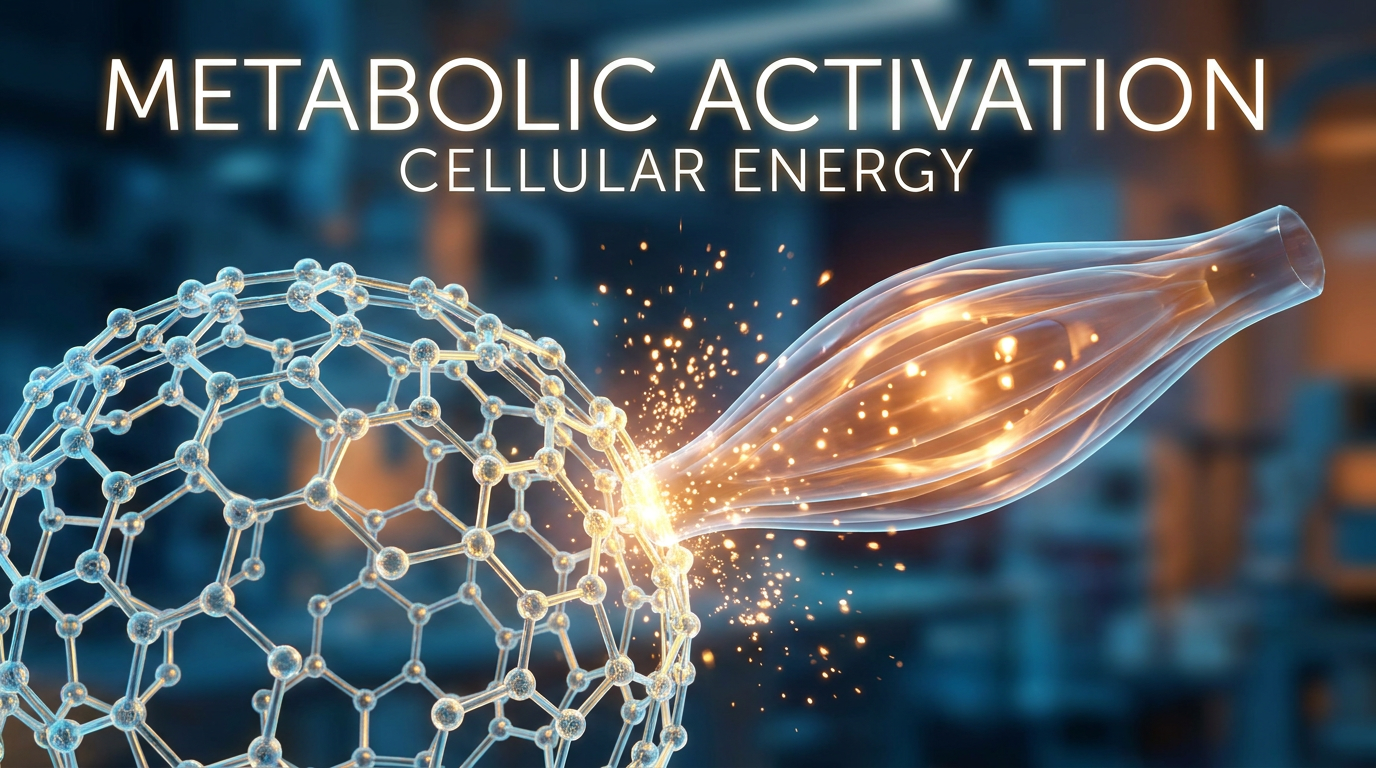
The target of ATX-304 is an enzyme called Adenosine monophosphate-activated protein kinase, or AMPK. Biologists refer to AMPK as the body's master energy sensor. It governs a vast signaling network that controls how cells sense and respond to energy demands.[1][4]

Under normal conditions, physical exercise depletes cellular energy, known as ATP. AMPK senses this deficit and immediately triggers a survival response: it commands the body to increase glucose uptake, burn stored fatty acids, and build new mitochondria to generate more power. This is the chemical reason why aerobic exercise makes humans leaner and more endurant.[3][4]
However, natural AMPK activity plummets as we age or consume chronic excess nutrients. Cells lose their metabolic flexibility, limiting fat oxidation and mitochondrial energy production. This age-related dampening of AMPK is a primary driver of insulin resistance and the accumulation of visceral fat.[1][3]
ATX-304 is designed to artificially flip this switch. Unlike previous pharmacological attempts that failed due to toxicity, ATX-304 activates the AMPK network without actually depleting cellular ATP. It effectively tricks the cell into believing it is undergoing rigorous aerobic training, increasing both energy supply and metabolic demand.[1][2][5]
The evidence for this mechanism was presented at the American Diabetes Association's 86th Scientific Sessions. In a Phase 1b randomized, double-blind study of adults with obesity and prediabetes, ATX-304 produced statistically significant improvements in resting metabolic rate.[5]
The human trial data also revealed profound shifts in lipid metabolism. Patients taking the drug saw significant reductions in liver fat, triglycerides, and visceral adipose tissue—the dangerous fat stored deep within the abdomen. Simultaneously, the drug elevated levels of adiponectin, a hormone that regulates glucose levels and fatty acid breakdown.[5]
The human trial data also revealed profound shifts in lipid metabolism.
These human results validate years of striking preclinical data. Before entering human trials, ATX-304 (previously studied in academic literature under the designation O304) was tested extensively in aged and obese animal models. In one landmark study, the drug boosted the running endurance of sedentary aged mice by over 40%.[3][4]

The cardiovascular benefits observed in those preclinical models were equally significant. The AMPK activator prevented and reverted age-associated hyperinsulinemia, improved cardiac microvascular function, and mitigated the development of progressive fatty liver disease, now known as MASLD.[3]
For clinical endocrinologists, one of the most promising aspects of ATX-304 is its potential for "muscle-sparing" weight loss. Traditional anti-obesity medications, such as GLP-1 receptor agonists, often cause patients to lose significant muscle mass alongside fat. Because ATX-304 mimics the metabolic state of exercise, early data suggests it preserves lean muscle tissue while targeting lipid stores.[1][5]
Beyond weight loss, the drug represents a vanguard in the longevity biotechnology sector. Because the U.S. Food and Drug Administration does not recognize "aging" as a treatable disease, longevity companies must target specific age-related pathologies to bring their therapies to market.[6]
By targeting the root metabolic decline—specifically the AMPK and mTOR pathways—these drugs are designed to act as multi-disease preventatives. The goal is not merely to treat a symptom, but to restore the cellular environment of a younger body, thereby extending human healthspan.[1][6]

A critical component of this healthspan extension is autophagy, the cellular "taking out the trash" process. AMPK activation triggers the clearance of damaged, aging mitochondria. This mitochondrial quality control is essential for preventing sarcopenia, or age-related muscle loss, and maintaining overall cellular vitality.[3][4]
Despite the promising data, transparent uncertainty remains. The Phase 1b trial primarily established safety and short-term metabolic engagement. The true test of efficacy will come in the upcoming Phase 2 studies, designated REWIRE-1 and REWIRE-2, which will evaluate long-term weight loss and cardiovascular outcomes at higher exposures.[2][5]
Furthermore, researchers caution against viewing the drug as a complete replacement for physical activity. While an AMPK activator can replicate the metabolic and chemical benefits of aerobic exercise, it cannot replicate the mechanical benefits. It will not improve bone density through weight-bearing impact, nor will it strengthen tendons or provide the neurochemical endorphin rush associated with a workout.[4][6]

Consequently, the target demographic for exercise mimetics is not the general healthy public looking for a shortcut. In fact, AMPK activators have already been banned by the World Anti-Doping Agency due to their performance-enhancing effects in athletes. The true beneficiaries will be the elderly, the bedridden, and those trapped in cycles of severe metabolic dysfunction.[3][4]
The regulatory and commercial hurdles are also steep. Developing preventive medicines requires massive, multi-year clinical trials to prove long-term safety, a timeline that often deters traditional venture capital. Cambrian Bio's distributed "pipeline company" model is a direct attempt to circumvent this structural bottleneck.[1][6]
If ATX-304 succeeds in its upcoming trials, it will represent a fundamental paradigm shift in medicine. By decoupling metabolic health from the physical ability to exercise, science may finally offer a chemical bridge to a longer, healthier life for those who need it most.[6]
How we got here
1990s-2000s
Researchers identify AMPK as the master regulator of cellular energy and a potential target for metabolic diseases.
2008
The Salk Institute publishes landmark research showing an AMPK activator (AICAR) boosts running endurance in mice by 44%.
2021
Preclinical studies demonstrate that the AMPK activator O304 prevents age-associated insulin resistance and improves cardiac function in aged mice.
June 2026
Cambrian Bio presents positive Phase 1b human clinical data for ATX-304 at the American Diabetes Association Scientific Sessions.
Viewpoints in depth
Longevity Researchers
Focus on extending human healthspan by treating the root causes of metabolic aging.
For longevity scientists, the goal is not merely to treat isolated diseases like obesity or diabetes, but to address the underlying cellular decline that causes them. By activating the AMPK network, researchers aim to restore the metabolic flexibility of a younger body. This approach theoretically acts as a multi-disease preventative, clearing out damaged mitochondria through autophagy and preserving cellular function across multiple organ systems simultaneously.
Clinical Endocrinologists
Focus on the immediate utility of the drug for treating obesity, prediabetes, and fatty liver disease.
Clinicians view AMPK activators as a highly targeted tool for the growing epidemic of metabolic syndrome. Unlike GLP-1 agonists that primarily suppress appetite and often lead to significant muscle loss, an exercise mimetic increases energy expenditure directly. Endocrinologists are particularly interested in the drug's ability to promote 'muscle-sparing' weight loss and its potential to reverse progressive fatty liver disease (MASLD), which currently has limited pharmacological treatments.
Public Health Advocates
Focus on the drug's potential to help the elderly and disabled, while cautioning against replacing physical activity for the able-bodied.
Public health experts recognize the immense value of an exercise pill for populations physically incapable of working out, such as the bedridden, the elderly, or those with severe joint degradation. However, they strongly caution that the drug should not be marketed as a lifestyle shortcut for the general public. While it replicates the chemical benefits of exercise, it cannot provide the mechanical stress required to build bone density, nor can it replicate the mental health benefits of physical movement.
What we don't know
- Whether the short-term metabolic improvements seen in Phase 1b will translate to sustained, long-term weight loss in humans.
- If the drug can safely be administered at higher doses over years without unforeseen off-target effects.
- How the FDA will eventually regulate longevity-focused drugs that aim to prevent age-related decline rather than treat a single acute disease.
Key terms
- AMPK
- Adenosine monophosphate-activated protein kinase, an enzyme that serves as the body's master energy sensor, triggering fat burning and glucose uptake when cellular energy is low.
- Exercise Mimetic
- A pharmacological compound designed to replicate the physiological benefits of physical exercise at the cellular level.
- Autophagy
- A cellular process where the body clears out damaged cells and proteins, essential for preventing age-related decline.
- Sarcopenia
- The age-related loss of skeletal muscle mass and strength.
- Visceral Adipose Tissue
- The 'hidden' fat stored deep inside the belly, wrapped around the organs, which is highly linked to metabolic disease.
Frequently asked
What is an exercise mimetic?
A drug that triggers the same cellular and metabolic pathways as physical exercise, such as burning fat and improving insulin sensitivity, without actual physical exertion.
Is ATX-304 a weight-loss drug like Ozempic?
While it targets obesity, it works differently. Instead of suppressing appetite via the brain, it increases cellular energy expenditure and fat oxidation, potentially preserving muscle mass better than GLP-1 drugs.
Can I take this instead of going to the gym?
No. While it mimics the metabolic effects of aerobic exercise, it cannot replicate the mechanical benefits of physical activity, such as increased bone density and joint strength.
When will this drug be available?
ATX-304 is currently entering Phase 2 clinical trials. It will likely be several years before it completes Phase 3 trials and receives FDA approval for public use.
Sources
Source coverage
6 outlets
3 viewpoints surfaced






[1]Cambrian BioLongevity Researchers
ATX-304: The Other Side of the Diet & Exercise Equation in Metabolic Disease
Read on Cambrian Bio →[2]Amplifier TherapeuticsLongevity Researchers
Developing ATX-304 for Metabolic Conditions
Read on Amplifier Therapeutics →[3]National Institutes of HealthClinical Endocrinologists
AMPK activator O304 improves metabolic and cardiac function, and exercise capacity in aged mice
Read on National Institutes of Health →[4]NutritionFactsPublic Health Advocates
AMPK: The Exercise-in-a-Pill Enzyme?
Read on NutritionFacts →[5]Business WireClinical Endocrinologists
Cambrian Bio Announces Positive Phase 1b Data for ATX-304, the First AMPK Network Activator in Clinical Development
Read on Business Wire →[6]Factlen Editorial TeamLongevity Researchers
Synthesis by Factlen editorial team
Read on Factlen Editorial Team →

More in health
See all 6 stories →Exercise Mimetics
The Science of 'Exercise in a Pill': How Mimetics Could Redefine Longevity
7 sources
Precision Nutrition
Beyond Diabetes: How Continuous Glucose Monitors Are Driving the Precision Nutrition Movement
6 sources

Cognitive Health
Shingles Vaccine Linked to 24% Lower Dementia Risk in Major Nursing Home Study
6 sources

Nature Prescriptions
The Evidence for Nature Prescriptions: How Green Space is Treating Depression and Anxiety
7 sources

Every angle. Every day.
Get health stories with full source coverage and perspective breakdowns delivered to your inbox.