
The Science of 'Exercise in a Pill': How Mimetics Could Redefine Longevity
Biotech firms are advancing a new class of drugs called exercise mimetics that trigger the metabolic benefits of a workout without physical exertion. While they won't replace the gym for healthy adults, they offer a groundbreaking lifeline for treating obesity and age-related frailty.
By Factlen Editorial Team
- Longevity Researchers
- Focus on extending human healthspan and treating age-related frailty through metabolic interventions.
- Public Health Advocates
- Emphasize that while mimetics are useful for the frail, they cannot replace the holistic benefits of physical activity for the general public.
- Biotech Industry
- View exercise mimetics as the next massive pharmaceutical market, potentially rivaling or succeeding GLP-1 weight-loss drugs.
What's not represented
- · Professional athletes and anti-doping agencies concerned about performance enhancement.
- · Fitness industry professionals evaluating the impact on gym culture.
Why this matters
As the global population ages, the loss of muscle mass and metabolic health drives a massive loss of independence and quality of life. A drug that replicates the cellular benefits of exercise could revolutionize how we treat frailty, obesity, and cardiovascular disease in those unable to work out.
Key points
- Exercise mimetics are experimental drugs designed to trigger the cellular pathways normally activated by physical exertion.
- By activating the AMPK and PPAR-delta pathways, these compounds trick the body into burning fat and building endurance.
- Unlike GLP-1 weight-loss drugs, mimetics increase resting energy expenditure and preserve muscle mass without suppressing appetite.
- While promising for treating frailty and obesity, mimetics cannot replicate the mechanical bone-strengthening or mental health benefits of actual exercise.
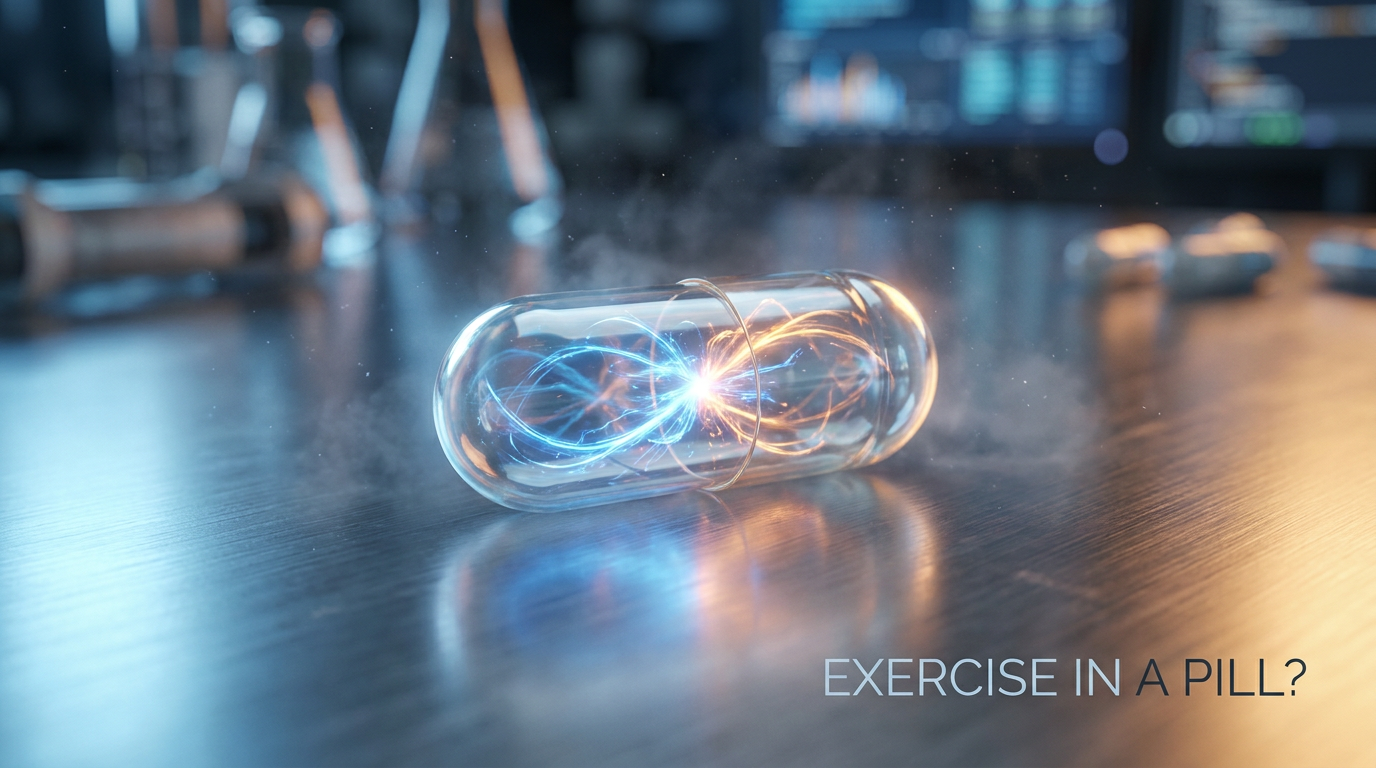
The holy grail of preventative medicine has long been a simple concept with impossibly complex biology: a pill that confers the physiological benefits of a five-mile run without the patient ever leaving the couch. For decades, the idea sounded like pure science fiction, relegated to the realm of wishful thinking. Now, a rapidly advancing field of biotechnology is bringing "exercise mimetics" into sharp clinical focus, promising to fundamentally alter how we treat aging, frailty, and metabolic disease. By targeting the exact cellular pathways activated during physical exertion, scientists are learning how to bottle the benefits of a workout.[1][5]
The latest catalyst in this space comes from Cambrian Biopharma, a longevity-focused biotechnology company that recently highlighted an experimental drug designed to mimic the metabolic effects of physical exertion. The compound, part of a broader pipeline aimed at extending human healthspan, represents a profound shift in how the pharmaceutical industry approaches age-related decline. Rather than treating the individual symptoms of aging—such as heart disease or muscle weakness—as they appear, the goal is to proactively maintain the metabolic vigor of youth. By tricking the body into a state of continuous, mild exertion, these drugs aim to stave off the systemic decay that accompanies a sedentary lifestyle.[5][7]
Unlike the current generation of blockbuster weight-loss drugs that rely on suppressing a patient's appetite, this new class of therapeutics targets the body's energy expenditure pathways directly. They do not stop you from wanting to eat; instead, they trick your muscles into burning fat and building endurance as if they were actively working out. This distinction is crucial, as it shifts the therapeutic focus from mere caloric restriction to active metabolic enhancement, opening the door to treatments that build resilience rather than just reducing mass.[1][5]
To understand how the complex systemic effects of exercise can be reduced to a pill, one must look closely at the cellular machinery that responds to physical stress. When a person exercises, their muscles rapidly consume adenosine triphosphate (ATP), which serves as the primary energy currency of the cell. As the muscle contracts and works, the local supply of ATP is quickly depleted, creating a localized energy crisis that the body must immediately address to keep moving.[6]

As ATP is burned for fuel, it breaks down into a byproduct called AMP. The rapidly rising levels of AMP act as a biochemical alarm bell inside the muscle tissue, triggering the activation of a "metabolic master switch" known as AMP-activated protein kinase, or AMPK. This enzyme is highly conserved across species, acting as a fundamental survival mechanism that ensures cells do not run out of the energy required to sustain basic life functions during periods of intense physical stress.[4][6]
AMPK functions essentially as the cell's internal fuel gauge. When it senses that the energy tank is running dangerously low, it immediately halts all non-essential, energy-consuming processes. Simultaneously, it revs up the body's energy production machinery, primarily by signaling the mitochondria—the powerhouses of the cell—to begin burning stored fatty acids. This is the exact mechanism that causes the body to burn fat during a long run, and exercise mimetics are designed to artificially flip this switch.[2][4]
Alongside AMPK, another crucial protein called PPAR-delta springs into action during physical exertion. Together, these two molecular regulators work in tandem to rewrite the genetic programming of skeletal muscle. They shift the tissue from a resting, glucose-dependent state to an endurance-optimized state that thrives on burning fat. By activating both AMPK and PPAR-delta simultaneously, scientists have discovered that they can artificially induce the deep cellular adaptations that normally require months of rigorous physical training. This synergistic activation is the key to unlocking true exercise mimetics, moving beyond simple fat burning to actual structural improvements in muscle endurance.[3][6]
In landmark preclinical studies, researchers found that administering synthetic compounds that activate AMPK and PPAR-delta could dramatically alter the physical capabilities of animal models. Mice given these specific compounds ran 44 percent longer on treadmills than untreated mice, despite having zero prior physical training. The animals exhibited the cardiovascular and muscular stamina of highly trained athletes, entirely through pharmacological intervention. This breakthrough proved that the biological benefits of endurance training can be chemically isolated and delivered orally, upending decades of conventional wisdom about the strict necessity of mechanical exertion for building stamina.[3][6]

Mice given these specific compounds ran 44 percent longer on treadmills than untreated mice, despite having zero prior physical training.
The metabolic shift observed in these studies was profound and highly specific. The mimetic drugs upregulated 30 out of 32 key oxidative genes, essentially creating the exact genetic signature of a marathon runner in a completely sedentary animal. The muscles physically transformed, developing a higher density of mitochondria and a greater capacity for sustained oxidative metabolism. This mirrored the exact physiological changes seen in humans who dedicate hours each week to aerobic conditioning, suggesting that the genetic pathways governing human fitness are highly malleable and responsive to targeted chemical triggers.[3][4]
The implications for human health extend far beyond athletic enhancement or cosmetic weight loss. While the idea of an "exercise pill" naturally appeals to the general public seeking an easier path to fitness, the primary medical target for these drugs is sarcopenia—the progressive, age-related loss of muscle mass and function. As humans age, the natural decline in muscle tissue leads to a cascade of negative health outcomes, from severe metabolic dysfunction to a devastating loss of physical independence. Preserving this tissue is considered one of the most critical challenges in the field of longevity medicine.[1][2]
For elderly individuals, bedridden patients recovering from surgery, or those with severe cardiovascular limitations, traditional exercise is often physically impossible or dangerously contraindicated. Exercise mimetics could provide a vital lifeline for these groups, preventing the rapid muscle wasting that inevitably leads to frailty. By artificially stimulating the muscles to maintain their tone and metabolic activity, these drugs could help vulnerable populations maintain their mobility and independence. This intervention could significantly reduce the risk of debilitating falls and the subsequent need for long-term institutional care that often follows a loss of muscle strength.[2][5]
Furthermore, these compounds offer a novel and potentially superior approach to the global obesity epidemic. While current blockbuster GLP-1 receptor agonists like Wegovy and Ozempic drive massive weight loss by reducing a patient's appetite, they often result in significant muscle loss alongside the reduction in body fat. Because muscle is highly metabolically active, losing it lowers the body's baseline metabolic rate, making it incredibly difficult for patients to maintain their weight loss if they ever stop taking the medication.[5][7]

Exercise mimetics, by contrast, tackle obesity by increasing the body's resting energy expenditure rather than suppressing caloric intake. In preclinical models, compounds like Cambrian's ATX-304 achieved total weight loss comparable to that of leading GLP-1 drugs, but the composition of the lost weight was entirely different. The reduction came exclusively from adipose fat stores, while the metabolically active muscle tissue was completely preserved and even strengthened. Crucially, the animals achieved this dramatic recomposition without any reduction in their appetite, simply burning significantly more fuel while at rest due to their enhanced metabolic state.[5][7]
Despite the immense promise of these therapeutics, researchers are quick to caution that a pill cannot perfectly replicate every single benefit of a rigorous physical workout. Exercise is a complex, systemic stressor that triggers a vast array of adaptations across multiple organ systems simultaneously. While mimetics can successfully replicate the metabolic and mitochondrial changes within skeletal muscle, they fall short of mimicking the holistic physical experience of moving the human body through space. The biological symphony of a true workout involves mechanical, neurological, and cardiovascular inputs that are difficult to capture in a single molecule.[1][2]
For instance, the mechanical impact of running, jumping, or lifting heavy weights stimulates bone remodeling and increases bone density—a physical stress response that biochemical mimetics cannot easily replicate. The sheer physical force applied to joints, tendons, and ligaments during exercise is necessary to keep those connective tissues strong and resilient. Without that mechanical load, a patient taking an exercise mimetic might develop the muscular endurance of an athlete but retain the fragile skeletal structure of a sedentary individual.[2]
Additionally, the cardiovascular sheer stress of pumping large volumes of blood through the arteries, which keeps blood vessels flexible and healthy, is uniquely tied to an elevated heart rate and physical exertion. Furthermore, the complex neurochemical cascades that produce the famous "runner's high," reduce systemic stress, and improve overall mental health are deeply connected to the actual act of physical movement. The psychological exertion required to push through fatigue and the subsequent release of endorphins and brain-derived neurotrophic factor (BDNF) provide cognitive benefits that a purely metabolic drug cannot fully emulate.[2][4]

Therefore, public health experts and longevity researchers view these drugs not as a convenient replacement for the gym for healthy adults, but as a critical medical intervention for those whose bodies are failing them. For a healthy thirty-year-old, a jog through the park will always be superior to a pill. But for an eighty-year-old struggling to stand up from a chair, an exercise mimetic could be the difference between vibrant independence and a rapid decline into severe frailty.[1][2]
As these compounds move out of the laboratory and into human clinical trials, the regulatory pathway will be highly complex and fraught with bureaucratic hurdles. The Food and Drug Administration does not currently recognize "aging" or "lack of exercise" as treatable diseases. Consequently, biotech companies must first prove these drugs are effective against specific, recognized medical conditions—such as muscular dystrophy, chronic kidney disease, or severe obesity. Only after securing approval for these targeted indications can the industry hope to expand their use to the broader public for general healthspan extension and preventative care.[1][7]
If successful, however, exercise mimetics could represent one of the most significant paradigm shifts in the history of preventative medicine. By decoupling the metabolic benefits of exercise from the physical ability to perform it, science is opening a new frontier in the fight against age-related decline. It offers a tantalizing future where the biological decay of a sedentary lifestyle can be chemically intercepted, allowing humanity to artificially maintain the metabolic vigor of youth well into our twilight years.[1][5]
How we got here
2008
Salk Institute researchers discover that activating the AMPK and PPAR-delta pathways increases endurance in mice without training.
2017
Scientists formally classify various metabolic regulators as 'exercise mimetics' and begin mapping their cellular effects.
2024
Researchers identify specific blood-borne proteins that transfer the brain-boosting benefits of exercise in animal models.
June 2026
Biotech firms like Cambrian Biopharma advance clinical candidates that mimic exercise to treat age-related decline and obesity.
Viewpoints in depth
Longevity Researchers
Argue that aging is a treatable metabolic decline, and exercise mimetics are the key to preserving muscle mass and independence in the elderly.
Researchers focused on extending human healthspan view exercise mimetics as a critical tool for combating sarcopenia—the age-related loss of muscle mass. They argue that because frail or bedridden patients cannot physically exercise, pharmacological intervention is the only way to halt the metabolic decay that leads to a loss of independence. By artificially keeping the body's 'exercise switch' turned on, they believe we can significantly compress the period of morbidity at the end of life.
Public Health Advocates
Warn against the medicalization of fitness, stressing that pills cannot replicate the mechanical and mental health benefits of actual movement.
Public health officials caution that while mimetics hold promise for the sick and elderly, they should not be viewed as a lifestyle shortcut for the general public. They emphasize that physical exercise provides holistic benefits—such as increased bone density from mechanical stress, improved joint flexibility, and the release of endorphins that boost mental health—that a purely metabolic drug cannot replicate. They worry that the promise of an 'exercise pill' could further discourage physical activity in an already sedentary society.
Biotech Industry
Focus on the massive commercial potential of mimetics as a superior alternative to current weight-loss drugs that cause muscle wasting.
The pharmaceutical and biotech sectors see exercise mimetics as the logical successor to the current boom in GLP-1 weight-loss drugs like Ozempic. Because GLP-1s suppress appetite, patients often lose significant muscle mass alongside fat, lowering their baseline metabolism. Industry leaders argue that mimetics solve this problem by increasing resting energy expenditure, allowing patients to burn fat while actively preserving or building muscle, representing a multi-billion dollar market opportunity.
What we don't know
- Whether the dramatic endurance and metabolic benefits seen in mice will translate with the same efficacy and safety to humans.
- The long-term safety profile of permanently keeping the body's 'exercise switch' turned on pharmacologically.
- How regulatory agencies like the FDA will classify and approve drugs aimed at general frailty rather than specific, traditional diseases.
Key terms
- AMPK
- An enzyme that serves as the cell's master energy sensor, triggering fat burning and energy production when cellular fuel levels are low.
- PPAR-delta
- A protein that works alongside AMPK to regulate the expression of genes involved in metabolism, shifting muscle tissue into an endurance-optimized state.
- Sarcopenia
- The natural, progressive loss of muscle mass, strength, and function that occurs as humans age.
- Exercise mimetic
- A pharmacological agent designed to chemically replicate the physiological and metabolic benefits of physical exercise.
- ATP
- Adenosine triphosphate, the primary molecule used by cells to store and transfer energy during physical exertion.
Frequently asked
What is an exercise mimetic?
An exercise mimetic is an experimental drug designed to trigger the exact cellular pathways normally activated by physical exertion, tricking the body into burning fat and building endurance.
Will this replace going to the gym?
No. While mimetics replicate metabolic benefits, they cannot replicate the mechanical benefits of exercise, such as bone strengthening, joint resilience, or the mental health boost of endorphins.
How do mimetics differ from Ozempic?
GLP-1 drugs like Ozempic reduce weight by suppressing appetite, which often leads to muscle loss. Mimetics increase energy expenditure, burning fat while actively preserving muscle mass.
When will these drugs be available?
They are currently in preclinical and early clinical trials. Because the FDA requires drugs to target specific diseases rather than general aging, widespread availability is likely still years away.
Sources
Source coverage
7 outlets
3 viewpoints surfaced







[1]Factlen Editorial TeamLongevity Researchers
Synthesis by Factlen editorial team
Read on Factlen Editorial Team →[2]Frontiers in AgingLongevity Researchers
Exercise-mediated modulation of mitochondrial quality control in aging
Read on Frontiers in Aging →[3]Cell MetabolismLongevity Researchers
AMPK and PPARdelta agonists are exercise mimetics
Read on Cell Metabolism →[4]National Institutes of HealthPublic Health Advocates
Overview of the cellular effects of exercise and exercise-mimetics
Read on National Institutes of Health →[5]STAT NewsBiotech Industry
STAT+: Cambrian’s experimental longevity drug mimics exercise
Read on STAT News →[6]Salk InstituteLongevity Researchers
Exercise in a pill builds endurance and sets stage for marathon mice
Read on Salk Institute →[7]Aging BiologyBiotech Industry
Scientific Breakthroughs and Industry Players in Anti-Aging Discovery
Read on Aging Biology →


Every angle. Every day.
Get health stories with full source coverage and perspective breakdowns delivered to your inbox.