
Shingles Vaccine Linked to 24% Lower Risk of Dementia in Major Study
A major study of 500,000 older adults found that receiving the recombinant shingles vaccine is associated with a 24 percent lower risk of developing dementia over four years. The findings add to growing evidence that preventing viral infections may be a key strategy in protecting long-term brain health.
By Factlen Editorial Team
- Epidemiological Researchers
- Focuses on the robust statistical signal across multiple large datasets and the biological plausibility of neuroinflammation.
- Public Health Advocates
- Emphasizes the immediate dual-benefit of increasing low vaccination rates among vulnerable seniors.
- Methodological Skeptics
- Cautions that observational data, even when rigorously adjusted, cannot definitively prove causation.
What's not represented
- · Neurologists treating advanced Alzheimer's patients
- · Families of patients currently living with dementia
Why this matters
Dementia is one of the most devastating and difficult-to-treat conditions in modern medicine. If a widely available, safe vaccine already sitting in pharmacies can reduce the risk of cognitive decline by nearly a quarter, it represents a massive breakthrough for aging populations and preventative healthcare.
Key points
- A new study analyzed 500,000 Medicare patients in skilled nursing facilities.
- Patients who received the Shingrix vaccine had a 24% lower relative risk of a dementia diagnosis over four years.
- The absolute risk of developing dementia dropped from 24.6% in unvaccinated patients to 18.8% in vaccinated patients.
- Researchers believe preventing the shingles virus from reactivating spares the brain from damaging neuroinflammation.
- While observational data is strong, clinical trials are still needed to definitively prove the vaccine directly prevents cognitive decline.
A widely available vaccine designed to prevent a painful skin rash may double as a protective shield against cognitive decline. A growing body of epidemiological evidence suggests that the recombinant shingles vaccine, currently recommended for older adults, is associated with a significantly lower risk of developing dementia. The findings offer a rare glimmer of hope in the notoriously difficult field of neurodegenerative disease, suggesting that a preventative tool may already be sitting in pharmacy refrigerators across the country.[1][6][7]
The most recent and compelling data comes from a massive study published in the Annals of Internal Medicine, led by researchers at the Brown University School of Public Health. The research team analyzed the Medicare and electronic health records of more than 500,000 adults aged 66 and older who had recently been admitted to skilled nursing facilities. This specific population was chosen because they are at a uniquely high risk for both shingles outbreaks and the onset of dementia.[2][3][4]
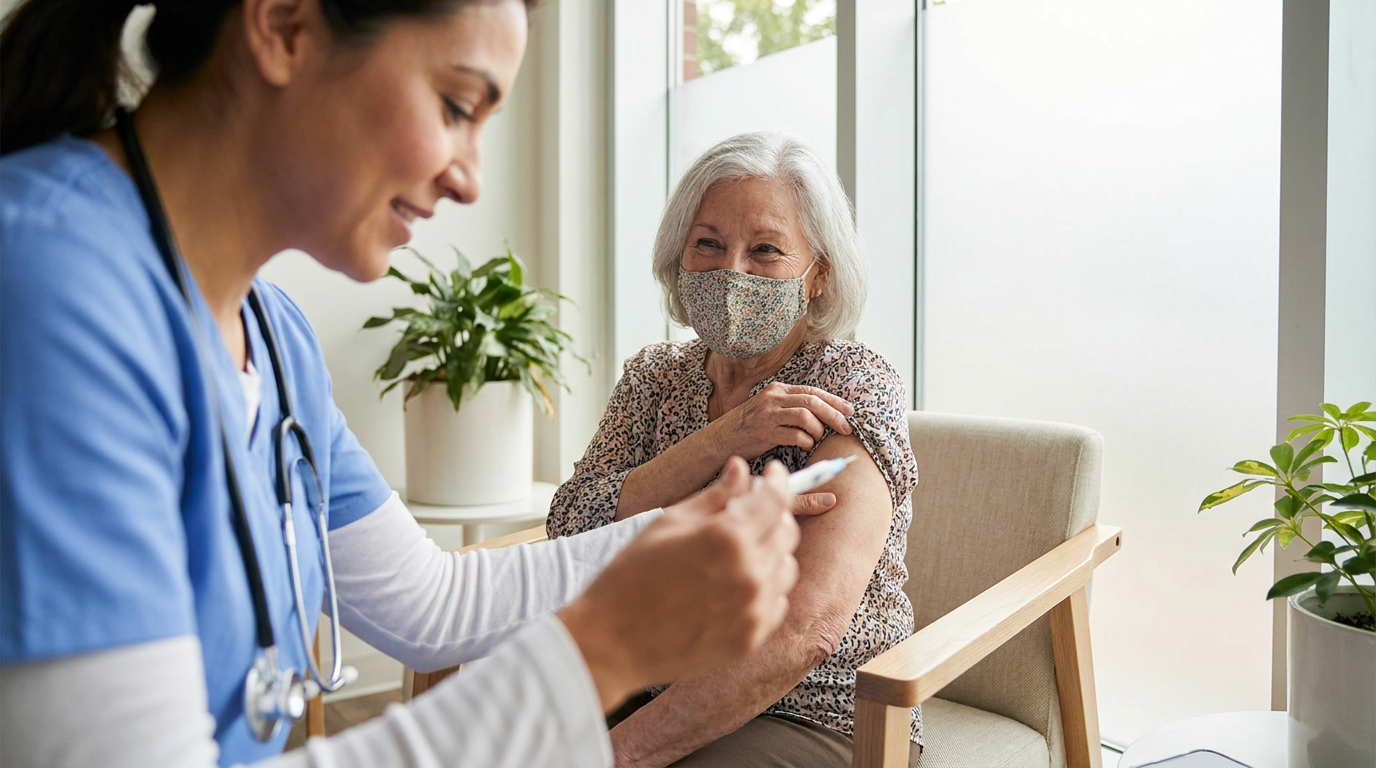
The results were striking. Patients who received at least one dose of the recombinant zoster vaccine (marketed as Shingrix) had a 24 percent lower relative risk of being diagnosed with dementia over the following four years compared to their unvaccinated peers. In absolute terms, 18.8 percent of the vaccinated group developed dementia, compared to 24.6 percent of the unvaccinated group—a difference of 5.8 percentage points. According to the researchers, this translates to roughly one in 17 cases of dementia potentially being prevented among this vulnerable demographic.[3][4][7]

"This study looks at the newest vaccine only in an older, vulnerable adult population who were not up to date with shingles vaccination and are at a very clear clinical point in care," noted Dr. Kaleen Hayes, the lead author of the study. The focus on the recombinant vaccine is crucial. Previous studies had found similar protective effects associated with the older, live-attenuated vaccine (Zostavax), but that formulation is no longer available in the United States. This new data confirms that the modern, widely used shot carries the same, if not stronger, neurological benefits.[3][4][5]
To understand why a skin-rash vaccine might protect the brain, researchers point to the unique lifecycle of the varicella-zoster virus. Most adults contract chickenpox in childhood. After the initial illness clears, the virus does not leave the body; instead, it retreats into the nervous system, lying dormant in nerve roots for decades. As the immune system naturally weakens with age, the virus can reactivate, traveling down the nerve fibers to cause the blistering, intensely painful rash known as shingles.[6][7]
However, the damage from reactivation may extend far beyond the skin. "The most obvious factor is through the reduction of shingles infections, which cause neuroinflammation and increase the risk of stroke," Hayes explained. Chronic inflammation is increasingly recognized as a primary driver of Alzheimer's disease and other forms of dementia. By preventing the virus from waking up and triggering a massive inflammatory cascade, the vaccine may spare the brain from the exact type of stress that accelerates cognitive decline.[6][7]

However, the damage from reactivation may extend far beyond the skin.
A secondary theory posits that the vaccine might offer a broader, non-specific boost to the innate immune system. The recombinant vaccine contains a powerful adjuvant—an ingredient designed to hyper-stimulate the body's immune response. Some immunologists suspect that this general immune training might help the body clear out the toxic amyloid plaques and tau tangles associated with Alzheimer's disease, though this mechanism remains entirely theoretical.[6]
Despite the robust statistical signal, the evidence is not yet definitive. The primary limitation of the Brown University study—and all similar epidemiological research—is the "healthy vaccinee bias." People who proactively seek out vaccinations tend to have better access to healthcare, higher levels of education, and generally healthier lifestyles than those who do not. These underlying factors are themselves highly protective against dementia, making it difficult to isolate the exact impact of the vaccine.[4][6]
To mitigate this bias, the Brown researchers used a sophisticated methodological approach called "target trial emulation." This technique uses observational data to mimic the strict parameters of a randomized controlled trial, carefully matching vaccinated and unvaccinated patients across a wide array of health and demographic variables. Even after adjusting for these differences, the 24 percent risk reduction remained robust, suggesting the effect is not merely a statistical illusion.[2][3][4][6]
Furthermore, the new findings do not exist in a vacuum; they align perfectly with previous "natural experiments" that sidestepped the healthy vaccinee bias entirely. A landmark study published in Nature analyzed a unique public health rollout in Wales, where a strict age cutoff meant that 79-year-olds were offered the vaccine while 80-year-olds were not. Because the two groups were virtually identical in every way except for their birthdate, the rollout acted as a randomized trial. That study found a 20 percent reduction in dementia risk among the vaccinated cohort.[5][6]

Interestingly, the protective effect appears to vary slightly across different demographics. The Brown University data indicated that the association between the recombinant vaccine and lower dementia risk was somewhat stronger in women than in men. Additionally, the protective benefit was attenuated in individuals who had previously received the older, live shingles shot, though the reasons for this remain unclear.[4]
For public health officials, the immediate takeaway is not to rebrand Shingrix as a dementia cure, but to urgently improve its uptake for its primary purpose. Despite the CDC recommending the two-dose regimen for all healthy adults aged 50 and older, vaccination rates remain stubbornly low. The study highlighted that even among older adults entering skilled nursing facilities—a population at severe risk for both shingles and dementia—a vast majority were unvaccinated.[1][4][6]

"Our cognition is so tied to our overall health and what happens to us physically," Hayes noted, emphasizing that preventing severe infections is a foundational aspect of brain health. If the dual-benefit hypothesis holds true, increasing shingles vaccination rates could simultaneously prevent millions of painful viral outbreaks and significantly dent the rising curve of global dementia cases.[3][6]
The next critical step for the medical community is to move beyond observational data. While the target trial emulation and natural experiments provide compelling evidence, only a large-scale, randomized controlled trial can definitively prove that the vaccine directly prevents cognitive decline. Until those trials are conducted, the shingles vaccine remains a powerful, underutilized tool that may offer an extraordinary, unintended bonus for the aging brain.[3][5][6]
How we got here
2013
Wales rolls out the live shingles vaccine with a strict age cutoff, unintentionally creating a natural experiment.
2017
The FDA approves Shingrix, a highly effective recombinant zoster vaccine, which becomes the new standard in the U.S.
May 2024
A Stanford study analyzing the Wales natural experiment finds a 20% reduction in dementia risk among the vaccinated.
June 2026
Brown University researchers publish data showing a 24% lower dementia risk for nursing home residents who received the newer Shingrix vaccine.
Viewpoints in depth
Epidemiological Researchers
This camp focuses on the robust statistical signal across multiple large datasets and the biological plausibility of neuroinflammation.
Researchers point to the consistency of the data across different populations and vaccine types. Whether looking at the live-attenuated vaccine in Wales or the recombinant vaccine in U.S. nursing homes, the signal remains a roughly 20 to 24 percent reduction in dementia risk. They argue that the biological mechanism—preventing viral reactivation and subsequent neuroinflammation—is highly plausible, given that chronic inflammation is a known driver of Alzheimer's pathology.
Public Health Advocates
This group emphasizes the immediate dual-benefit of increasing low vaccination rates among vulnerable seniors.
For public health officials, the exact mechanism of the dementia protection is secondary to the immediate clinical reality: the shingles vaccine is already approved, safe, and highly effective at preventing a debilitating viral infection. They view the potential cognitive benefits as a powerful new messaging tool to combat vaccine hesitancy and improve the stubbornly low uptake of Shingrix, particularly in high-risk environments like skilled nursing facilities.
Methodological Skeptics
This perspective cautions that observational data, even when rigorously adjusted, cannot definitively prove causation.
Skeptics highlight the persistent threat of the "healthy vaccinee bias." They argue that people who receive preventative care like the shingles vaccine inherently differ from those who do not—they often have better diets, more exercise, and superior access to healthcare. While advanced statistical models attempt to control for these variables, skeptics maintain that residual confounding is always possible, and only a randomized controlled trial can definitively prove that the vaccine itself is responsible for preserving cognitive function.
What we don't know
- Whether the vaccine directly prevents dementia, or if vaccinated individuals simply lead healthier lives overall.
- The exact biological mechanism—whether it's the prevention of viral neuroinflammation or a general boosting of the innate immune system.
- Whether the protective cognitive effects apply equally to all demographic groups and genetic risk profiles.
Key terms
- Recombinant Zoster Vaccine (RZV)
- A non-live vaccine (marketed as Shingrix) that uses a piece of the virus combined with an adjuvant to trigger a strong immune response against shingles.
- Target Trial Emulation
- A research method that uses observational data to mimic the design of a randomized controlled trial, helping to reduce bias when a real trial isn't possible.
- Neuroinflammation
- Inflammation of the nervous tissue in the brain or spinal cord, increasingly recognized as a major contributor to Alzheimer's and other dementias.
- Healthy Vaccinee Bias
- A statistical distortion where people who choose to get vaccinated also tend to have healthier lifestyles and better healthcare access, making the vaccine look more effective than it is.
- Absolute Risk Reduction
- The actual, real-world difference in the probability of an event occurring between two groups, rather than a relative percentage.
Frequently asked
Does the shingles vaccine cure dementia?
No. The vaccine appears to lower the risk of developing dementia or delay its onset, but it is not a cure for those who already have advanced cognitive decline.
Which shingles vaccine was studied?
The recent study focused on Shingrix, the recombinant zoster vaccine (RZV) introduced in 2017, which is currently the standard shingles shot in the U.S.
How does a skin rash virus affect the brain?
The virus that causes shingles lives in the nervous system. When it reactivates, it can cause severe inflammation, which researchers believe may accelerate brain aging and dementia.
Should I get the vaccine just to prevent dementia?
The CDC already recommends the shingles vaccine for adults 50 and older to prevent shingles. The potential dementia protection is currently considered an added benefit, not the primary medical indication.
Sources
Source coverage
7 outlets
3 viewpoints surfaced






[1]STAT NewsPublic Health Advocates
Shingles vaccine may lower dementia risk, new study finds
Read on STAT News →[2]Annals of Internal MedicineEpidemiological Researchers
Dementia risk after recombinant herpes zoster vaccination in older adults with a recent skilled-nursing facility stay: a target trial emulation
Read on Annals of Internal Medicine →[3]Brown UniversityEpidemiological Researchers
Older adults who received shingles vaccine had lower risk of dementia
Read on Brown University →[4]MedPage TodayPublic Health Advocates
Study Looks at Risk for Dementia After Shingles Vaccine in High-Risk Group
Read on MedPage Today →[5]NatureEpidemiological Researchers
The recombinant shingles vaccine is associated with lower risk of dementia
Read on Nature →[6]Inc. MagazinePublic Health Advocates
A common vaccine may be the secret to avoiding cognitive decline
Read on Inc. Magazine →[7]Factlen Editorial TeamMethodological Skeptics
Synthesis by Factlen editorial team
Read on Factlen Editorial Team →
More in health
See all 5 stories →Clinical Evidence
Massive 2026 Evidence Synthesis Finds Exercise Matches or Outperforms Medication for Depression
5 sources
Metabolic Health
The Science of Circadian Eating: Why When You Eat Matters as Much as What You Eat
6 sources

Longevity Science
The Science of 'Exercise Mimetics': How New Longevity Drugs Aim to Put a Workout in a Pill
7 sources
Every angle. Every day.
Get health stories with full source coverage and perspective breakdowns delivered to your inbox.