
The Analog Renaissance: Why Gen Z is Trading Smartphones for 'Dumbphones' and Slow Media
Driven by digital fatigue and a desire to reclaim their attention, younger generations are fueling a resurgence in basic flip phones, physical media, and offline hobbies.
By Factlen Editorial Team

- Digital Minimalists
- Advocate for intentionally downgrading technology to reclaim focus, mental health, and personal agency from algorithmic feeds.
- Hardware Industry
- Views the dumbphone resurgence as a viable, growing market segment catering to consumers exhausted by premium smartphones.
- Socioeconomic Critics
- Argue that the ability to completely disconnect is a modern luxury unavailable to gig workers and those reliant on digital economies.
What's not represented
- · Gig economy workers who rely on smartphones for income
- · App developers losing engagement metrics
Why this matters
As screen fatigue reaches a breaking point, the shift toward analog tools offers a practical blueprint for reclaiming focus, reducing anxiety, and setting healthier boundaries with technology in an always-on world.
Key points
- Gen Z and millennials are increasingly swapping smartphones for basic 'dumbphones' to combat screen fatigue.
- Sales of feature phones are rising globally, with hundreds of thousands of units sold in Western markets.
- The trend is part of a broader 'Slow Media' movement that favors physical books, vinyl, and intentional consumption.
- Research shows the average user interacts with their smartphone over 2,600 times a day, driving digital burnout.
- Critics note that the ability to completely disconnect has become a modern status symbol, inaccessible to many gig workers.
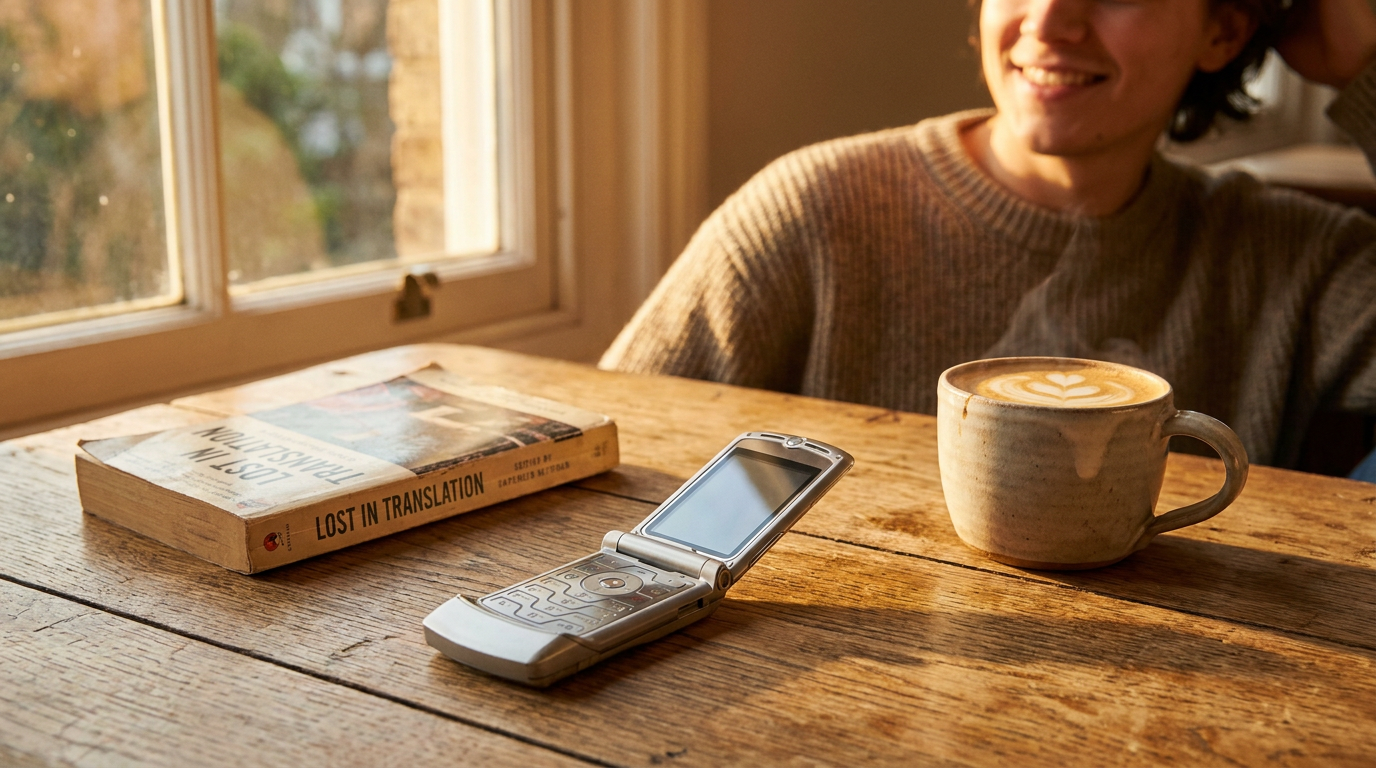
The scene is becoming increasingly common: a 22-year-old at a coffee shop reaches into their bag, bypassing a glowing tablet, and pulls out a device that snaps shut with a satisfying plastic clack. The flip phone is back, and it is no longer just a punchline about the early 2000s.[7]
This is not merely a fleeting aesthetic choice driven by nostalgia. It is the vanguard of the "Analog 2026" movement—a deliberate, widespread rejection of the attention economy by the very demographic that grew up entirely inside it.[3]
Dubbed "dumbphones" or feature phones, these devices intentionally strip away algorithmic feeds, high-definition cameras, and the endless barrage of push notifications. They make phone calls, send SMS texts, and perhaps offer a pixelated game of Snake, leaving the user alone with their thoughts.[4]
The numbers reveal a genuine market shift rather than a niche internet fad. In the United Kingdom alone, 450,000 of these basic devices were sold in a single year, with Western European sales climbing steadily to over 215 million units.[1]

In the United States, the trend is mirroring Europe's trajectory. Manufacturers like HMD Global, the maker of Nokia phones, have reported a 5 percent bump in their flip phone market, moving tens of thousands of basic units each month to a younger demographic.[2]
The driving force behind this hardware downgrade is profound digital fatigue. Behavioral research indicates that the average smartphone user interacts with their device more than 2,600 times a day—a relentless cycle of taps, swipes, and notifications that leaves the nervous system in a state of chronic overwhelm.[6]
For Generation Z, who have never known a world without ubiquitous internet access, the smartphone has morphed from a magical tool of connection into a source of deep exhaustion. They are increasingly suspicious of the data-harvesting and attention-engineering tactics built into modern applications.[4]
They are increasingly suspicious of the data-harvesting and attention-engineering tactics built into modern applications.
This suspicion has birthed the concept of "Slow Media." Instead of doomscrolling through bite-sized, algorithmically served videos, younger consumers are pivoting toward intentional, high-friction media consumption that requires sustained attention.[7]

The analog renaissance extends far beyond mobile telecommunications. It encompasses a broader return to the physical world, evidenced by surging interest in vinyl records, wired headphones, disposable film cameras, and paper journals.[3]
The "analog bag" has even become a cultural staple—a physical toolkit carried to provide offline entertainment during moments of boredom. By packing a book, a sketchbook, or a dedicated music player, individuals are replacing the instinct to immediately reach for a screen.[7]
This shift is highly visible in how people are choosing to spend their leisure time. Recent consumer data shows that roughly 75 percent of adults engaged in a physical crafting project over the past year, a significant jump that analysts link directly to wellness and digital detoxing.[5]

However, cultural critics note that the ability to completely "log off" has quietly become a modern status symbol. For gig economy workers, freelancers, or those whose livelihoods depend on constant digital availability, abandoning a smartphone is an inaccessible luxury.[7]
In a world where everyone is drowning in information, the ultimate flex in 2026 is appearing entirely untouched by it. Unreachability is no longer viewed as a professional failure; it is the new luxury.[7]
For those who cannot fully commit to a dumbphone, a middle ground is rapidly emerging. "Dumbed-down" smartphones—devices locked out of social media and web browsers via strict app blockers—are allowing users to retain essential tools like maps and banking while silencing the noise.[2]
Ultimately, the analog renaissance is not an anti-technology crusade. It is a healthy renegotiation of boundaries. By choosing when and how to connect, a chronically online generation is finally attempting to train the algorithm, rather than letting the algorithm train them.[7]

How we got here
2007
The launch of the modern smartphone begins the era of constant, pocket-sized connectivity.
2020
Pandemic lockdowns push global screen time to historic highs, triggering early waves of digital fatigue.
2024
Sales of basic 'dumbphones' see their first major measurable spike in Western markets like the UK and US.
2026
The 'Analog 2026' movement solidifies, with digital minimalism and offline hobbies becoming mainstream wellness trends.
Viewpoints in depth
The Digital Minimalists
Advocates who view downgrading technology as essential for mental health.
For this growing cohort, the smartphone is no longer a tool of convenience but a vector for anxiety. They argue that human neurology was not designed to process the sheer volume of information and social comparison delivered by modern algorithmic feeds. By switching to dumbphones and embracing 'Slow Media,' they are actively reclaiming their attention spans, improving their sleep hygiene, and forcing themselves to be present in their physical environments. To them, friction—the inability to instantly look up a fact or send a photo—is a feature, not a bug.
The Hardware Industry
Manufacturers capitalizing on the demand for simpler, distraction-free devices.
Tech companies and analysts are recognizing that the relentless push for more features, better cameras, and faster processors has alienated a segment of the market. Legacy brands like Nokia (via HMD Global) and new minimalist startups are leaning into this fatigue, marketing their devices not as technological steps backward, but as premium lifestyle choices. They view the dumbphone not as a replacement for the smartphone economy, but as a lucrative secondary market for consumers seeking a 'weekend phone' or a dedicated digital detox tool.
The Accessibility Critics
Observers who point out the socioeconomic privilege required to log off.
While praising the mental health benefits of digital minimalism, socioeconomic critics argue that the 'Analog Renaissance' is inherently exclusionary. They point out that gig economy workers, freelancers, and lower-income individuals often rely entirely on their smartphones for income, banking, and essential communication. From this perspective, the ability to be unreachable is a modern luxury. When opting out of the digital ecosystem becomes a status symbol, it highlights a growing divide between those who can afford to disconnect and those who are forced to remain constantly online to survive.
What we don't know
- Whether the dumbphone trend will permanently alter smartphone usage habits or remain a niche lifestyle choice.
- How major tech companies like Apple and Google will adapt their operating systems if digital minimalism continues to scale.
Key terms
- Dumbphone
- A basic mobile phone with limited features, typically restricted to voice calls and text messaging, lacking internet browsing or social media apps.
- Slow Media
- A movement advocating for intentional, focused consumption of high-quality content, like books or long-form articles, over rapid, algorithmic scrolling.
- Digital Minimalism
- A philosophy of technology use where individuals intentionally restrict their digital tools to a small number of carefully selected, high-value activities.
- Analog Bag
- A curated collection of physical items—such as a journal, film camera, and book—carried to provide offline entertainment during moments of downtime.
Frequently asked
Can you use essential apps like WhatsApp or Maps on a dumbphone?
Some modern feature phones offer stripped-down versions of essential apps like WhatsApp or basic navigation. However, many purists opt for devices that strictly only make calls and send texts to avoid any temptation.
Why is Gen Z leading a trend for older technology?
Having never known a world without constant connectivity, many digital natives are experiencing severe screen fatigue. They are seeking the hard boundaries that analog tools naturally provide to protect their mental health.
Is replacing a smartphone with a dumbphone expensive?
No, basic feature phones typically cost between $30 and $80, making the hardware switch highly affordable. The primary challenge is the lifestyle adjustment, not the financial cost.
Sources
Source coverage
7 outlets
3 viewpoints surfaced







[1]ReutersHardware Industry
Sales data shows the trend of buying dumb phones is gaining ground
Read on Reuters →[2]CNBCDigital Minimalists
Dumb phones are on the rise in the U.S. as Gen Z looks to limit screen time
Read on CNBC →[3]EuronewsDigital Minimalists
Gen Zs and millennials are turning back to 'dumb phones' and rediscovering the offline world
Read on Euronews →[4]The GuardianDigital Minimalists
Dull devices are now cool: The Boring Phone and the new dumbphone boom
Read on The Guardian →[5]MintelHardware Industry
US Crafting and Hobbies Market Report: Wellness and Digital Detox
Read on Mintel →[6]DscoutHardware Industry
Mobile Touches: A Study on Human-Smartphone Interaction
Read on Dscout →[7]Factlen Editorial TeamSocioeconomic Critics
Synthesis by Factlen editorial team
Read on Factlen Editorial Team →

Every angle. Every day.
Get culture stories with full source coverage and perspective breakdowns delivered to your inbox.