
Why Gen Z is Trading Smartphones for Dumbphones and Vinyl in 2026
Driven by digital fatigue and a desire for intentionality, a growing movement of young people is unbundling their tech and returning to single-purpose analog devices.
By Factlen Editorial Team
- Digital Minimalists
- Argue that constant connectivity erodes mental health and that physical media restores intentionality and focus.
- Tech Pragmatists
- Advocate for a hybrid approach, using basic analog tools for leisure while maintaining smartphones for essential modern infrastructure.
- Socioeconomic Critics
- Highlight that 'logging off' is a luxury, noting that gig workers and service staff cannot afford to disconnect from the digital economy.
What's not represented
- · Smartphone manufacturers facing declining upgrade cycles
- · App developers adapting to lower engagement metrics
Why this matters
The shift toward analog technology demonstrates a cultural tipping point where consumers are actively choosing friction over convenience to protect their mental health and attention spans. This unbundling of the smartphone is reshaping consumer electronics, retail footprints, and how a hyperconnected generation defines status.
Key points
- Gen Z and millennials are driving a massive resurgence in analog technology, including dumbphones, vinyl records, and point-and-shoot cameras.
- The movement is a direct response to digital fatigue, algorithmic exhaustion, and the pressure of constant connectivity.
- Physical media introduces 'friction,' creating natural stopping points that prevent infinite scrolling and mindless consumption.
- Critics note that digital minimalism is often a luxury, as gig workers and service staff cannot afford to disconnect from their smartphones.
- Many users are adopting a hybrid approach, keeping smartphones for essential tasks while using single-purpose devices for leisure.
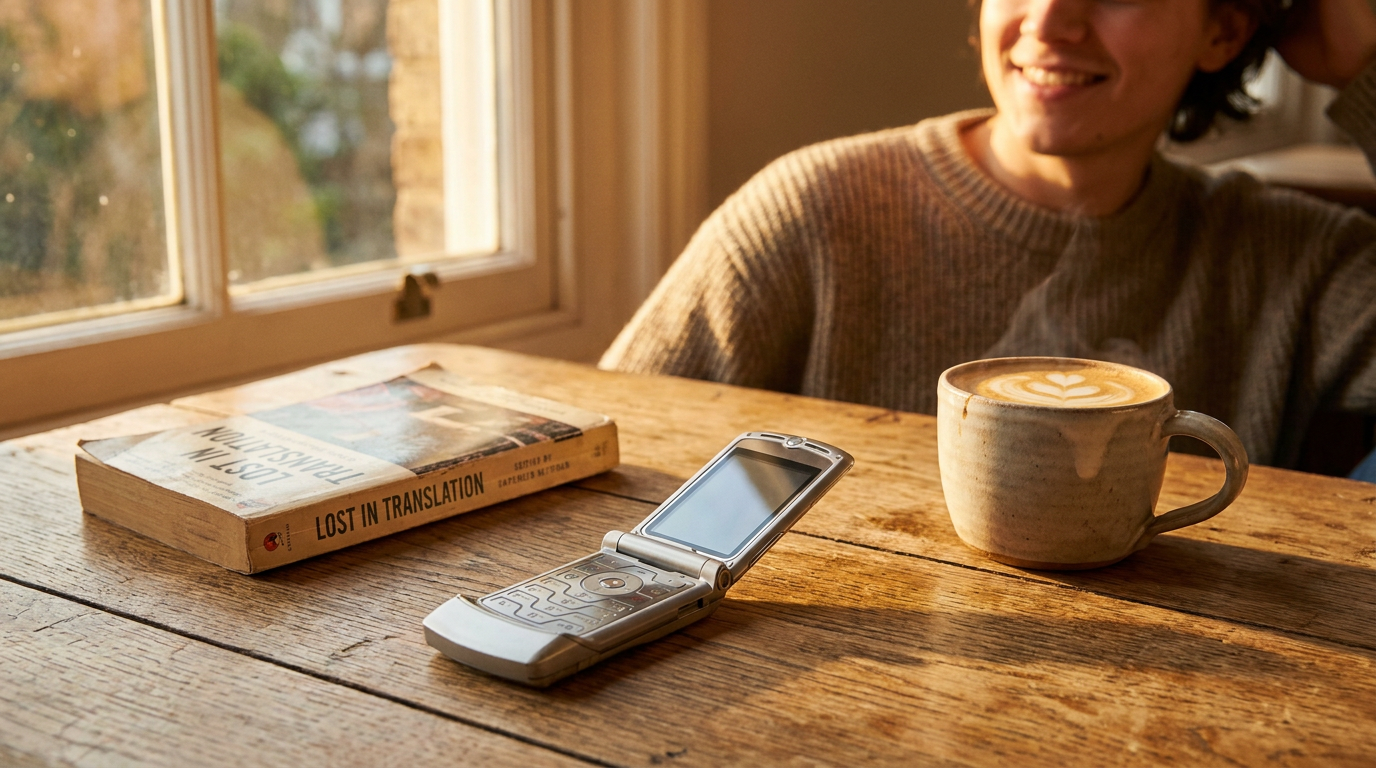
Walk into a metropolitan coffee shop in 2026, and you might witness a scene that feels distinctly out of time. A twenty-something patron pulls a silver flip phone from their pocket to check a text message, sets a physical paperback on the table, and snaps a photo of their latte with a dedicated point-and-shoot digital camera. This is not a time traveler from 2004; it is the modern vanguard of the "Analog Renaissance."[4][5]
Across the globe, a quiet but measurable exodus is underway. Generation Z and younger millennials are intentionally unbundling their digital lives, trading the infinite capabilities of the smartphone for the deliberate limitations of physical media and single-purpose devices. What began as a niche aesthetic trend has evolved into a profound behavioral shift.[1][6]
The numbers behind this movement are striking and have begun to move major markets. In 2025, U.S. vinyl sales cracked the $1 billion mark for the first time since 2000, moving nearly 47 million units. Meanwhile, search engines have reported a 5,000 percent spike in queries for "analog accessories" and digital boundaries, prompting major retailers to rapidly expand their physical footprints to meet the demand for tangible goods.[2][4][7]
But the most visible symbol of this cultural pivot is the resurgence of the "dumbphone." Basic feature phones, once relegated to emergency glovebox backups or construction sites, are now being marketed as premium lifestyle choices. Devices from legacy brands like Nokia and minimalist startups like Light Phone are seeing surging demand from users desperate to escape the algorithmic treadmill.[5][8]

To understand the mechanism behind this trend, one must look at the psychological toll of hyperconnectivity. A reported 52 percent of Gen Z users attempted to quit or significantly reduce their social media usage last year. The constant barrage of notifications, the pressure of curated online identities, and the sheer volume of digital noise have led to widespread decision fatigue.[1][6]
In response, young consumers are actively seeking out "friction." In modern user interface design, friction is usually considered a fatal flaw—something that stops a user from seamlessly moving to the next video, article, or purchase. But in the analog renaissance, friction is the entire point.[4][6]
Physical media has a definitive start and an end, and in a world defined by the infinite scroll, that kind of hard boundary is quietly comforting. When a vinyl record finishes a side, the listener must physically stand up and flip it. When a point-and-shoot camera runs out of memory or film, the photographer is forced to stop shooting and experience the moment.[2][4]
Physical media has a definitive start and an end, and in a world defined by the infinite scroll, that kind of hard boundary is quietly comforting.
These natural stopping points force a level of intentionality that smartphones actively discourage. A modern smartphone camera encourages taking fifty rapid-fire photos to find the perfect angle for social media; a digital point-and-shoot from 2008 encourages taking one photo and moving on, knowing it cannot be immediately uploaded or heavily filtered anyway.[3][6]

There is also a deeply sensory component to the revival. Psychologists point to the human need for tactile engagement—the satisfying snap of a flip phone closing to end a call, the mechanical click of a camera shutter, or the delicate ritual of dropping a needle onto a spinning record.[2][5]
For Gen Z, this tactile hunger is often wrapped in "anemoia"—a profound nostalgia for a time they never actually lived through. Having grown up entirely in the era of glass touchscreens, cloud storage, and streaming subscriptions, the physical weight of a CD or a printed photograph feels novel, grounding, and inherently more permanent than a file on a server.[2][5]
However, the movement is not without its critics, who point out the socioeconomic realities of disconnecting. Digital minimalism, they argue, is increasingly becoming a luxury status symbol. The ability to leave one's smartphone at home implies that one's livelihood and social standing do not depend on constant availability.[1]
For what sociologists call the "Tethered Class"—gig workers, delivery drivers, and service staff whose schedules and income are dictated by mobile applications—a digital detox is not an act of wellness; it is a fast track to unemployment. For these workers, the smartphone is a mandatory tether to the economy.[1]
Furthermore, the analog lifestyle can be prohibitively expensive. While a basic flip phone is cheap, the broader ecosystem of the analog renaissance—$35 new-release vinyl records, $15-per-roll film development, and dedicated single-purpose gadgets—requires a disposable income that contradicts the movement's minimalist branding.[1][2]

Despite these hurdles, the trend is forcing the consumer technology industry to adapt. We are witnessing the gradual "unbundling" of the iPhone. Rather than relying on a single monolithic device for every aspect of their lives, intentional users are compartmentalizing their technology to build healthier boundaries.[3][8]
A common modern setup involves keeping a smartphone strictly for navigation, banking, and essential messaging, while offloading music to a dedicated MP3 player and photography to a standalone camera. This hybrid approach allows users to retain the genuine utilities of the digital age while walling off its most addictive elements.[3][5]

Ultimately, the analog renaissance is less about destroying technology and more about renegotiating our relationship with it. By choosing devices that do less, a hyperconnected generation is attempting to reclaim the one resource Silicon Valley cannot manufacture: their own undivided attention.[1][6]
How we got here
2007
The iPhone launches, beginning the era of the 'everything device' and the decline of single-purpose gadgets.
2020
Pandemic lockdowns drive screen time to record highs, sparking early waves of severe digital fatigue.
2023
The 'dumbphone' market sees its first major resurgence as Gen Z popularizes the Y2K aesthetic on social media.
2025
U.S. vinyl sales cross the $1 billion threshold, cementing physical media's transition from niche hobby to mainstream market.
2026
Digital minimalism evolves from a temporary 'detox' challenge into a sustained lifestyle shift prioritizing single-purpose devices.
Viewpoints in depth
Digital Minimalists
Advocates who believe that constant connectivity is fundamentally incompatible with human well-being.
For digital minimalists, the smartphone is not a tool but a slot machine designed to harvest attention. They argue that the human brain was not built to process the volume of information, tragedy, and social comparison delivered by modern algorithmic feeds. By switching to dumbphones and physical media, this camp believes they are reclaiming their autonomy. They view the friction of analog technology—having to wait for photos to develop, or being unable to look up an answer instantly—as a feature that forces them to be present in their physical surroundings and comfortable with boredom.
Tech Pragmatists
Users who seek to balance the genuine utility of smartphones with the boundaries of analog devices.
Tech pragmatists argue that entirely abandoning the smartphone is an overcorrection that ignores the genuine miracles of modern technology. They point out that smartphones democratized navigation, banking, and emergency communication. Instead of throwing the device away, this camp advocates for the 'unbundling' approach: stripping the smartphone of all social media and entertainment apps, and using it purely as a utilitarian tool. They satisfy their need for tactile engagement by using iPods, vinyl, and film cameras for leisure, effectively building a firewall between their necessary digital infrastructure and their personal downtime.
Socioeconomic Critics
Observers who highlight the class divide inherent in the ability to disconnect.
Critics of the analog renaissance argue that the movement is blind to its own privilege. They point out that the ability to be unreachable is a luxury status symbol reserved for white-collar workers and the wealthy. For the millions of people in the gig economy—Uber drivers, Instacart shoppers, and on-call service staff—the smartphone is a digital boss that dictates their livelihood. Furthermore, this camp highlights the irony that 'living simply' has become a highly commodified aesthetic, where participants spend thousands of dollars on vintage cameras, boutique film development, and premium vinyl records just to escape a device they already own.
What we don't know
- Whether the dumbphone trend will result in lasting behavioral changes or fade as a temporary Y2K aesthetic fad.
- How major tech companies like Apple and Google will alter their operating systems to address the growing demand for extreme digital boundaries.
- If the manufacturing infrastructure for physical media can scale sustainably without creating massive e-waste.
Key terms
- Dumbphone
- A basic mobile phone with limited features, typically restricted to voice calls and SMS text messaging, intentionally lacking advanced internet capabilities.
- Digital Minimalism
- A philosophy of technology use in which individuals intentionally restrict their digital habits to a small number of carefully selected, highly intentional tools.
- Anemoia
- A feeling of nostalgia for a time period or cultural era that the person never actually experienced firsthand.
- Friction
- In technology design, intentional barriers or steps that slow down a user's actions, often used in analog media to prevent mindless consumption.
- The Tethered Class
- A socioeconomic term describing workers, such as gig economy drivers or on-call staff, whose livelihoods depend on constant smartphone connectivity.
Frequently asked
What exactly is a 'dumbphone'?
A dumbphone is a basic feature phone that only handles voice calls and text messages, intentionally lacking social media apps, web browsers, and constant notifications.
Why are point-and-shoot cameras popular again?
Users prefer the tactile experience, the distinct aesthetic of older sensors, and the inability to immediately edit and post photos to social media, which encourages living in the moment.
Is digital minimalism expensive?
It can be. While buying an old flip phone is cheap, maintaining separate devices, buying vinyl records, and attending screen-free retreats often requires significant disposable income.
What does 'anemoia' mean?
Anemoia is a psychological term for experiencing nostalgia for a time or place that one has never actually lived through, a feeling common among Gen Z embracing Y2K-era technology.
Sources
Source coverage
8 outlets
3 viewpoints surfaced







[1]MediumSocioeconomic Critics
The Quiet Exodus: Why Gen Z is Logging Off
Read on Medium →[2]FstoppersTech Pragmatists
The Need for the Physical: Why Film and Vinyl Are Booming
Read on Fstoppers →[3]Digital Camera WorldDigital Minimalists
Point-and-shoot cameras are skyrocketing in the age of digital minimalism
Read on Digital Camera World →[4]PureWowDigital Minimalists
The Analog Renaissance and the Quest for Digital Boundaries
Read on PureWow →[5]Vertu InsightsDigital Minimalists
Why is Gen Z Buying Dumb Phones? The Rise of Digital Minimalism in 2026
Read on Vertu Insights →[6]IlluminemSocioeconomic Critics
Young people are falling in love with old technology
Read on Illuminem →[7]MAT MagTech Pragmatists
Vinyl Record Sales Reach $1 Billion as we Declare 2026 the year of Physical Music Media
Read on MAT Mag →[8]Shared Security PodcastTech Pragmatists
Why Gen Z is Ditching Smartphones for Dumbphones
Read on Shared Security Podcast →
Every angle. Every day.
Get culture stories with full source coverage and perspective breakdowns delivered to your inbox.