
Inside the Math of SpaceX's Historic $1 Trillion Public Valuation
Following its highly anticipated public market debut, SpaceX's valuation has surged past $1 trillion. This explainer breaks down the financial architecture of the launch business, the Starlink revenue engine, and the unprecedented risks of pricing in Mars colonization.
By Factlen Editorial Team
- Space Economy Optimists
- Argue that Starlink's recurring revenue and Starship's potential to unlock new orbital industries easily justify the trillion-dollar valuation.
- Traditional Value Investors
- Caution that the company's explicit goal of Mars colonization is a massive capital sink with no clear ROI, making the stock highly speculative.
- Aerospace Industry Analysts
- Focus on the structural advantages of vertical integration and rapid reusability, viewing the valuation as a reflection of a near-monopoly on reliable access to orbit.
What's not represented
- · Legacy telecommunications providers facing disruption from Starlink
- · Astronomers concerned about light pollution from mega-constellations
Why this matters
SpaceX's transition to a publicly traded mega-cap corporation proves that space infrastructure is now a viable, highly lucrative commercial sector. This milestone fundamentally rewrites the rules of aerospace economics and opens the door for massive private investment into the industrialization of Earth orbit.
Key points
- SpaceX's public debut pushed its valuation past $1 trillion, making it one of the most valuable companies globally.
- The valuation is supported by three pillars: the Falcon 9 launch monopoly, the Starlink telecom network, and the Starship program.
- Starlink's recurring subscription revenue is the primary financial engine funding the company's capital-intensive projects.
- Traditional investors caution that the company's explicit goal of Mars colonization presents an unprecedented financial risk.
- Despite going public, corporate governance structures ensure Elon Musk retains nearly total control over strategic direction.
SpaceX’s transition from a scrappy 2002 aerospace startup to a publicly traded behemoth culminated last week in a historic market debut that fundamentally altered the landscape of commercial spaceflight. Shares of the company were offered at a set price of $135 during the initial public offering, but intense retail and institutional demand drove the stock up 37% in early trading sessions. This massive surge pushed the aerospace manufacturer's total market capitalization comfortably past the $1 trillion threshold, cementing its status as one of the most valuable corporations on the planet. The debut not only enriched early investors and employees but also served as a massive validation of the commercial space industry, proving that orbital logistics and satellite telecommunications can command the kind of premium valuations traditionally reserved for software monopolies and consumer technology giants.[1][4]
This milestone represents a watershed moment not just for founder Elon Musk—whose personal stake in the enterprise is now valued in the hundreds of billions of dollars—but for the broader entrepreneurial ecosystem. It marks the first time a pure-play space exploration and infrastructure company has achieved a mega-cap valuation, a financial tier previously occupied exclusively by legacy tech behemoths like Apple, Microsoft, Alphabet, and Nvidia. The sheer scale of this valuation reflects a profound shift in how global capital markets view the economic potential of low Earth orbit and beyond. Investors are no longer treating space as a niche sector dependent on government contracts, but rather as the next major frontier for commercial infrastructure, telecommunications, and industrial expansion.[1][3][7]
But beneath the headline-grabbing numbers and the euphoria of the trading floor lies a highly complex financial architecture that defies traditional valuation metrics. Understanding why SpaceX commands a $1 trillion market capitalization requires recognizing that it is not a single, monolithic business. Instead, it functions as three distinct, vertically integrated enterprises operating under a single corporate umbrella: a dominant and highly profitable launch provider, a rapidly expanding global telecommunications network, and a highly speculative, capital-intensive research and development program aimed at interplanetary colonization. Each of these divisions carries its own distinct risk profile, capital requirements, and timeline for profitability, making the consolidated entity one of the most difficult assets to accurately price in modern financial history.[2][7]
The foundational pillar of SpaceX's current valuation rests on its near-monopoly in the global commercial launch market. Through its workhorse Falcon 9 and the heavy-lift Falcon Heavy rockets, the company has fundamentally altered the underlying economics of reaching orbit. By pioneering and perfecting rapid reusability—specifically the ability to land, refurbish, and relaunch first-stage boosters dozens of times—SpaceX has slashed the cost per kilogram to low Earth orbit by orders of magnitude compared to legacy aerospace contractors like United Launch Alliance or Europe's Arianespace. This structural cost advantage has allowed the company to consistently underbid competitors while maintaining healthy profit margins, effectively cornering the market for commercial satellite deployment and securing lucrative national security contracts.[4][6]

This launch dominance provides a steady, reliable stream of cash flow that forms the bedrock of the company's financial stability. According to recent industry data, SpaceX now routinely delivers more mass to orbit on an annual basis than all other nations and commercial corporations combined. The reliability of the Falcon 9 architecture has made it the undisputed gold standard for orbital logistics, effectively turning access to space into a standardized, commoditized service. However, while the launch business is highly successful and generates billions in annual revenue, industry analysts widely agree that transportation alone does not justify a $1 trillion market capitalization. The launch market, while growing, has a natural ceiling dictated by the number of satellites that need to be placed in orbit.[4][6][7]
The true financial engine driving the company's astronomical public valuation is Starlink. This sprawling satellite internet constellation, comprising thousands of mass-produced, flat-panel satellites operating in low Earth orbit, represents SpaceX's strategic pivot from a pure transportation company to a global telecommunications provider. By beaming high-speed, low-latency internet access down to user terminals across the globe, Starlink taps into a total addressable market that is vastly larger and more lucrative than the launch industry. Telecommunications is a multi-trillion-dollar global sector, and Starlink is uniquely positioned to capture market share in rural areas, maritime environments, commercial aviation, and developing nations where traditional fiber-optic infrastructure is economically unviable.[2][6]
Starlink's business model is built on the holy grail of modern finance: recurring subscription revenue. Unlike the lumpy, project-based revenue of rocket launches, Starlink generates a predictable, high-margin stream of monthly cash flow from millions of individual and enterprise subscribers worldwide. Financial analysts note that this subscription revenue is the primary mechanism funding the company's more ambitious, capital-intensive engineering projects. Furthermore, the synergy between the launch business and Starlink forms the core of SpaceX's impenetrable competitive moat. Because SpaceX owns the rockets, it can deploy its own Starlink satellites at internal cost, a massive structural advantage that competing satellite internet ventures like Amazon's Project Kuiper simply cannot match.[2][4][7]

Starlink's business model is built on the holy grail of modern finance: recurring subscription revenue.
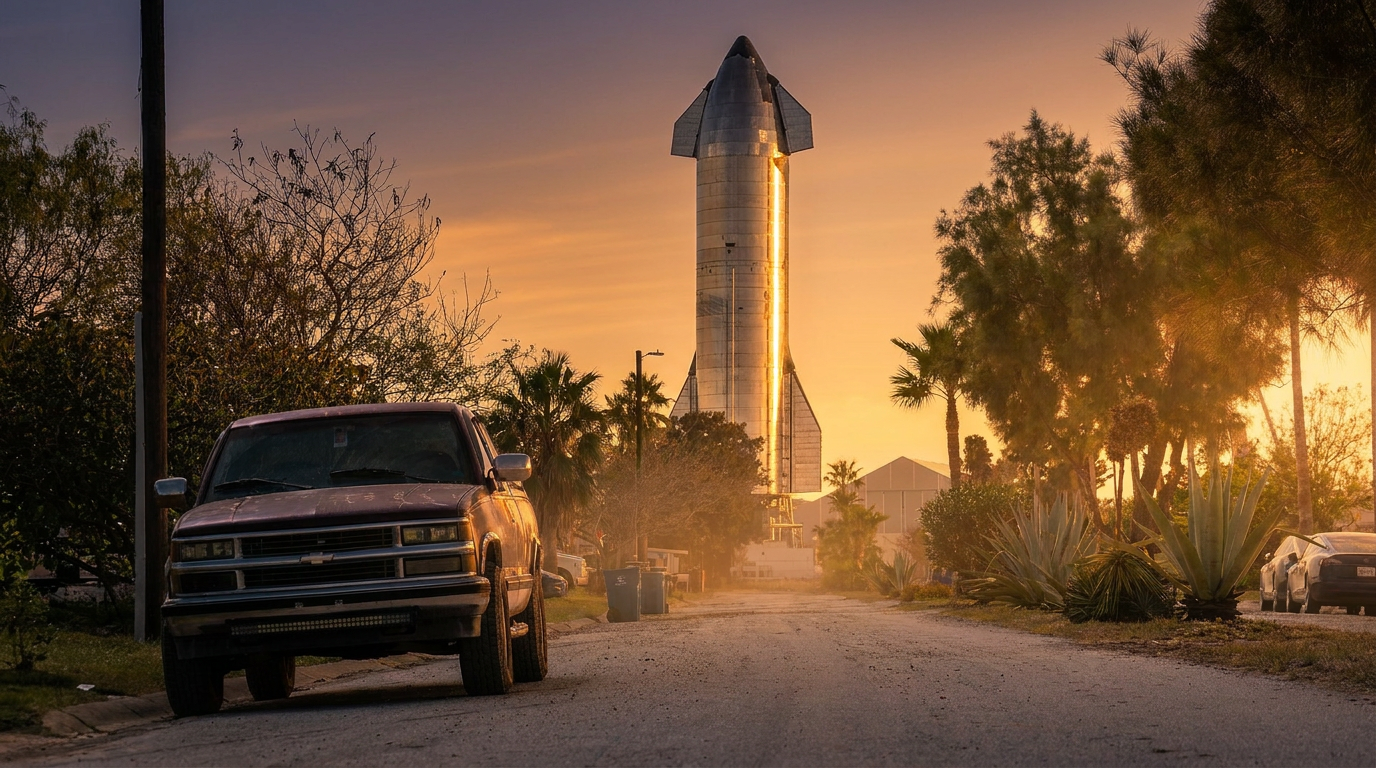
However, the most heavily debated and speculative component of the $1 trillion valuation is the Starship program. Currently in advanced testing and development phases at the company's Starbase facility in Texas, Starship is designed to be a fully reusable, super-heavy-lift launch vehicle capable of carrying unprecedented payloads to Earth orbit, the Moon, and eventually Mars. The engineering challenges associated with Starship are immense, requiring breakthroughs in materials science, propulsion, and thermal protection systems. Yet, if successful, Starship promises to reduce the cost of space access by yet another order of magnitude, fundamentally changing what is economically possible in space.[2][5][7]
Markets are currently pricing in a significant probability that Starship will become the foundational infrastructure for the next century of the space economy. By lowering the cost barrier to orbit so drastically, Starship could enable entirely new, multi-billion-dollar industries that currently exist only in science fiction, such as space-based solar power generation, asteroid mining, and large-scale orbital manufacturing facilities. Investors are betting that whoever controls the primary transportation architecture for these future industries will capture an enormous share of the resulting economic value. In this light, the $1 trillion valuation is not just a reflection of present-day cash flows, but a call option on the future industrialization of the solar system.[2][7]
Yet, this is precisely where traditional financial modeling begins to fracture and where skeptics raise the loudest alarms. Financial columnists and traditional value investors point out that valuing SpaceX requires underwriting its ultimate, explicitly stated mission: making humanity a multi-planetary species. Establishing a self-sustaining city on Mars—Elon Musk's lifelong goal and the driving force behind the company's existence—is an endeavor with absolutely no historical precedent. It carries unknown total costs that could easily stretch into the trillions, and it offers no clear timeline for a return on investment. It is an undertaking that could consume hundreds of billions of dollars in capital before generating a single dollar of profit for public shareholders.[2][7]
This creates a unique and unprecedented tension for public market investors. When buying SpaceX stock at a $1 trillion valuation, shareholders are effectively funding a Mars colonization program that operates entirely outside the bounds of conventional quarterly earnings expectations. The company's deep, ideological commitment to this vision makes the stock an astonishingly speculative bet, despite its dominant, cash-generating position in the current launch and telecommunications markets. Critics argue that if the Starship program encounters insurmountable engineering hurdles, or if the Mars colonization effort proves to be a bottomless financial sinkhole, the company's valuation could face a severe and rapid correction, wiping out billions in shareholder wealth.[2][5]

Furthermore, corporate governance remains a focal point of intense analysis and debate among institutional investors. Even as a newly public entity subject to SEC regulations and quarterly reporting requirements, SpaceX's voting structure ensures that Musk retains nearly total control over the company's strategic direction. This concentration of power means that the company's capital allocation decisions will continue to reflect the founder's immense risk appetite and long-term interplanetary priorities, rather than standard shareholder return metrics like dividends or share buybacks. Investors must be comfortable ceding total control to a CEO who has explicitly stated that the company's primary purpose is not wealth maximization, but species survival.[2][5][7]
Regulatory filings associated with the public debut detail the extensive and unique risk factors associated with the company's operations. These range from the inherent, catastrophic dangers of spaceflight and rocket propulsion to the complex, rapidly evolving geopolitical landscape of global telecommunications. The regulatory environment for mega-constellations like Starlink is still in its infancy, with ongoing international debates over orbital debris mitigation, light pollution affecting astronomical research, and the allocation of finite radio frequency spectrum. Any adverse regulatory rulings by international bodies or the Federal Communications Commission could severely impact Starlink's growth trajectory and, by extension, the company's overall valuation.[5][6]
The geopolitical implications of SpaceX's dominance also add a layer of complexity to its public market valuation. The company is deeply intertwined with the United States national security apparatus, launching highly classified payloads for the Department of Defense and the National Reconnaissance Office. Furthermore, the deployment of Starlink in conflict zones has demonstrated the strategic importance of independent, space-based communication networks. This dual-use nature of SpaceX's technology means that the company operates under intense government scrutiny and export controls, which could limit its ability to expand into certain international markets or collaborate with foreign entities, potentially capping its global growth potential.[4][6][7]
Despite these profound uncertainties and the unprecedented nature of the company's long-term goals, the broader market's enthusiastic reception of the SpaceX debut signals a massive shift in investor sentiment toward the space sector. The record weekly inflows into technology and space-adjacent equities following the IPO suggest that retail and institutional investors alike are eager for exposure to the new space economy. The $1 trillion valuation firmly validates the thesis that space is no longer solely the domain of slow-moving government agencies and cost-plus defense contractors, but a viable, highly lucrative theater for aggressive commercial enterprise and rapid technological innovation.[3][4][7]

For the broader entrepreneurial ecosystem, SpaceX's transition to a publicly traded mega-cap corporation serves as a powerful, undeniable proof of concept. It demonstrates that with sufficient capital backing, relentless engineering talent, and an extraordinarily high tolerance for risk, private companies can successfully disrupt industries previously thought to be impenetrable, state-backed monopolies. The success of the IPO is likely to trigger a wave of investment into adjacent space technologies, from orbital tugs and space stations to lunar landers and advanced propulsion systems, as venture capitalists seek to fund the next generation of aerospace disruptors.[4][7]
Ultimately, the story of SpaceX's $1 trillion valuation is a testament to the power of vertical integration and visionary, albeit highly speculative, long-term planning. Whether the company can sustain this valuation will depend entirely on its ability to execute the Starship program and continue scaling the Starlink network without succumbing to the immense capital demands of Mars colonization. But for now, the era of the trillion-dollar space corporation has officially arrived, fundamentally rewriting the rules of aerospace economics and opening a new chapter in the commercialization of the final frontier.[2][7]
How we got here
2002
Elon Musk founds Space Exploration Technologies Corp. with the long-term goal of colonizing Mars.
2008
SpaceX successfully launches the Falcon 1, becoming the first private company to reach orbit with a liquid-fueled rocket.
2015
The company achieves the first successful landing of a Falcon 9 first-stage booster, proving the viability of rapid reusability.
2019
The first batch of Starlink operational satellites is launched into low Earth orbit.
Last Week
SpaceX makes its historic debut on the public markets, with shares surging to push the valuation past $1 trillion.
Viewpoints in depth
The Telecommunications Bull Case
Focuses on Starlink as the ultimate cash cow justifying the premium valuation.
Proponents of this view argue that the launch business, while impressive, is merely a loss-leader or infrastructure play to support Starlink. By providing global broadband access, SpaceX is tapping into a multi-trillion-dollar telecommunications market. Because the company owns the rockets, it can deploy and upgrade its constellation at a fraction of the cost of potential competitors, creating an insurmountable economic moat built on recurring subscription revenue.
The Mars Capital Sink
Focuses on the unprecedented financial risk of interplanetary colonization.
Traditional value investors point out that a $1 trillion valuation typically requires a clear path to massive, sustained free cash flow returned to shareholders. However, SpaceX's stated mission is to make humanity multi-planetary. Skeptics argue that establishing a city on Mars is an endeavor with unknown costs that could easily consume hundreds of billions of dollars without ever generating a return, making the stock highly speculative despite its current market dominance.
The Infrastructure Monopoly
Focuses on the Falcon 9 and Starship as the foundational railroads of the 21st century.
Industry analysts view the valuation through the lens of infrastructure. Just as the railroads unlocked the economic potential of the American West, SpaceX's reusable rockets are unlocking the economic potential of low Earth orbit. By drastically lowering the cost of access to space, the company is positioning itself as the unavoidable toll road for all future orbital industries, from space-based solar power to asteroid mining.
What we don't know
- The total capital required to successfully develop and scale the Starship program.
- How international regulators will ultimately govern the deployment and frequency allocation of mega-constellations like Starlink.
- Whether the company's long-term goal of Mars colonization can ever become economically self-sustaining.
Key terms
- Market Capitalization
- The total value of a publicly traded company's outstanding shares of stock, used by investors to determine a company's size.
- Low Earth Orbit (LEO)
- An Earth-centered orbit with an altitude of 2,000 kilometers or less, where the majority of commercial satellites, including the Starlink constellation, operate.
- Form S-1
- The initial registration form required by the SEC for public companies that are based in the U.S., detailing the company's business model and risk factors.
- Vertical Integration
- A business strategy where a company owns its supply chain; for SpaceX, this means building its own rockets to launch its own satellites.
Frequently asked
Why is SpaceX valued at over $1 trillion?
The valuation is driven by its near-monopoly in the commercial launch market, the rapid growth of its Starlink satellite internet business, and the market pricing in the future potential of its Starship program.
Does Elon Musk still control the company after the IPO?
Yes. Through a specific voting structure detailed in regulatory filings, Musk retains nearly total control over the company's strategic direction and capital allocation.
How does Starlink affect the company's stock price?
Starlink provides high-margin, recurring subscription revenue, which is highly valued by public markets and serves as the primary financial engine funding the company's more ambitious space exploration projects.
Sources
Source coverage
7 outlets
3 viewpoints surfaced







[1]CNBCSpace Economy Optimists
Musk's SpaceX stake is worth over $1 trillion. Here are the other billionaire shareholders
Read on CNBC →[2]The New York TimesTraditional Value Investors
How Much Is SpaceX Really Worth?
Read on The New York Times →[3]Bloomberg
US Stocks Draw Record Weekly Inflows as Investors Pile Into Tech
Read on Bloomberg →[4]SpaceNewsAerospace Industry Analysts
SpaceX Public Debut Reshapes Global Aerospace Market
Read on SpaceNews →[5]U.S. Securities and Exchange Commission
Space Exploration Technologies Corp. Form S-1 Registration Statement
Read on U.S. Securities and Exchange Commission →[6]BryceTechAerospace Industry Analysts
State of the Satellite Industry Report 2026
Read on BryceTech →[7]Factlen Editorial TeamSpace Economy Optimists
Synthesis by Factlen editorial team
Read on Factlen Editorial Team →

Every angle. Every day.
Get business stories with full source coverage and perspective breakdowns delivered to your inbox.