
Navigating Small Claims Court: A Citizen's Guide to Civil Litigation
Small claims court offers a low-cost, simplified path for everyday citizens to resolve financial disputes without hiring an expensive lawyer. Here is how the process works, what it costs, and how to actually collect your money if you win.
By Factlen Editorial Team
- Self-Representation Advocates
- Argues that small claims court democratizes justice by removing the financial barrier of attorney fees and simplifying procedures.
- Civil Litigators
- Emphasizes that small claims courts are strictly limited to monetary damages and lack the procedural safeguards of formal civil court.
- Asset Recovery Specialists
- Focuses on the reality that winning a judgment is only half the battle, as enforcing collection requires significant additional effort.
What's not represented
- · Small business owners who frequently face frivolous small claims lawsuits
- · Court clerks who manage the administrative backlog of pro se filings
Why this matters
Legal disputes under $10,000 are often too small to justify a lawyer's hourly rate, leaving many people feeling powerless when they are wronged. Understanding how to navigate small claims court empowers you to enforce your rights, recover stolen deposits, and hold businesses accountable on your own terms.
Key points
- Small claims court allows individuals to resolve disputes without the cost of hiring a lawyer.
- State limits vary widely, ranging from $2,500 in Kentucky to $25,000 in Tennessee and Delaware.
- The process begins with a formal demand letter, which often resolves the dispute before filing.
- Hearings are informal, guided by a judge rather than strict evidentiary rules.
- Winning a judgment does not guarantee payment; plaintiffs must often enforce collection themselves.
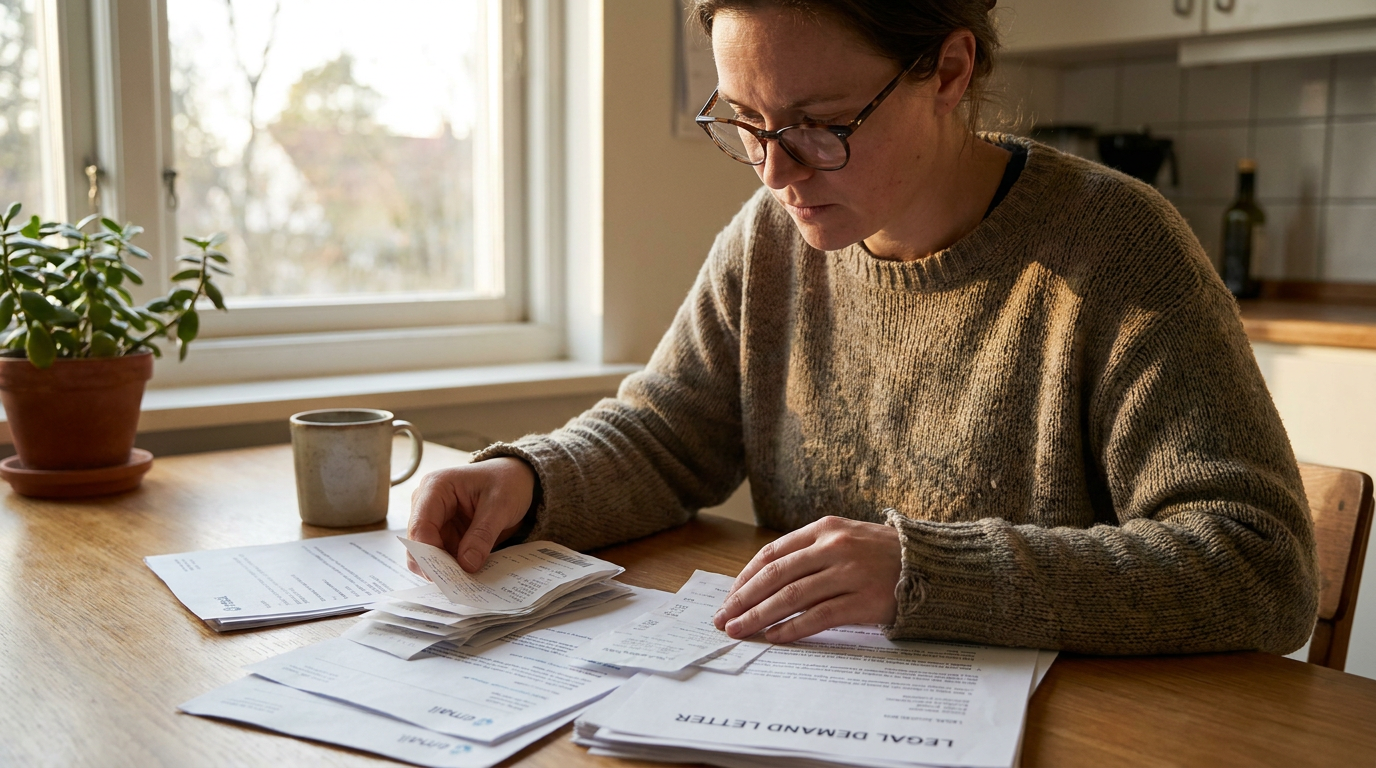
It is a frustratingly common dilemma: a contractor walks off the job with a $5,000 deposit, a landlord illegally withholds a $3,000 security deposit, or a freelance client refuses to pay a final invoice. The amount of money is significant to your household, but when you call a law firm, you discover that a standard civil litigation retainer costs more than the dispute is worth. For many, walking away feels like a profound injustice, but formal litigation feels like financial suicide.[1]
Enter small claims court, often dubbed the "people's court." It is a specialized division of the civil justice system explicitly designed to be navigated by everyday citizens without a law degree. By stripping away the labyrinthine procedural rules and strict evidentiary standards of formal civil litigation, the system allows individuals to present their case directly to a judge.[1][4]
The core philosophy of small claims court is accessibility and speed. In formal civil court, cases can drag on for years through endless motions and discovery phases. In small claims, the average case is resolved in just 30 to 90 days from the moment the paperwork is filed.[3][6]
In many jurisdictions, the system goes out of its way to level the playing field between individuals and massive corporations. In California, for example, lawyers are strictly prohibited from representing parties during the actual small claims hearing. If you sue a massive insurance company, they cannot send a high-priced litigator to crush you; they must send a regular company representative to argue the facts.[2]
The financial threshold for what constitutes a "small" claim has risen significantly in recent years, making the court viable for surprisingly large disputes. As of 2026, the maximum amount you can sue for varies wildly depending on where you live.[2]
Tennessee and Delaware currently tie for the highest limits in the nation, allowing plaintiffs to sue for up to $25,000. Texas follows closely at $20,000, while California allows individuals to claim up to $12,500. On the lower end, states like Kentucky cap small claims at just $2,500, forcing larger disputes into formal civil court.[2]

The cost of entry is another major draw. While formal civil litigation often requires thousands of dollars just to get started, the total cost of a do-it-yourself small claims lawsuit typically ranges from $48 to $275.[3]
This total includes the court filing fee—which averages between $30 and $75 depending on the state and the claim amount—as well as the costs associated with serving the defendant and sending certified mail. Furthermore, low-income individuals can often apply for fee waivers to file their cases entirely for free.[3]
The mechanism of a small claims lawsuit begins long before anyone steps foot in a courthouse. The first mandatory step is almost always the "demand letter." This is a formal, written request outlining the dispute, the exact amount owed, and a deadline for payment before legal action is taken.[3][7]
The mechanism of a small claims lawsuit begins long before anyone steps foot in a courthouse.
Surprisingly, a well-drafted demand letter resolves a significant percentage of disputes without a lawsuit ever being filed. When a business realizes you are organized, serious, and willing to utilize the court system, they often calculate that settling the debt is cheaper than sending an employee to spend a day at the courthouse.[7]
If the demand letter fails, the plaintiff files a formal claim at the local courthouse. Jurisdiction rules dictate that the suit must generally be filed in the county where the defendant lives, where the business is headquartered, or where the disputed transaction occurred.[4][7]
Once filed, the plaintiff must execute "service of process." Due process requires that the defendant be formally notified of the lawsuit so they have a chance to defend themselves. Plaintiffs cannot simply hand the papers to the defendant themselves; they must use a court clerk, a sheriff, a professional process server, or certified mail with a return receipt.[3]

The hearing itself is a stark departure from the dramatic trials depicted on television. There is no jury, no dramatic cross-examination, and no shouting of "objection!" Instead, a judge or magistrate guides the conversation, asking direct questions to both parties to establish the facts.[4][6]
Most hearings are concluded in under an hour. The judge will review your evidence—which should be neatly organized into folders containing contracts, printed text messages, photos, and receipts—and usually renders a decision on the exact same day.[4][5]
However, the system has strict limitations that plaintiffs must understand before filing. Small claims courts are generally restricted entirely to awarding monetary damages. They cannot issue injunctions, force someone to return a specific piece of property, or mandate that a contractor finish a half-built deck.[5][6]
If a dispute requires forcing a business to change its practices, or if it demands complex legal remedies like specific performance, the plaintiff has no choice but to navigate the more expensive and time-consuming waters of formal civil litigation.[5][6]

The most significant point of uncertainty for plaintiffs is the post-judgment phase. Winning a case results in a piece of paper declaring that the defendant owes you money, but the court does not write the check or automatically transfer funds into your bank account.[4][7]
If the losing party refuses to pay voluntarily, the burden of collection falls entirely on the winner. This often requires initiating separate enforcement actions, which can be a frustrating reality check for victorious plaintiffs.[3][7]
Enforcement tools include wage garnishments, bank levies, and placing liens on the debtor's property. While highly effective, these tools require additional paperwork, nominal fees, and the ability to locate where the debtor works or banks.[4][7]
Despite the challenges of collection and the strict monetary limits, small claims court remains one of the most vital democratic institutions in the legal system. It ensures that justice is not exclusively reserved for those who can afford to buy it by the hour, giving everyday citizens a real mechanism to enforce their rights.[1]
How we got here
Step 1
The plaintiff sends a formal demand letter requesting payment by a specific deadline.
Step 2
If unpaid, the plaintiff files a claim at the local courthouse and pays the filing fee.
Step 3
The plaintiff executes service of process, formally notifying the defendant of the lawsuit.
Step 4
Both parties attend an informal hearing where a judge reviews evidence and issues a ruling.
Step 5
If the plaintiff wins but the defendant refuses to pay, the plaintiff initiates collection actions.
Viewpoints in depth
The Self-Representation View
Advocates view small claims court as a vital equalizer that democratizes the justice system.
For consumer rights advocates and legal aid organizations, small claims court is the ultimate equalizer. By removing the necessity—and in some states, the presence—of lawyers, the system prevents large corporations from using their massive legal budgets to intimidate everyday consumers. This perspective emphasizes that without small claims court, any dispute under $5,000 would effectively be a total loss for the consumer, as the cost of formal litigation would instantly eclipse the value of the claim.
The Civil Litigator's View
Legal professionals caution that the simplified rules come at the cost of comprehensive legal remedies.
While acknowledging its utility for simple debts, civil litigators often point out the severe limitations of the small claims process. Because these courts are strictly limited to monetary damages, they are useless for plaintiffs who need a judge to order a specific action—such as forcing a neighbor to take down an illegal fence or compelling a business to honor a service contract. Furthermore, the lack of a formal 'discovery' process means plaintiffs cannot legally force the other side to hand over internal emails or documents before the hearing, which can make proving complex fraud incredibly difficult.
The Asset Recovery View
Collection specialists emphasize the harsh reality of enforcing a judgment after the gavel falls.
From the perspective of debt collectors and asset recovery specialists, winning in small claims court is merely the end of the beginning. They stress that a court judgment is just a piece of paper; it does not automatically extract money from the defendant's bank account. This camp highlights the often-overlooked secondary phase of litigation: tracking down a debtor's assets, filing for wage garnishments, and paying sheriff's fees to execute bank levies. For these professionals, a plaintiff hasn't truly won until the check clears.
What we don't know
- Whether states with lower limits (like Kentucky's $2,500 cap) will pass legislation to adjust their thresholds for inflation in the coming years.
- Exactly what percentage of small claims judgments go uncollected nationwide, as post-judgment enforcement data is highly fragmented across local jurisdictions.
Key terms
- Pro se
- A Latin legal term meaning 'for oneself,' used when a person represents themselves in court without a lawyer.
- Demand letter
- A formal written notice sent to an adversary outlining a dispute and requesting payment before a lawsuit is filed.
- Service of process
- The formal legal procedure of delivering court documents to a defendant so they are officially notified of a lawsuit.
- Default judgment
- A binding court ruling granted in favor of the plaintiff when the defendant fails to respond to a summons or appear in court.
- Wage garnishment
- A court order requiring an employer to withhold a portion of a debtor's paycheck and send it directly to the person who won the lawsuit.
Frequently asked
Do I need to hire a lawyer for small claims court?
In most states, no. In fact, states like California strictly prohibit lawyers from representing parties during the actual small claims hearing to keep the playing field level.
What happens if the defendant ignores the lawsuit?
If the defendant is properly served but fails to show up to the hearing, the judge will typically issue a 'default judgment' in your favor, meaning you win automatically.
Can I sue a large corporation in small claims court?
Yes. You can sue businesses and corporations, provided your claim falls under the state's monetary limit. The corporation will typically send a representative to the hearing.
How do I actually get my money if I win?
The court does not collect the money for you. If the defendant refuses to pay, you must use court-authorized enforcement tools like wage garnishments, bank levies, or property liens.
Sources
Source coverage
7 outlets
3 viewpoints surfaced







[1]Factlen Editorial TeamSelf-Representation Advocates
Synthesis by Factlen editorial team
Read on Factlen Editorial Team →[2]Terms.lawAsset Recovery Specialists
Small Claims Court Limits by State 2026
Read on Terms.law →[3]PettyLawsuitSelf-Representation Advocates
Complete 2026 Guide to Small Claims Court Costs
Read on PettyLawsuit →[4]Connecticut Statewide Legal ServicesSelf-Representation Advocates
How Small Claims Court Works
Read on Connecticut Statewide Legal Services →[5]Bonardi & UzdavinisCivil Litigators
Small Claims vs Civil Court
Read on Bonardi & Uzdavinis →[6]Bradford LawCivil Litigators
Small Claims Court vs. Civil Court
Read on Bradford Law →[7]RecovAssetAsset Recovery Specialists
Small Claims Court Collection Guide
Read on RecovAsset →
Every angle. Every day.
Get law justice stories with full source coverage and perspective breakdowns delivered to your inbox.